
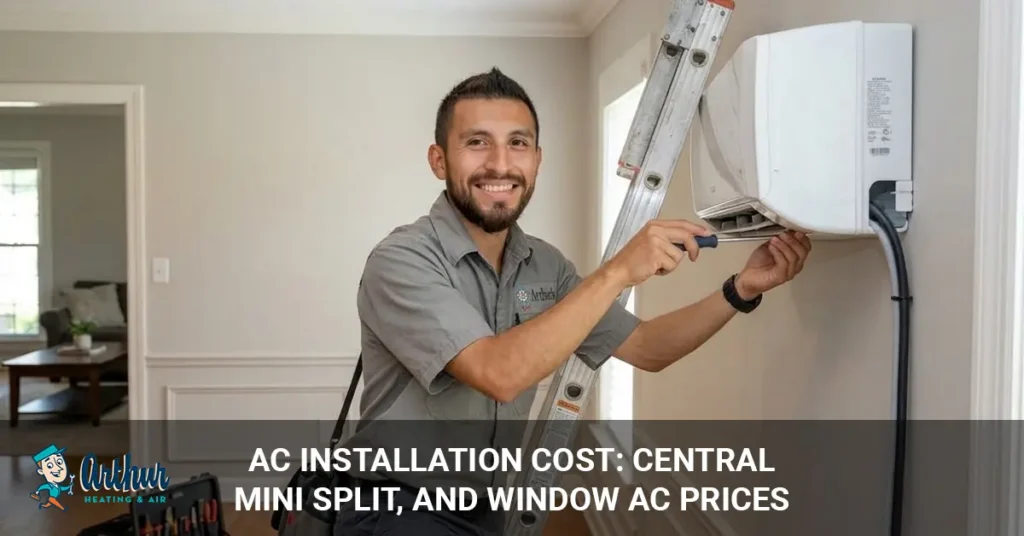
AC installation cost depends on the type of air conditioner, home size, and installation complexity. Most homeowners want to know the total cost before choosing a cooling system because prices can vary widely.
Installing an air conditioning system is one of the most effective ways to keep your home comfortable during hot weather. The total price can change based on the system you choose, how large your home is, and the amount of work required during installation.
The three most common cooling systems used in homes are central air conditioners, ductless mini split systems, and window AC units. Each system works differently and comes with its own installation cost, setup process, and long-term operating expenses.
In general, window AC units cost the least to install, mini split systems fall in the mid-range, and central air conditioning systems usually cost the most because they cool the entire home.
This guide explains AC installation costs for central air, mini split systems, and window units, along with the main factors that affect pricing and tips to help homeowners choose the right cooling system for their needs and budget.
Average AC Installation Cost by System Type
The cost of installing an air conditioning system depends mainly on the type of unit you choose. Below is a general overview of average installation costs.
| AC System Type | Average Installation Cost | Best For |
| Window AC | $200 – $1,000 | Single rooms or apartments |
| Mini Split AC | $1,800 – $12,000 | Zoned cooling for rooms |
| Central AC | $3,500 – $10,000+ | Whole-home cooling |
These ranges include both equipment and labor in most cases, though prices can vary based on home size and installation requirements.
Central Air Conditioner Installation Cost
Central air conditioner installation usually costs between $3,500 and $10,000 or more, depending on the system size, efficiency rating, and installation requirements.
Central air conditioning systems cool an entire home using a network of ducts and vents. The system includes an outdoor condenser unit and an indoor evaporator coil connected to your home’s ductwork. Many homeowners choose central AC because it provides consistent cooling throughout the house.
Average Cost
The average cost to install central air conditioning typically ranges from $3,500 to $10,000 or more. The final price depends mainly on the size of the unit, energy efficiency rating, and the amount of installation work required.
Homes that already have ductwork usually cost less to install, while homes without ducts may require additional work that increases the total price.
What Affects Central AC Installation Price
Several factors can influence the total cost of central AC installation.
AC Unit Size
AC unit size directly affects the installation cost because larger homes need larger systems. Air conditioners are measured in tons, which indicates cooling capacity.
Typical system sizes include:
- 1.5 ton: Small homes or apartments
- 2–3 ton: Medium-sized homes
- 4–5 ton: Large homes
A properly sized system improves cooling performance and energy efficiency.
Existing Ductwork
Existing ductwork can significantly reduce installation costs. If ducts are already installed and in good condition, the system can be connected quickly.
Homes without ductwork may require new duct installation, which can add $3,000 to $7,000 to the overall project cost.
Labor and Installation Complexity
Installation complexity also affects the final price. A central AC installation typically includes several steps, such as:
- Mounting the outdoor condenser unit
- Installing the indoor evaporator coil
- Connecting refrigerant lines
- Completing electrical connections
- Setting up and testing the thermostat
If the installation requires additional electrical upgrades or structural adjustments, labor costs may increase.
Advantages of Central AC
Central air conditioning offers several benefits for homeowners.
- Even cooling throughout the entire home
- Quiet indoor operation
- Can increase property value
Disadvantages
Despite the benefits, central AC systems also have some drawbacks.
- Higher installation cost compared to other systems
- Requires ductwork
- Energy loss can occur if ducts are poorly sealed or inefficient
Mini Split AC Installation Cost
Mini split AC installation usually costs between $1,800 and $12,000, depending on how many rooms you want to cool and how complex the installation is.
Ductless mini split systems cool a home without using ductwork. The system includes an outdoor compressor unit connected to one or more indoor air handlers. Many homeowners choose mini splits because they are energy efficient and allow different rooms to have their own temperature settings.
Average Cost
The average cost to install a mini split system ranges from $1,800 to $12,000 or more. The price mainly depends on the number of indoor units, system capacity, and installation requirements.
Single-room systems cost less, while systems designed to cool multiple rooms cost more because they require additional indoor units.
Single-Zone vs Multi-Zone Systems
Mini split systems can be installed as either single-zone or multi-zone systems.
Single-Zone Mini Split
A single-zone mini split cools one room or area of the home.
This setup uses one outdoor unit and one indoor air handler. It is commonly used for bedrooms, home offices, garages, or small apartments.
Typical installation cost: $1,800 – $4,500
Multi-Zone Mini Split
A multi-zone mini split system cools multiple rooms using several indoor units connected to one outdoor compressor.
Each indoor unit controls the temperature of a specific room, allowing more precise cooling.
Typical installation cost: $5,000 – $12,000 or more
Cost Factors for Mini Split Systems
Several factors affect the total cost of installing a mini split AC system.
Number of Indoor Units
The number of indoor units has the biggest impact on installation cost. Each additional room requires another air handler, which increases both equipment and labor expenses.
Installation Difficulty
Mini split installation requires technicians to drill a small hole through the wall to run refrigerant lines, electrical wiring, and the drainage pipe. If the installation area is difficult to access, labor costs may increase.
System Efficiency
Mini split systems have efficiency ratings called SEER (Seasonal Energy Efficiency Ratio). Higher SEER systems usually cost more upfront but can reduce electricity costs over time.
Advantages of Mini Split Systems
Mini split AC systems offer several benefits.
- No ductwork required
- High energy efficiency
- Individual temperature control for each room
Disadvantages
Despite the benefits, mini split systems also have some limitations.
- Higher upfront cost for multi-zone systems
- Indoor air handlers remain visible on walls
Window AC Installation Cost
Window AC installation usually costs between $200 and $1,000, including the price of the unit. It is the most affordable way to cool a room and is commonly used in apartments, small homes, or spaces that do not have central air conditioning.
Window air conditioners are installed in a window frame or wall opening. These units cool a single room by pulling in warm air, cooling it, and circulating it back into the space.
Average Cost
The average cost to install a window AC unit ranges from $200 to $1,000. This price often includes both the air conditioner and basic installation.
Smaller units designed for bedrooms or offices usually cost less, while larger units designed for bigger rooms cost more.
Unit Price
The price of a window AC unit usually ranges from $150 to $700, depending on the cooling capacity and brand.
Units with higher BTU ratings can cool larger rooms, but they also cost more.
Professional Installation
Many homeowners install window AC units on their own because the process is simple. Professional installation may cost between $75 and $300 if adjustments are needed.
Professionals may be required if:
- The window frame needs reinforcement
- A wall sleeve installation is required
- Electrical adjustments are needed
Best Uses for Window AC Units
Window AC units work best for cooling small areas or individual rooms. They are often used in places where installing central air conditioning is not practical. Common uses include:
- Single rooms
- Small apartments
- Temporary cooling solutions
Advantages
Window AC units offer several benefits for homeowners and renters.
- Lowest upfront cost
- Simple installation process
- Portable and easy to remove
Disadvantages
Despite the low cost, window AC units also have some limitations.
- Limited cooling coverage
- Higher noise compared to other systems
- Less energy efficient than central or mini split systems
Factors That Affect AC Installation Costs
AC installation cost depends on several factors, including home size, system efficiency, installation difficulty, equipment quality, and local labor rates. These factors influence both the price of the equipment and the amount of labor required for installation.
Understanding these cost factors can help homeowners estimate the total price before installing a new air conditioning system.
Home Size
Home size is one of the biggest factors that affect AC installation cost. Larger homes need larger air conditioning systems with higher cooling capacity.
Bigger systems cost more and may also require additional installation work, which increases the total project cost.
Energy Efficiency Ratings
Air conditioners with higher efficiency ratings usually cost more upfront but reduce energy use over time. AC efficiency is commonly measured by the SEER (Seasonal Energy Efficiency Ratio) rating.
Higher SEER systems use less electricity, which can lower monthly cooling costs.
Installation Complexity
Installation difficulty can increase labor costs during AC installation. Some homes require additional work to properly install a cooling system. Complex installations may include:
- Electrical upgrades
- Structural modifications
- Refrigerant line extensions
These additional steps increase the amount of time and labor required for the installation.
Brand and Equipment Quality
The brand and quality of the AC equipment also affect the total cost. Premium HVAC brands typically cost more but may offer better durability, performance, and longer warranties.
Higher-quality systems may have a higher upfront cost but can provide better long-term reliability.
Location and Labor Rates
Installation costs can vary depending on your location and local labor rates. HVAC contractors in some areas charge higher labor fees due to demand, regional pricing, or local regulations.
Getting multiple quotes from licensed contractors can help homeowners find competitive pricing.
Cost by Home Size
AC installation cost increases as home size increases because larger spaces need more cooling capacity. Bigger homes require larger air conditioning systems or multiple units, which raises both equipment and installation costs.
Below is a general estimate of installation costs based on home size.
Small Homes or Apartments
Cooling a small home or apartment usually costs between $200 and $4,000. Smaller spaces often only need a window AC unit or a single-zone mini split system.
These systems are cheaper because they cool a limited area and require simpler installation. Typical options for small homes include:
- Window AC units
- Portable air conditioners
- Single-zone mini split systems
Medium Homes (1,500–2,000 sq ft)
Cooling a medium-sized home typically costs between $4,000 and $8,000. Most homes in this size range install central air conditioning or multi-zone mini split systems.
These systems provide better airflow and consistent cooling across several rooms. Common systems for medium homes include:
- Central air conditioning systems
- Multi-zone ductless mini split systems
Large Homes (2,500+ sq ft)
Cooling a large home usually costs between $7,000 and $12,000 or more. Larger homes require higher-capacity central AC systems or multiple mini split zones to maintain consistent indoor temperatures.
These installations often involve larger equipment and a more complex setup, which increases the total cost. Large homes may require:
- High-capacity central AC systems
- Multiple mini split indoor units
- Expanded ductwork or upgraded electrical systems
Which AC System Is Cheapest to Install?
Window AC units are usually the cheapest air conditioning systems to install. They have the lowest upfront cost and require minimal installation compared to other cooling systems.
The total cost depends on the size of the space you want to cool and the type of system needed.
Window AC
Window AC units have the lowest installation cost. Most window air conditioners cost between $200 and $1,000, including the unit. They are a good option for:
- Single rooms
- Small apartments
- Temporary cooling needs
Because installation is simple, many homeowners install them without professional help.
Mini Split
Mini split systems cost more than window units but are more energy efficient. Installation typically ranges from $1,800 to $12,000, depending on the number of rooms being cooled.
Mini splits are a good choice for homes that do not have ductwork and need cooling in specific areas.
Central AC
Central air conditioning has the highest installation cost but provides whole-home cooling. Installation usually costs $3,500 to $10,000 or more, depending on home size and system capacity.
Central AC systems distribute cool air through ductwork, which allows the entire house to maintain a consistent temperature.
For small spaces, window AC units are usually the most affordable option. For larger homes, central air conditioning often provides better long-term comfort and value.
Additional Costs to Consider
AC installation may include additional costs beyond the equipment and basic labor. These extra expenses can increase the total project price depending on the condition of your home and the type of system being installed.
Understanding these potential costs can help homeowners plan their budget more accurately.
Electrical Upgrades
Some homes require electrical upgrades before installing a new AC system. Older homes may have electrical panels that cannot support modern air conditioning equipment.
In these cases, an electrician may need to upgrade the electrical panel or wiring to safely power the HVAC system.
Smart Thermostat Installation
Installing a smart thermostat can improve cooling efficiency and comfort. Smart thermostats allow homeowners to control temperature settings remotely and schedule cooling times.
The typical cost for installing a smart thermostat ranges from $150 to $500, depending on the device and installation requirements. You can also review smart thermostat installation cost for a detailed breakdown of pricing and installation factors.
Permits and Inspections
Some areas require permits before installing a new air conditioning system. Local building codes may require permits and inspections to ensure the system is installed safely.
Permit costs usually range from $100 to $400, depending on local regulations.
Annual Maintenance
Regular maintenance helps keep an AC system running efficiently and extends its lifespan. Annual servicing typically includes cleaning components, checking refrigerant levels, and inspecting system performance.
Most homeowners spend around $100 to $300 per year on routine AC maintenance. Regular servicing can also prevent expensive breakdowns. You can learn more about the typical AC repair cost to understand common repair expenses.
Tips to Reduce AC Installation Costs
You can reduce AC installation costs by choosing the right time for installation, comparing contractor quotes, selecting the correct system size, and taking advantage of available rebates. These simple steps can help lower upfront costs while improving long-term efficiency.
Install During the Off-Season
Installing an AC system during the off-season can help reduce installation costs. HVAC contractors are usually less busy during fall or early spring, which may lead to lower labor prices and faster scheduling.
Homeowners often pay more during peak summer months because demand for AC installation is higher.
Compare Multiple Quotes
Getting quotes from several HVAC contractors can help you find the best price. Comparing estimates allows you to evaluate equipment options, labor costs, and warranty coverage.
It also helps ensure you are paying a fair price for the installation.
Choose the Right AC Size
Choosing the correct AC size helps prevent unnecessary costs and improves efficiency. An oversized system costs more to install and may cycle on and off too frequently.
A properly sized system cools the home more efficiently and can lower energy bills over time.
Look for Energy Rebates
Energy rebates can reduce the total cost of installing a new AC system. Many utility companies and government programs offer incentives for installing high-efficiency air conditioning systems.
These rebates can help offset the higher upfront cost of energy-efficient equipment.
When to Call a Professional HVAC Installer
You should call a professional HVAC installer when installing central AC or mini split systems because these systems require technical knowledge and specialized tools. Professional installation ensures the system runs safely, efficiently, and according to manufacturer guidelines.
While many homeowners can install window AC units on their own, larger cooling systems involve electrical work, refrigerant handling, and precise setup that should be done by trained technicians.
Professional installation helps ensure:
- Proper refrigerant handling, which requires certified technicians
- Safe electrical connections to prevent system damage or safety risks
- Correct system sizing so the AC cools the home efficiently
- Warranty protection, since many manufacturers require professional installation
Hiring a licensed HVAC installer can also help prevent costly repairs and performance issues that may occur if the system is installed incorrectly.
Final Thought
AC installation cost depends mainly on the system type, home size, and installation requirements. Window AC units are usually the most affordable option for cooling small spaces, while ductless mini split systems provide efficient cooling for individual rooms without ductwork. Central air conditioning systems typically cost more to install but offer consistent cooling for the entire home.
Understanding these differences can help homeowners choose the right air conditioning system based on their budget and cooling needs. Speaking with a professional HVAC contractor can also help ensure the system is properly sized and installed for reliable performance and long-term efficiency.