
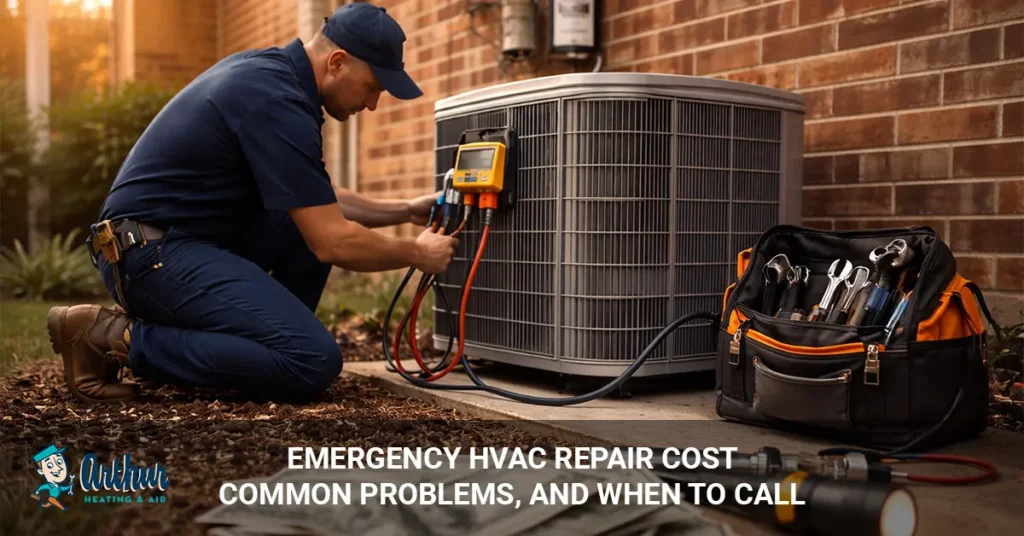
An HVAC emergency happens when your system fails in a way that affects safety, health, or could cause serious damage to your home. These problems don’t wait for business hours. A system can stop working late at night, during a heatwave, or on the coldest day of the year.
When comfort turns into a safety concern, knowing what counts as an emergency and what it may cost helps you act quickly and avoid bigger problems. This guide explains what qualifies as emergency HVAC repair, the most common urgent issues, typical repair costs, and when it’s best to call a professional right away. Each section gives a clear answer first, so it’s easy to scan and decide what to do next.
What Is Considered an Emergency HVAC Repair?
An emergency HVAC repair is any issue that puts your safety, health, or home at risk, or leaves you without heat or cooling during extreme weather. If waiting could make the situation dangerous or lead to major damage, it should be treated as an emergency.
Common examples include no heat during freezing temperatures, no cooling during extreme heat, gas smells, burning or electrical odors, serious electrical issues, or a system that won’t turn on at all.
Common Emergency HVAC Problems
No Heat During Cold Weather
No heat in cold weather is an HVAC emergency because it can make your home unsafe and lead to frozen pipes. This problem is often caused by ignition failures, electrical issues, or a failed blower motor. During winter, it should be addressed right away to protect both your home and your health.
No Cooling During Extreme Heat
Losing cooling during extreme heat can quickly become a health risk. Children, older adults, and anyone with health conditions are especially vulnerable. Common causes include compressor failure, refrigerant leaks, or electrical faults. When indoor temperatures rise fast, emergency service is usually necessary.
HVAC System Not Turning On
An HVAC system that won’t turn on at all usually points to an electrical or control problem. A tripped breaker is a simple thing to check, but repeated shutdowns often mean a deeper issue. If the system is completely unresponsive, calling for emergency repair is the safest option.
Burning Smells or Electrical Odors
Burning or electrical smells should always be treated as emergencies. These odors can signal overheating parts, wiring problems, or motor failure. Turn the system off immediately and call a professional to prevent further damage or fire risk.
Gas Smell or Suspected Gas Leak
A gas smell near your HVAC system is always an emergency. Leave the home right away, avoid using electronics, and contact emergency services or your gas provider. Only after the area is safe should you contact an HVAC professional. Safety always comes first.
Loud Banging, Grinding, or Screeching Noises
Loud, sudden noises usually mean a mechanical failure that can worsen quickly. Grinding or screeching often points to motor or bearing issues, while banging can signal serious internal problems. Shutting the system down and calling for repair can prevent major damage.
Short Cycling or Overheating
Short cycling or overheating puts heavy stress on your HVAC system and can cause rapid failure. The system turns on and off repeatedly, which increases wear on key components. If the system won’t stabilize, emergency service may be needed to avoid permanent damage.
Emergency HVAC Repair Cost
Emergency HVAC repairs usually cost between $250 and $2,000, depending on the problem and when service is needed. After-hours, weekend, and holiday calls typically cost more than standard appointments because of higher labor rates.
Smaller emergency fixes fall on the lower end of the range, while major component repairs can push costs much higher.
Emergency HVAC Repair Cost by System Type
Emergency AC Repair Cost
Emergency AC repairs usually cost between $300 and $2,000. Common emergency issues include compressor failures, refrigerant leaks, and electrical problems. Costs often rise during heatwaves when demand for emergency services is high.
Emergency Furnace Repair Cost
Emergency furnace repairs typically range from $250 to $1,800. Ignition failures, gas valve problems, and blower motor issues are common causes. Repairs involving gas components often cost more because of added safety requirements.
Emergency Heat Pump Repair Cost
Emergency heat pump repairs usually fall between $300 and $2,000. Defrost system failures, reversing valve problems, and electrical issues can happen in both winter and summer. Since heat pumps run year-round, quick service is especially important to prevent further damage.
Why Emergency HVAC Repairs Cost More
Emergency HVAC repairs cost more because they require immediate service outside normal business hours. After-hours calls often include higher labor rates, overtime pay, and added service fees.
Limited parts availability and the urgency of the situation can also increase costs. Technicians may need to reprioritize scheduled jobs to handle emergencies, which further raises the price.
When to Call an Emergency HVAC Technician
You should call an emergency HVAC technician when your safety, health, or home is at risk.
Situations like no heat during freezing weather, no cooling in extreme heat, gas smells, burning odors, or a complete system failure all require immediate attention.
If waiting until normal business hours could cause harm or major damage, it’s best to treat the issue as an emergency and call right away.
What to Do Before Calling for Emergency HVAC Repair
You can take a few safe steps before calling for emergency HVAC service. Check that the thermostat is set correctly, replace the batteries if needed, and look for any tripped circuit breakers.
Do not attempt electrical or gas-related repairs. If you notice smoke, sparks, or a gas smell, leave the home immediately and contact emergency services before calling an HVAC professional.
Emergency HVAC Repair vs Scheduled Repair
Emergency HVAC repair is more expensive, but it’s necessary when safety, health, or property is at risk. Situations like no heat in freezing weather, gas smells, or complete system failure shouldn’t wait.
Scheduled repair is usually cheaper and works best for non-urgent problems that don’t affect safety or comfort right away. Knowing the difference helps you avoid unnecessary emergency costs while still acting quickly when it truly matters.
How to Avoid Emergency HVAC Repairs
Most HVAC emergencies can be avoided with regular maintenance and early action. Annual inspections and regular HVAC maintenance help catch small issues before they turn into sudden failures, expensive emergency repairs, and changing filters on time keeps the system from working harder than it should.
Paying attention to warning signs like strange noises, weak airflow, or rising energy bills allows you to fix problems early. Taking care of small repairs ahead of time is always cheaper than needing emergency service later.
How Long Emergency HVAC Repairs Take
Most emergency HVAC repairs are completed within a few hours.
Smaller issues can often be fixed the same night, while larger repairs may take longer if parts need to be ordered.
Acting early usually leads to faster service and fewer delays, since problems are easier to fix before they cause additional damage.
Are Emergency HVAC Repairs Worth the Cost?
Emergency HVAC repairs are worth the cost when safety or health is at risk. Restoring heat during freezing weather or cooling during extreme heat can prevent serious health issues and expensive property damage.
For problems that aren’t urgent and don’t affect safety, waiting for scheduled service usually makes more financial sense and keeps repair costs lower.
Final Thoughts
HVAC emergencies are stressful, but knowing what to expect makes them easier to handle.
Situations like no heat, no cooling, gas smells, or electrical issues should never be ignored.
By understanding common emergency HVAC problems, typical costs, and when to call a professional, homeowners can act quickly, stay safe, and limit damage when it matters most.