
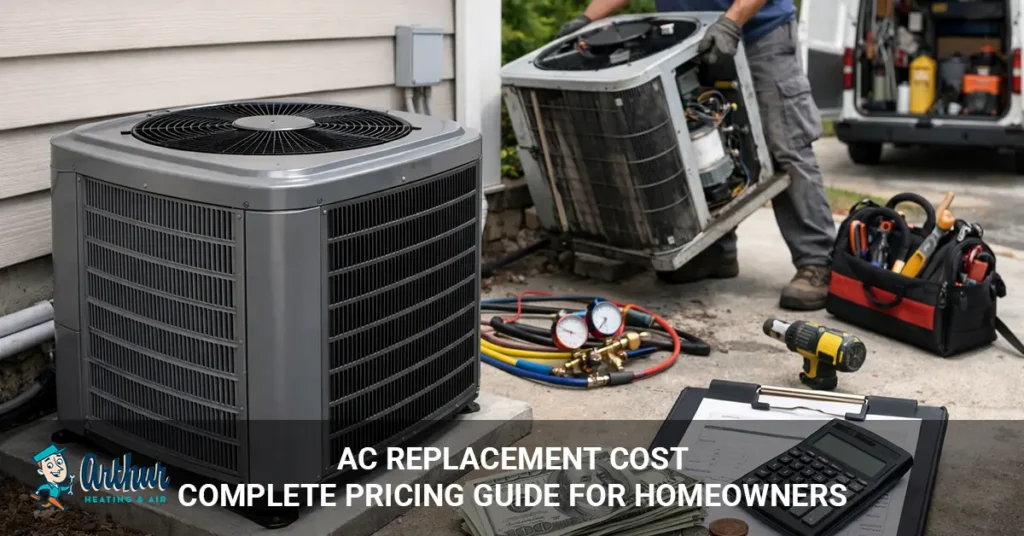
The average AC replacement cost usually falls between $5,000 and $12,500, depending on the type of system, its size, efficiency rating, and how complex the installation is.
Replacing an air conditioner is a major expense, but the right system can make a noticeable difference. A properly sized, efficient AC can lower monthly energy bills, cool your home more evenly, and reduce the need for frequent repairs.
This guide breaks down how much AC replacement costs, what drives the price up or down, and how homeowners can avoid paying more than necessary.
How Much Does AC Replacement Cost?
AC replacement usually costs between $5,000 and $12,500 for a central air conditioning system.
Homes with smaller layouts and basic systems tend to fall on the lower end of that range. Larger homes, higher-efficiency units, and premium brands push the cost higher. Ductless systems and heat pumps can cost more or less than this range, depending on how many indoor units are needed and how the system is set up.
The total price typically includes the new AC unit, professional labor, and the materials required to install the system correctly and safely.
What’s Included in AC Replacement Cost?
AC replacement cost covers the new system and everything needed to install it properly.
This usually includes the air conditioner itself, professional labor, refrigerant handling, electrical connections, and full system testing once installation is complete. In most cases, the old AC unit is also removed, and the new system is set up to run safely and efficiently.
If your home needs ductwork repairs, duct sealing, or electrical upgrades, those items are not always included in the base price. These additional needs are typically priced separately and added only if they are required for the new system to work correctly.
Factors That Affect AC Replacement Cost
AC replacement cost depends on a few key factors that influence equipment choice, labor time, and system efficiency. Below are the key factors of ac replacement cost:
AC System Size (Tonnage)
AC system size directly affects replacement cost because larger homes require larger units.
Bigger systems cost more to purchase and install, but size is not just about square footage. The system must match your home’s cooling needs. An AC that is too small will struggle to cool the space, while one that is too large will cycle on and off too often.
Installing the correct size is critical for comfort, efficiency, and long-term reliability. For a deeper explanation of sizing and load calculations, see our guide on how to choose the right AC unit for your home. A properly sized system cools evenly, uses less energy, and lasts longer.
Energy Efficiency (SEER Rating)
Energy efficiency affects AC replacement cost because higher SEER systems are more expensive to buy.
A higher SEER rating means the system uses less energy to cool your home. While these systems cost more upfront, they usually lower monthly cooling bills and perform better over time. Lower SEER systems are cheaper initially, but they use more energy and cost more to run.
Choosing the right SEER rating is about balancing upfront cost with long-term energy savings and comfort.
AC Brand and Model
AC replacement cost also depends on the brand and model you choose.
Well-known brands often cost more because they come with longer warranties, better build quality, and proven reliability. Budget options are usually cheaper upfront, but they may have shorter warranties or fewer features.
Choosing the right brand is about balancing price, performance, and long-term peace of mind.
Ductwork Condition
Ductwork condition affects AC replacement cost because damaged ducts reduce system performance.
Leaking or poorly insulated ducts waste cooled air, which makes the new AC work harder. If ducts are damaged, undersized, or very old, sealing or replacement may be needed to ensure proper airflow.
Addressing duct issues during AC replacement helps improve efficiency, comfort, and long-term system performance, even though it can increase the upfront cost.
Home Layout and Installation Complexity
Home layout affects AC replacement cost because some installations take more time and labor.
Multi-story homes often require longer refrigerant lines and more complex airflow balancing. Tight spaces, limited attic or crawl space access, and older electrical systems can also slow down installation.
When the job is more complex, labor costs increase. Proper planning helps ensure the system is installed correctly and performs as expected.
AC Replacement Cost by System Type
AC replacement cost varies by system type because each setup has different equipment and installation requirements.
Central AC systems typically cost $5,000 to $12,500 and are common in homes with existing ductwork. Ductless mini-split systems range from $3,500 to $15,000 or more, depending on how many indoor units are needed. Heat pumps usually cost $6,000 to $14,000 and offer both cooling and heating. Package units fall between $7,000 and $13,000 and are often used in homes with limited indoor space.
The best system for your home depends on the layout, local climate, and how much you want to invest upfront versus long-term energy savings.
Repair vs Replacement: Which Is More Cost-Effective?
AC replacement is usually more cost-effective when repair costs start adding up. If you’re still unsure, read our detailed guide on AC repair vs replacement to compare long-term costs and system performance before making a decision.
If your AC is 10 to 15 years old, breaks down often, or needs a major repair, replacing it often makes more financial sense. Older systems are less efficient and typically cost more to run and maintain. Newer systems use less energy and require fewer service calls.
A simple rule to follow is this: if repair costs are close to 50% of the price of a new system, replacement is usually the smarter long-term decision.
Signs It’s Time to Replace Your AC
It’s time to replace your AC when it can no longer cool your home efficiently or reliably.
Rising energy bills are often one of the first warning signs. Uneven cooling, weak airflow, and rooms that never reach a comfortable temperature also point to a system in decline. Frequent breakdowns and unusual noises usually mean internal parts are wearing out.
AC systems that use outdated refrigerants are another strong candidate for replacement, as repairs become more expensive and parts harder to find.
How Long Does AC Replacement Take?
Most AC replacements are completed in one full day.
Straightforward installations with existing ductwork and no electrical issues usually move quickly. The old system is removed, the new one is installed, and testing is done the same day.
Some jobs take longer. Homes with ductwork problems, electrical upgrades, or system changes may need two days or more. Extra time ensures the system is installed correctly and runs safely from the start.
How to Lower AC Replacement Cost
You can lower AC replacement costs by planning ahead and making informed choices.
Choosing the correct system size helps prevent overpaying for equipment you do not need. Replacing your AC during the off-season, such as spring or fall, often comes with lower labor costs and better availability.
Energy rebates and tax credits can also reduce the upfront price, especially for high-efficiency systems. Regular maintenance plays a role, too. Well-maintained systems last longer, which helps delay replacement.
Getting multiple quotes from qualified contractors is one of the best ways to compare pricing and avoid paying more than necessary.
Common Mistakes That Increase AC Replacement Cost
Oversizing the system is one of the most common and costly mistakes homeowners make.
A system that is too high costs more upfront and cycles on and off too often, which wastes energy and causes extra wear. Ignoring duct problems is another issue. Leaky or damaged ducts force the AC to work harder and raise energy bills.
Choosing price over quality can also backfire. Cheaper installs often cut corners, leading to more repairs later. Skipping professional load calculations is another mistake that results in poor system performance and higher long-term costs.
Final Thoughts
AC replacement is worth the cost when your current system is inefficient, unreliable, or costly to maintain.
A new AC system provides better comfort, lower energy bills, and fewer breakdowns. While the upfront expense can feel high, the long-term savings and improved performance often outweigh the initial cost.
If your AC is struggling to keep up or needs frequent repairs, replacing it sooner rather than later can save money and keep your home comfortable year-round.