
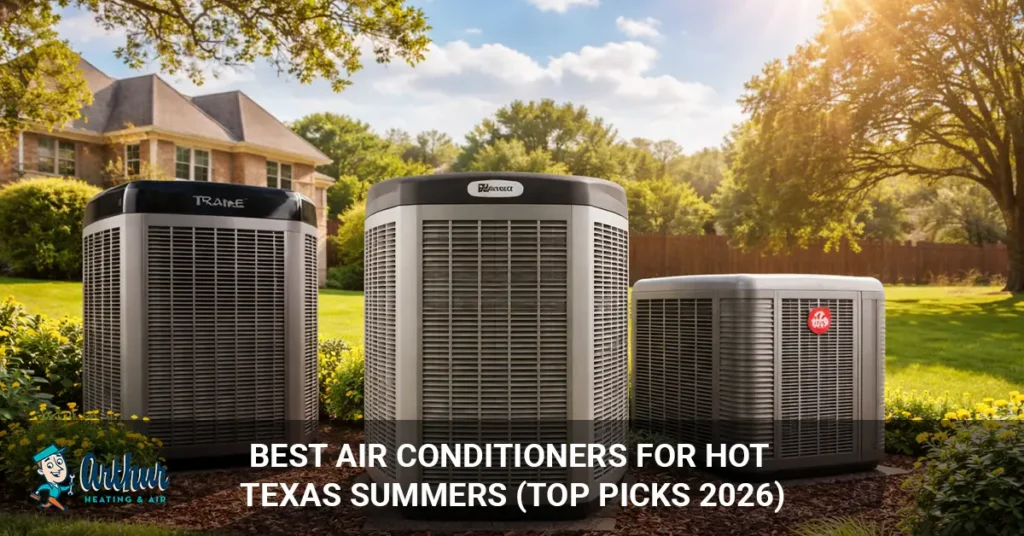
Texas summers are no joke. When it’s 105°F in the shade, and your AC runs all day, you quickly find out if your system is strong enough or not.
If your home feels warm in the afternoon or your electric bill spikes every August, this guide will help you choose better.
Let’s keep this simple and straight to the point.
Why Texas Heat Requires a High-Performance AC
Texas heat requires a high-performance AC because the cooling season is longer, hotter, and more demanding than almost anywhere else in the country.
This isn’t just about a few hot weeks in summer. In many parts of Texas, your AC runs most of the year.
In cities like Houston and Austin, the cooling season can last 8 to 10 months. That’s a lot of wear and tear on your system.
In Dallas, San Antonio, and across West Texas, 100°F+ days are common. Not once or twice. For weeks at a time.
Along the Gulf Coast, it’s not just heat, it’s humidity. Your AC isn’t only cooling the air. It’s also removing moisture. That makes it work even harder.
And electricity costs keep rising. When your system runs longer and struggles to keep up, your monthly bill climbs fast.
Here’s what that really means for homeowners:
- Your AC runs more hours per year than most states
- Low-efficiency systems break down sooner
- Undersized units can’t keep up in peak heat
- Cheap systems cost more over time
In Texas, an average AC isn’t enough. You need a properly sized, high-efficiency system built for extreme heat.
What SEER Rating Is Best for Texas?
The best SEER rating for Texas homes in 2026 is at least 16 SEER2, but most homeowners should aim for 18–22 SEER2 for better comfort and lower energy bills.
Here’s why.
Texas heat is intense. Your AC runs longer and works harder than in most states. A low-efficiency unit may cool your home, but it will cost you more every month.
Let’s break it down simply:
- Minimum: 16 SEER2: This is the basic starting point for Texas. It meets efficiency standards and works fine for smaller homes or tighter budgets.
- Ideal: 18–22 SEER2: This is the sweet spot for most homeowners. You get noticeably lower electric bills, stronger cooling during 100°F+ days, and better humidity control.
- Premium: 22+ SEER2: These are high-end, variable-speed systems. They run smoother, quieter, and use the least electricity. Great for large homes or families planning to stay long-term.
What Higher SEER2 Really Means
A higher SEER2 rating means:
- Lower monthly energy bills
- Better performance during heat waves
- Less strain on parts and fewer breakdowns
- More consistent indoor comfort
In simple terms, the unit doesn’t have to work as hard to cool your home.
Is a High SEER2 Worth It?
Yes, if you plan to stay in your home for 5+ years, a high-efficiency system usually pays for itself through energy savings.
You’ll spend more upfront.
But you’ll save month after month.
And your home will feel more comfortable during peak summer.
For Texas weather, efficiency isn’t a luxury. It’s a smart investment.
What to Look for in an AC for Texas Summers
The best AC for Texas summers is one that can handle long, extreme heat without driving up your energy bills or breaking down early.
Here’s what really matters when choosing a system.
1. Variable-Speed Compressor
A variable-speed compressor is ideal for Texas because it adjusts its cooling output instead of constantly turning on and off.
Traditional systems blast at 100% power, then shut off. That wastes energy and creates temperature swings.
Variable-speed systems adjust slowly and steadily.
Benefits:
- More consistent indoor temperature
- Better humidity control (especially important in humid areas)
- Lower energy usage over time
- Quieter operation
In Texas heat, steady cooling works better than short, powerful bursts.
2. Proper Sizing (Tonnage Matters)
The right size AC unit is critical for comfort and efficiency.
An oversized unit cools too fast and shuts off before removing humidity. Your house may feel cold but still sticky.
An undersized unit runs nonstop. It struggles in 100°F+ weather and wears out faster.
The solution? A professional Manual J load calculation.
This calculation looks at:
- Square footage
- Insulation
- Windows
- Sun exposure
- Ceiling height
- Ductwork
Guessing the size leads to problems. Proper sizing leads to comfort and lower bills.
3. Strong Warranty
Texas heat puts serious stress on AC equipment. A strong warranty protects your investment. Look for:
- 10-year parts warranty
- Extended compressor coverage
- Registered manufacturer warranty
If a company offers a weak warranty, that’s a red flag.
4. Smart Thermostat Compatibility
Smart thermostats help reduce unnecessary runtime and improve efficiency. They can:
- Adjust temperature automatically
- Learn your schedule
- Reduce cooling when you’re away
- Lower monthly energy costs
In a state where AC runs most of the year, smarter controls mean real savings.
Top Air Conditioners for Hot Texas Summers (2026 Picks)
Best Overall: Trane XV20i
The Trane XV20i is the best overall air conditioner for Texas summers because it delivers powerful, consistent cooling even when temperatures stay above 100°F for days at a time.
This system can reach up to 22 SEER2, which means it runs very efficiently compared to standard units. In simple terms, it cools your home using less electricity. That matters a lot during long Texas summers when your AC runs almost nonstop.
What really makes this unit stand out is its true variable-speed technology. Instead of blasting at full power and shutting off repeatedly, it adjusts its speed gradually. This keeps your home at a steady temperature without hot and cold swings. It also helps remove more humidity from the air, which is especially important in humid areas.
The build quality is another big reason homeowners choose this model. It’s designed to handle heavy use in cities like Dallas, Austin, and San Antonio, where heat waves are common, and durability matters. A system that can handle prolonged extreme temperatures will last longer and require fewer repairs.
This unit is a strong fit for larger homes or for homeowners who plan to stay in their house for many years. While the upfront cost is higher than that of entry-level systems, the long-term comfort, energy savings, and reliability often make it worth the investment.
If you want top-tier performance and peace of mind during the hottest months of the year, the Trane XV20i is one of the strongest options available in 2026.
Best Value: Rheem RA16
The Rheem RA16 is one of the best value air conditioners for Texas because it gives you solid cooling performance without a premium price tag.
With up to 17 SEER, this unit delivers respectable efficiency that helps keep your energy bills in check during long summer months. It doesn’t have all the high-end bells and whistles of top-tier systems, but it provides reliable cooling day after day. That consistency is exactly what many Texas homeowners want, especially in mid-size homes where you need dependable performance but don’t want to overspend.
People also like the Rheem RA16 because it’s straightforward to install and backed by a solid warranty. That extra peace of mind matters when your system is working hard through weeks of 100°F heat.
In short, the Rheem RA16 handles Texas summers well for its price point, making it a smart choice if you want dependable cooling without breaking the bank.
Most Energy Efficient: Lennox XC25
The Lennox XC25 is one of the most energy-efficient air conditioners you can buy in 2026, and it’s especially valuable for Texas homes with high utility rates.
This system can reach up to 26 SEER, which means it uses significantly less electricity than standard units while still cooling your home effectively. In places where your AC runs almost every day for months, that kind of efficiency can add up to real savings on your energy bill by the end of the year.
One of the standout features of the Lennox XC25 is its ability to deliver extremely precise temperature control. Instead of strong blasts of cold air followed by warm periods, it cools your home more smoothly and evenly. That makes indoor comfort feel more consistent, even on days when the outdoor heat seems relentless.
This model also operates much more quietly than many traditional air conditioners. If noise levels matter to you, like when you’re trying to sleep or relax at home, the XC25’s quiet operation is a major plus.
For homeowners who are energy-conscious and want to spend less each month on cooling, this unit is a top choice. It doesn’t just perform well in hot weather; it does so without wasting energy. That’s why it’s often recommended for areas with high electricity costs or for people who plan to stay in their homes long term.
In short, if your priority is lowering monthly bills and maximizing efficiency while still staying cool through Texas summers, the Lennox XC25 is one of the strongest picks available.
Best for Smaller Homes: Goodman GSX16
The Goodman GSX16 is a solid choice for smaller homes because it delivers dependable cooling without a high price tag.
This system stays affordable while still giving you reliable performance in hot weather. It doesn’t have all the advanced features of premium models, but it has enough power to keep homes up to about 1,200–1,800 square feet comfortable even during long Texas heat waves.
What makes this unit appealing is its simplicity. If you’re replacing an old system or setting up cooling for the first time in a small house or rental property, the GSX16 gets the job done without complication. It’s easy for installers to work with, and many homeowners appreciate how straightforward maintenance can be.
For people on a tighter budget who still want a unit that handles Texas summers, this Goodman model is a dependable option. It keeps your home cool and comfortable without overspending on features you might not need in a smaller space.
Central AC vs Heat Pump in Texas
The short answer is this: both central AC and heat pumps work in Texas summers, but the best choice depends on where you live and how you use your system.
Many homeowners wonder if a heat pump can handle extreme Texas heat. The answer is yes, a modern, high-performance heat pump cools just like a traditional air conditioner during summer. The difference is that it can also heat your home in winter.
For example, the Carrier Infinity 24 is a premium heat pump designed for high-demand climates. It delivers efficient cooling in summer, reliable heating in winter, and uses variable-speed operation to keep temperatures steady. That means fewer temperature swings, better humidity control, and lower energy use.
So which system makes the most sense?
In North Texas, winters can dip below freezing. In that region, a heat pump or a dual-fuel system is often a smart choice. A heat pump handles most heating needs efficiently, and a gas furnace can assist during very cold days.
In South Texas and along the Gulf Coast, summers are long, hot, and humid, while winters are mild. In these areas, a high-efficiency central AC system with strong humidity control is often the better fit. Since heating demand is low, many homeowners focus on maximizing summer cooling performance.
Here’s the simple way to think about it.
If you want one system that cools and heats efficiently, a heat pump is a strong option.
If your priority is maximum cooling power for long, humid summers, a high-efficiency central AC may be the better choice.
The right decision depends on your climate zone, utility rates, and how long you plan to stay in your home.
What Size AC Do You Need in Texas?
General estimate:
| Home Size | Recommended Tonnage |
| 1,200–1,500 sq ft | 2–2.5 tons |
| 1,500–2,000 sq ft | 2.5–3 tons |
| 2,000–2,500 sq ft | 3–4 tons |
| 2,500–3,000 sq ft | 4–5 tons |
However, insulation, ceiling height, sun exposure, and windows all impact sizing.
Always request a professional load calculation before installation.
Want the Right Size AC for Your Home?
Avoid overspending or undersizing with a professional load calculation.
 Get My AC Size & Quote
Average AC Installation Cost in Texas (2026)
The average AC installation cost in Texas in 2026 varies depending on the type and efficiency of the system you choose, but you can expect these general ranges.
For a standard efficiency system, most homeowners pay between about $6,000 and $8,500. These units cool well and are a good choice if you want solid performance without too many extra features.
If you choose a high-efficiency system, costs usually fall between $8,500 and $12,000. These units use less energy and can save you money on monthly bills over time, which helps offset the higher upfront cost.
At the top end, premium variable-speed systems, those with the best efficiency and comfort features, typically cost $12,000 to $15,000 or more. These are great if you want quieter operation, tighter temperature control, and the highest energy savings.
Installation costs can change based on several factors. If you’re comparing options, it’s best to speak with a professional AC installation company to get an accurate estimate for your home. The condition of your ductwork matters a lot. If your ducts need repair or replacement, that adds to the total project price. If your electrical panel needs an upgrade to support a new system, that also increases cost. Larger homes require bigger systems, which cost more, and some brands simply carry higher price tags.
Also, remember that financing options and utility rebates may be available in your area. Many utility providers offer incentives for installing high-efficiency systems, and some HVAC companies have flexible payment plans that make upgrades easier on your budget.
In the end, installation cost isn’t just one number. It’s a range that reflects the size of your home, the system you choose, and the work needed to make the installation smooth and reliable.
How to Make Your AC Last Longer in Texas Heat
The best way to make your AC last longer in Texas heat is simple: reduce strain, keep it clean, and service it regularly.
Texas heat is hard on air conditioners. When your system runs for months at a time, small issues can turn into expensive breakdowns. A little maintenance goes a long way.
Start by changing your air filters every 30 to 60 days. In Texas, this matters more than people realize. A dirty filter restricts airflow. That forces your system to work harder, increases energy use, and adds stress to the compressor.
Next, schedule maintenance twice a year. Ideally, once in spring, before peak cooling season, and once in fall. A technician will check refrigerant levels, clean coils, inspect electrical components, and make sure everything is running efficiently. Preventive service is far cheaper than emergency repairs in July.
Keep your outdoor unit clear of debris. Leaves, grass clippings, and dirt block airflow around the condenser. Make sure there’s at least two feet of clear space around the unit. Good airflow helps your AC release heat properly.
Installing a smart thermostat also helps. It prevents unnecessary runtime and reduces wear on the system. Small adjustments in scheduling can make a big difference over time.
Don’t forget about attic insulation. Poor insulation makes your AC work longer to maintain indoor temperatures. Proper insulation reduces heat gain and lowers strain on your system.
When you take care of your air conditioner, it pays you back. With proper maintenance, a quality system can last 12 to 18 years even in the demanding Texas climate.
In Texas, your AC works hard. Treat it well, and it will keep you comfortable for years. Consider booking seasonal AC tune-up services to keep your system running efficiently all year long.
Final Recommendation
For extreme Texas summers, the smartest move is to choose a properly sized, high-efficiency, variable-speed system with strong warranty coverage.
Texas heat is intense and long-lasting. Your AC isn’t just running for a few weeks; it’s working hard for most of the year. That’s why variable-speed technology matters. It keeps temperatures steady, improves humidity control, and reduces wear on the system.
Aim for at least 18+ SEER2 efficiency. Higher efficiency means lower monthly energy bills and better performance during long heat waves. Over time, that efficiency pays you back.
Proper sizing is just as important as the brand you choose. A system that’s too large or too small will cost you more in comfort, repairs, and energy use. Always make sure a professional load calculation is done before installation.
And don’t overlook warranty coverage. Texas heat stresses equipment. A strong manufacturer’s warranty protects your investment and gives you peace of mind.
If you plan to stay in your home for many years, investing in a high-efficiency system is usually the right decision. You’ll enjoy better comfort, fewer breakdowns, and lower energy bills year after year.
In Texas, your air conditioner isn’t a luxury. It’s essential. Choose one built to handle the heat.
Ready to Upgrade Your AC for Texas Summers?
Get expert installation with upfront pricing and long-term reliability.
 Schedule My AC Installation