
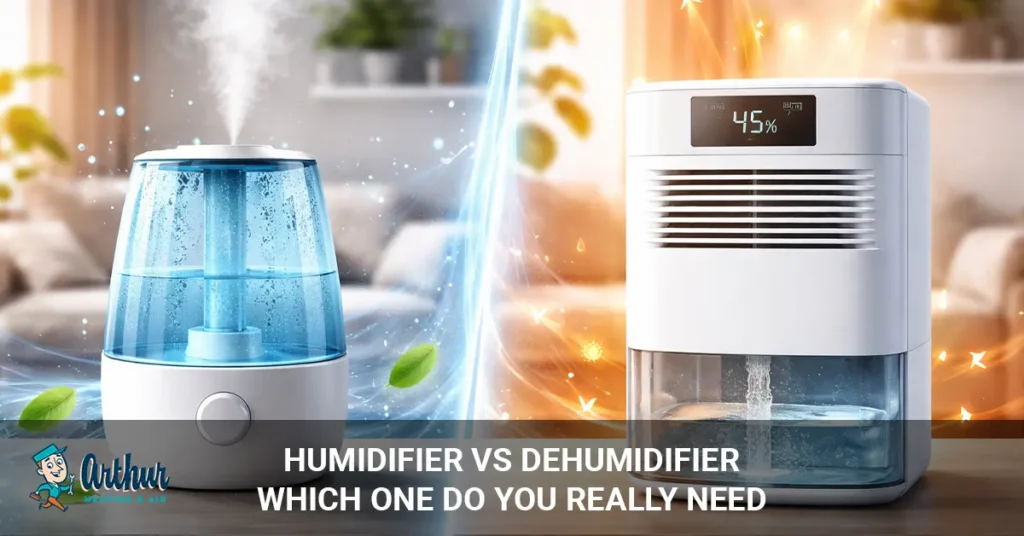
If your home feels too dry or too damp, your humidity level is likely the issue. It affects your comfort, your health, and even your home.
A humidifier adds moisture to dry air, while a dehumidifier removes extra moisture from humid air. The right choice depends on what your home needs right now.
In this guide, you’ll learn the difference, when to use each, and how to keep your indoor air balanced and comfortable.
What’s the Difference Between a Humidifier and a Dehumidifier?
The difference is simple: a humidifier adds moisture to the air, while a dehumidifier removes excess moisture. Both help keep your indoor humidity at a healthy level.
If your air feels dry, a humidifier helps by adding moisture and improving comfort. If your air feels damp or sticky, a dehumidifier removes that extra moisture and makes the air feel lighter and cleaner.
In short, use a humidifier for dry air and a dehumidifier for humid air.
What Is a Humidifier?
A humidifier is a device that adds moisture to the air. It helps reduce dryness and makes your home more comfortable.
It works by releasing water vapor or a fine mist into the air. This raises humidity levels and can help with dry skin, an irritated throat, and nasal discomfort.
There are different types of humidifiers to choose from. Cool mist humidifiers are common and safe for most homes. Warm mist humidifiers heat water to create steam. Ultrasonic humidifiers use vibrations to produce a fine mist. Evaporative humidifiers use a fan and a wick to add moisture naturally.
What Is a Dehumidifier?
A dehumidifier is a device that removes excess moisture from the air. It helps reduce humidity and keeps your home from feeling damp or sticky.
It works by pulling in air, extracting the moisture, and then releasing drier air back into the room. This process helps prevent mold, odors, and moisture buildup.
There are two main types. Refrigerant (compressor-based) dehumidifiers use cooling coils to remove moisture and are common in homes. Desiccant dehumidifiers use moisture-absorbing materials and work well in cooler environments.
Humidifier vs Dehumidifier (Key Differences)
A humidifier adds moisture to dry air, while a dehumidifier removes excess moisture from humid air. Both improve comfort, but in opposite ways.
Here’s a simple comparison to make it clear:
| Feature | Humidifier | Dehumidifier |
| Function | Adds moisture | Removes moisture |
| Best For | Dry air | Humid air |
| Health Impact | Relieves dryness | Reduces mold and allergens |
| Comfort | Prevents dry skin | Reduces sticky feeling |
In short, use a humidifier when the air feels dry, and a dehumidifier when the air feels damp or heavy.
Signs You Need a Humidifier
You need a humidifier if your indoor air feels dry and uncomfortable. Dry air can affect your health and your home.
Common signs include dry skin, chapped lips, or a scratchy throat that doesn’t go away. You may notice more static electricity when touching fabrics or surfaces. Wooden furniture or floors can start to crack or shrink over time. You might also experience frequent coughing, nasal irritation, or general dryness in your breathing.
If you notice these signs, adding moisture to the air can help improve comfort and reduce irritation.
Signs You Need a Dehumidifier
You need a dehumidifier if your home feels damp or has too much moisture in the air. High humidity can lead to mold, odors, and poor air quality.
Common signs include a musty smell that doesn’t go away and visible mold or mildew in corners or on walls. You may notice condensation forming on windows or glass surfaces. The air can also feel sticky or heavy, especially during warmer months.
If you notice these signs, removing excess moisture can help keep your home more comfortable and prevent damage.
Ideal Indoor Humidity Level
The ideal indoor humidity level is between 30% and 50%. This range keeps your home comfortable and helps prevent air quality problems. Understanding what affects indoor air quality can help you maintain the right balance and avoid common issues like mold or dry air.
If you’re noticing condensation, musty odors, dry skin, or other signs of an imbalance, these signs your home has poor humidity levels can help you identify the problem and determine what to do next.
When humidity is too low, the air feels dry and can cause irritation in your skin, throat, and nose. When humidity is too high, it can lead to mold growth, musty odors, and a heavy, uncomfortable feeling in your home.
Keeping your humidity in this range helps protect your health, your comfort, and your home.
Which One Is Better for Allergies?
The best option for allergies depends on what is causing your symptoms. Both can help, but in different situations.
A humidifier helps if your air is too dry and irritates your throat, nose, or sinuses. It can make breathing more comfortable and reduce dryness-related symptoms.
A dehumidifier is better if your allergies are triggered by mold, dust mites, or damp air. Lowering humidity helps control these allergens and improves air quality. Following proper HVAC tips for allergy sufferers can further reduce triggers and improve comfort in your home.
In many homes, a dehumidifier is more effective for reducing common indoor allergy triggers.
Cost Comparison
Humidifiers are usually more affordable than dehumidifiers and cost less to run. They use less energy because they simply add moisture to the air.
Dehumidifiers cost more upfront and use more electricity since they actively remove moisture from the air. This process requires more power, especially in humid conditions.
Both devices need regular maintenance. You’ll need to clean them and replace parts like filters or tanks over time to keep them working properly.
Can You Use Both Together?
Yes, you can use both a humidifier and a dehumidifier at different times to keep your indoor humidity balanced. This helps maintain comfort throughout the year.
For example, you may need a humidifier in winter when indoor air becomes dry. In summer, when humidity is higher, a dehumidifier can help remove excess moisture.
Dry winter air can also affect how your heating system operates and how comfortable your home feels. Understanding the effects of dry winter air on your HVAC system can help you take the right steps before and during the heating season.
Using a hygrometer makes it easier to track your humidity levels. It helps you know when to add or remove moisture so you can keep your home in the ideal range.
Common Mistakes to Avoid
Avoiding a few common mistakes can help you get better results and keep your indoor air balanced. Small errors can make your system less effective.
One common mistake is adding too much moisture or removing too much. This can create new problems like mold or overly dry air. Not using a humidity monitor is another issue, because you won’t know if your levels are in the right range.
Skipping regular cleaning can also cause problems, especially with humidifiers where bacteria can build up over time. Choosing the wrong size unit for your space is another mistake, as it can reduce performance and make it harder to control humidity.
Keeping things balanced and well-maintained will help your system work properly and keep your home comfortable.
Final Thoughts
Humidifiers and dehumidifiers both help improve your comfort and indoor air quality. The key is choosing the right one based on your home’s needs.
If your air feels dry, a humidifier will add moisture and make it more comfortable. If your air feels damp or sticky, a dehumidifier will remove excess moisture and improve air quality.
Keeping your indoor humidity between 30% and 50% helps you stay comfortable, reduces health issues, and protects your home.