
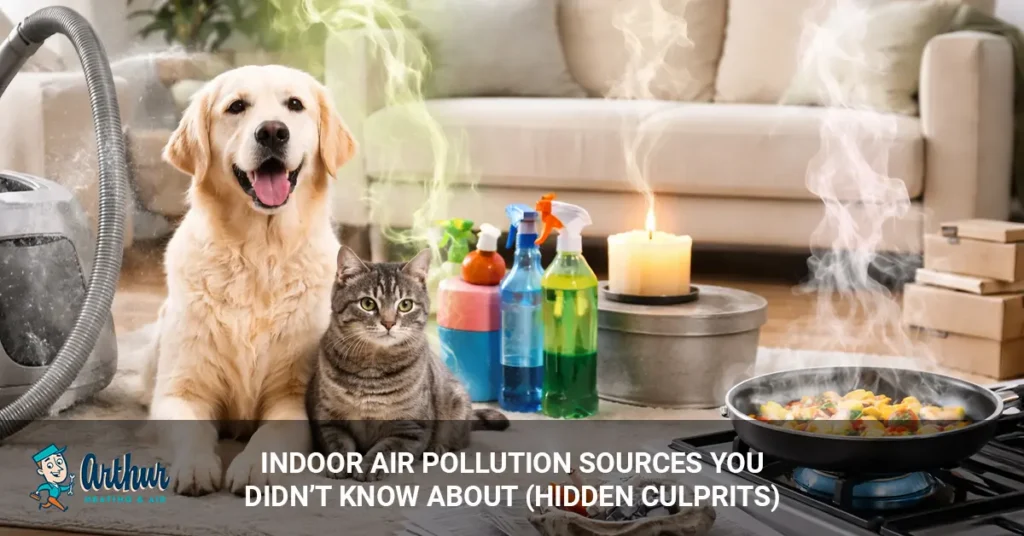
Indoor air pollution often comes from hidden sources inside your home, like cleaning products, furniture, and poor ventilation.
Many people think outdoor air is worse, but indoor air can actually be more polluted. The surprising part is that most of these sources are things you use every day.
Over time, these hidden pollutants build up and affect your comfort, your health, and the air you breathe.
When you know what to look for, it becomes much easier to improve your indoor air and keep your home feeling clean and fresh.
Hidden Indoor Air Pollution Sources
Hidden indoor air pollution comes from everyday items and activities that release particles and chemicals into your home.
These pollutants build up quickly, especially when there isn’t enough fresh air moving through the space.
Things you use daily, like cleaners, furniture, and even cooking, can slowly affect your air without you noticing.
When you understand where these pollutants come from, it’s easier to take simple steps to improve your indoor air quality.
1. Cleaning Products and Air Fresheners
Cleaning products and air fresheners can release chemicals that pollute the air inside your home.
Many of these products give off strong fumes when you use them. These particles stay in the air and can affect how your home smells and feels.
Using them often can lead to lingering odors and lower air quality over time.
Choosing milder products and using them in well-ventilated areas can help reduce their impact.
2. Furniture and Building Materials
Furniture and building materials can release chemicals into the air over time.
New items like sofas, cabinets, paint, and flooring can give off gases that affect indoor air quality.
This process can last for weeks or even months after installation, especially in newer homes. Good ventilation and time help reduce these emissions and improve the air in your home.
3. Carpets and Rugs
Carpets and rugs trap dust, pet hair, and allergens inside their fibers.
Over time, these particles build up deep in the material and are hard to remove with light cleaning.
When you walk on the carpet, those trapped particles get released back into the air. Regular vacuuming and deep cleaning help reduce buildup and keep your air cleaner.
4. Cooking and Gas Appliances
Cooking and gas appliances release smoke, grease, and tiny particles into your indoor air.
When you cook, especially with gas, these pollutants spread through your home if there isn’t proper ventilation.
Without airflow, the particles stay inside and build up over time.
Using an exhaust fan or opening windows while cooking helps remove these pollutants and keeps your air cleaner.
5. Poor Ventilation
Poor ventilation traps polluted air inside your home. When fresh air isn’t coming in, dust, odors, and chemicals stay indoors and build up quickly.
Closed windows and weak airflow make the problem worse over time.
Improving airflow by opening windows or using fans helps remove stale air and keep your home feeling fresh.
6. Mold and Hidden Moisture
Mold and hidden moisture are common sources of indoor air pollution. They often grow in places you don’t see, like behind walls, under sinks, or in damp corners.
Mold releases spores into the air, which can trigger allergies and breathing problems. (See why your home smells musty and HVAC causes.) Fixing leaks and keeping moisture under control helps prevent mold from spreading.
7. HVAC Systems and Dirty Filters
Dirty HVAC systems can spread dust and pollutants throughout your home. When filters are clogged or ducts are dirty, the system pushes unclean air into every room.
This can lower air quality and make your home feel dusty or uncomfortable. Regular maintenance and filter changes help keep your system clean and your air healthier.
8. Pets and Pet Dander
Pets release dander, hair, and odors into the air. These particles can build up quickly, especially if you have more than one pet.
Without regular cleaning, they keep circulating through your home and affect air quality. Grooming your pets and cleaning often helps reduce buildup and keeps your air fresher.
9. Candles and Indoor Burning
Candles and indoor burning release smoke and fine particles into your home. Scented candles and incense can add more pollutants, especially when used often.
These particles stay in the air and can build up over time. Limiting use and improving ventilation helps reduce their impact on your air quality.
10. Electronics and Household Items
Electronics and everyday household items can also affect your indoor air quality. Some devices release heat and small amounts of particles while they run.
Over time, these small emissions can build up and add to indoor pollution. Keeping your space well-ventilated and reducing clutter can help limit their impact.
Signs Your Home Has Hidden Air Pollution
Hidden indoor air pollution often shows clear warning signs.
You may notice more allergies, headaches, or trouble breathing when you’re inside your home.
Stuffy air, lingering odors, and dust building up quickly are also common signs. If your home doesn’t feel fresh even after cleaning, your air quality may need attention.
How to Reduce Hidden Indoor Air Pollution
You can reduce hidden indoor air pollution by improving airflow, cleaning regularly, and using better filtration.
Open windows when possible to bring in fresh air and push out trapped pollutants. Use air purifiers to capture dust, allergens, and small particles.
Choose low-chemical or low-odor products to reduce harmful fumes in your home.
Regular cleaning and proper HVAC maintenance help keep your air cleaner and prevent pollutants from building up.
When to Take Air Quality Seriously
You should take indoor air quality seriously when symptoms keep coming back or get worse over time.
If you notice ongoing allergies, headaches, or breathing problems, your indoor air may be the cause.
Long-term exposure to poor air quality can affect your health and comfort. Taking action early helps prevent bigger problems and keeps your home safer to live in.
Final Thoughts
Indoor air pollution often comes from sources you don’t expect.
Once you understand these hidden causes, it becomes easier to make small changes that improve your air.
Simple steps like better ventilation, regular cleaning, and proper maintenance can make a big difference.
Cleaner air helps create a healthier, more comfortable home for you and your family.