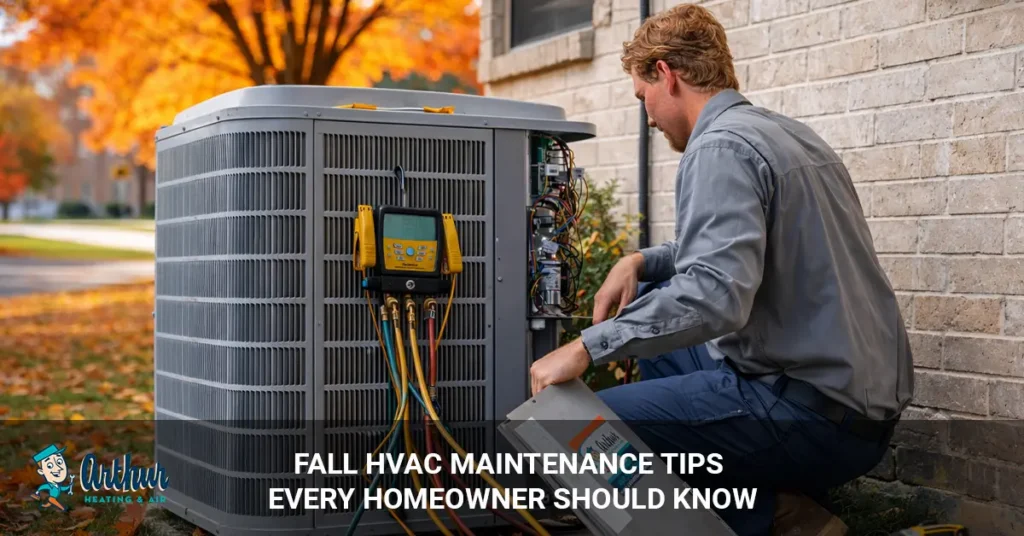
Fall HVAC maintenance helps you prepare your system for winter and avoid breakdowns when you need heat the most.
Many homeowners wait until it gets cold. That’s when problems usually show up. A few simple checks in the fall can keep your system running smoothly and help you avoid expensive repairs.
In this guide, you’ll learn easy fall HVAC maintenance tips, what to check, and when to call a professional.
Why Fall HVAC Maintenance Is Important
Fall HVAC maintenance is important because it prepares your system for heavy use during winter.
When you check and clean your system early, it runs more efficiently and is less likely to break down when temperatures drop.
This also helps lower energy bills and keeps your home warm and comfortable throughout the season.
Fall HVAC Maintenance Checklist (Quick Overview)
A fall HVAC checklist helps you cover the most important tasks before winter starts.
- Replace or clean air filters
- Check thermostat settings
- Clean vents and registers
- Inspect ductwork
- Test your heating system
- Clear debris around the outdoor unit
- Check safety devices
- Schedule a professional inspection
Following this checklist helps your system run efficiently and reduces the risk of winter breakdowns.
Essential Fall HVAC Maintenance Tips
1. Replace or Clean Air Filters
Replacing or cleaning air filters improves airflow and keeps your indoor air clean.
Dirty filters block airflow and force your system to work harder. This reduces efficiency and increases energy use.
Check your filters before winter and replace them if they look dirty. Following a proper schedule, like this guide on how often to change AC filters, helps maintain airflow and efficiency.
2. Check Thermostat Settings
Checking your thermostat ensures your system heats your home properly.
Switch it to heating mode and test if it reaches and maintains the set temperature.
If the temperature feels off or the system runs too often, the thermostat may need adjustment or replacement.
3. Inspect and Clean Vents
Inspecting and cleaning vents helps air flow freely throughout your home.
Dust, dirt, or blocked vents can restrict airflow and reduce efficiency. This can also cause uneven heating.
Keeping vents clean and open helps your system heat your home more evenly.
4. Check Ductwork for Leaks
Checking ductwork for leaks helps prevent heat loss and improves efficiency.
Gaps or loose connections can let warm air escape before it reaches your rooms. This makes your system work harder.
Sealing leaks helps keep heat inside your home and lowers energy costs.
5. Test Your Heating System
Testing your heating system ensures it works properly before cold weather begins.
Turn it on early and let it run for a few minutes. Check if warm air is coming through the vents and if the temperature feels right.
If you notice weak heating or unusual sounds, it’s better to fix the issue before winter arrives.
6. Clean Around Outdoor Unit
Cleaning around the outdoor unit helps maintain proper airflow and system performance.
Leaves, dirt, and debris can block airflow and reduce efficiency. This makes your system work harder than it should.
Keep the area around the unit clear so it can run smoothly and efficiently.
7. Check Carbon Monoxide Detectors
Checking carbon monoxide detectors helps keep your home safe during heating season.
Make sure the detectors are working properly and have fresh batteries. Test them before you start using your heating system regularly.
This simple step helps protect your home from dangerous gas leaks.
8. Schedule Professional HVAC Inspection
Scheduling a professional HVAC inspection helps ensure your system is ready for winter.
A technician can check internal parts, test performance, and find issues you may not notice.
Fixing small problems early helps prevent breakdowns and keeps your system running smoothly.
When Should You Do Fall HVAC Maintenance?
You should do fall HVAC maintenance in early fall before the cold weather begins.
This gives you enough time to check your system and fix any issues before you start using heating every day.
Taking action early helps ensure your system runs smoothly when temperatures drop.
Signs Your HVAC System Needs Maintenance Before Winter
Your HVAC system needs maintenance if it shows signs of poor performance.
Common warning signs include weak heating, strange noises, higher energy bills, and uneven temperatures in your home.
These issues mean your system may not be ready for winter and should be checked before cold weather begins.
What Happens If You Skip Fall HVAC Maintenance?
Skipping fall HVAC maintenance can lead to breakdowns, higher costs, and poor heating performance.
Without regular checks, your system may fail when you need it most during cold weather. This can lead to expensive repairs and discomfort.
Taking care of your system early helps you avoid these problems and keeps your home warm.
DIY vs Professional Fall HVAC Maintenance
What You Can Do Yourself
You can handle basic fall HVAC maintenance tasks on your own to keep your system running well.
Simple tasks include replacing air filters, cleaning vents, and checking airflow around your home.
Doing these regularly helps improve performance and prevents small issues from getting worse.
When to Call a Professional
Call a professional when your HVAC system needs a full inspection or technical work.
If you notice issues like weak heating, unusual noises, or rising energy bills, it’s best to get expert help.
A technician can find hidden problems, fix them safely, and make sure your system is ready for winter.
Cost of Fall HVAC Maintenance
Fall HVAC maintenance usually costs between $75 and $200, depending on your system and service provider.
The exact cost can vary based on the level of service and your location.
This small investment can help you avoid much higher costs from emergency repairs or system replacement.
Final Thoughts
Fall HVAC maintenance is a simple step that helps prevent bigger problems during winter.
By checking your system early, you can improve performance, reduce energy costs, and avoid unexpected breakdowns.
Taking action now helps keep your home comfortable and stress-free when cold weather arrives.