
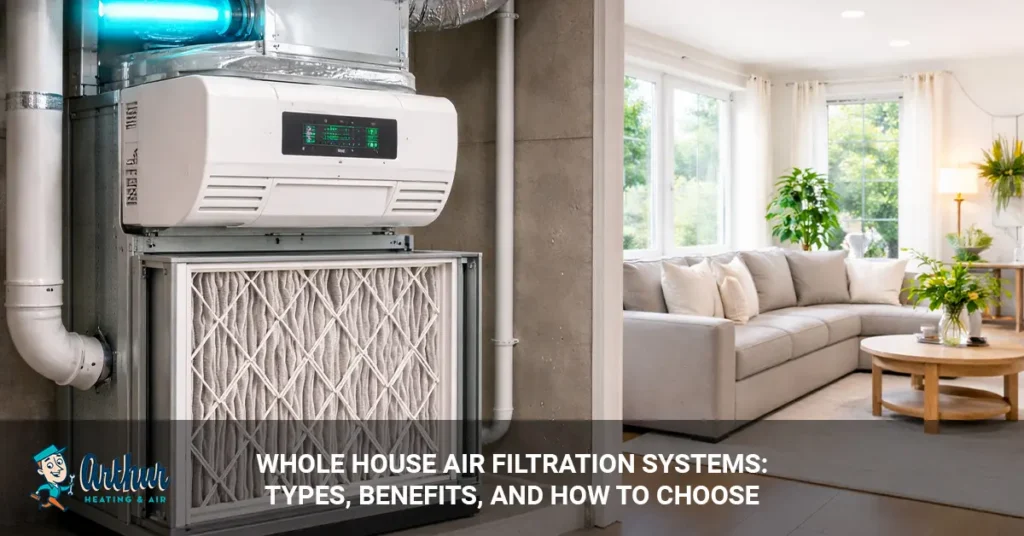
Whole-house air filtration systems clean the air in your entire home through your HVAC system.
Indoor air often carries dust, pollen, pet dander, and other pollutants. These systems filter those particles as air moves through your system, so you breathe cleaner air in every room.
In this guide, you’ll learn how these systems work, the main types, their benefits, and how to choose the right one.
What Is a Whole House Air Filtration System?
A whole-house air filtration system cleans the air in your entire home through your HVAC system.
It is installed inside your heating and cooling system. As air moves through it, the filter removes dust, allergens, and other particles before sending clean air back into your home.
Unlike portable air purifiers, it works across all rooms at once, not just a single space.
How Does a Whole House Air Filtration System Work?
A whole-house air filtration system works by cleaning the air as it moves through your HVAC system.
Air from your home is pulled into the system and passes through a filter. The filter traps dust, allergens, and other particles.
The cleaned air is then pushed back into your home through the vents. This cycle repeats every time your HVAC system runs, helping keep the air clean in every room.
Types of Whole House Air Filtration Systems
Mechanical Filters (Standard and High-Efficiency)
Mechanical filters clean the air by trapping dust, dirt, and pollen as air passes through them.
They use a physical barrier to catch particles before the air circulates back into your home. Standard filters provide basic protection, while high-efficiency filters capture smaller particles and improve air quality.
They are the most common and affordable option for most homes, and understanding the difference between HEPA and MERV filters can help you choose the right one for better air quality.
Electronic Air Cleaners
Electronic air cleaners remove particles by using an electric charge to pull them out of the air.
As air passes through the system, particles like dust and smoke are charged and collected on plates inside the unit.
They are effective at capturing very fine particles, but they need regular cleaning to keep working properly.
HEPA Filtration Systems
HEPA filtration systems remove very small particles from the air, including allergens and some bacteria.
They trap fine particles that standard filters often miss, which helps improve indoor air quality.
However, HEPA filters can restrict airflow, so some HVAC systems may need adjustments to work properly with them.
UV Air Purifiers
UV air purifiers use ultraviolet light to kill bacteria, viruses, and mold in the air.
They do not trap dust or particles. Instead, they target microorganisms as air passes through the system.
They are usually added to your HVAC system along with a filter to improve overall air quality. For another HVAC-based air-cleaning option, air scrubber systems can help clean indoor air by targeting airborne particles and other contaminants as air circulates through the system.
Activated Carbon Filters
Activated carbon filters remove odors, gases, and chemicals from the air.
They work by absorbing smells and harmful compounds as air passes through the filter. This helps reduce odors from pets, cooking, and smoke.
They are often used along with other filters to improve overall air quality.
Benefits of Whole House Air Filtration Systems
Improved Indoor Air Quality
Whole-house air filtration systems improve indoor air quality by removing dust, allergens, and pollutants from the air.
As air circulates through your HVAC system, the filter captures harmful particles before they spread through your home.
This helps you breathe cleaner air in every room, especially when you understand what affects indoor air quality and how to control it effectively.
Reduces Allergens and Dust
Whole-house air filtration systems reduce allergens and dust by capturing them before they spread through your home.
They trap particles like pollen, pet dander, and dust mites as air moves through the system.
This helps keep your home cleaner and makes the air easier to breathe.
Eliminates Odors
Whole-house air filtration systems help eliminate odors by removing them from the air as it circulates.
Activated carbon filters absorb smells from cooking, pets, and smoke before they spread through your home.
This keeps your indoor air fresh and more comfortable.
Protects HVAC System
Whole-house air filtration systems protect your HVAC system by keeping dirt and debris out of it.
When the air is clean, less dust builds up on internal parts. This helps the system run smoothly and reduces wear and tear.
As a result, your system works more efficiently and lasts longer.
Better Health and Comfort
Whole-house air filtration systems improve health and comfort by keeping the air cleaner.
They reduce dust, allergens, and pollutants that can affect breathing. This makes the air easier to breathe, especially for people with allergies or asthma.
Cleaner air also helps your home feel fresher and more comfortable every day.
Do You Really Need a Whole House Air Filtration System?
You need a whole-house air filtration system if you want cleaner air in every room of your home.
It is especially helpful if you have pets, allergies, or high dust levels. It can also make a big difference if you live in an area with poor outdoor air quality.
If indoor air feels dusty or triggers allergies, a whole-house system can be a strong solution.
Whole House Air Filtration vs Portable Air Purifiers
Whole-house air filtration systems clean air in the entire home, while portable air purifiers only clean one room at a time.
A whole-house system works through your HVAC system, so every room gets filtered air automatically. It runs in the background and keeps the air quality consistent.
Portable units are easier to set up and cost less upfront, but you may need multiple units to cover the whole home. This can be less convenient and harder to manage.
How to Choose the Right Whole House Air Filtration System
Home Size
Choose a system that matches your home size to ensure proper air coverage.
If the system is too small, it won’t clean all the air effectively. If it’s too large, it may not work efficiently with your HVAC system.
Picking the right size helps maintain consistent air quality throughout your home.
Filter Type
Choose the filter type based on what you want to remove from the air.
Different filters target different pollutants. Some remove dust and allergens, while others focus on odors, bacteria, or chemicals.
Pick a filter that matches your needs, such as allergies, pets, or indoor air quality concerns.
MERV Rating
MERV rating tells you how well a filter captures dust, pollen, and other particles.
Higher MERV ratings trap smaller particles and improve air quality. But very high ratings can reduce airflow if your system is not designed for them.
Choose a balanced MERV rating that improves air quality without restricting airflow.
Budget
Choose a system that fits both your upfront budget and long-term costs.
The total cost includes installation, filter replacements, and regular maintenance. Some systems cost more at the start but are cheaper to maintain over time.
Look at both short-term and long-term expenses before making a decision.
Maintenance Requirements
Maintenance requirements tell you how often the system needs cleaning or filter replacement.
Some systems need frequent filter changes, while others require regular cleaning of internal parts. The more advanced the system, the more maintenance it may need.
Choose a system that fits your routine so you can keep it working properly without hassle.
Cost of Whole House Air Filtration Systems
The cost of a whole-house air filtration system depends on the type of system and installation.
Basic systems are more affordable and easier to install. Advanced systems like HEPA filters or electronic air cleaners cost more due to higher performance and added features.
You should also consider ongoing costs, such as filter replacements and regular maintenance, when planning your budget.
Maintenance and Filter Replacement
Whole-house air filtration systems need regular maintenance to work properly.
You should check the filters regularly and replace them based on how often you use the system and the type of filter.
Keeping the system clean helps maintain strong airflow, improves performance, and extends the life of your HVAC system.
Final Thoughts
Whole-house air filtration systems improve air quality throughout your entire home.
If you want cleaner air, fewer allergens, and better HVAC performance, choosing the right system is important.
With the right setup and regular maintenance, these systems can make your home more comfortable and healthier to live in.