
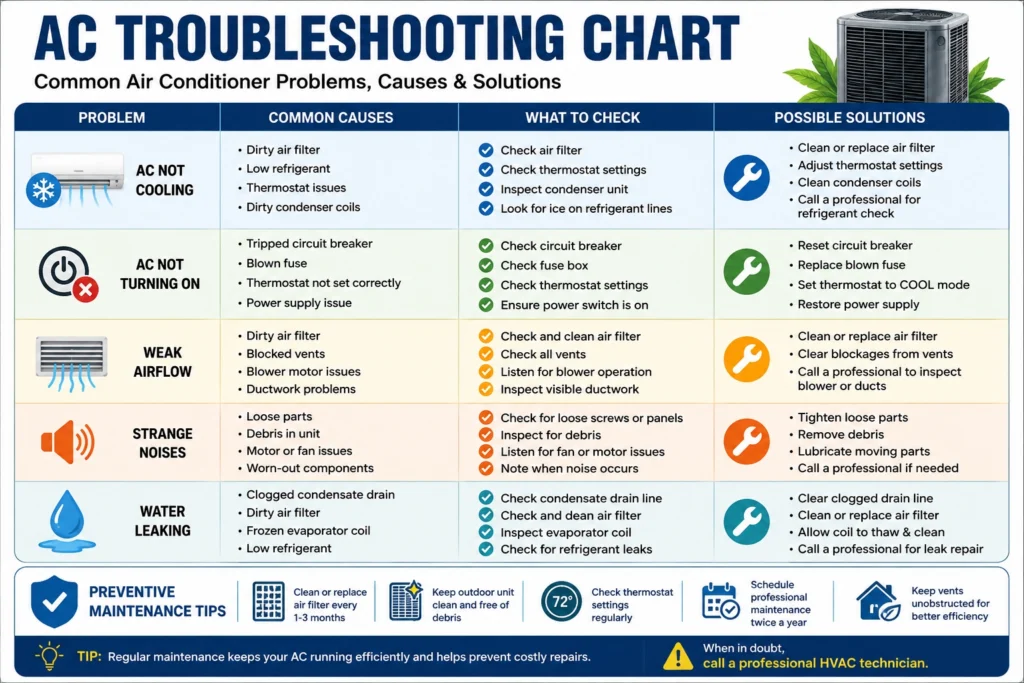
An AC troubleshooting chart helps you quickly figure out why your air conditioner isn’t cooling and what to do next. When the system is running but your home still feels warm, it’s often caused by a small issue that’s easy to spot once you know where to look.
You might notice weak airflow, warm air from the vents, or rooms that never reach the thermostat setting. That can be frustrating, especially during hot weather. The good news is that many cooling problems follow the same patterns.
This guide breaks down the most common AC cooling issues in simple terms. It explains what usually causes each problem, what you can safely check on your own, and when it’s best to call an HVAC professional. The goal is to help you identify the issue faster, avoid guesswork, and prevent minor problems from turning into expensive repairs.
How to Use This AC Troubleshooting Chart
You should use this AC troubleshooting chart by starting with the symptom you’re seeing, not the part you think is broken. Most cooling problems show clear signs, and matching the symptom first makes the issue easier to narrow down.
Begin by finding the problem that best describes what your AC is doing, such as running without cooling, weak airflow, or warm air from the vents. Then look at the common causes listed and review the simple checks you can safely do yourself, like changing a filter or checking thermostat settings.
If the problem goes beyond basic checks or keeps coming back, stop troubleshooting and call an HVAC professional. Following this step-by-step approach saves time, avoids guesswork, and helps prevent small issues from turning into expensive repairs.
AC Troubleshooting Chart: Common Cooling Problems
AC Troubleshooting Chart: Common Cooling ProblemsThis section gives a quick, at-a-glance breakdown of the most common AC cooling issues homeowners face. Use it to match what your system is doing with the likely cause, simple checks you can make, and clear signs that it’s time to call a professional.
AC Running but Not Cooling
Your AC is usually running but not cooling because airflow is restricted, coils are dirty, or refrigerant levels are low. When this happens, the system turns on but can’t remove heat from your home effectively.
Start by checking the air filter and replacing it if it’s dirty. Then look around the outdoor unit and clear away any leaves, grass, or debris that could block airflow. These simple steps often restore cooling when the issue is minor.
If the air coming from the vents stays warm, cooling doesn’t improve, or ice starts forming on the unit, it’s time to call an HVAC professional. Those signs usually point to refrigerant or internal system problems that require expert repair.
If the system runs but never cools the house, this often points to deeper issues covered in our AC not cooling guide.
AC Blowing Warm Air
Your AC is usually blowing warm air because the thermostat is set incorrectly, refrigerant levels are low, or the outdoor unit isn’t working properly. When any of these happen, the system can run but won’t produce cool air.
Start by checking the thermostat. Make sure it’s set to “cool” and the temperature is set lower than the current room temperature. If the thermostat uses batteries, replace them if the screen is blank or unresponsive.
If warm air continues after checking the thermostat, or if you notice signs of a refrigerant problem, it’s time to call an HVAC professional. Refrigerant and outdoor unit issues need trained service to fix safely and correctly.
Weak Airflow from Vents
Weak airflow usually happens because the air filter is clogged, ducts are blocked, or the blower motor isn’t working properly. When airflow is reduced, cool air can’t reach your rooms even if the AC is running.
Start by replacing the air filter if it looks dirty and make sure all supply vents are open and unobstructed by furniture or rugs. These simple checks often improve airflow right away.
If airflow stays weak or some rooms cool better than others, it’s time to call an HVAC professional. Ongoing airflow problems often point to duct or blower issues that need expert attention.
AC Won’t Turn On
An AC that won’t turn on is usually caused by a power issue, a thermostat problem, or an electrical fault. When this happens, the system may appear completely unresponsive.
Start by checking your circuit breaker to see if it has tripped and reset it if needed. Then check the thermostat batteries and replace them if the screen is blank or the system isn’t responding.
If the AC still won’t start after these checks, it’s time to call an HVAC professional. Electrical and control issues require proper testing and should be handled by a trained technician for safety.
Ice on AC Unit or Refrigerant Lines
Ice on your AC unit or refrigerant lines usually means airflow is restricted or refrigerant levels are low. When this happens, the system can freeze up instead of cooling properly.
Turn the system off right away to let the ice thaw. While it’s off, replace the air filter if it’s dirty and make sure vents are open and unobstructed. Restricted airflow is a common cause of freezing.
If ice comes back after thawing or cooling still doesn’t improve, call an HVAC professional. Ongoing icing often points to a refrigerant issue or internal problem that needs expert repair.
AC Turning On and Off Frequently (Short Cycling)
Short cycling happens when your AC turns on and off too often, and it’s usually caused by a thermostat issue, an electrical problem, or a system that’s too large for your home. This prevents the AC from running long enough to cool properly.
Start by checking the thermostat placement and settings. Make sure it isn’t near heat sources like windows, appliances, or direct sunlight, and confirm the temperature settings are correct.
If the system continues to cycle frequently or the problem gets worse, it’s time to call an HVAC professional. Ongoing short cycling can damage components and reduce system lifespan if it’s not fixed.
Water Leaking from AC
Water leaking from your AC is usually caused by a clogged condensate drain or frozen evaporator coils. When moisture can’t drain properly, it backs up and leaks around the unit.
Start by checking for visible clogs near the indoor unit’s drain line and clearing any obvious blockages if accessible. Also look for signs of ice buildup that may be melting and causing water to drip.
If leaking continues or you notice water damage around the unit, call an HVAC professional. Ongoing leaks can lead to mold growth and system damage if not repaired properly.
Strange Noises from AC
Strange noises from your AC usually point to loose parts, motor trouble, or electrical issues. While some sounds may seem minor at first, they often signal a problem that can get worse if ignored.
Pay attention to when the noise happens, such as during startup, while running, or when the system shuts off. Noting the timing and type of sound can help narrow down the cause.
If you hear loud banging, buzzing, grinding, or screeching sounds, turn the system off and call an HVAC professional. These noises often indicate serious issues that should be fixed before they cause further damage.
High Energy Bills with Poor Cooling
High energy bills paired with poor cooling usually mean your AC is working harder than it should. Dirty components, duct leaks, or an aging system often force the unit to use more energy without delivering better comfort.
Start by replacing the air filter and clearing debris from around the outdoor unit so airflow isn’t restricted. These simple steps can improve efficiency and reduce strain on the system.
If your energy bills keep rising and cooling doesn’t improve, it’s time to call an HVAC professional. Ongoing efficiency problems often require a full system inspection to identify hidden issues or determine if an upgrade is needed.
What You Can Safely Check Yourself
You can safely check a few simple things before calling for HVAC service, and these steps often fix minor cooling problems. Starting with basic checks helps rule out easy issues and saves time.
Begin by replacing the air filter if it looks dirty or clogged. Next, make sure the thermostat is set to “cool” and has fresh batteries if needed. Check the circuit breaker to confirm no switches have tripped, and reset them if necessary. Outside, clear away leaves, grass, or debris around the outdoor unit so air can flow freely.
If cooling doesn’t improve after these steps, the problem is likely internal and best handled by an HVAC professional.
When to Call an HVAC Professional
You should call an HVAC professional when cooling problems continue after basic checks or when safety becomes a concern. Some AC issues can’t be fixed without proper tools and training.
Call for service if your AC keeps blowing warm air, ice forms on the unit, refrigerant leaks are suspected, or you notice electrical problems like tripped breakers or burning smells. These issues require professional diagnosis and repair to avoid further damage.
Getting prompt service helps protect your system, restore cooling faster, and prevent small problems from turning into costly repairs.
How to Prevent Future AC Cooling Problems
You can prevent most AC cooling problems with simple, consistent maintenance. Scheduling annual AC maintenance before summer begins helps prevent airflow issues, breakdowns, and poor cooling performance. Regular care keeps the system running efficiently and helps catch small issues early.
Change air filters every one to three months, especially during heavy use. Keep the outdoor unit clean and clear of leaves, dirt, and grass so airflow isn’t blocked. Scheduling annual AC maintenance before summer begins allows a technician to inspect, clean, and tune the system before peak demand.
Preventive care improves efficiency, reduces unexpected breakdowns, and helps your AC system last longer while keeping your home comfortable.
Final Thoughts
Most AC cooling problems come down to airflow issues, dirty components, refrigerant problems, or normal system wear over time. Some of these issues are easy to identify, while others need professional tools and experience to fix safely.
An AC troubleshooting chart helps you narrow down the cause quickly and avoid guesswork. If simple checks don’t bring the cool air back, calling an HVAC technician early is the best way to protect your comfort, prevent further damage, and keep your system running reliably.