If your home feels dusty, smells stale, or triggers allergies, your indoor air is likely the problem. Even with regular filters, many pollutants stay in the air and settle on surfaces.
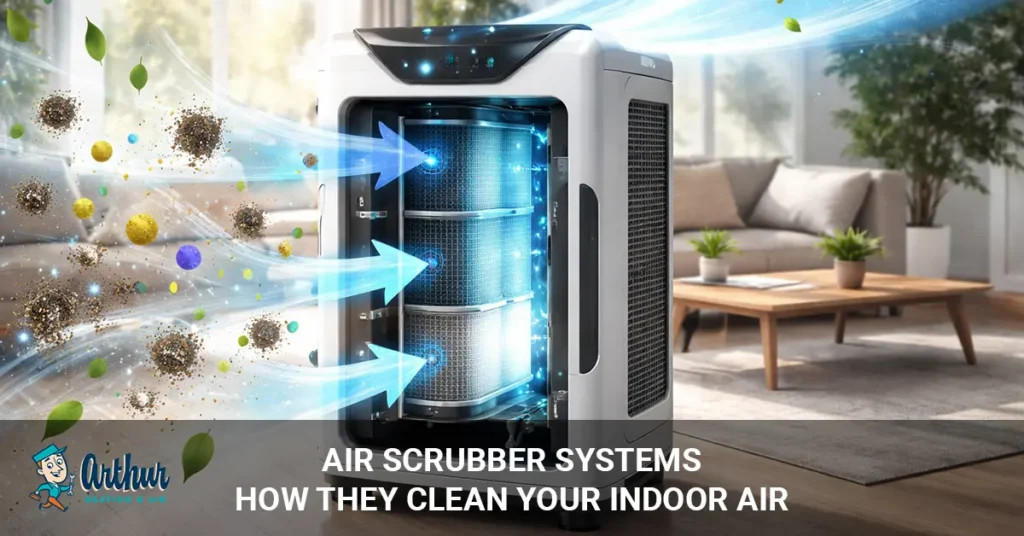
Air scrubber systems clean your indoor air by actively reducing dust, odors, and airborne contaminants. They go beyond standard filters and help improve air quality throughout your entire home.
In this guide, you’ll learn what air scrubbers are, how they work, and whether they are the right choice for your home.
What Is an Air Scrubber?
An air scrubber is a device installed in your HVAC system that cleans both the air and surfaces in your home. It works with your heating and cooling system to improve indoor air quality.
Unlike standard filters that only trap particles, an air scrubber actively targets pollutants as air moves through your system. It helps reduce dust, allergens, and other contaminants not just in the air, but also on surfaces around your home.
This makes it a more complete solution for keeping your indoor environment cleaner and healthier.
How Do Air Scrubber Systems Work?
Air scrubber systems work by actively breaking down and removing pollutants from the air and surfaces. They use technologies like UV light and ionization to clean your indoor environment.
As air moves through your HVAC system, the air scrubber releases charged particles or uses UV light to target contaminants. These particles attach to dust, bacteria, and other pollutants, making them easier to trap or neutralize.
Some systems also send cleaning ions into your living space. These ions help reduce pollutants on surfaces like furniture, walls, and countertops, giving you cleaner air and a fresher home overall.
What Do Air Scrubbers Remove?
Air scrubbers remove a wide range of indoor pollutants, helping make your home cleaner and healthier. They target both airborne particles and some contaminants on surfaces.
They help reduce dust and common allergens that trigger symptoms. They also work on bacteria and some viruses, improving overall air cleanliness. Air scrubbers can lower mold spores in the air, which is important for preventing growth and odors.
They are also effective at reducing pet dander, along with smells from pets, cooking, and smoke. In addition, they help break down chemical pollutants that can make indoor air feel stale.
Because of this, air scrubbers are especially useful in homes with allergies, pets, or ongoing air quality issues.
Air Scrubber vs Air Purifier: What’s the Difference?
Air scrubbers and air purifiers both improve indoor air quality, but they work in different ways and cover different areas.
Air purifiers clean the air in a single room using filters like HEPA. They are great for targeting specific spaces such as bedrooms or living rooms. Air purifiers clean the air in a single room using filters like HEPA. They are great for targeting specific spaces such as bedrooms or living rooms. If you’re wondering whether they are effective, it helps to understand do air purifiers really work before comparing them to whole-home systems like air scrubbers.
Air scrubbers, on the other hand, are installed in your HVAC system and clean the air throughout your entire home.
Another key difference is how they work. Air purifiers mainly trap particles from the air, while air scrubbers actively treat both the air and some surfaces by breaking down pollutants.
In simple terms, air purifiers are best for room-by-room cleaning, while air scrubbers provide whole-home air cleaning.
Benefits of Air Scrubber Systems
Air scrubber systems improve your indoor air by reducing pollutants throughout your home. They help create a cleaner and more comfortable living space.
They work by lowering dust, pollen, and other airborne particles that trigger allergies. This can help reduce symptoms like sneezing, congestion, and irritation.
Air scrubbers also help remove odors from pets, cooking, and smoke, making your home smell fresher. Some systems can reduce bacteria and mold in the air, which adds another layer of protection for your health.
Overall, they provide better air quality, fewer allergens, and a cleaner indoor environment.
Are Air Scrubbers Safe?
Air scrubbers are safe when they are properly installed and use certified technology. Most modern systems are designed to clean the air without producing harmful levels of ozone.
Safety depends on choosing a high-quality unit and having it installed correctly. A professional installation helps ensure the system works as intended and does not affect your indoor air negatively.
When used the right way, air scrubbers are a reliable and safe option for improving air quality in your home.
How Much Does an Air Scrubber Cost?
Air scrubber systems usually cost between $500 and $2,000, including installation. The final price depends on the brand, features, and your HVAC setup.
Basic models with standard features are more affordable, while advanced systems with stronger performance or added technology cost more. Installation costs can also vary based on your system and home layout.
You should also consider ongoing maintenance. Some parts may need to be replaced over time, and occasional servicing helps keep the system working properly.
Overall, an air scrubber is a moderate investment that can improve your air quality and comfort over the long term.
Do You Need an Air Scrubber for Your Home?
You may need an air scrubber if you want better air quality than standard filters can provide. It adds an extra layer of cleaning for your whole home.
It’s especially useful if you deal with allergies, have pets, notice smoke or odors, or worry about mold. In these cases, an air scrubber can help reduce pollutants more effectively than basic filtration alone.
If your current filters are not improving your air enough, adding an air scrubber can make a noticeable difference. But if your air quality is already good and your system is well-maintained, a high-quality filter may be all you need.
Air Scrubber vs HEPA Filter: Which Is Better?
Neither is strictly better; air scrubbers and HEPA filters do different jobs and work best together. The right choice depends on your needs.
HEPA filters are best for capturing very small particles like dust, pollen, and pet dander in specific rooms. They are ideal for targeted spaces like bedrooms or living areas where you want the cleanest air.
Air scrubbers, on the other hand, work through your HVAC system to clean air across your entire home. They also help reduce some pollutants on surfaces, not just in the air.
For the best results, use both. A HEPA air purifier handles fine particles in key rooms, while an air scrubber improves air quality throughout your whole home.
Common Mistakes to Avoid
Avoiding a few common mistakes can help your air scrubber work properly and last longer. Small issues can reduce performance and limit results.
Choosing a low-quality or uncertified air scrubber is a common mistake. It may not clean the air effectively and can raise safety concerns. Skipping regular maintenance is another problem, since the system needs proper care to keep working well.
Some people expect instant results, but improving air quality takes time. Professional installation is also important because a poorly installed system may not perform as it should.
Avoiding these mistakes helps you get better results and cleaner air throughout your home.
Final Thoughts
Air scrubber systems are a strong solution for improving indoor air quality because they clean both the air and surfaces in your home. They go beyond basic filters and help reduce dust, odors, and other pollutants.
If you want cleaner air, fewer allergy symptoms, and a fresher home, an air scrubber can be a smart investment. It adds an extra layer of protection and helps create a more comfortable living environment.