If you’re dealing with sneezing, itchy eyes, or constant congestion at home, your indoor air is likely the problem. Dust, pollen, pet dander, and mold spores move through your space every day. Without a good air filter, these allergens keep building up and triggering your symptoms.
The best air filters for homes with allergies remove these particles from the air so you can breathe easier. Choosing the right one can make a noticeable difference in how you feel day to day.
In this guide, you’ll learn which air filters work best, how they help reduce allergens, and how to pick the right option for your home.
What Is the Best Air Filter for Allergies?
The best air filter for allergies is a True HEPA filter. It removes almost all common allergens from the air, including dust, pollen, pet dander, and mold.
These filters trap very small particles that you can’t see but still breathe in. That’s why they work so well for people with allergies.
If you use a central heating or cooling system, go with a MERV 11 to 13 filter. It does a great job of catching allergens while still allowing proper airflow through your system.
In simple terms, use a HEPA filter for room air purifiers and a MERV 11–13 filter for your HVAC system. This setup gives you better air quality throughout your home.
Why Air Filters Matter for Allergy Relief
Air filters matter because they remove allergens from the air before you breathe them in. Cleaner air means fewer allergy symptoms.
Indoor air is often more polluted than outdoor air, especially in tightly sealed homes. Without proper filtration, allergens keep circulating through your HVAC system and settle around your living space.
Common Indoor Allergens
- Dust and dust mites
- Pollen that comes in from outside
- Pet dander
- Mold spores
- Smoke and other airborne pollutants
How Air Filters Help
- Trap tiny particles before they reach your lungs
- Reduce sneezing, congestion, and irritation
- Improve the overall air quality inside your home
Using the right air filter helps you create a cleaner, healthier space where you can breathe more comfortably every day. You can also follow these HVAC tips for allergy sufferers to further improve indoor air quality
Types of Air Filters for Allergies (Explained Simply)
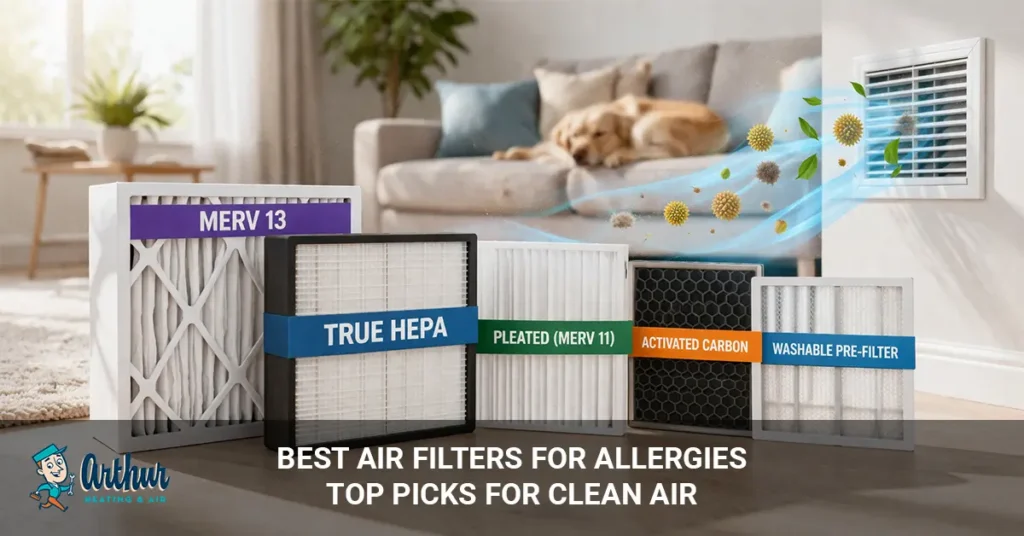
The main types of air filters for allergies are HEPA, MERV, carbon, and washable filters. Each one works differently, but not all are equally effective.
Understanding these options helps you choose a filter that actually improves your air—not just one that sounds good on the label.
HEPA Filters (Best Overall)
HEPA filters are the best choice for allergies because they remove almost all airborne particles. They trap dust, pollen, pet dander, and mold with very high efficiency.
They can capture up to 99.97% of tiny particles, which makes them very effective for people with allergies or asthma. You’ll usually find HEPA filters in air purifiers and some upgraded HVAC systems designed for better air quality.
MERV Filters (Best for HVAC Systems)
MERV filters are best for whole-home systems because they balance good filtration with proper airflow. They clean the air without putting too much strain on your HVAC system.
MERV ratings range from 1 to 20, with higher numbers offering better filtration. For most homes, MERV 11 to 13 is the ideal range. These filters are made for central heating and cooling systems and help improve air quality throughout the house.
Activated Carbon Filters
Activated carbon filters are best for removing odors and gases from the air. They don’t capture allergens on their own but work well when paired with HEPA filters.
They help remove smoke, chemicals, and unpleasant smells, making your indoor air feel fresher. Many air purifiers use them as an added layer of filtration.
Electrostatic and Washable Filters
Electrostatic and washable filters are reusable and more budget-friendly over time. They are easy to clean and maintain, which makes them convenient for regular use.
However, they are less effective at capturing very small particles, so they may not be the best option for people with serious allergies.
Best Air Filters for Homes With Allergies (Top Picks)
The best air filters for allergies combine strong filtration, reliable performance, and the right fit for your space. Here are the top options to consider based on real-world use.
Best Overall: True HEPA Air Purifier
A True HEPA air purifier is the best overall choice for allergy relief because it removes most airborne allergens quickly and effectively. It captures common triggers like dust, pollen, and pet dander, helping you breathe cleaner air.
It works well in medium to large rooms and is especially useful in bedrooms and living areas where you spend the most time. Using one of these spaces can make a noticeable difference in your comfort and reduce everyday allergy symptoms.
Best for Large Rooms
Air purifiers for large rooms are best when you need to clean more air in less time. They use higher airflow and stronger filtration to cover bigger spaces.
They work well in open areas and large homes where air needs to circulate quickly. With faster air movement, they help reduce allergens across wider areas and keep the air more consistent.
Best Budget Option
A budget-friendly air purifier is a good choice for small spaces and basic allergy relief. It offers solid performance without a high cost.
These units are affordable, easy to use, and work well in small rooms or offices. They are a good starting point if you want cleaner air without spending too much.
Best Premium Option
A premium air purifier is the best choice if you want the highest level of air cleaning. It uses advanced filtration to remove even the smallest particles.
These models often include medical-grade filters that capture ultra-fine pollutants. They are ideal for people with severe allergies or those who want the cleanest possible indoor air.
Best HVAC Filter
A MERV 13 HVAC filter is the best option for improving air quality throughout your entire home. It filters the air every time your system runs.
It captures a wide range of allergens and works with most home HVAC systems. These filters are easy to replace and widely available. While they are very effective for overall air cleaning, they are slightly less powerful than HEPA filters when it comes to removing the smallest particles.
HEPA vs MERV: Which Is Better for Allergies?
HEPA filters are better for maximum allergen removal, while MERV filters are better for whole-home airflow and daily use. The right choice depends on how you plan to use them.
Both work well, but they serve different purposes.
Key Differences
| Feature | HEPA Filter | MERV Filter |
| Filtration Power | Highest | Moderate to high |
| Best Use | Air purifiers | HVAC systems |
| Airflow Impact | Can restrict airflow | Balanced |
| Allergy Control | Excellent | Very good |
Which One Should You Choose?
Choose a HEPA filter if you want the strongest protection against allergens in specific rooms like bedrooms.
Choose a MERV 11–13 filter if you want to improve air quality throughout your entire home using your HVAC system.
Best Strategy for Allergy Relief
The best approach is to use both together. This gives you better coverage and more consistent results.
- Use a HEPA air purifier in rooms where you spend the most time
- Use a MERV 11–13 filter in your HVAC system
This combination helps reduce allergens across your whole home while keeping your system running efficiently.
How to Choose the Best Air Filter for Allergies
The best air filter for allergies is one that matches your home, removes allergens effectively, and runs without causing airflow issues. Choosing the right one comes down to a few key factors.
Key Factors to Consider
1. True HEPA Certification: Choose a True HEPA filter for the best results. Avoid “HEPA-like” filters because they don’t capture particles as effectively.
2. MERV Rating (HVAC): Pick a MERV 11 to 13 filter for your HVAC system. It removes allergens well without restricting airflow or stressing your system.
3. Room Size Coverage: Match the air purifier to your room size. A unit that’s too small won’t clean the air properly.
4. CADR Rating (Clean Air Delivery Rate): Look for a higher CADR rating. It means the purifier can clean the air faster and more efficiently.
5. Noise Level: Choose a quieter model if you plan to use it in a bedroom. This helps you run it overnight without disturbance.
6. Replacement Cost: Check how often filters need to be replaced and the cost. A cheaper unit can become expensive if filters need frequent changes.
Air Filter Placement Tips for Maximum Effect
The best place to put your air purifier is where you spend the most time, especially your bedroom. Proper placement helps the unit clean more air and reduce allergens faster.
Place your air purifier in the bedroom first, since you spend hours there every day, and cleaner air can improve your sleep and reduce symptoms. It also works well in the living room or main area where your family gathers, helping control allergens in shared spaces. If you have pets or areas where dust builds up quickly, placing the purifier nearby can target the main source of allergens more effectively.
For the best results, keep doors and windows closed while the purifier is running so outdoor allergens don’t keep coming in. Avoid placing it behind furniture or in tight corners, as this blocks airflow and reduces performance. Make sure there is enough open space around the unit so it can pull in and circulate air properly. Running the purifier consistently, especially during allergy season, will help maintain cleaner air throughout your home.
How Often Should You Replace Air Filters?
You should replace your air filters every 1 to 3 months to keep them working properly and to reduce allergens in your home. Regular replacement helps your system run efficiently and keeps the air cleaner.
If you have allergies, change your filter every 1 to 3 months to keep dust and pollen under control. If you have pets, replace it more often, about every 30 to 60 days, since pet hair and dander can clog the filter faster. During high pollen seasons, it’s also a good idea to check and replace your filter more frequently.
You’ll know it’s time to replace your filter if you see visible dust buildup on it. Reduced airflow from your vents is another clear sign. If your allergy symptoms start getting worse indoors, your air filter may no longer be doing its job.
Keeping up with regular filter changes is one of the easiest ways to improve your indoor air and stay comfortable. For a detailed schedule, see this guide on how often to change your AC filter.
Common Mistakes to Avoid
Avoiding a few common mistakes can make a big difference in how well your air filter works. Small errors can reduce performance and keep allergens in your home.
One common mistake is choosing “HEPA-type” filters instead of True HEPA, which don’t remove particles as effectively. Using the wrong filter size is another issue, as it allows air to pass through gaps without being properly filtered. Some people install high-MERV filters in systems that can’t handle them, which can restrict airflow and strain the HVAC system.
Not replacing filters on time is a major problem because a clogged filter stops working and can even make air quality worse. Running your air purifier only occasionally also limits its effectiveness, since allergens are constantly circulating in your home.
Avoiding these mistakes helps your air filter perform better and keeps your indoor air cleaner and healthier.
Final Thoughts
Upgrading your air filters is one of the easiest and most effective ways to reduce allergies at home. Cleaner air helps you feel better every day.
For the best results, use a True HEPA air purifier in the rooms where you spend the most time. Add a MERV 11 to 13 filter to your HVAC system to improve air quality throughout your home. Make sure to replace your filters regularly so they keep working properly.
With the right setup, you can enjoy cleaner air, better sleep, and fewer allergy symptoms.