
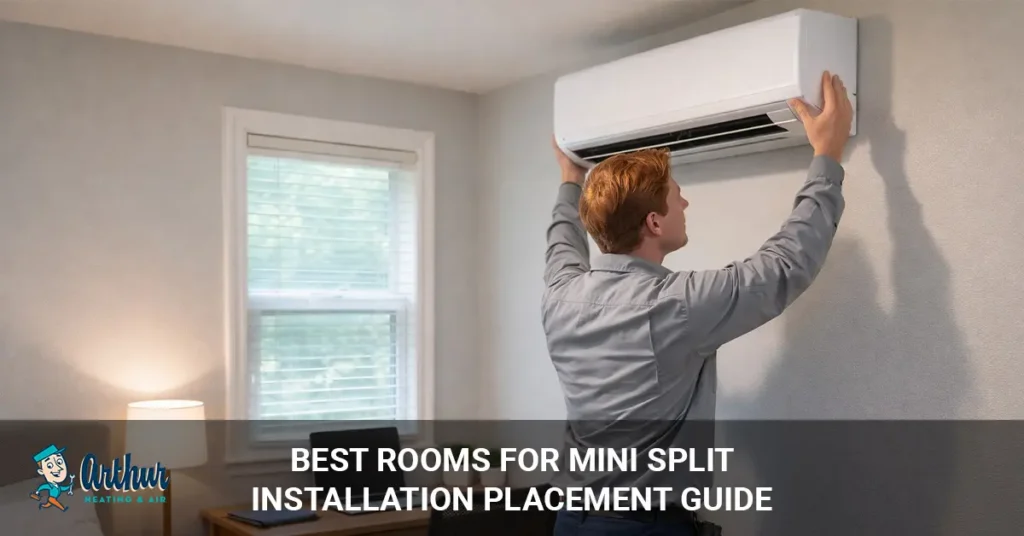
The best rooms for installing a mini split are bedrooms, living rooms, home offices, garages, and room additions where you need efficient, targeted cooling. Mini split systems work especially well in spaces that need their own temperature control.
Unlike central air systems, mini splits cool individual rooms instead of the entire house. This makes them a good option for rooms that are used often or areas that stay warmer than the rest of the home.
Choosing the right room and placement can make a big difference. When a mini split is installed in the right location, it improves airflow, cools the space more evenly, and helps the system run more efficiently.
How Mini Split Placement Affects Cooling Efficiency
Mini split placement affects cooling efficiency because the unit needs clear airflow to cool the entire room properly. When the indoor unit is installed in the right spot, cool air can spread evenly, and the system does not have to work as hard.
Airflow Distribution
Airflow distribution improves when the mini split is placed where air can move freely across the room. Installing the unit in a central area on the wall helps cool air reach all corners of the space.
Avoiding Obstructions
Avoiding obstructions helps the system push cool air throughout the room. Furniture, shelves, curtains, or large objects placed in front of the unit can block airflow and reduce cooling performance.
Correct Mounting Height
Correct mounting height helps the system circulate air more effectively. Mini split indoor units are usually installed high on the wall so cool air can flow downward and spread evenly across the room.
Best Rooms in a Home for Mini Split Installation
The best rooms for mini split installation are spaces that need their own temperature control or areas that are difficult to cool with central air. Mini split systems work well in rooms where comfort, efficiency, and flexible cooling are important.
Living Rooms
Living rooms are one of the best places to install a mini split because they are used frequently and often have larger open spaces. A mini split can help keep the room comfortable during hot weather without affecting the temperature in other parts of the house.
Bedrooms
Bedrooms benefit from mini split systems because they allow you to control the temperature for better sleep comfort. You can cool the bedroom without running the cooling system throughout the entire home.
Home Offices
Home offices often need steady cooling during the day, especially when electronics are running. A mini split can maintain a comfortable temperature while you work without changing the temperature in other rooms.
Basements
Basements can feel warm and humid because heat can get trapped in these lower areas. Installing a mini split helps control both temperature and comfort in basement spaces.
Garages
Garages usually do not connect to a home’s central duct system. A mini split provides an effective cooling option when the garage is used as a workshop, home gym, or hobby space.
Rooms That Benefit Most from Zoned Cooling
Rooms that benefit most from zoned cooling are spaces that need their own temperature control or are not connected to central ductwork. Mini split systems are ideal for these areas because they allow you to cool only the room you are using.
Room Additions
Room additions often do not connect easily to existing ductwork. A mini split can provide efficient cooling without requiring major changes to the home’s HVAC system.
Converted Attics
Converted attics can become very hot during summer because heat rises and collects in the upper part of the house. Installing a mini split helps maintain a more comfortable temperature in these spaces.
Sunrooms
Sunrooms receive direct sunlight throughout the day, which can make them warmer than other rooms. A mini split system can help keep the space cool and comfortable.
Guest Rooms
Guest rooms are not always used every day. A mini split allows you to cool the room only when guests are staying, which can help save energy.
Where to Install the Indoor Mini Split Unit
The indoor mini split unit should be installed high on a wall where air can move freely across the room. Proper placement helps the system spread cool air evenly and improves overall cooling performance.
Wall Placement Guidelines
The indoor unit should be installed in a central area of the room so airflow can reach the entire space. Avoid placing the unit in corners or areas where furniture may block the air.
Distance from Ceiling
Mini split units are usually installed a few inches below the ceiling. This spacing allows the unit to pull in air properly and distribute cool air throughout the room.
Avoiding Direct Sunlight
The indoor unit should be placed away from direct sunlight. Heat from sunlight can affect the unit’s temperature sensors and make the system work harder than necessary.
Where to Install the Indoor Mini Split Unit
The indoor mini split unit should be installed high on a wall where air can move freely across the room. Proper placement helps the system spread cool air evenly and improves overall cooling performance.
Wall Placement Guidelines
The indoor unit should be installed in a central area of the room so airflow can reach the entire space. Avoid placing the unit in corners or areas where furniture may block the air.
Distance from Ceiling
Mini split units are usually installed a few inches below the ceiling. This spacing allows the unit to pull in air properly and distribute cool air throughout the room.
Avoiding Direct Sunlight
The indoor unit should be placed away from direct sunlight. Heat from sunlight can affect the unit’s temperature sensors and make the system work harder than necessary.
Common Mini Split Placement Mistakes
Common mini split placement mistakes can reduce cooling performance and make the system use more energy. Installing the unit in the wrong location can prevent air from circulating properly and force the system to work harder.
If your system is not cooling properly, explore our AC repair service to fix performance issues quickly.
Installing Near Heat Sources
Installing a mini split near heat sources can affect how the system senses room temperature. Appliances, ovens, electronics, or direct heat can cause inaccurate readings and reduce cooling efficiency.
Blocking Airflow
Blocking airflow can prevent cool air from spreading throughout the room. Furniture, shelves, curtains, or wall decorations placed in front of the unit can restrict airflow and reduce performance.
Installing Too Low on the Wall
Installing the unit too low can limit how well the air circulates. Mini split indoor units are usually mounted high on the wall so cool air can flow downward and reach the entire room.
Poor Outdoor Unit Location
A poor outdoor unit location can prevent heat from escaping properly. Units placed in tight spaces or surrounded by obstacles may not release heat efficiently, which can affect overall cooling performance.
When to Install Multiple Mini Split Units
You should install multiple mini split units when several rooms in your home need separate cooling. A multi-zone mini split system allows each room to have its own indoor unit while connecting to one outdoor unit.
This setup works well in larger homes where different rooms have different temperature needs. For example, bedrooms, living areas, and home offices can each have their own indoor unit for better comfort.
Multiple mini split units also allow individual temperature control. Each room can be set to a different temperature, which helps improve comfort and can reduce energy use by cooling only the spaces that are being used.
When to Call a Professional for Mini Split Installation
You should call a professional HVAC technician when installing a mini split to ensure the system is placed correctly and works efficiently. Proper installation helps the unit cool the room evenly and prevents future performance problems.
An HVAC technician can evaluate the room size, airflow patterns, and the best location for the indoor and outdoor units. This helps ensure the system is installed where it can distribute cool air effectively.
Professional installation also ensures that refrigerant lines, electrical connections, and mounting brackets are installed safely. Correct installation protects the system, improves energy efficiency, and helps the mini split operate reliably for many years.
Final Thoughts
Mini split systems are a flexible cooling solution for many areas of the home. Rooms like bedrooms, living rooms, home offices, and garages often benefit the most from mini split installation because they allow targeted cooling.
Proper placement is important for the system to work efficiently. When the indoor unit is installed in the right location, cool air can circulate evenly throughout the room, improving comfort and reducing energy use.
With correct placement and professional installation, a mini split system can provide reliable cooling and long-term energy savings for many years.