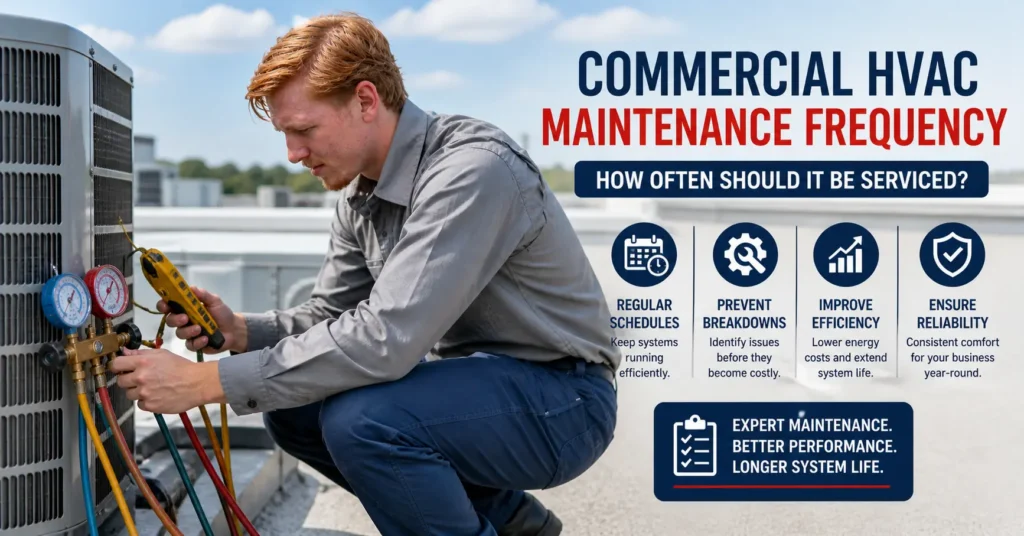
Commercial HVAC systems should be serviced at least twice a year, and more often for buildings that use them heavily.
Regular servicing keeps your system running efficiently and helps you avoid costly breakdowns. When maintenance is skipped, small issues build up and turn into expensive repairs and unexpected downtime.
The good part is simple. With the right service schedule, you can keep your system working smoothly throughout the year.
In this guide, you’ll learn how often to service your HVAC system, what affects service frequency, and what tasks should be done at each stage.
How Often Should Commercial HVAC Systems Be Serviced?
Commercial HVAC systems should be serviced at least twice a year, and more often if they run heavily.
For most buildings, servicing in spring and fall is enough to keep the system efficient and ready for peak seasons. These visits help prepare the system for heavy use during summer and winter.
If your system runs all day or supports a large facility, it needs more frequent checks. Quarterly maintenance is a better option for high-use environments like hospitals, data centers, and large commercial spaces.
In critical settings, monthly inspections may be required to keep performance stable and prevent unexpected failures.
Why Regular HVAC Servicing Is Important
Regular HVAC servicing prevents breakdowns and keeps your system running efficiently.
When your system is maintained properly, it uses less energy, which helps lower your operating costs. Clean components also improve airflow and indoor air quality, making the space more comfortable.
Routine servicing reduces wear on important parts, which helps extend the life of the system. It also allows small issues to be found early, so they don’t turn into costly repairs or unexpected failures.
Recommended Commercial HVAC Maintenance Schedule
A proper maintenance schedule keeps your HVAC system reliable and efficient throughout the year.
Start with monthly checks to keep things running smoothly. This includes checking air filters, looking over visible parts, and watching system performance for any early signs of trouble.
Every few months, the system needs more detailed attention. Quarterly maintenance should include cleaning coils, inspecting electrical components, and checking refrigerant levels to make sure everything is working properly.
Twice a year, a full inspection and tune-up should be done before peak seasons. This prepares the system for heavy use during summer and winter.
Once a year, schedule a deeper service. This includes thorough cleaning, full system testing, and checking overall performance to keep the system efficient in the long run.
Factors That Affect HVAC Service Frequency
HVAC service frequency depends on how the system is used and the environment it operates in.
Buildings with high occupancy or long operating hours need more frequent servicing because the system runs longer and faces more wear. Systems in harsh climates or dusty conditions also require extra attention to stay efficient.
Older systems usually need more maintenance than newer ones since parts wear out over time. The type of building also plays a role. For example, hospitals and industrial facilities need stricter and more frequent maintenance compared to standard office spaces.
Signs Your Commercial HVAC Needs More Frequent Servicing
Your HVAC system needs more frequent servicing when its performance drops or problems start happening often.
One of the first signs is rising energy bills, which usually means the system is working harder than it should. Weak airflow or uneven temperatures also point to underlying issues that need attention.
Strange noises or unusual smells can signal internal damage, loose parts, or buildup inside the system. If the system breaks down often or needs repeated repairs, it’s a clear sign that it requires more frequent servicing to stay reliable.
What Happens If You Skip HVAC Maintenance?
Skipping HVAC maintenance leads to higher costs and poor system performance.
When maintenance is ignored, the system uses more energy and becomes less efficient. Parts wear out faster, which shortens the lifespan of the system.
It can also affect indoor air quality and make the space uncomfortable. In many cases, it leads to sudden breakdowns that disrupt daily operations and increase repair costs.
Commercial HVAC Maintenance Checklist
A commercial HVAC maintenance checklist helps keep your system running smoothly and prevents costly issues.
Start by replacing air filters regularly so airflow stays strong and clean. Keep coils and internal components clean to avoid buildup that can reduce efficiency.
Check refrigerant levels to make sure the system cools properly. Inspect electrical connections to catch loose or worn parts before they cause failure.
Test the thermostat to ensure it controls temperature accurately. Also, check airflow across the building to confirm that air is evenly distributed and the system is working as it should.
How to Choose a Commercial HVAC Maintenance Plan
Choose a commercial HVAC maintenance plan based on your system size, how often it runs, and how critical it is to your business.
For most businesses, a preventive maintenance plan is the best choice because it includes regular inspections and servicing to stop problems before they start.
Look for a provider that offers flexible plans, experienced technicians, and fast response times. The right plan should match your usage level and keep your system reliable without unnecessary costs.
Final Thoughts
Commercial HVAC systems should be serviced regularly to stay efficient and reliable.
When you follow a proper maintenance schedule and fix issues early, you reduce costs, avoid breakdowns, and extend the life of your system.
Regular servicing is a simple step that keeps your building comfortable and your business running smoothly every day.