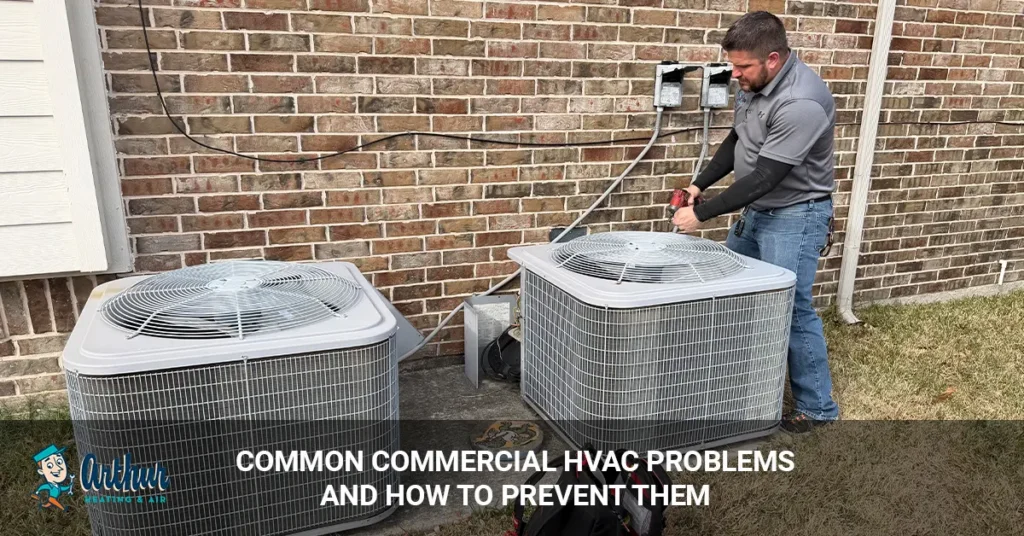
Commercial HVAC problems are usually caused by poor maintenance, system wear, or heavy usage, but most of them can be prevented.
Commercial HVAC systems keep your building comfortable and safe. They control temperature, airflow, and indoor air quality in places like offices, stores, hospitals, and warehouses.
When these systems stop working properly, the impact is immediate. Energy bills increase. Indoor comfort drops. Daily operations can slow down or even stop.
The good part is simple. Most HVAC issues don’t happen suddenly. They build over time, which means you can catch and fix them early.
In this guide, you’ll learn the most common commercial HVAC problems, what causes them, and how to prevent them before they become costly.
What Is a Commercial HVAC System?
A commercial HVAC system is a system that heats, cools, and controls air quality in large buildings.
It manages temperature, airflow, and ventilation across spaces like offices, retail stores, hospitals, and warehouses. These systems are built to handle bigger areas and longer operating hours than residential units.
Common types include:
- Rooftop units (RTUs) are used in many commercial buildings
- Split systems for smaller spaces
- Chillers and boilers for large or complex facilities
Because these systems are more advanced and run more often, they need regular maintenance to stay efficient and avoid breakdowns.
Why Commercial HVAC Systems Fail
Commercial HVAC systems fail mainly due to poor maintenance, aging parts, or incorrect setup. Understanding these causes helps you prevent costly repairs and avoid downtime.
Proper system design and sizing are especially important in specialized commercial environments where temperature, airflow, and humidity must be carefully controlled. Our guide to Commercial Grow Room HVAC Design: Best Practices for Climate Control explains how these factors work together in a controlled growing environment.
Common causes include:
- Lack of routine maintenance
- Aging equipment and worn components
- Improper installation
- Incorrect system sizing
- Heavy usage or harsh environmental conditions
Without regular care, even a high-quality HVAC system will lose efficiency over time and may break down earlier than expected.
Most Common Commercial HVAC Problems (And How to Prevent Them)
1. Poor Airflow
Poor airflow happens when air cannot move properly through your HVAC system, which makes rooms feel uneven and forces the system to work harder.
The most common cause is dirty air filters that block airflow and reduce efficiency. Ductwork can also be the problem if it is blocked, leaking, or poorly designed. In some cases, the fan may not be working properly, which limits how air circulates through the building.
To prevent poor airflow, replace air filters on a regular schedule so air can move freely. Check your ductwork for any blockages or leaks and fix them early. It is also important to schedule air balancing, which helps distribute air evenly across all areas of the building and keeps the system running efficiently.
2. Refrigerant Leaks
Refrigerant leaks happen when the system loses the fluid needed for cooling, which reduces performance and can damage key components.
When refrigerant levels drop, the system cannot cool properly. You may notice weak cooling or ice forming on the coils, both of which are clear signs that something is wrong.
The main cause is usually small leaks in the lines or connections that develop over time due to wear or poor maintenance.
To prevent this issue, schedule routine inspections so leaks can be detected early. If a leak is found, it should be fixed immediately to avoid further damage. It’s also important not to overload the system, as excessive strain can increase the risk of leaks and reduce overall efficiency.
3. Thermostat Malfunctions
Thermostat malfunctions happen when the system cannot read or control temperature correctly, which leads to uneven cooling or system issues.
When the thermostat is not working properly, the HVAC system may turn on and off at the wrong times or fail to maintain a consistent temperature.
This usually happens due to incorrect calibration, wiring problems, or outdated controls that can no longer respond accurately.
To prevent this, calibrate your thermostat regularly so it reads temperatures correctly. Upgrading to a programmable or smart thermostat can improve accuracy and control. It’s also important to check wiring connections to make sure everything is working as it should.
4. Dirty or Clogged Filters
Dirty or clogged filters block airflow and make your HVAC system work harder than it should.
When filters are full of dust and debris, airflow drops, energy use goes up, and indoor air quality gets worse. Over time, this can also strain other parts of the system and lead to bigger issues.
This is one of the most common problems, but also one of the easiest to fix.
To prevent it, check your filters every month and replace them on a consistent schedule. Using high-quality filters that match your system also helps improve performance and maintain clean indoor air.
5. Electrical Issues
Electrical issues can stop your HVAC system suddenly and may also create safety risks.
When electrical components fail, the system may shut down without warning or run inconsistently. Common problems include loose wiring, failed capacitors, or breakers that trip frequently.
These issues often develop over time due to wear, vibration, or poor installation.
To prevent electrical problems, schedule regular inspections to catch faults early. Make sure all connections are tight and secure. For deeper diagnostics or repairs, it’s best to hire a professional to ensure the system stays safe and reliable.
6. Drainage Problems
Drainage problems happen when water cannot flow out of the system properly, which can lead to leaks and mold growth.
When the drain line gets blocked, moisture builds up inside the system. This can cause water damage, bad odors, and unhealthy indoor air.
The most common causes are dirt buildup in the drain line or poor installation that prevents proper water flow.
To prevent this, clean the drain lines regularly so water can move freely. Make sure the drainage system is properly designed and installed. It’s also important to check for standing water, as it is an early sign of a blockage or drainage issue.
7. Compressor Failure
Compressor failure happens when the main cooling component stops working, which shuts down the entire HVAC system.
The compressor is the heart of the system, so when it fails, cooling stops completely. This usually happens due to overheating, dirty coils that trap heat, or refrigerant issues that put extra strain on the system.
These problems often build up over time and are linked to poor maintenance.
To prevent compressor failure, clean the coils regularly so heat can escape properly. Keep an eye on system load to avoid overworking the unit. It’s also important to maintain proper refrigerant levels, as low or imbalanced levels can damage the compressor.
8. Uneven Heating or Cooling
Uneven heating or cooling happens when some areas of the building feel too hot while others stay too cold.
This issue affects comfort and can reduce productivity, especially in larger spaces where consistent temperature matters.
It usually occurs due to poor zoning, leaking ducts, or a system that was not designed or sized correctly for the building.
To prevent this, install proper zoning so different areas can be controlled separately. Seal any duct leaks to keep air flowing where it should. It’s also important to make sure the system is correctly sized and designed to match the building’s needs.
9. High Energy Consumption
High energy consumption happens when your HVAC system uses more power than it should, which leads to higher utility bills.
This usually means the system is not running efficiently. Dirty components can block airflow and force the system to work harder. Aging equipment also loses efficiency over time, especially if it has not been maintained properly.
These issues often build up slowly, so the increase in energy costs may go unnoticed at first.
To prevent this, schedule regular energy audits to identify inefficiencies early. Upgrading outdated systems can significantly reduce energy use. It’s also important to keep all components clean and well-maintained so the system can run smoothly and efficiently.
Preventive Maintenance Checklist for Commercial HVAC
Preventive maintenance keeps your HVAC system running efficiently and helps you avoid costly breakdowns. Following an HVAC maintenance checklist ensures every key component is inspected and maintained properly.
Regular care reduces wear, improves performance, and extends the life of your system. Most major HVAC problems can be avoided when small issues are handled early.
Start by replacing air filters on a regular schedule so airflow stays strong and clean. Check ductwork for leaks or blockages to make sure air is distributed properly throughout the building. Clean coils and internal components to prevent dirt buildup that can reduce efficiency.
It’s also important to check refrigerant levels to ensure proper cooling performance. Test the thermostat to confirm it is reading and controlling temperature accurately. Inspect electrical connections to catch any loose or worn parts before they cause failure.
Along with routine checks, schedule professional servicing at least twice a year. This helps identify hidden issues and keeps your system working reliably all year round.
Benefits of Preventive HVAC Maintenance
Preventive HVAC maintenance helps your system run better, last longer, and cost less to operate.
When your system is maintained regularly, it uses less energy, which lowers your monthly utility bills. It also reduces wear on key components, helping extend the overall lifespan of the equipment.
Regular maintenance helps catch small issues early, which means fewer unexpected breakdowns and less downtime for your business. It also keeps filters, coils, and ducts clean, which improves indoor air quality and creates a healthier environment.
Most importantly, a well-maintained system provides consistent heating and cooling, so everyone in the building stays comfortable throughout the year.
When to Call a Commercial HVAC Professional
You should call a commercial HVAC professional when the problem goes beyond basic maintenance or keeps coming back.
Some issues need expert tools and experience to fix safely and correctly. If your system is breaking down often, it usually means there is a deeper problem that needs professional attention. A sudden drop in performance, like weak cooling or heating, is also a sign that something is wrong inside the system.
Unusual noises or smells should never be ignored, as they often point to damaged parts or internal issues. If any major component fails, such as the compressor or electrical parts, it’s best to have a professional handle the repair.
Getting expert help early can prevent bigger damage, reduce downtime, and keep your system running reliably.
How to Choose the Right Commercial HVAC Service Provider
Choosing the right commercial HVAC service provider helps keep your system reliable and reduces the risk of costly breakdowns.
Start by looking for technicians who are certified and experienced in commercial systems, not just residential units. Experience matters because commercial HVAC systems are more complex and require proper handling.
A good provider should offer preventive maintenance plans so your system is checked regularly, not just when something goes wrong. This helps you avoid unexpected failures and keeps performance consistent.
It’s also important to choose a company that provides emergency support, so you can get help quickly if your system fails during critical hours.
Finally, check customer reviews and feedback to see how reliable and professional the service provider is. This gives you a clear idea of what to expect before making a decision.
Final Thoughts
Commercial HVAC problems can be avoided when you focus on regular maintenance and fix small issues early.
When systems are ignored, costs rise, comfort drops, and breakdowns become more frequent. But with the right approach, most of these problems never reach that point.
By understanding common HVAC issues and taking simple preventive steps, you can keep your system running efficiently, extend its lifespan, and maintain a comfortable environment for everyone in your building.