Your HVAC system can look fine, but still have hidden problems. These issues can raise your energy bills, reduce comfort, and lead to expensive repairs.
Routine inspections help catch these problems early. A trained technician can spot small faults before they turn into major breakdowns.
In this guide, you’ll learn exactly what happens during an HVAC inspection. We’ll also cover the most common problems, the warning signs to watch for, and simple ways to prevent costly damage.
What Happens During an HVAC Inspection?
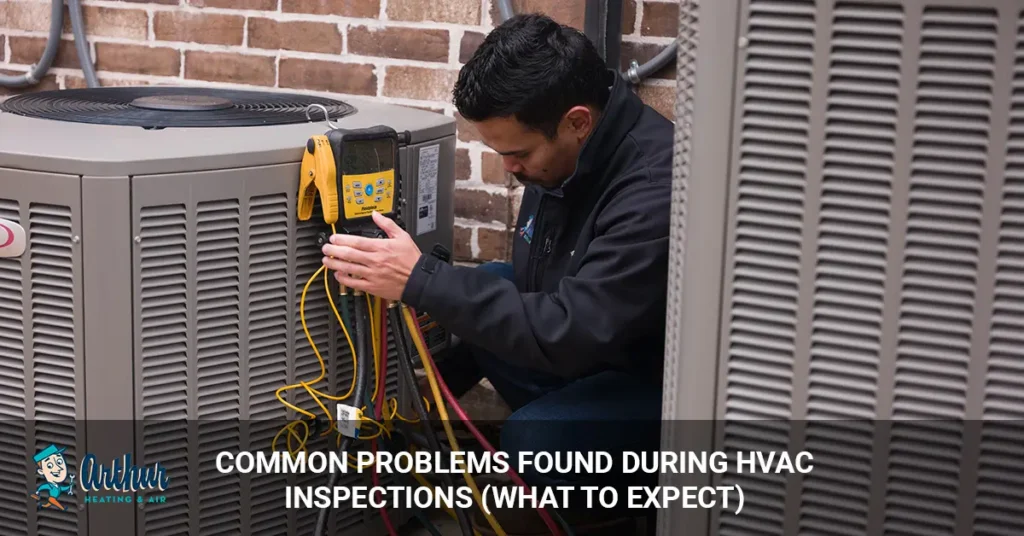
An HVAC inspection is a full check of your system to make sure it runs safely and efficiently. A technician looks at all key parts to catch small issues early and keep your system working properly.
Here’s what they check:
- Air filters: They check if filters are dirty or clogged and replace them if needed.
- Thermostat: They test the settings and make sure it reads the correct temperature.
- Electrical components: They inspect wiring, connections, and safety controls.
- Refrigerant levels: They measure pressure and check for leaks.
- Coils (evaporator and condenser): They look for dirt buildup that can reduce efficiency.
- Blower motor and fan: They check airflow and listen for unusual noises.
- Ductwork: They inspect for leaks, blockages, and poor airflow.
- Condensate drain line: They check for clogs that can cause water damage.
Most homeowners schedule an HVAC inspection twice a year. Once before summer for cooling. Once before winter for heating. This helps prevent breakdowns and keeps energy costs under control.
Most Common Problems Found During HVAC Inspections
These are the issues technicians find most often during an inspection. Each one can affect comfort, energy use, and system life if not fixed early.
Dirty or Clogged Air Filters
Dirty or clogged air filters are the most common HVAC problem and the easiest to fix. They block airflow and make your system work harder than it should.
This usually happens due to a lack of regular maintenance. Over time, dust, dirt, and pet hair collect in the filter and restrict proper airflow through the system.
You may notice weak airflow from vents, more dust around your home, or increased allergy symptoms. These are clear signs the filter is no longer doing its job.
If ignored, this problem can raise your energy bills and put extra strain on the system. That added pressure can shorten the lifespan of key components.
The solution is simple. Replace your air filter every 1 to 3 months, depending on usage and indoor conditions. This small step helps improve airflow, energy efficiency, and indoor air quality.
Refrigerant Leaks
Refrigerant leaks are a serious HVAC problem that directly reduces your system’s cooling performance. When refrigerant levels drop, your system cannot remove heat effectively, so your home may not cool properly.
This usually happens due to corrosion, normal wear, or damage to the refrigerant lines over time. Small cracks or weak points can develop and allow refrigerant to escape.
The signs are often noticeable. You may feel warm air coming from the vents, hear a hissing sound, or see ice forming on the coils.
If this issue is ignored, it can lead to major damage, especially to the compressor. Compressor failure is one of the most expensive HVAC repairs.
The fix requires professional service. A licensed technician will locate and repair the leak, then recharge the system with the correct amount of refrigerant.
Thermostat Malfunctions
Thermostat malfunctions can cause your HVAC system to run incorrectly even when the unit itself is fine. When the thermostat gives wrong signals, your system cannot maintain the right temperature.
This problem usually happens due to incorrect calibration, wiring issues, or an outdated thermostat model. Over time, thermostats can lose accuracy or fail to communicate properly with the system.
You may notice uneven temperatures in different rooms or that the system does not respond when you adjust the settings. These are clear signs the thermostat is not working as it should.
If not fixed, it can reduce energy efficiency and make your home less comfortable. The system may run longer than needed or shut off too early.
The solution depends on the issue. A technician can recalibrate the thermostat or fix wiring problems. In many cases, upgrading to a programmable or smart thermostat can improve accuracy and overall system performance.
Electrical Component Failures
Electrical component failures can stop your HVAC system from working completely. When key electrical parts fail, the system cannot start or run safely.
This usually happens due to loose connections, aging components, or normal wear and tear over time. Wiring can degrade, and connections can become unstable with regular use.
You may notice that the system won’t turn on at all or shuts down frequently during operation. These are strong signs of an electrical problem.
If ignored, this issue can create safety risks and cause further damage to the system. Electrical faults can also lead to more expensive repairs if they affect other components.
The solution requires professional help. A trained technician will inspect the system, fix faulty connections, and replace damaged parts safely. This is not a DIY repair and should always be handled by an expert.
Dirty Coils (Evaporator & Condenser)
Dirty coils reduce your HVAC system’s ability to cool your home efficiently. When coils are covered in dirt, they cannot transfer heat properly.
This usually happens due to dust, debris, and a lack of regular cleaning. Over time, buildup forms on both the evaporator and condenser coils.
You may notice your system takes longer to cool your home or runs more often than usual. These are clear signs that the coils are not working efficiently.
If ignored, dirty coils can cause the system to overheat and use more energy. This leads to higher utility bills and added strain on the system.
The solution is regular maintenance. Annual professional cleaning helps keep the coils clean, improves efficiency, and prevents long-term damage.
Leaky or Blocked Ductwork
Leaky or blocked ductwork reduces airflow and wastes a large amount of energy in your home. When air escapes or gets blocked, your system cannot deliver consistent heating or cooling.
This problem usually happens due to poor sealing, physical damage, or debris buildup inside the ducts. Over time, gaps and blockages can develop without being noticed.
You may notice uneven temperatures between rooms or weak airflow from certain vents. These signs point to issues within the duct system.
If not fixed, duct problems can lead to energy loss of up to 30 percent. This increases your utility bills and puts extra strain on your HVAC system.
The solution is to seal any leaks and clean the ductwork. Proper sealing and maintenance improve airflow, increase efficiency, and help your system perform as expected.
Blower Motor Problems
Blower motor problems reduce airflow and can stop your HVAC system from circulating air properly. The blower motor is responsible for pushing air through your ducts and into each room.
This issue usually happens due to aging parts or lack of lubrication. Over time, the motor can wear down or struggle to run smoothly.
You may hear strange noises like rattling or squealing, or notice weak airflow from your vents. These are common signs the blower motor is not working correctly.
If ignored, the motor can fail completely and cause the system to stop working. This can lead to costly repairs and discomfort in your home.
The solution depends on the condition of the motor. A technician may repair the motor or replace it if the damage is severe.
Clogged Condensate Drain Line
A clogged condensate drain line can cause water leaks and hidden damage in your home. It prevents moisture from draining properly out of your HVAC system.
This usually happens when mold, algae, or debris builds up inside the drain line over time. Without regular cleaning, the line can easily become blocked.
You may notice water pooling around the unit, musty smells, or higher indoor humidity. These are clear signs that the drain line is clogged.
If ignored, it can lead to water damage and mold growth in your home. This can affect both your property and indoor air quality.
The solution is regular maintenance. Cleaning the drain line helps prevent blockages and keeps your system running safely.
Warning Signs Your HVAC System Needs Immediate Attention
Certain signs mean your HVAC system needs immediate attention and should not be ignored. These issues can quickly lead to bigger damage if you delay action.
Burning or unusual odors are a serious warning. They may indicate electrical problems or overheating parts inside the system.
Loud noises like banging, grinding, or squealing often point to loose or failing components. These sounds are not normal and usually mean something is wearing out or broken.
Frequent on-and-off cycling is another red flag. It can signal thermostat issues, airflow problems, or an overworked system.
A sudden spike in energy bills often means your system is struggling to run efficiently. This usually happens when there is an underlying problem.
Weak airflow or uneven cooling shows that air is not moving properly through your system. This can be caused by blockages, leaks, or failing parts.
If you notice any of these signs, contact a professional HVAC technician right away. Quick action can prevent costly repairs and keep your system running safely.
How Much Do These HVAC Problems Cost to Fix?
HVAC repair costs vary based on the problem, but most issues fall within a predictable range. The sooner you fix them, the less you usually pay. For a detailed breakdown, check this HVAC repair cost guide.
Air filter replacement is one of the lowest-cost fixes. It’s quick, simple, and often inexpensive compared to other repairs.
Thermostat repair or replacement usually falls in the low to moderate range. Costs depend on whether it needs recalibration, wiring repair, or a full upgrade.
Refrigerant leak repair is more expensive. It involves finding the leak, fixing it, and recharging the system, which can add up.
Blower motor replacement sits in the moderate range. The cost depends on the type of motor and how difficult it is to replace.
Compressor replacement is one of the highest-cost repairs. In some cases, replacing the entire HVAC system may be more cost-effective.
Fixing problems early helps you avoid major expenses. Small repairs cost much less than dealing with a full system breakdown later.
How to Prevent Common HVAC Problems
You can prevent most HVAC problems with simple, regular maintenance. Small steps done on time can keep your system running efficiently and avoid costly repairs.
Replace your air filters regularly to maintain proper airflow and keep dust from building up inside the system. This is one of the easiest and most effective ways to prevent issues.
Schedule professional maintenance twice a year. A technician can catch small problems early and keep your system in good condition before peak seasons. You can also follow a complete HVAC maintenance checklist.
Keep the outdoor unit clean and free of leaves, dirt, and debris. This helps the system breathe properly and improves performance.
Check and seal your ductwork if needed. Properly sealed ducts prevent air loss and ensure even cooling or heating throughout your home.
Pay attention to your energy bills. A sudden increase often signals that your system is not working efficiently.
These simple habits can extend the life of your HVAC system, improve comfort, and reduce energy costs over time.
Should You Repair or Replace Your HVAC System?
You should repair or replace your HVAC system based on its age, repair costs, and performance. If repairs are frequent or expensive, replacement is often the better long-term choice.
Older systems tend to break down more often. If your HVAC system is around 10 to 15 years old or more, it may no longer run efficiently and could cost more to maintain.
Frequent repairs are another clear sign. When repair costs start adding up, it often makes more sense to invest in a new system instead of continuing to fix an old one.
High energy bills can also point to an inefficient system. Older units use more energy to deliver the same level of comfort.
A newer HVAC system can improve efficiency, lower energy costs, and provide more reliable performance. In many cases, replacing the system saves money over time compared to ongoing repairs.
When to Call a Professional HVAC Technician
You should call a professional HVAC technician when the issue goes beyond basic maintenance or affects system safety and performance. Some problems require expert tools and training to fix correctly.
If you suspect a refrigerant leak, it’s important to get professional help right away. Handling refrigerant requires proper certification and equipment.
Electrical issues are another reason to call a technician. Faulty wiring or components can be dangerous and should never be handled without experience.
If your system stops working completely, a professional can diagnose the root cause and restore operation safely.
Unusual noises or smells are also warning signs. These can point to internal damage, loose parts, or overheating components.
Professional service ensures the problem is fixed correctly. It also helps protect your system, improve efficiency, and prevent further damage.
Final Thoughts
HVAC inspections are essential for keeping your system safe, efficient, and reliable. They help catch small issues early before they turn into expensive repairs.
Understanding the most common problems gives you an advantage. You can spot warning signs sooner and take action before your system fails.
If your HVAC system hasn’t been inspected recently, now is a good time to schedule one. A simple check today can help you avoid major repair costs later.