
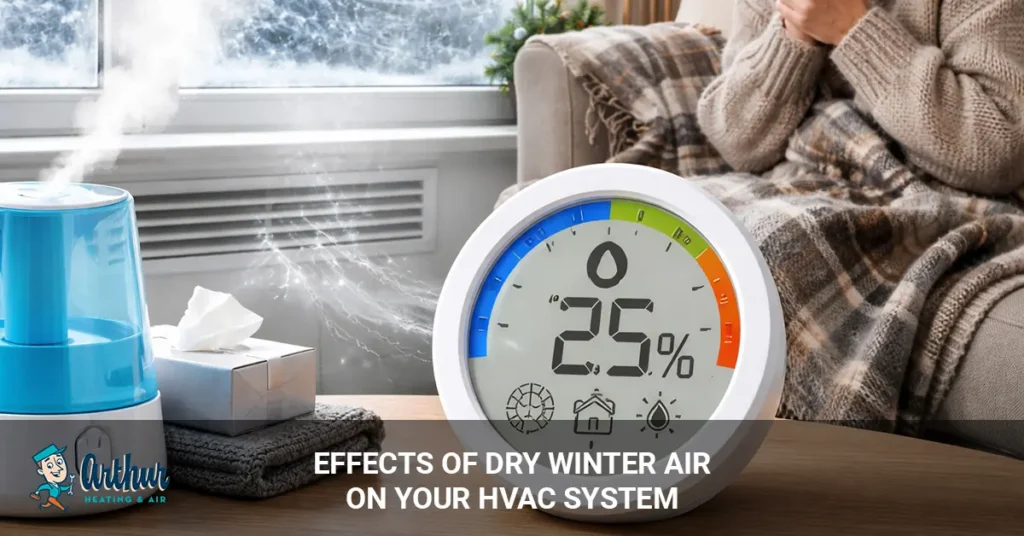
If your home feels colder than it should in winter, dry air is likely the reason. Cold air holds very little moisture, and once it’s heated inside, it becomes even drier.
Dry winter air affects your HVAC system by making it work harder and reducing comfort. It can also lead to uneven heating and extra strain on the system.
In this guide, you’ll learn how dry air impacts your HVAC system and simple ways to fix it and improve comfort.
What Is Dry Winter Air?
Dry winter air is air with very low humidity, usually below 30%. This happens because cold air can’t hold much moisture.
When this cold air enters your home and gets heated, it becomes even drier. The heat removes what little moisture is left, making the air feel dry and uncomfortable.
This low humidity affects both your comfort and your HVAC system, making your home feel colder and harder to heat properly.
How Dry Air Affects Your HVAC System
Dry air affects your HVAC system by making it work harder to keep your home comfortable. It increases heating demand and can reduce overall efficiency.
Because dry air feels colder than it actually is, you may turn up the thermostat more often. This puts extra strain on your system and leads to higher energy use.
Low humidity also allows dust to move more freely in the air. This can clog filters faster and affect airflow, which makes your system work even harder.
Common Problems Caused by Dry Air
Dry air causes problems that affect both your HVAC system and your home. It can lead to discomfort, damage, and reduced system performance.
You may notice more dust collecting in your filters, which can block airflow and make your system work harder. Static electricity also becomes more common, causing small shocks and irritation.
Over time, dry air can dry out materials in your home. This can lead to cracks in wood, gaps in ductwork, and wear on seals. You may also notice uneven heating, where some rooms feel colder than others.
Fixing dry air early helps prevent these issues and keeps your system running smoothly.
How Dry Air Affects Indoor Comfort
Dry air makes your home feel colder and less comfortable, even when the temperature is set correctly. It affects how your body feels the heat. Understanding how humidity affects indoor comfort can help you see why balanced air is so important.
When the air is dry, moisture leaves your skin and airways more quickly. This can cause dry skin, chapped lips, and a scratchy throat or nose. Breathing can feel uncomfortable, especially at night.
Because of this, you may turn up the heat more often to feel warm. This increases energy use without actually improving comfort.
How to Fix Dry Air in Your Home
You can fix dry air by adding moisture back into your indoor air. This helps improve comfort and reduces strain on your HVAC system.
Using a humidifier is the most effective way to do this. It adds moisture to the air and helps keep your humidity at a healthy level. If you’re comparing options, understanding humidifier vs dehumidifier can help you choose the right solution for your home.
You can also seal air leaks around windows and doors to stop dry outdoor air from coming in. Try not to run your heating system higher than needed, since it can dry the air even more. Adding indoor plants or other moisture sources can also help.
These simple steps can make your home feel warmer, more comfortable, and easier to live in during winter.
Ideal Winter Humidity Levels
The ideal indoor humidity level in winter is between 30% and 40%. This range keeps your home comfortable without causing condensation problems.
When humidity stays in this range, the air feels warmer and easier to breathe. You won’t need to turn up the heat as much, which can help save energy.
Keeping your humidity balanced also helps prevent dryness, reduce irritation, and protect your home during colder months.
Humidifier vs HVAC Upgrade – What’s Better?
A humidifier is usually the easiest and most cost-effective way to fix dry air. It works quickly and improves comfort right away.
A portable humidifier is great for single rooms and smaller spaces. A whole-home humidifier, connected to your HVAC system, provides consistent moisture throughout your entire home.
If dry air is a constant issue, a whole-home system is a better long-term solution. It runs automatically and keeps humidity balanced without much effort.
The best choice depends on your home, your needs, and your budget.
Tips to Protect Your HVAC System in Winter
You can protect your HVAC system in winter by keeping it clean and maintaining proper humidity levels. Small steps can prevent bigger problems.
Change your air filters regularly to stop dust from building up and blocking airflow. Monitor your humidity to keep it in a healthy range so your system doesn’t have to work harder than needed.
Keep vents open and clear so air can move freely through your home. This helps your system heat evenly and efficiently.
Regular maintenance is also important. A simple check-up can keep your system running all winter smoothly.
Common Mistakes to Avoid
Avoiding a few common mistakes can help you manage dry air and protect your HVAC system. Small habits can make a big difference.
Ignoring dry air is a common mistake. It can lead to discomfort and higher energy use over time. Over-humidifying is another issue, as too much moisture can cause condensation and even mold.
Not maintaining your humidifier can reduce its performance. Running your heating system too high can also make the air even drier.
Keeping a balanced approach helps you stay comfortable and avoid these problems.
Final Thoughts
Dry winter air affects both your comfort and your HVAC system. The key is adding moisture and keeping your humidity balanced.
Aim to keep your indoor humidity between 30% and 40% during winter. This helps your home feel warmer and reduces strain on your system.
With a few simple steps, you can improve comfort, protect your HVAC system, and lower energy use throughout the season.
Using a humidifier is the most effective way to do this. It adds moisture to the air and helps keep your humidity at a healthy level. For long-term results, professional humidifier installation and humidity control services can help keep your home comfortable throughout the winter.