
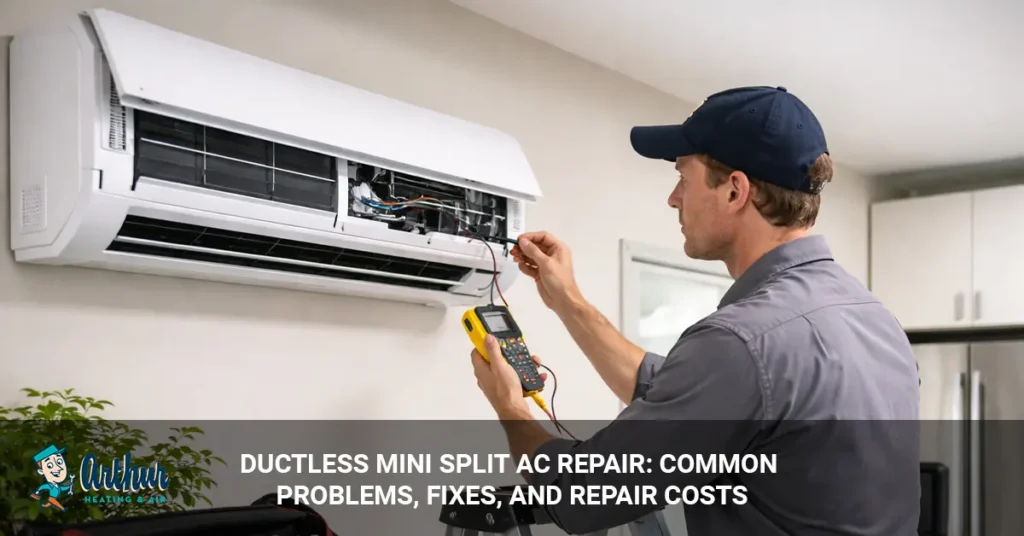
Ductless mini split AC systems are reliable, but they can still develop problems over time. These issues usually start small and become worse if you ignore them.
If you catch problems early, you can fix them faster, avoid high repair costs, and keep your system running efficiently.
How Do You Know If Your Ductless Mini Split Needs Repair?
You know your ductless mini split needs repair when it stops cooling properly, leaks water, makes strange noises, or does not respond to the remote.
These are early warning signs that the system is not working as it should. You may also notice weak airflow or the unit turning on and off too often.
These problems do not go away on their own. If you ignore them, they can turn into bigger and more expensive repairs.
Common Ductless Mini Split AC Problems and Fixes
1. Mini Split Not Cooling Properly
If your mini split is not cooling properly, it means the system is not removing heat as it should.
You may feel little or no cool air coming from the unit. This usually happens because of dirty filters, blocked airflow, or low refrigerant levels.
Start by cleaning the air filters and making sure nothing is blocking airflow. If the problem continues, the system may need professional repair to check the refrigerant or internal components, especially if your mini split is not cooling properly and showing deeper issues
2. Water Leaking from Indoor Unit
Water leaking from your mini split means the drainage system is blocked or not working properly.
You may notice water dripping from the indoor unit or pooling around it. This usually happens because of a clogged drain line or frozen coils.
Start by checking and clearing the drain line and cleaning the unit. If the leak continues, the system likely needs professional repair to prevent further damage.
3. Mini Split Making Strange Noises
Strange noises from your mini split mean there is a mechanical problem inside the unit.
You may hear rattling, buzzing, or grinding sounds while the system is running. These noises often come from loose parts, fan issues, or motor problems.
This is not normal. If you ignore these sounds, the damage can get worse and lead to more expensive repairs.
4. Unit Not Turning On
If your mini split is not turning on, it means there is a power or control issue.
Start by checking the basics like the circuit breaker, power supply, and remote batteries. Sometimes the problem is simple and easy to fix.
If the unit still does not turn on, the issue may be electrical or related to internal components. In that case, it’s best to call a professional.
5. Bad Smells from Mini Split
Bad smells from your mini split mean there is dirt, mold, or bacteria inside the system.
You may notice a musty or unpleasant odor when the unit is running. This usually happens when filters, coils, or internal parts are dirty.
Cleaning the filters and the indoor unit often solves the problem. It also helps improve your indoor air quality and keeps the system running smoothly.
6. Ice Formation on the Unit
Ice buildup on your mini split means there is a problem with airflow or refrigerant.
You may see ice forming on the indoor unit or coils. This usually happens when airflow is blocked or the system is low on refrigerant.
Start by cleaning the filters and making sure airflow is not restricted. If ice keeps forming, the system likely needs professional repair to check refrigerant levels and internal issues.
7. Weak Airflow
Weak airflow means your mini split is not moving enough air to cool the space properly.
You may feel very little air coming from the unit or notice uneven cooling. This usually happens due to dirty filters, blocked vents, or a problem with the fan.
Start by cleaning or replacing the filters and checking for any airflow blockage. If the issue continues, the system may need professional repair.
Ductless Mini Split AC Repair Costs
Average Repair Cost
The average cost to repair a ductless mini split AC ranges from $100 to $800, depending on the problem.
Simple fixes like cleaning or minor part replacements cost less. More complex issues like refrigerant leaks or compressor problems, cost more.
The final cost depends on how serious the issue is and how much work is needed to fix it.
Cost by Common Problem
Repair costs depend on the type of problem your mini split has.
Simple issues like cleaning or replacing filters usually cost the least. Electrical or sensor problems fall in the mid-range. More serious issues, like refrigerant leaks or compressor failure, are the most expensive.
In general, the more complex the repair, the higher the cost.
Factors That Affect Repair Cost
Repair cost depends on the condition of your system and the type of work required.
Key factors include the age of the unit, the type of problem, the cost of parts, and labor charges. Older systems often need more repairs and replacement parts, which increases the cost.
More complex issues also take more time to fix, which adds to the total repair price.
Repair vs Replace: What Should You Choose?
You should repair your mini split if the issue is small, but replace it if the system is old or keeps having problems.
Minor issues can be fixed quickly and at a lower cost. But if your system breaks down often, struggles to cool, or your energy bills keep rising, replacement may be the better option. This guide on AC repair vs replacement can help you make the right decision
A simple rule to follow: if the repair cost is more than half the price of a new unit, replacing it is usually the smarter long-term choice.
Can You Fix a Mini Split Yourself?
You can fix basic mini split issues yourself, but most repairs should be done by a professional.
Simple tasks like cleaning filters, removing dust, and checking the remote are safe and easy to handle. These help improve airflow and system performance.
However, problems related to electrical parts, refrigerant, or internal components require proper tools and training. Trying to fix these yourself can cause more damage or safety risks.
When to Call a Professional
You should call a professional when the problem doesn’t go away or keeps coming back.
If your mini split has issues like refrigerant leaks, electrical faults, or repeated breakdowns, it needs expert diagnosis. These problems cannot be fixed with basic cleaning or simple checks.
A professional technician can find the exact cause, fix it safely, and prevent further damage to your system.
What Happens If You Ignore Mini Split Problems?
If you ignore mini split problems, they can lead to system failure and higher repair costs.
Small issues like weak airflow or strange noises can quickly turn into serious damage if left untreated. Over time, this reduces efficiency, increases energy bills, and puts more stress on the system.
Fixing problems early helps you avoid breakdowns, save money, and extend the life of your mini split.
Tips to Prevent Mini Split AC Problems
You can prevent most mini split AC problems with regular cleaning and maintenance.
Start by cleaning the air filters regularly to keep airflow strong. Make sure the unit stays free from dust and debris so it can run efficiently.
It’s also important to schedule yearly maintenance to catch small issues early. Using the system properly, like setting the right temperature and not overworking it, also helps.
These simple steps keep your system running smoothly and help it last longer.
Final Thoughts
Ductless mini split AC systems work well, but they still need regular care and timely repairs.
If you notice any issues, it’s best to fix them early before they get worse. Small problems are easier and cheaper to handle.
Taking action early helps you save money, improve performance, and avoid unexpected breakdowns.