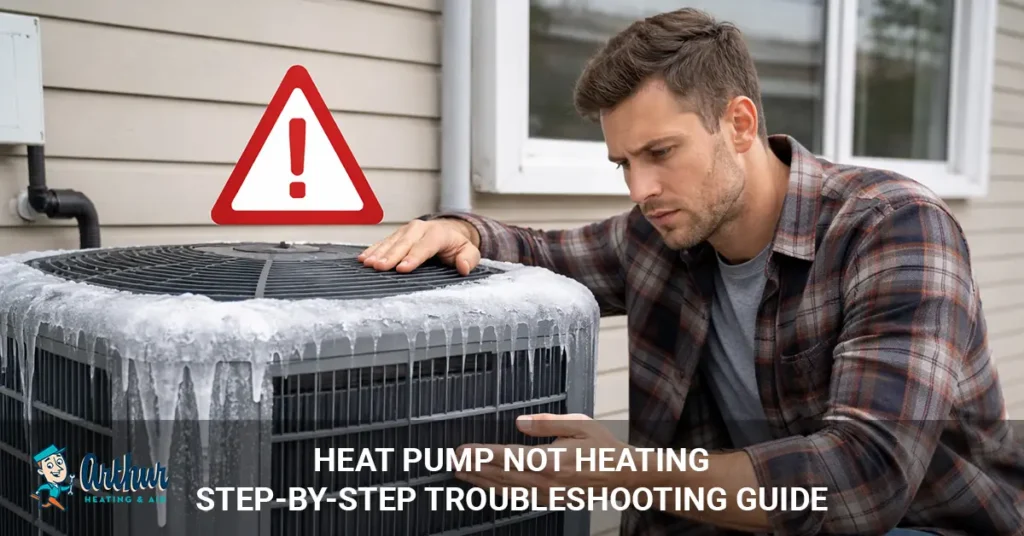
If your heat pump isn’t heating, start by checking the thermostat, air filter, vents, circuit breaker, and outdoor unit for simple problems. A dirty filter, blocked airflow, incorrect thermostat setting, or outdoor-unit issue can reduce heating performance.
But not every heat pump problem has a simple fix. Low refrigerant, a frozen coil, a faulty reversing valve, blower problem, or electrical failure requires professional diagnosis.
Also keep one thing in mind: a heat pump normally produces cooler-feeling air than a gas furnace. Air that feels lukewarm doesn’t always mean the system has failed.
Here’s how to identify the most common causes and what you can safely do about them.
Why Is My Heat Pump Not Heating?
A heat pump may not heat properly because of a thermostat problem, restricted airflow, outdoor-unit blockage, defrost operation, refrigerant issue, or component failure.
Start with the simple checks before assuming you need a major repair.
| Cause | Common Sign | What to Do |
| Thermostat setting | System doesn’t respond | Check thermostat |
| Dirty air filter | Weak airflow | Replace filter |
| Blocked vents | Poor airflow | Clear vents |
| Outdoor unit blocked | Reduced performance | Clear loose debris |
| Defrost cycle | Temporary cool air | Allow the cycle to finish |
| Frozen outdoor coil | Heavy ice buildup | Call a technician |
| Low refrigerant | Weak heating or ice | Professional service |
| Reversing valve problem | Heating/cooling mode issue | Professional service |
| Blower problem | Weak or no airflow | Professional service |
| Electrical/control failure | System won’t run | Professional service |
If basic checks don’t restore normal heating, don’t start opening the equipment. A heat pump contains electrical and refrigerant components that require proper tools and training.
10 Common Reasons Your Heat Pump Isn’t Heating
1. The Thermostat Is Set Incorrectly
An incorrect thermostat setting can prevent the heat pump from entering heating mode.
Check that:
- The thermostat is set to HEAT.
- The temperature setting is above the current room temperature.
- The thermostat has power.
- The batteries work if your thermostat uses them.
After changing the setting, give the system a few minutes to respond.
Heat pumps can also use different control strategies from conventional furnaces, especially when auxiliary heat is available. If you’re unsure about the thermostat settings, check the equipment’s instructions.
2. The Air Filter Is Dirty
A clogged air filter can restrict airflow and reduce how much heat your heat pump delivers to the home.
Check the filter if you haven’t changed it recently.
A dirty filter can cause:
- Weak airflow
- Longer heating cycles
- Reduced comfort
- Increased system strain
- Poor overall performance
Replace a heavily dirty filter with the correct size and type.
If the heat pump still doesn’t heat properly with a clean filter, another problem may be responsible.
3. Vents or Return Grilles Are Blocked
Blocked supply vents or return-air grilles can restrict airflow and make your home feel colder.
Check that furniture, curtains, rugs, or other objects aren’t covering your vents.
Also make sure supply registers are open.
The return side matters too. Your heat pump needs adequate return airflow to circulate air through the system.
If airflow remains weak after clearing the vents and replacing the filter, have the system inspected.
4. The Outdoor Unit Is Blocked
Leaves, grass, dirt, snow, or other debris around the outdoor unit can restrict airflow and reduce heat-pump performance.
The outdoor coil needs adequate airflow to exchange heat with the surrounding air.
Keep the area around the unit reasonably clear.
You can remove loose debris that you can safely reach without opening the equipment or damaging the coil.
Don’t bend the coil fins or spray the unit aggressively while the system is running.
If the outdoor unit remains heavily blocked or performance doesn’t improve after clearing obvious debris, call a technician.
5. The Heat Pump Is in Defrost Mode
A heat pump may temporarily blow cooler air during a normal defrost cycle, especially in cold weather.
This is one of the most common reasons homeowners think their heat pump has stopped heating.
During heating mode, the outdoor coil can collect frost. The heat pump periodically enters defrost mode to remove that frost.
During this short process, the system may temporarily change how it operates.
You may notice:
- Cooler air from the vents
- Steam or vapor around the outdoor unit
- A temporary change in outdoor-unit operation
Once the defrost cycle finishes, the system should return to normal heating.
If the unit stays in defrost for an unusually long time or repeatedly develops heavy ice, the system may have another problem.
6. The Outdoor Coil Is Frozen
Heavy ice covering the outdoor coil can prevent a heat pump from heating efficiently and may indicate an airflow, refrigerant, or defrost problem.
A light layer of frost can occur during normal winter operation.
Heavy ice is different.
If the outdoor unit becomes covered in thick ice, don’t scrape it off with a tool. You can damage the coil.
Possible causes include:
- Defrost-system problems
- Low refrigerant
- Restricted airflow
- Outdoor fan problems
- Other system faults
If heavy ice keeps returning, turn the system off if necessary and call an HVAC professional.
7. The Refrigerant Level Is Low
Low refrigerant can reduce a heat pump’s ability to transfer heat and may cause weak heating or ice buildup.
Heat pumps use refrigerant to move heat between the indoor and outdoor sides of the system.
A properly operating system shouldn’t simply lose refrigerant over time.
If the refrigerant level is low, a leak may be present.
Adding refrigerant without finding the leak doesn’t address the underlying problem.
Refrigerant service requires specialized equipment, so don’t attempt to recharge the system yourself.
8. The Reversing Valve Isn’t Working Properly
A faulty reversing valve can prevent a heat pump from switching correctly between heating and cooling modes.
The reversing valve changes the direction of refrigerant flow so the system can provide heating or cooling.
When it doesn’t operate correctly, you may notice:
- The system cools when it should heat.
- Heating performance is very weak.
- The unit doesn’t switch modes properly.
- The thermostat appears to work but the system doesn’t respond correctly.
Because the valve is part of the refrigerant system, diagnosis and repair require an HVAC technician.
9. The Blower Motor Has a Problem
A failing blower motor can reduce or stop airflow even when the heat pump itself is producing heat.
You may notice:
- Weak airflow from the vents
- No airflow
- Humming from the indoor unit
- Unusual motor noises
- The system starts but doesn’t circulate air properly
Check the filter first.
If the filter is clean and the vents are open but airflow remains weak, the blower assembly may need professional inspection.
Don’t open the electrical compartment or attempt to repair the motor yourself.
10. An Electrical or Control Component Has Failed
A failed capacitor, control board, wiring connection, or other electrical component can prevent the heat pump from heating normally.
An electrical or control problem can cause:
- No response from the system
- Intermittent operation
- Repeated shutdowns
- Fan problems
- Startup problems
- Incorrect system operation
If your heat pump has power but doesn’t operate correctly, don’t remove electrical panels or test live components yourself.
An HVAC technician can diagnose the control system safely.
Tried These Steps and Still No Heat?
A professional inspection can find the issue quickly and safely.
 Book a Heat Pump Inspection
Why Is My Heat Pump Blowing Cold Air?
A heat pump can blow air that feels cooler than furnace air during normal heating, but continuously cold air usually indicates a problem.
Unlike a gas furnace, a heat pump doesn’t create heat through combustion. It moves heat from one place to another.
As a result, the air coming from the vents may feel warm rather than extremely hot.
Brief cooler airflow can also happen during a defrost cycle.
The situation becomes more concerning when:
- The air stays cold for an extended period.
- The indoor temperature keeps falling.
- The outdoor unit is heavily iced.
- The system runs continuously without reaching the thermostat setting.
- The system switches between heating and cooling incorrectly.
If the air feels consistently cold and your home isn’t warming up, have the system checked.
What Can I Check When My Heat Pump Isn’t Heating?
You can safely check the thermostat, filter, vents, breaker, and outdoor-unit airflow before calling an HVAC technician.
Try these basic checks:
- Make sure the thermostat is set to HEAT.
- Raise the temperature setting several degrees.
- Check the thermostat batteries if applicable.
- Replace a dirty air filter.
- Open blocked supply vents.
- Clear furniture away from return grilles.
- Check the heat pump’s circuit breaker.
- Remove loose debris around the outdoor unit.
- Give the system time to complete a normal defrost cycle.
Don’t attempt to:
- Add refrigerant.
- Open refrigerant lines.
- Remove electrical panels.
- Repair the reversing valve.
- Scrape ice from the coil.
- Bypass safety controls.
If the basic checks don’t solve the problem, professional diagnosis is the safest next step.
When Should You Call a Heat Pump Technician?
Call an HVAC technician when basic checks don’t restore heating or when the system has heavy ice, weak airflow, refrigerant symptoms, electrical problems, or repeated shutdowns. Professional heat pump repair can diagnose the underlying problem and restore proper operation.
Professional service is appropriate when:
- The heat pump won’t start.
- The outdoor unit doesn’t run.
- The system blows cold air continuously.
- Heavy ice keeps forming.
- The system repeatedly shuts down.
- Airflow remains weak with a clean filter.
- You suspect a refrigerant leak.
- The heat pump won’t switch between heating and cooling.
- You hear unusual mechanical or electrical noises.
Don’t keep running a heat pump that clearly isn’t operating normally. Continued operation can sometimes make an existing problem worse.
How Much Does Heat Pump Repair Cost?
Heat pump repair costs vary widely depending on the failed component, with simple electrical repairs costing much less than compressor, refrigerant, or reversing-valve repairs.
Typical repair categories include:
| Repair | General Cost Level |
| Thermostat | Low to moderate |
| Capacitor | Low to moderate |
| Electrical component | Low to moderate |
| Fan motor | Moderate |
| Refrigerant leak | Moderate to high |
| Reversing valve | High |
| Compressor | High |
Your actual price depends on the heat pump model, part, labor rate, accessibility, and repair complexity.
Get a diagnosis and written estimate before approving a major repair.
Heat Pump Repair vs. Replacement
Repair usually makes sense for a newer heat pump with an isolated problem, while replacement deserves consideration when an older system has repeated or expensive failures.
| Repair May Make Sense | Replacement May Make Sense |
| System is relatively new | System is older |
| One isolated failure | Frequent breakdowns |
| Repair cost is reasonable | Major component failure |
| Good efficiency | Declining efficiency |
| Reliable performance | Poor heating and cooling |
Don’t replace a heat pump simply because it has reached a certain age.
Consider the system’s repair history, efficiency, comfort, and the cost of the proposed repair. If replacement becomes the better option, our guide to heat pump installation cost explains the main factors that affect the price.
Frequently Asked Questions
Why is my heat pump not heating?
A heat pump may not heat because of a thermostat setting, dirty filter, blocked outdoor unit, defrost problem, low refrigerant, reversing-valve failure, blower problem, or electrical fault.
Start with the thermostat, filter, vents, breaker, and outdoor-unit airflow before calling for service.
Why is my heat pump blowing cold air?
A heat pump can blow air that feels cooler than furnace air during normal operation, but continuous cold airflow can indicate a problem. A defrost cycle can also temporarily produce cooler air.
Why is my heat pump running but not heating?
A running heat pump that doesn’t warm the home may have restricted airflow, low refrigerant, a defrost problem, a reversing-valve issue, or another system fault.
Check the filter and vents first. If the system continues running without heating properly, call a technician.
Why is my heat pump blowing lukewarm air?
Lukewarm air can be normal for a heat pump because it generally delivers warmer-than-room-temperature air rather than furnace-hot air. If the home temperature continues falling, however, the system may have a performance problem.
Why is my heat pump frozen in heating mode?
Heavy ice on a heat pump can result from a defrost problem, low refrigerant, restricted airflow, or another system fault. Light frost can be normal, but thick ice that doesn’t clear requires professional inspection.
Should a heat pump blow cold air during defrost?
Yes, a heat pump may temporarily produce cooler indoor air during a defrost cycle. The system should return to normal heating after the cycle finishes.
Can a dirty filter stop a heat pump from heating?
Yes, a severely dirty filter can restrict airflow and reduce heating performance. Replace the filter if it’s clogged and check whether airflow improves.
How do I reset my heat pump?
Start by checking the thermostat and circuit breaker rather than repeatedly resetting the equipment. If the breaker trips again or the heat pump still doesn’t operate correctly, call an HVAC technician.
Why is my outdoor heat pump unit not running?
An outdoor heat pump may stop temporarily during a normal defrost cycle, but a unit that remains off can have a power, control, thermostat, or component problem.
Check the thermostat and breaker first. Don’t open the outdoor electrical compartment yourself.
When should I call a heat pump technician?
Call a technician when the heat pump doesn’t heat after basic checks, develops heavy ice, has weak airflow, repeatedly shuts down, or shows signs of refrigerant, electrical, or component problems.
Final Thought
If your heat pump isn’t heating, start with the thermostat, air filter, vents, breaker, and outdoor unit. These checks can solve some simple problems without a service call.
Remember that heat pumps normally produce air that feels less hot than air from a gas furnace. A brief period of cooler air can also occur during a normal defrost cycle.
However, continuous cold air, heavy ice, weak airflow, repeated shutdowns, or poor heating despite a clean filter usually means the system needs professional diagnosis.
Don’t attempt refrigerant, electrical, ignition, or reversing-valve repairs yourself. A qualified HVAC technician can identify the cause and determine whether repair is the better option.
Still Not Getting Heat? Get It Fixed Today
Fast, reliable heat pump repair to restore comfort to your home.
 Schedule Heat Pump Repair