
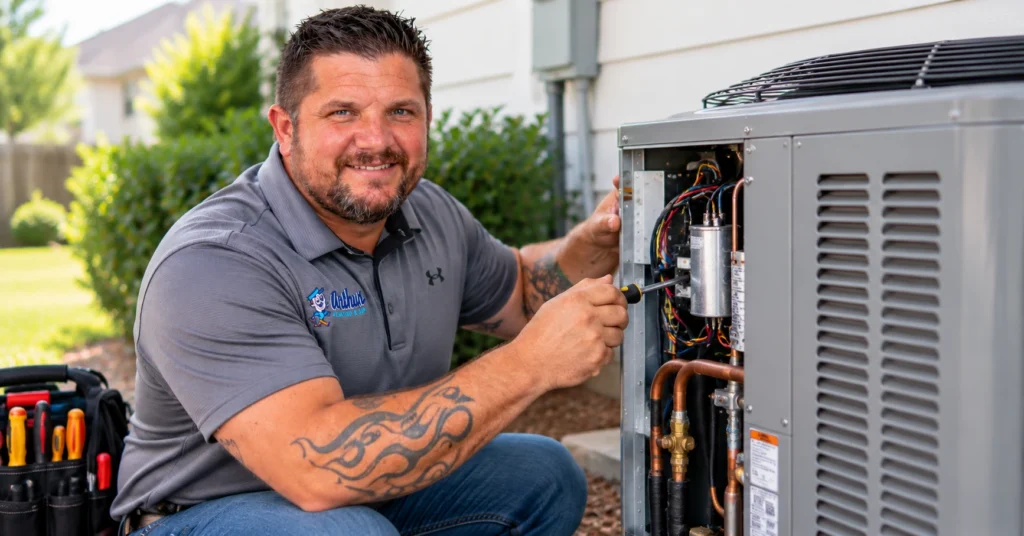
Heat pump repair typically costs $150 to $1,000 in 2026, although major repairs can cost $1,500 or more. The final price depends on what’s wrong, the parts needed, labor rates, and how difficult the repair is.
A simple fix, such as replacing a thermostat or capacitor, usually costs less. Repairs involving the compressor, coils, refrigerant system, or reversing valve can cost much more.
If your heat pump isn’t heating or cooling properly, knowing the likely repair cost can help you plan your next step. It can also help you compare the cost of repairing the existing system with replacing it.
How Much Does Heat Pump Repair Cost in 2026?
Heat pump repair typically costs $150 to $1,000 in 2026, while major repairs can cost $1,000 or more. For a broader look at heating and cooling repair prices, see our guide to HVAC repair costs. Smaller repairs often fall in the 150–400 range, while compressor, coil, and other major repairs can be much more expensive.
Here are typical price ranges for common heat pump repairs:
| Heat Pump Repair | Typical Cost |
| Thermostat repair or replacement | 100–300 |
| Capacitor replacement | 150–400 |
| Contactor replacement | 150–400 |
| Refrigerant leak repair | 200–1,000+ |
| Defrost control repair | 200–600 |
| Reversing valve repair | 300–800 |
| Fan motor replacement | 300–800 |
| Blower motor replacement | 300–900 |
| Coil repair or replacement | 500–1,500+ |
| Compressor replacement | 1,000–2,500+ |
These numbers are general estimates, not guaranteed prices. Your actual cost can vary based on local labor rates, parts availability, the type and age of your heat pump, and how difficult the repair is.
Some HVAC companies also charge a separate diagnostic or service fee. Ask whether diagnosis, labor, parts, and any additional charges are included before approving the repair.
What Is Included in Heat Pump Repair Cost?
Heat pump repair costs can include diagnosis, labor, replacement parts, refrigerant, and other service charges. The exact breakdown depends on the repair and how the HVAC company prices its services.
Your repair bill may include:
- Diagnostic fee: Covers the technician’s time to find the cause of the problem.
- Labor: Pays for the work needed to repair or replace the faulty component.
- Replacement parts: Covers components such as capacitors, motors, valves, or other parts.
- Refrigerant: May be charged separately if the system needs refrigerant after a leak is repaired.
- Additional charges: Emergency service, difficult repairs, or other required work may increase the total.
Some HVAC companies apply the diagnostic fee toward the repair if you approve the work, while others charge it separately. Ask for a clear estimate before work begins so you know what’s included and what you’ll pay.
Heat Pump Repair Cost by Type of Repair
Heat pump repair costs vary depending on which component has failed. Replacing a thermostat or capacitor is usually less expensive than repairing a compressor, coil, or refrigerant system.
Thermostat Repair or Replacement
Heat pump thermostat repair or replacement typically costs $100 to $300. The price depends on the thermostat, the problem, and whether the technician needs to modify or replace wiring.
A faulty thermostat can cause short cycling, inaccurate temperatures, or a heat pump that won’t start.
Capacitor Replacement
Heat pump capacitor replacement typically costs $150 to $400. The capacitor helps the system’s motors start and run properly.
When it fails, the outdoor fan or compressor may have trouble starting, or the heat pump may stop working.
Contactor Replacement
Replacing a heat pump contactor usually costs $150 to $400. The contactor controls electrical power to components such as the compressor and outdoor fan.
Because this involves high-voltage electrical components, have a qualified HVAC professional diagnose and replace it.
Refrigerant Leak Repair
Heat pump refrigerant leak repair typically costs $200 to $1,000 or more, depending on the location and severity of the leak. The technician must find and repair the leak before adding the correct amount of refrigerant.
Low refrigerant can cause poor heating and cooling performance. Simply adding refrigerant without fixing the leak may only provide a temporary fix.
Defrost Control Repair
Heat pump defrost control repair typically costs $200 to $600. The defrost system helps remove ice from the outdoor coil when the heat pump is operating in heating mode.
A faulty defrost control can cause excessive ice buildup and reduce heating performance.
Reversing Valve Repair
Heat pump reversing valve repair or replacement typically costs $300 to $800. This valve changes the direction of refrigerant flow so the system can switch between heating and cooling.
A faulty valve may leave the heat pump stuck in one mode or prevent it from heating or cooling properly.
Fan Motor Replacement
Heat pump fan motor replacement typically costs $300 to $800. The outdoor fan moves air across the coil and helps the system release or absorb heat.
A failing motor can cause poor performance, unusual noises, or overheating. A technician should test the motor and related electrical components before replacing it.
Blower Motor Replacement
Heat pump blower motor replacement typically costs $300 to $900. The blower moves conditioned air through your home’s ductwork.
A failing blower motor can cause weak airflow, unusual noises, overheating, or poor heating and cooling. The technician should confirm the motor is the cause before replacing it.
Coil Repair or Replacement
Heat pump coil repair or replacement typically costs $500 to $1,500 or more. The price depends on the coil, system design, replacement part, and how difficult it is to access.
A damaged or leaking coil can cause refrigerant loss and reduce the heat pump’s heating and cooling performance.
Compressor Replacement
Heat pump compressor replacement typically costs $1,000 to $2,500 or more, making it one of the most expensive heat pump repairs. The compressor is a major part of the refrigeration system, and replacing it requires specialized equipment and significant labor.
If an older heat pump needs a compressor, compare the repair estimate with the cost of a new system. A replacement may make more sense if the system is already experiencing frequent or expensive repairs.
What Factors Affect Heat Pump Repair Cost?
Heat pump repair costs depend on the failed component, labor, system type, replacement parts, and how difficult the repair is. That’s why two homeowners with similar problems can receive different repair estimates.
The main factors that affect the price include:
- Type of repair: Replacing a small electrical component usually costs less than repairing a compressor or coil.
- Replacement parts: Some heat pump components cost much more than others.
- Labor rates: HVAC labor prices vary by location and contractor.
- System type: Air-source, ductless, and other heat pumps may require different parts and repair methods.
- Repair difficulty: Hard-to-reach components can take more time and labor to replace.
- System age: Older heat pumps may need harder-to-find or discontinued parts.
- Refrigerant: The type and amount of refrigerant needed can affect the total cost.
- Warranty coverage: A parts or equipment warranty may cover some of the repair cost.
- Emergency service: Nights, weekends, and holidays may come with additional service charges.
Before approving an expensive repair, ask for a detailed estimate. It should clearly show the diagnosis, parts, labor, and any additional fees so you know what you’re paying for.
Does Heat Pump Repair Cost More for Older Systems?
Yes, heat pump repairs can cost more on older systems because parts may be harder to find and more components may be wearing out. Older heat pumps may also need repairs more often as they approach the end of their service life.
However, the age of the system alone doesn’t mean you need to replace it. Consider:
- Repair history: Frequent repairs can add up quickly.
- System efficiency: Older heat pumps may use more energy than newer models.
- Overall condition: A well-maintained older system may still have plenty of useful life left.
- Repair cost: A major repair may be harder to justify on an older system.
- Expected remaining life: Consider how long the system is likely to keep operating reliably.
If an older heat pump needs an expensive repair, compare the repair estimate with the cost of replacement. A newer, more efficient system may reduce future repair needs and energy costs.
If replacement appears to be the better option, compare your repair estimate with typical heat pump installation costs before making a final decision.
How Much Does Emergency Heat Pump Repair Cost?
Emergency heat pump repair usually costs more than regular service because HVAC companies may charge extra for nights, weekends, holidays, or urgent calls. The final price depends on the contractor, time of service, and type of repair.
Emergency service may be necessary when:
- The heat pump stops working during dangerously cold weather.
- You notice a serious electrical problem.
- You smell burning or see smoke coming from the system.
- A major water leak is causing damage to your home.
- The heat pump repeatedly trips the circuit breaker.
Not every heat pump problem needs immediate service. If the system is safe to leave off until normal business hours, a standard appointment may help you avoid additional emergency charges.
If you notice smoke, a burning smell, or another immediate safety concern, turn the system off and follow appropriate emergency or electrical safety procedures rather than continuing to operate it.
Heat Pump Repair vs. Replacement: Which Is Better?
Repair is usually cheaper upfront, but replacing the heat pump may be a better choice when the system is old, inefficient, or needs frequent expensive repairs. The right option depends on the system’s age, condition, repair history, and the cost of the repair.
When Does Heat Pump Repair Make Sense?
Repair usually makes sense when the heat pump is in good condition and the repair is relatively minor or affordable.
Repair may be the better option when:
- The system is relatively new.
- The problem is limited to one component.
- The repair cost is reasonable.
- The rest of the system is working well.
- The heat pump has been reliable.
- The system still provides good efficiency and performance.
When Should You Replace a Heat Pump?
Replacement may make more sense when the heat pump is older, needs frequent repairs, or requires an expensive major component.
Consider replacement when:
- The system is near the end of its expected service life.
- The compressor or coil has failed.
- Repairs are becoming more frequent.
- Replacement parts are difficult or expensive to find.
- The system has poor energy efficiency.
- The repair cost is high compared with a new heat pump.
Don’t make the decision based on repair cost alone. Ask an HVAC professional to diagnose the problem and explain both options. Comparing the repair cost, expected remaining life, efficiency, and future repair needs can help you choose the more practical option.
How to Reduce Heat Pump Repair Costs
Regular maintenance and early repairs can help lower heat pump repair costs by catching small problems before they turn into major failures. A few simple maintenance habits can also reduce unnecessary wear on the system.
You can help keep repair costs down by:
- Replacing the air filter regularly: A dirty filter restricts airflow and makes the system work harder.
- Keeping the outdoor unit clear: Remove leaves, grass, dirt, and other debris around the unit.
- Keeping vents and returns clear: Make sure furniture and other objects aren’t blocking indoor airflow.
- Scheduling professional maintenance: Regular inspections can catch worn or failing components early.
- Addressing unusual sounds quickly: Strange noises or changes in performance can be early signs of a problem.
- Checking your warranty: Parts or equipment may still be covered, which could reduce your repair costs.
- Getting a written estimate: For major repairs, compare the diagnosis, parts, labor, and total cost before approving the work.
Regular professional service can help identify worn components before they fail. Learn more about heat pump maintenance and the routine care your system needs.
Don’t wait until a small problem becomes a complete system failure. Taking care of minor issues early can help prevent more expensive repairs and unexpected breakdowns.
When Should You Call a Heat Pump Professional?
You should call an HVAC professional when your heat pump stops working, doesn’t heat or cool properly, makes unusual noises, leaks, or shows signs of an electrical or refrigerant problem. These issues can get worse if you continue running the system without finding the cause.
Professional service is especially important if:
- The heat pump won’t turn on.
- Your home isn’t getting enough heat or cooling.
- The outdoor unit has heavy ice buildup.
- You hear grinding, buzzing, or other unusual noises.
- The system keeps turning on and off.
- The circuit breaker trips repeatedly.
- You suspect a refrigerant leak.
- You notice a burning smell.
- A major component, such as the compressor or motor, appears to have failed.
Don’t try to repair refrigerant lines, electrical components, compressors, or other internal parts yourself. These repairs require specialized tools, training, and safety procedures.
If you’re unsure what’s causing the problem, turn the system off when necessary and have a qualified HVAC professional diagnose it. Professional heat pump repair can address the underlying issue and help prevent further damage.
Heat Pump Repair Cost FAQs
How much does it cost to repair a heat pump?
Heat pump repair typically costs $150 to $1,000 in 2026, while major repairs can cost $1,500 or more. The final price depends on the failed component, parts, labor, and repair difficulty.
What is the most expensive heat pump repair?
Compressor replacement is usually one of the most expensive heat pump repairs, often costing $1,000 to $2,500 or more. Major coil and refrigerant-system repairs can also be expensive.
How much does a heat pump compressor replacement cost?
Heat pump compressor replacement typically costs $1,000 to $2,500 or more. The actual price depends on the compressor, heat pump type, labor, and whether other components need repair.
Is it worth repairing an old heat pump?
Repairing an old heat pump can make sense when the problem is minor, but replacement may be better when repairs are frequent or expensive. Consider the repair cost, system condition, efficiency, and expected remaining service life.
How much does emergency heat pump repair cost?
Emergency heat pump repair usually costs more than regular service because contractors may charge extra for after-hours or urgent calls. The total depends on the contractor, timing, and type of repair.
How long does a heat pump repair take?
A simple heat pump repair may take an hour or two, while major repairs can take several hours or require more than one visit. The repair time depends on the failed component and whether replacement parts are available.
Can a heat pump be repaired instead of replaced?
Yes, many heat pump problems can be repaired without replacing the entire system. Repair is often a good option when the system is in good condition and the repair cost is reasonable.
Does heat pump maintenance reduce repair costs?
Regular heat pump maintenance can help reduce repair costs by catching worn or failing components before they cause major problems. It can also help maintain proper airflow and system performance.
Final Thoughts
Heat pump repair typically costs $150 to $1,000 in 2026, but major repairs can cost $1,500 or more. Your actual cost depends on the failed part, labor, system age, and repair difficulty.
Before approving a costly repair, get a clear diagnosis and written estimate. If your heat pump is older or has needed several repairs, compare the repair cost with the price of a replacement.
Regular maintenance and prompt repairs can help catch problems early and reduce the chance of expensive breakdowns. If you’re unsure whether to repair or replace your heat pump, a qualified HVAC professional can help you compare both options.