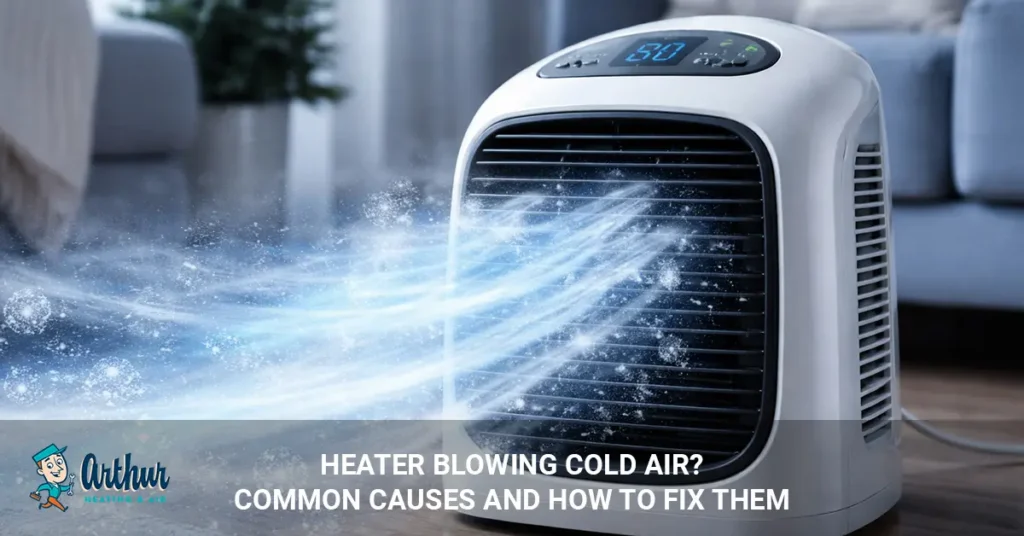
A heater blowing cold air doesn’t always mean your heating system has failed. In many cases, the problem is caused by something simple, such as an incorrect thermostat setting, a dirty air filter, or a temporary operating mode. However, persistent cold air can also signal more serious issues like ignition failure, a dirty flame sensor, gas supply problems, overheating, or a malfunctioning heat pump.
Some heating systems naturally blow unheated air for a short time when they first start or after the burner shuts off. If the cold air lasts only a minute or two, this is often normal. But if your heater continues blowing cold air and your home never warms up, the system needs attention before the problem worsens.
In this guide, you’ll learn why your heater is blowing cold air, the most common causes, warning signs of serious heating problems, safe troubleshooting steps you can try yourself, how HVAC technicians diagnose the issue, and when it’s time to call a licensed professional.
Why Is My Heater Blowing Cold Air?
A heater usually blows cold air because it’s unable to produce heat or distribute it properly throughout your home. The problem may be as simple as an incorrect thermostat setting or a clogged air filter, or it could involve a faulty ignition system, dirty flame sensor, gas supply issue, or heat pump operating in defrost mode.
In some situations, blowing cool air is completely normal. For example, many furnaces circulate air briefly before the burners ignite, and heat pumps periodically enter a defrost cycle during cold weather. However, if your heater continues blowing cold air and your home never reaches the thermostat setting, the system likely needs troubleshooting or repair.
| Possible Cause | Typical Solution |
| Thermostat setting | Adjust thermostat settings |
| Dirty air filter | Replace the air filter |
| Pilot light or ignition failure | Professional repair |
| Dirty flame sensor | Clean or replace the flame sensor |
| Overheating furnace | Restore proper airflow |
| Gas supply problem | Professional diagnosis |
| Heat pump defrost cycle | Normal operation |
The key is determining whether the cold air is temporary or continuous. If the heater begins producing warm air after a minute or two, the system may be operating normally. If it continues blowing cold air throughout the heating cycle, it’s time to identify the underlying cause before it leads to higher energy bills or more extensive HVAC repairs.
Common Reasons Your Heater Is Blowing Cold Air
A heater can blow cold air for several different reasons, ranging from simple maintenance issues to more serious furnace or heat pump problems. Identifying the underlying cause is the first step toward restoring reliable heat.
Thermostat Is Set Incorrectly
Incorrect thermostat settings are one of the simplest causes of cold air. Make sure the thermostat is set to Heat, not Cool or Fan. If the fan is set to On, it will continue circulating air even after the burners shut off, making the air from the vents feel cool.
For most homes, setting the fan to Auto allows it to run only during the heating cycle.
Furnace Is Overheating
An overheating furnace will shut off the burners as a safety precaution, leaving the blower to circulate unheated air. This often happens when restricted airflow causes the heat exchanger to become too hot.
Common causes of overheating include:
- Dirty air filter
- Closed or blocked supply vents
- Blocked return air vents
- Failing blower motor
Once the furnace cools down, it may restart, only to repeat the same cycle. If your system repeatedly starts and stops, learn more about why your heater keeps shutting off and what causes short cycling.
Dirty Air Filter
A clogged air filter can restrict airflow enough to prevent proper heating. Reduced airflow forces the furnace to work harder and may trigger the high-limit safety switch, causing the burners to shut off while the blower continues running.
Replacing the air filter every one to three months is one of the easiest ways to prevent this problem. Learn how a dirty air filter affects your heater’s performance and why regular filter changes are essential for reliable heating.
Pilot Light Is Out (Older Furnaces)
Older gas furnaces with standing pilot lights won’t produce heat if the pilot goes out. Without a pilot flame, the burners can’t ignite, so the blower may circulate cool air instead.
If the pilot repeatedly goes out, the furnace should be inspected by an HVAC professional.
Faulty Electronic Ignition
Modern furnaces rely on electronic ignition systems instead of pilot lights. If the igniter fails or becomes worn, the burners won’t ignite even though the blower continues operating.
A faulty igniter usually requires professional replacement.
Dirty Flame Sensor
A dirty flame sensor can cause the burners to shut off within seconds after ignition. The flame sensor confirms that a burner flame is present. If it becomes coated with dirt or corrosion, the furnace’s safety system shuts off the gas supply to prevent unsafe operation.
Cleaning or replacing the flame sensor often restores proper heating.
Gas Supply Problems
If the furnace isn’t receiving enough gas, it can’t generate heat. A closed gas valve, low gas pressure, or a malfunctioning gas control valve may prevent the burners from operating correctly.
Gas-related problems should always be diagnosed by a licensed HVAC technician.
Leaky or Damaged Ductwork
Damaged ductwork can make the air from your vents feel cold even when the furnace is producing heat. Leaks in unconditioned spaces such as attics, crawl spaces, or garages allow warm air to escape before it reaches your living areas.
Professional duct sealing can improve both comfort and energy efficiency.
Heat Pump Defrost Mode
Heat pumps occasionally blow cooler air while operating in defrost mode, and this is completely normal. During freezing weather, frost can accumulate on the outdoor coil. The heat pump temporarily reverses operation to melt the ice before returning to normal heating.
This cycle usually lasts only a few minutes.
Low Refrigerant (Heat Pumps)
Low refrigerant reduces a heat pump’s ability to transfer heat into your home. As refrigerant levels drop, the system becomes less efficient and may blow lukewarm or cold air instead of comfortably warm air.
Because refrigerant systems are sealed, low refrigerant usually indicates a leak that requires professional repair.
Although some of these problems have simple solutions, persistent cold air shouldn’t be ignored. Identifying the cause early can restore comfort, improve energy efficiency, and help prevent more expensive HVAC repairs.
Warning Signs of a More Serious Heating Problem
A heater blowing cold air is sometimes a symptom of a larger HVAC problem that requires professional attention. If the cold air is accompanied by unusual smells, noises, or repeated system shutdowns, don’t ignore the warning signs. Addressing these issues early can help prevent equipment damage and protect your home’s safety.
Burning Smell
A persistent burning smell may indicate overheating or an electrical problem. It’s normal to notice a light dusty odor the first time you use your heater each season, but the smell should disappear after a short time.
If the burning odor continues, possible causes include:
- Overheating components
- Dirty blower motor
- Electrical wiring problems
- Failing motor bearings
Turn off the heater and schedule an inspection if the smell doesn’t go away.
Gas Odor
A gas smell near your furnace should always be treated as an emergency. Natural gas has a distinctive sulfur or rotten egg odor added for safety.
If you smell gas:
- Leave the home immediately.
- Don’t operate light switches or electrical devices.
- Avoid using open flames.
- Contact your gas utility and emergency services from a safe location.
Do not restart the furnace until it has been inspected by a qualified professional.
Frequent Short Cycling
A heater that repeatedly turns on and off may be short cycling. This problem often results from restricted airflow, thermostat issues, overheating, or failing furnace components. Short cycling reduces efficiency and places extra wear on the heating system.
Strange Noises
Unusual furnace noises can indicate developing mechanical problems. While every heating system makes some operating sounds, new or loud noises shouldn’t be ignored.
Common sounds include:
- Banging
- Rattling
- Squealing
- Grinding
- Clicking
These noises may point to loose components, blower motor issues, ignition problems, or airflow restrictions.
Rising Energy Bills
A sudden increase in heating costs often means your system is working harder than it should. If your heater blows cold air while running longer or cycling more frequently, declining efficiency may be increasing your utility bills.
Carbon Monoxide Alarm
A carbon monoxide alarm should never be ignored. If the alarm activates:
- Turn off the heating system if it’s safe to do so.
- Leave the home immediately.
- Move everyone, including pets, outside.
- Call emergency services or your gas utility.
- Do not re-enter until the home has been declared safe.
Carbon monoxide is colorless, odorless, and potentially life-threatening. Every home with fuel-burning appliances should have working carbon monoxide detectors installed according to the manufacturer’s recommendations.
If your heater is blowing cold air along with any of these warning signs, stop troubleshooting and contact a licensed HVAC technician. Prompt diagnosis can prevent larger repairs, improve heating performance, and ensure your heating system operates safely.
Tried these steps and still getting cold air?
Let a professional find the problem quickly and safely.
 Book a Heater Check
Can You Fix a Heater Blowing Cold Air Yourself?
You can often fix a heater blowing cold air if the problem is caused by a simple maintenance issue, but persistent cold air usually requires professional repair. Before calling an HVAC technician, there are several safe troubleshooting steps you can try.
Check the Thermostat
Start by confirming your thermostat settings. Make sure it’s set to Heat and that the temperature is higher than the current room temperature.
Also check that:
- The fan is set to Auto, not On
- The thermostat batteries are working (if applicable)
- The thermostat isn’t located near a window, fireplace, or supply vent that could affect temperature readings
Replace the Air Filter
A dirty air filter is one of the most common causes of heating problems. If the filter is clogged, replace it with the correct size and MERV rating recommended by the manufacturer.
A clean filter improves airflow, helps prevent overheating, and allows the furnace to heat your home more efficiently.
Check the Circuit Breaker
If your heater isn’t producing heat, inspect your home’s electrical panel. A tripped breaker may prevent the furnace or heat pump from operating correctly.
If a breaker has tripped:
- Reset it once.
- If it trips again, stop resetting it and contact an HVAC professional.
Repeated breaker trips usually indicate an electrical problem that needs repair.
Open All Supply and Return Vents
Blocked vents can reduce airflow and affect heating performance. Walk through your home and make sure:
- Supply registers are fully open.
- Return air vents aren’t blocked by furniture or rugs.
- Curtains or storage items aren’t restricting airflow.
Proper airflow helps the heating system operate safely and efficiently.
Reset the Furnace
Some heating systems can recover from temporary faults with a simple reset. Follow the reset procedure in your owner’s manual.
If the heater immediately begins blowing cold air again after resetting, don’t continue restarting the system. Repeated resets won’t solve the underlying problem.
Check the Pilot Light (Older Furnaces)
If your furnace has a standing pilot light, verify that it’s lit. A pilot light that won’t stay lit may indicate a faulty thermocouple, gas valve problem, or another issue that requires professional service.
Always follow the manufacturer’s instructions when relighting a pilot light.
Know When to Stop Troubleshooting
Don’t attempt repairs involving gas, electrical components, or internal furnace parts. Avoid working on:
- Gas valves
- Burners
- Flame sensors
- Ignition systems
- Electrical wiring
- Control boards
Improper repairs can create fire hazards, gas leaks, electrical shock risks, or carbon monoxide exposure.
If your heater continues blowing cold air after these basic checks, schedule an inspection with a licensed HVAC technician. Professional diagnosis can identify the root cause and restore safe, reliable heating before a minor issue becomes a more expensive repair.
How HVAC Technicians Diagnose the Problem
HVAC technicians use specialized tools and testing procedures to determine why a heater is blowing cold air. Since several different issues can produce the same symptom, a complete inspection helps identify the actual cause and ensures the correct repair is made.
Thermostat Testing
The thermostat is one of the first components an HVAC technician checks. They verify that it’s accurately reading the room temperature, communicating properly with the heating system, and programmed correctly.
The technician may also inspect:
- Thermostat wiring
- Battery condition (if applicable)
- Thermostat location
- Calibration and temperature accuracy
If the thermostat is faulty, recalibration or replacement may restore normal heating.
Airflow Inspection
Proper airflow is essential for efficient furnace operation. Restricted airflow can cause overheating, short cycling, and cold air from the vents.
During an airflow inspection, the technician checks:
- Air filter condition
- Supply and return vents
- Blower motor operation
- Blower wheel cleanliness
- Ductwork for restrictions or leaks
Correcting airflow problems often improves both heating performance and energy efficiency.
Ignition System Inspection
The ignition system is inspected to ensure the burners ignite correctly. Depending on the furnace, the technician checks the electronic igniter or standing pilot light for signs of wear, damage, or failure.
If the burners don’t ignite consistently, the furnace cannot produce warm air.
Flame Sensor Testing
The flame sensor confirms that the burner flame is present during operation. If it’s dirty or malfunctioning, the furnace safety system shuts off the gas supply within seconds.
The technician will:
- Remove and inspect the flame sensor
- Clean off oxidation or buildup
- Replace the sensor if it’s damaged
A dirty flame sensor is one of the most common causes of furnaces blowing cold air.
Gas Pressure Testing
Proper gas pressure is necessary for safe and efficient heating. HVAC technicians use specialized gauges to verify that the furnace is receiving the correct gas pressure and that the gas valve is operating properly.
Gas pressure that’s too low can prevent the burners from producing enough heat.
Heat Exchanger Inspection
The heat exchanger is inspected for cracks, corrosion, or signs of overheating. A damaged heat exchanger can reduce heating performance and create a potential carbon monoxide hazard.
If the technician suspects a cracked heat exchanger, the furnace should remain off until the problem is repaired or the system is replaced.
System Performance Testing
After completing any necessary repairs, the technician performs a full system performance test. They verify that the burners ignite properly, the blower operates correctly, airflow is adequate, and the furnace completes a normal heating cycle without blowing cold air.
A complete diagnostic process ensures the underlying problem is corrected instead of simply treating the symptoms, helping restore reliable heating and prevent future breakdowns.
When Should You Call an HVAC Professional?
You should call an HVAC professional if your heater continues blowing cold air after basic troubleshooting or shows signs of a serious mechanical or safety issue. While replacing an air filter or adjusting the thermostat may solve simple problems, persistent cold air often requires specialized testing and repair.
Contact a licensed HVAC technician if you notice any of the following:
- The heater never blows warm air. If the system runs continuously but only produces cold air, the problem may involve the ignition system, gas supply, or another major component.
- The heater repeatedly blows cold air. If the furnace briefly heats and then switches back to cold air, it may be overheating or short cycling.
- You smell natural gas. Leave the home immediately, avoid using electrical switches, and contact your gas utility and emergency services from a safe location. Do not attempt to restart the furnace.
- A persistent burning smell develops. An ongoing burning odor may indicate overheating, electrical problems, or failing components that require immediate inspection.
- The carbon monoxide alarm activates. Turn off the heating system if it’s safe to do so, evacuate everyone from the home, and call emergency services. Do not re-enter until the home has been declared safe.
- The furnace won’t stay running. If the burners ignite but shut off within seconds or the system repeatedly restarts, professional diagnosis is needed.
- The system displays an error code. Modern furnaces often display diagnostic codes that indicate problems with sensors, ignition components, pressure switches, or safety controls.
Prompt repairs can prevent small heating problems from becoming major equipment failures. A licensed HVAC technician has the tools and experience to identify the root cause, restore reliable heating, and ensure your system operates safely throughout the heating season.
How to Prevent Your Heater From Blowing Cold Air
Regular maintenance is the best way to prevent your heater from blowing cold air unexpectedly. Keeping your heating system clean, maintaining proper airflow, and addressing small issues early can improve efficiency, reduce breakdowns, and extend the life of your furnace or heat pump.
Replace the Air Filter Regularly
A clean air filter allows air to flow freely through your heating system. Replace the filter every one to three months, or according to the manufacturer’s recommendations. Homes with pets or higher dust levels may need more frequent filter changes.
Schedule Annual Heating Maintenance
An annual HVAC tune-up helps identify worn or failing components before they cause heating problems. Following a heater tune-up checklist each year helps improve efficiency, reduce breakdowns, and keep your heating system operating reliably. During a maintenance visit, an HVAC technician will typically:
- Inspect and clean the flame sensor
- Check the ignition system
- Test the thermostat
- Inspect the blower motor
- Verify proper airflow
- Examine the heat exchanger
- Test safety controls
Routine maintenance helps keep your heater operating safely and efficiently throughout the heating season.
Keep Supply and Return Vents Open
Blocked vents can reduce airflow and cause overheating. Make sure furniture, rugs, curtains, and other household items don’t block supply registers or return air vents.
Proper airflow allows warm air to circulate evenly throughout your home.
Maintain Your Thermostat
A properly functioning thermostat helps the heating system operate efficiently. Replace batteries when needed, keep the thermostat clean, and avoid placing lamps or other heat-producing appliances nearby that could affect temperature readings.
Schedule Heat Pump Maintenance
If your home uses a heat pump, regular maintenance is just as important. A technician should inspect refrigerant levels, clean the outdoor coil, verify the defrost cycle is working properly, and check electrical components to ensure efficient heating.
Address Small Problems Early
Don’t ignore unusual heating system behavior. Strange noises, occasional cold air, uneven heating, or short cycling are often early warning signs of developing problems. Prompt repairs are usually less expensive than waiting for a complete system failure.
Preventive maintenance is one of the most cost-effective ways to keep your heating system running reliably. A little routine care can improve comfort, lower energy bills, reduce unexpected repairs, and help your heater last longer.
Frequently Asked Questions
Why is my heater running but not heating?
If your heater is running but not heating, it may have a dirty air filter, thermostat problem, ignition failure, dirty flame sensor, or gas supply issue. Heat pumps may also blow cool air if they’re in defrost mode or have low refrigerant.
Can a dirty air filter make a heater blow cold air?
Yes. A clogged air filter can restrict airflow, causing the furnace to overheat and shut off the burners while the blower continues circulating cool air. Replacing the filter is often one of the first troubleshooting steps.
Why does my heater blow cold air before getting warm?
This is normal for many heating systems. The blower may start before the burners ignite, or it may continue running briefly after the burners shut off to remove remaining heat from the heat exchanger. If warm air follows after a minute or two, the system is usually operating correctly.
Is it normal for a heat pump to blow cool air?
Yes. During the defrost cycle, a heat pump temporarily switches modes to melt frost from the outdoor coil. During this process, the air from the vents may feel cooler than normal for several minutes before the system returns to heating mode.
Can a thermostat cause a heater to blow cold air?
Yes. Incorrect thermostat settings, weak batteries, faulty wiring, or a malfunctioning thermostat can prevent the heating system from operating correctly or cause it to cycle improperly.
Why does my furnace keep blowing cold air after replacing the filter?
If replacing the filter doesn’t solve the problem, the issue may involve the ignition system, flame sensor, gas valve, blower motor, or another internal component. Understanding the average furnace repair cost can help you prepare if professional service is needed. A professional HVAC inspection is usually needed to determine the exact cause.
Should I turn off my heater if it’s blowing cold air?
If your heater only blows cold air and your home isn’t warming up, it’s a good idea to turn the system off and inspect simple issues such as the thermostat and air filter. However, if you smell gas, notice a persistent burning odor, or your carbon monoxide alarm sounds, turn off the heating system if it’s safe to do so, leave the home immediately, and contact your gas utility or emergency services.
Final Thoughts
A heater blowing cold air doesn’t always mean you need a new heating system. In many cases, the problem is caused by something simple, such as an incorrect thermostat setting, a dirty air filter, or normal heat pump operation. However, persistent cold air can also indicate more serious issues involving the ignition system, flame sensor, gas supply, or airflow.
Start with the basic troubleshooting steps, such as checking the thermostat, replacing the air filter, and ensuring vents are open. If your heater continues blowing cold air or you notice warning signs such as gas odors, burning smells, frequent short cycling, or a carbon monoxide alarm, stop using the system and contact a licensed HVAC technician. Prompt repairs can restore reliable heating, improve energy efficiency, and help prevent more expensive furnace repairs.
Still Blowing Cold Air? Get It Fixed Today
Fast, reliable furnace repair to bring the heat back.
 Schedule Furnace Repair