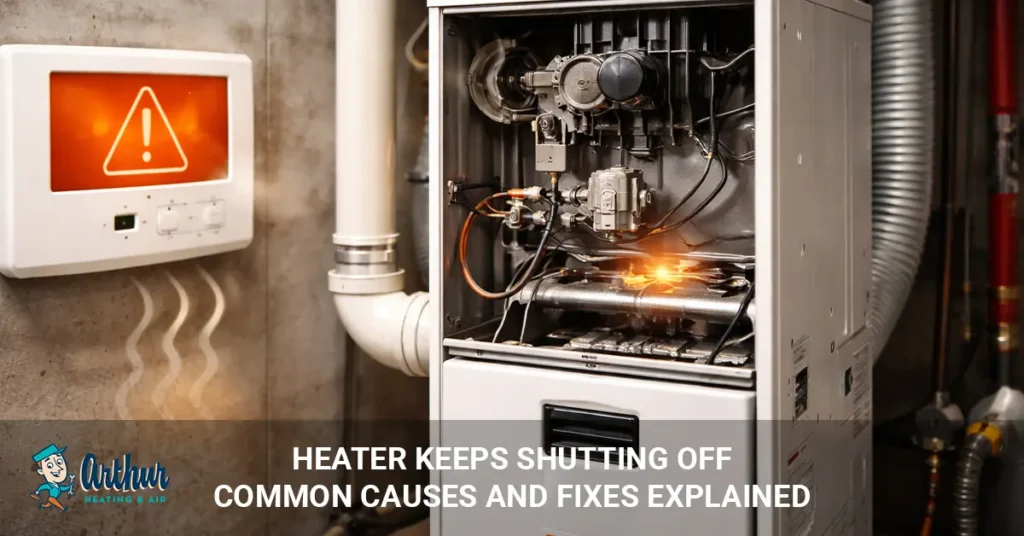
If your heater keeps shutting off after running for only a few minutes, it’s likely experiencing short cycling. Short cycling occurs when a furnace or heating system turns on, runs briefly, then shuts off before reaching the temperature set on the thermostat. While the heater may restart a few minutes later, this repeated cycling reduces efficiency, increases energy bills, and places unnecessary wear on important components.
Several problems can cause a heater to short cycle. A dirty air filter, faulty thermostat, overheating furnace, dirty flame sensor, blocked vents, oversized furnace, or failing limit switch are among the most common causes. Some issues are simple enough for homeowners to address, while others require professional diagnosis and repair.
In this guide, you’ll learn why your heater keeps shutting off, the most common causes, warning signs of short cycling, safe troubleshooting steps, how HVAC technicians diagnose the problem, and when it’s time to call a professional before a minor issue turns into an expensive repair.
Why Does My Heater Keep Shutting Off?
A heater that keeps shutting off is usually experiencing short cycling, which means it stops running before completing a normal heating cycle. Instead of heating your home to the temperature set on the thermostat, the furnace turns off after only a few minutes, then starts again shortly afterward. This repeated cycling wastes energy, increases wear on the system, and can lead to costly repairs if the underlying problem isn’t fixed.
A properly functioning heating system should run long enough to warm your home evenly before shutting off. When the heating cycle is interrupted repeatedly, it’s often a sign of restricted airflow, thermostat problems, overheating, or a malfunctioning furnace component.
| Normal Heating Cycle | Short Cycling |
| Runs until the thermostat reaches the set temperature | Shuts off after only a few minutes |
| Maintains consistent indoor comfort | Creates uneven temperatures |
| Uses energy efficiently | Increases energy consumption |
| Places normal wear on components | Causes excessive wear and tear |
| Extends furnace lifespan | Can shorten equipment life |
Short cycling doesn’t always mean your furnace is failing, but it should never be ignored. Even a simple issue, such as a clogged air filter, can reduce airflow enough to trigger repeated shutdowns. In other cases, the cause may be a faulty thermostat, dirty flame sensor, blocked vent, or an overheating heat exchanger that requires professional service.
Common Reasons Your Heater Keeps Shutting Off
Several heating system problems can cause a furnace to shut off before completing a normal heating cycle. Some causes are simple enough to fix yourself, while others require professional HVAC service to prevent further damage.
Dirty Air Filter
A clogged air filter is one of the most common causes of short cycling. When the filter becomes packed with dust and debris, it restricts airflow through the furnace. Reduced airflow causes the heat exchanger to overheat, triggering the high-limit safety switch and shutting the heater off to prevent damage.
Replacing the air filter regularly helps maintain proper airflow and often resolves this problem. Learn more about how dirty air filters affect your heater’s performance and why regular filter changes are essential.
Thermostat Problems
A faulty thermostat can cause your heater to shut off too early. Incorrect thermostat settings, weak batteries, poor placement near heat sources, or wiring issues may cause the thermostat to think the home has reached the desired temperature before it actually has.
If the thermostat is located near a sunny window, supply vent, or fireplace, it may also receive inaccurate temperature readings.
Overheating Furnace
An overheating furnace automatically shuts itself off to protect internal components. Restricted airflow, blocked supply vents, dirty blower components, or mechanical problems can all cause excessive heat to build up inside the furnace.
The high-limit switch is designed to stop the heating cycle before permanent damage occurs.
Dirty Flame Sensor
A dirty flame sensor may shut off the burner shortly after ignition. The flame sensor confirms that the burner flame is present. If dirt or corrosion prevents it from detecting the flame correctly, the furnace’s safety system shuts off the gas supply within a few seconds.
Cleaning or replacing the flame sensor often restores normal operation.
Blocked Exhaust or Air Intake Vent
Blocked vent pipes can force the furnace to shut down as a safety precaution. Snow, leaves, bird nests, or other debris may restrict airflow through the intake or exhaust vent, especially on high-efficiency furnaces.
Never attempt to operate a furnace with a blocked vent because improper venting can create dangerous operating conditions.
Oversized Furnace
A furnace that’s too large for your home often short cycles because it heats the house too quickly. Although this may sound beneficial, oversized systems don’t run long enough to distribute heat evenly, resulting in frequent starts and stops, uneven temperatures, and increased equipment wear.
Blower Motor Problems
A failing blower motor can reduce airflow enough to trigger repeated shutdowns. Worn bearings, failing capacitors, damaged belts (on older systems), or motor failure can all prevent the blower from circulating enough air through the furnace.
Without adequate airflow, the heat exchanger overheats and the safety controls shut the system down.
Limit Switch Failure
A faulty limit switch may incorrectly shut off the furnace even when temperatures are normal. Because this safety device protects the furnace from overheating, it should only be tested and replaced by a qualified HVAC technician.
Gas Supply Problems
An interrupted gas supply can cause the burner to shut off unexpectedly. Low gas pressure, a partially closed gas valve, or problems with the gas control valve can prevent the burner from operating continuously. Since gas-related issues involve safety risks, they should always be diagnosed by a licensed HVAC professional.
Although some causes of short cycling are relatively simple, repeated shutdowns should never be ignored. Identifying the underlying problem early can improve efficiency, reduce energy costs, and help prevent expensive furnace repairs.
Warning Signs Your Furnace Is Short Cycling
A furnace that short cycles usually shows several warning signs before it stops heating your home effectively. Recognizing these symptoms early can help prevent higher energy bills, unnecessary wear on the system, and costly repairs.
Heater Turns Off After a Few Minutes
One of the most obvious signs of short cycling is a heater that shuts off after only a few minutes of operation. Instead of running long enough to reach the thermostat setting, the furnace repeatedly starts and stops, making it difficult to maintain a comfortable indoor temperature.
Uneven Heating
Short cycling often causes some rooms to feel warm while others remain cold. Because the heating cycle ends too soon, warm air doesn’t have enough time to circulate evenly throughout the home. If your system is also blowing cold air instead of heat, it could indicate a more serious furnace problem.
Higher Energy Bills
Frequent starting and stopping can increase your heating costs. Furnaces use the most energy during startup, so repeated cycling forces the system to consume more fuel or electricity than a normal heating cycle.
Frequent Cycling
A heater that turns on and off every few minutes is not operating normally. Most furnaces should complete a full heating cycle before shutting down. Constant cycling places additional stress on the blower motor, igniter, and other components, increasing the likelihood of future repairs.
Strange Noises
Clicking, banging, rattling, or loud humming sounds may accompany short cycling. While some furnace noises are normal, new or unusual sounds can indicate mechanical problems such as a failing blower motor, loose components, or ignition issues.
Burning Smell
A persistent burning smell should never be ignored. A brief dusty odor at the beginning of the heating season is common, but a burning smell that continues while the furnace runs may indicate overheating, restricted airflow, or an electrical problem.
If your heater repeatedly shuts off and you notice one or more of these warning signs, schedule an inspection as soon as possible. Addressing short cycling early can improve heating performance, reduce utility costs, and help extend the lifespan of your furnace.
Can You Fix a Heater That Keeps Shutting Off Yourself?
You can fix some causes of short cycling yourself, but recurring shutdowns often require professional diagnosis. Simple maintenance tasks such as replacing a dirty air filter or checking the thermostat may solve the problem. However, issues involving gas, electrical components, or the furnace’s safety controls should always be handled by a licensed HVAC technician.
Replace the Air Filter
Start by checking the furnace air filter. A clogged filter restricts airflow, causing the furnace to overheat and shut down before completing a heating cycle.
If the filter looks dirty:
- Replace it with the correct size and type.
- Follow the manufacturer’s recommended MERV rating.
- Check the filter every one to three months during the heating season.
This is one of the easiest and most effective DIY fixes.
Check the Thermostat
Make sure the thermostat is working properly. Verify that it’s set to Heat and that the temperature setting is above the current room temperature.
Also check for:
- Weak or dead batteries
- Loose wiring (if visible)
- Incorrect programming
- Placement near windows, supply vents, or other heat sources
A poorly located thermostat can cause inaccurate temperature readings and frequent cycling.
Open All Supply and Return Vents
Blocked vents can reduce airflow and cause the furnace to overheat. Walk through your home and make sure supply registers and return air vents are fully open and free of furniture, rugs, or curtains.
Good airflow helps the furnace complete a normal heating cycle.
Check the Exhaust Vent
High-efficiency furnaces rely on clear intake and exhaust vents for safe operation. If the vent pipe exits through an exterior wall, inspect it for obvious obstructions such as:
- Leaves
- Snow or ice
- Bird nests
- Dirt or debris
Never disassemble vent pipes yourself. Only remove visible obstructions around the exterior opening.
Reset the Furnace
Some furnaces can recover from a temporary fault after being reset. Follow the reset procedure recommended in your owner’s manual. If the furnace immediately begins short cycling again, don’t continue resetting it. Repeated shutdowns indicate an underlying problem that needs to be diagnosed.
Avoid Chemical or Mechanical Repairs
Don’t attempt to repair gas valves, flame sensors, limit switches, electrical wiring, or burners yourself unless you’re qualified to do so. These components are critical safety devices, and improper repairs can create fire, gas leak, or carbon monoxide hazards.
If your heater continues shutting off after these basic troubleshooting steps, schedule professional HVAC service. Early diagnosis can prevent more expensive repairs and help restore safe, reliable heating.
Not Sure What’s Causing Your Heater To Shut Off?
A professional inspection can find the problem fast and prevent bigger repairs.
 Book a Heater Inspection
How HVAC Technicians Diagnose Short Cycling
HVAC technicians use specialized testing equipment to identify why a heater keeps shutting off before completing a normal heating cycle. Since several different problems can cause short cycling, a complete inspection helps pinpoint the exact issue and prevents unnecessary repairs.
Thermostat Testing
The thermostat is one of the first components an HVAC technician checks. They verify that it’s reading the room temperature accurately, communicating correctly with the furnace, and located in an area that isn’t affected by direct sunlight, nearby supply vents, or other heat sources.
If necessary, the technician may recalibrate, repair, or replace the thermostat.
Airflow Inspection
Proper airflow is essential for safe furnace operation. Technicians inspect the air filter, blower motor, evaporator coil (if applicable), supply vents, and return vents to identify restrictions that could cause the furnace to overheat.
During the inspection, they may check for:
- Dirty air filters
- Blocked return vents
- Closed supply registers
- Dirty blower components
- Airflow imbalances
Flame Sensor Inspection
A dirty or failing flame sensor can cause the burner to shut off within seconds of ignition. The technician removes and inspects the flame sensor for dirt, oxidation, or damage, then cleans or replaces it if necessary.
This is one of the most common repairs for gas furnaces that repeatedly shut off after starting.
Electrical Testing
Electrical testing helps identify failing components that interrupt the heating cycle. Using specialized diagnostic tools, technicians test parts such as:
- Limit switches
- Pressure switches
- Control boards
- Ignition systems
- Capacitors
- Blower motors
- Wiring connections
These tests help determine whether an electrical fault is causing the furnace to shut down.
Heat Exchanger Inspection
The heat exchanger is inspected for overheating, cracks, or other signs of damage. A damaged heat exchanger can trigger safety shutdowns and may also allow carbon monoxide to escape into the home.
If a cracked heat exchanger is suspected, the furnace should remain off until repairs or replacement are completed.
Furnace Performance Testing
After completing any repairs, the technician tests the furnace to confirm it operates normally. They monitor the heating cycle, airflow, temperature rise, burner operation, and safety controls to verify the furnace runs efficiently without short cycling.
A thorough diagnosis ensures the actual cause of the problem is corrected rather than simply treating the symptoms. This helps improve heating performance, reduce energy costs, and extend the life of the furnace.
When Should You Call an HVAC Professional?
You should call an HVAC professional if your heater continues shutting off after basic troubleshooting or shows signs of a serious mechanical or safety problem. While replacing an air filter or checking the thermostat may solve simple issues, repeated short cycling often requires specialized diagnostic equipment.
Contact a licensed HVAC technician if you notice any of the following:
- The heater won’t stay on. If the furnace starts but shuts off after only a few minutes every time it runs, professional diagnosis is recommended.
- A persistent burning smell. A dusty smell at the beginning of the heating season is normal, but an ongoing burning odor may indicate overheating, electrical problems, or damaged components.
- You smell natural gas. If you detect the odor of gas, leave the home immediately, avoid using electrical switches, and contact your gas utility and an HVAC professional. Do not attempt to restart the furnace.
- The carbon monoxide alarm activates. Turn off the heating system if it’s safe to do so, leave the building immediately, and call emergency services or your gas utility. Do not re-enter until the home has been declared safe.
- The furnace keeps restarting. Frequent on-and-off cycling places excessive wear on the blower motor, ignition system, and other critical components.
- The furnace displays an error code. Many modern heating systems display diagnostic codes that indicate problems with sensors, pressure switches, ignition systems, or safety controls.
- The heater isn’t producing enough heat. If your home never reaches the thermostat setting despite the furnace running repeatedly, the system needs professional inspection.
Prompt repairs can prevent minor heating issues from becoming expensive equipment failures. A licensed HVAC technician can identify the root cause of the short cycling, restore safe operation, and help extend the lifespan of your heating system.
How to Prevent Your Heater From Short Cycling
Routine maintenance is the best way to prevent a heater from short cycling. Keeping your heating system clean, maintaining proper airflow, and addressing small issues early can improve efficiency and reduce unnecessary wear on furnace components.
To help prevent your heater from shutting off prematurely:
Replace the Air Filter Regularly
A clean air filter helps maintain proper airflow through the furnace. Replace the filter every one to three months, or as recommended by the manufacturer. Homes with pets or higher dust levels may require more frequent filter changes.
Schedule Annual Furnace Maintenance
Professional maintenance helps identify small problems before they become major repairs. Following a heater tune-up checklist each year can improve efficiency, reduce breakdowns, and help prevent short cycling. During an annual tune-up, an HVAC technician can:
- Inspect and clean the flame sensor
- Check the blower motor
- Test safety controls
- Inspect the heat exchanger
- Verify proper airflow
- Confirm thermostat accuracy
Annual maintenance helps keep the furnace operating safely and efficiently throughout the heating season.
Keep Supply and Return Vents Open
Blocked vents restrict airflow and can cause the furnace to overheat. Make sure furniture, rugs, curtains, and other objects aren’t covering supply registers or return air vents.
Maintain Proper Thermostat Settings
Avoid making frequent thermostat adjustments. Constantly changing the temperature setting can cause the furnace to cycle more often than necessary. If your thermostat uses batteries, replace them when recommended to ensure accurate operation.
Keep the Area Around the Furnace Clean
A clean furnace area promotes proper airflow and safe operation. Remove boxes, storage items, dust, and debris from around the furnace to allow adequate air circulation and reduce fire hazards.
Address Small Problems Early
Don’t ignore unusual furnace behavior. Strange noises, burning odors, uneven heating, or occasional short cycling are often early warning signs of developing problems. Having these issues inspected promptly can prevent more extensive damage and costly repairs.
A little preventive maintenance goes a long way. Keeping your heating system clean and scheduling regular inspections can improve comfort, lower energy bills, extend the life of your furnace, and reduce the likelihood of unexpected breakdowns.
Frequently Asked Questions
Why does my heater shut off after a few minutes?
A heater that shuts off after a few minutes is usually short cycling. Common causes include a dirty air filter, faulty thermostat, overheating furnace, dirty flame sensor, blocked vents, or a malfunctioning limit switch. A professional inspection can identify the exact cause if basic troubleshooting doesn’t solve the problem.
Is short cycling dangerous?
Short cycling isn’t always dangerous, but it should never be ignored. Repeated shutdowns increase wear on furnace components, reduce heating efficiency, and may indicate a more serious issue such as overheating, a cracked heat exchanger, or a failing safety control.
Can a dirty air filter cause a heater to shut off?
Yes. A dirty air filter is one of the most common causes of short cycling. Restricted airflow causes the furnace to overheat, triggering the high-limit switch and shutting the system down before it completes a normal heating cycle.
Can the thermostat cause short cycling?
Yes. Incorrect thermostat settings, weak batteries, poor placement, faulty wiring, or a malfunctioning thermostat can all cause the furnace to turn off too early.
Why does my heater keep turning on and off but never warms the house?
This usually means the furnace isn’t completing a full heating cycle. Short cycling prevents warm air from circulating throughout the home, leading to uneven temperatures and reduced comfort. Airflow restrictions, thermostat problems, or furnace malfunctions are common causes.
How much does it cost to repair short cycling?
Repair costs depend on the underlying problem. If you’re trying to budget for professional service, review the average furnace repair costs to understand what common heating repairs typically cost.
Replacing an air filter or cleaning a flame sensor is generally inexpensive, while repairing a blower motor, control board, or heat exchanger costs significantly more. A professional diagnosis is the best way to determine the required repair and provide an accurate estimate.
Should I keep using my heater if it keeps shutting off?
It’s best to have the problem inspected as soon as possible. Continuing to operate a short-cycling furnace can increase wear on the system and lead to more expensive repairs. If you notice a gas smell, persistent burning odor, or a carbon monoxide alarm activates, turn off the heating system, leave the home, and contact your gas utility or emergency services immediately.
Final Thoughts
A heater that keeps shutting off is often experiencing short cycling, and it’s a problem that shouldn’t be ignored. While a clogged air filter or thermostat issue may be easy to fix, repeated shutdowns can also point to overheating, airflow restrictions, or failing furnace components that require professional attention.
Start with simple troubleshooting, such as replacing the air filter and checking the thermostat. If the problem continues, schedule an inspection with a licensed HVAC technician. Early diagnosis can improve heating performance, lower energy bills, prevent unexpected breakdowns, and help extend the life of your furnace.
Ready to Fix Your Heater for Good?
Get fast, reliable repair from a licensed technician.
 Schedule Heater Repair