
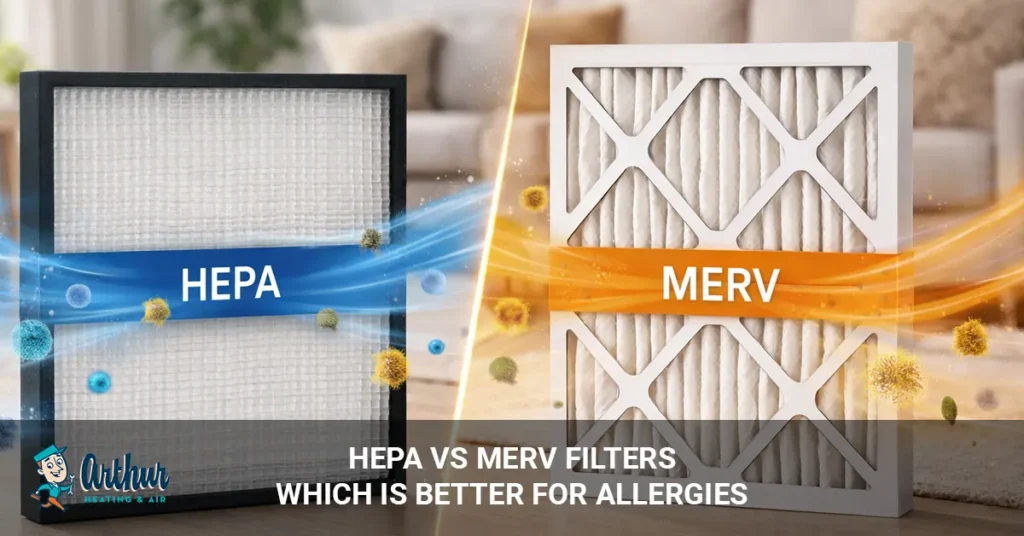
If you want cleaner air at home, you’ve probably seen HEPA and MERV filters. Both work well, but they are made for different uses and give different results.
The main difference is simple. HEPA filters focus on removing the smallest particles, while MERV filters balance filtration with airflow in your HVAC system.
In this guide, you’ll learn how each filter works, which one is better for allergies, and how to choose the right option for your home.
What Is the Difference Between HEPA and MERV Filters?
The main difference between HEPA and MERV filters is that HEPA filters provide the highest level of filtration, while MERV filters balance filtration with proper airflow in HVAC systems.
HEPA filters are built to capture very small particles with high efficiency, making them ideal for removing dust, pollen, pet dander, and other allergens. MERV filters use a rating scale from 1 to 20 and are designed for heating and cooling systems, where airflow is just as important as filtration.
In simple terms, HEPA filters focus on maximum air cleaning, while MERV filters are made to clean the air without affecting your system’s performance.
What Is a HEPA Filter?
A HEPA filter is a high-efficiency air filter that removes very small particles from the air. It is one of the best options for improving indoor air quality, especially for people with allergies.
HEPA filters can capture up to 99.97% of tiny particles like dust, pollen, pet dander, and mold. This makes them very effective for reducing common allergy triggers and improving the air you breathe.
You’ll commonly find HEPA filters in air purifiers, hospitals, and clean environments where air quality matters most. Some advanced home systems also use them for better filtration.
HEPA filters focus on removing as many particles as possible, even if it slightly reduces airflow. That’s why they are best used in air purifiers or systems designed to handle them.
What Is a MERV Filter?
A MERV filter is an air filter used in HVAC systems that is rated from 1 to 20 based on how well it traps particles. Higher ratings mean better filtration.
MERV filters are designed to clean the air while still allowing proper airflow through your heating and cooling system. This balance helps your system run efficiently while reducing dust and allergens.
For most homes, a MERV 8 filter provides basic filtration, while MERV 11 to 13 is the best choice for improving air quality and reducing allergies. Higher ratings like MERV 14 and above offer stronger filtration but are usually not needed for standard home systems.
You’ll commonly find MERV filters installed in furnaces, air conditioners, and central HVAC systems, where they help clean the air throughout your entire home.
HEPA vs MERV Filters (Side-by-Side Comparison)
HEPA filters provide the highest level of filtration, while MERV filters offer a balance between filtration and airflow for everyday use in HVAC systems.
Here’s a simple comparison to help you understand the difference:
| Feature | HEPA Filter | MERV Filter |
| Filtration Power | Very high | Moderate to high |
| Particle Size | Captures extremely small particles | Captures small to medium particles |
| Best Use | Air purifiers | HVAC systems |
| Airflow Impact | Can restrict airflow | Maintains balanced airflow |
| Allergy Control | Excellent | Very good |
In short, HEPA filters are best when you want maximum air cleaning in specific rooms, while MERV filters are better for improving air quality throughout your entire home without affecting system performance.
Which Is Better for Allergies?
HEPA filters are better for allergies because they remove more airborne particles, including the smallest allergens. They are especially helpful if you have strong or constant symptoms.
That said, MERV 11 to 13 filters still do a very good job for everyday use. They work well in HVAC systems and help reduce allergens throughout your entire home.
The best results come from using both together. Place a HEPA air purifier in the rooms where you spend the most time, like your bedroom, and use a MERV 11 to 13 filter in your HVAC system. This setup gives you better coverage and more consistent air quality. For more options, check this guide on the best air filters for allergies.
When Should You Use HEPA Filters?
Use HEPA filters when you need the highest level of air cleaning in specific rooms. They are best for reducing allergens where you spend the most time.
They work especially well in bedrooms and living rooms, where cleaner air can improve comfort and reduce symptoms. HEPA filters are also a great choice if you have pets, as they help capture pet dander and hair.
If you have allergies or asthma, using a HEPA filter can make a noticeable difference in your daily breathing. For best results, place them in the areas you use most often so they can continuously clean the air where it matters most.
When Should You Use MERV Filters?
Use MERV filters when you want to improve air quality across your entire home through your HVAC system. They are the best choice for whole-home filtration.
They work well for everyday air cleaning because they run whenever your heating or cooling system is on. This helps reduce dust and allergens throughout the house without needing multiple devices.
MERV filters are also designed to maintain proper airflow, so your HVAC system can run efficiently without extra strain. This makes them a reliable and practical option for keeping your indoor air cleaner on a daily basis.
Can You Use HEPA Filters in HVAC Systems?
Most standard HVAC systems cannot use HEPA filters because they restrict airflow too much. This can reduce system performance and even lead to damage over time.
HEPA filters are very dense, which makes them excellent at trapping small particles, but it also makes it harder for air to pass through. Most home HVAC systems are not designed to handle this level of resistance.
If you want HEPA-level filtration for your whole home, you may need a system upgrade or a separate air filtration unit designed for that purpose. These systems are built to handle stronger filters without affecting airflow.
For most homes, a MERV 11 to 13 filter is the safest and most effective option. It improves air quality while allowing your HVAC system to run properly.
MERV Ratings Explained (Quick Guide)
MERV ratings show how well an air filter captures particles. The higher the number, the better it filters the air.
MERV 1 to 4 filters provide basic protection and only capture large particles like dust and debris. MERV 5 to 8 filters are common in standard homes and handle moderate dust and pollen.
MERV 9 to 13 filters are the best choice for most homes with allergies. They capture smaller particles like pet dander, fine dust, and mold spores. MERV 14 to 16 filters offer high-efficiency filtration and are usually used in commercial or specialized settings.
Keep in mind that higher MERV ratings can restrict airflow if your system isn’t designed for them. That’s why MERV 11 to 13 is the safest and most effective range for most homes.
Best Choice for Your Home
The best choice for your home is to use both HEPA and MERV filters together. This gives you stronger filtration and better coverage throughout your space.
Use a HEPA air purifier in the rooms where you spend the most time, like your bedroom or living room. This helps remove the smallest allergens right where you need it most. At the same time, install a MERV 11 to 13 filter in your HVAC system to clean the air as it moves through your entire home.
This combination works well because it targets both local and whole-home air quality. It helps reduce allergens more effectively and keeps your indoor air cleaner every day. You can also follow these HVAC tips for allergy sufferers to further improve indoor air quality.
Common Mistakes to Avoid
Avoiding a few key mistakes can help your air filters work better and keep your air cleaner. Small issues can reduce performance and even cause problems with your system.
Using a HEPA filter in a system that isn’t designed for it is a common mistake. It can restrict airflow and affect how your HVAC system runs. Choosing a very high MERV rating without checking your system’s limits can also cause similar issues.
Not replacing your filters on time is another problem. A dirty filter can block airflow and make your indoor air quality worse instead of better.
It’s also important not to rely on just one type of filtration. Using a combination of HEPA and MERV filters gives better results and helps reduce allergens more effectively throughout your home.
Final Thoughts
HEPA and MERV filters both help improve indoor air quality, but they work best when used together in the right way. Understanding how each one works makes it easier to choose the right setup for your home.
If you want the best results, use a HEPA air purifier in key rooms and a MERV 11 to 13 filter in your HVAC system. This simple combination helps reduce allergens, improve airflow, and keep your air cleaner every day.
Cleaner air can make a real difference. You may notice better sleep, fewer symptoms, and a more comfortable home overall.