
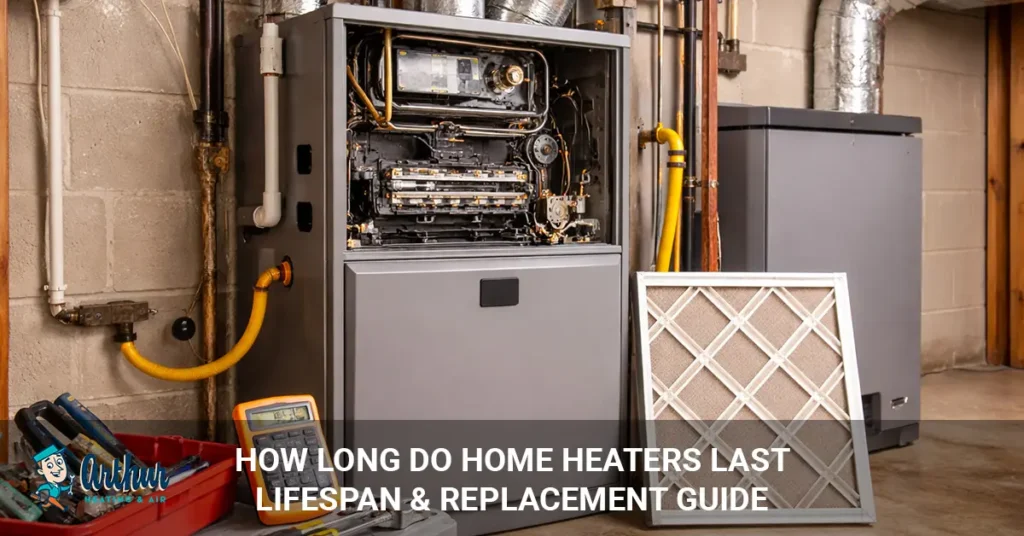
If you’re wondering how long your home heater will last, you’re not alone. Most homeowners start asking this when energy bills go up, repairs become more common, or the house just doesn’t feel as comfortable as it used to.
Heaters usually don’t fail all at once. They wear down slowly over time. Efficiency drops. Reliability declines. Knowing the average lifespan of your heating system helps you plan ahead, avoid unexpected breakdowns, and decide when replacement makes more sense than continued repairs.
This guide explains how long different types of heaters typically last, what affects their lifespan, and how to tell when it’s time to replace yours.
How Long Do Home Heaters Last?
Most home heaters last about 15 to 20 years, depending on the type of system, maintenance, and daily use.
Some heaters last longer when they’re well cared for. Others wear out sooner because of heavy use, poor installation, or missed maintenance. Age alone doesn’t tell the full story, but it’s a good place to start when judging your heater’s condition.
Average Lifespan by Heater Type
Furnaces (Gas, Electric, Oil)
Most furnaces last between 15 and 20 years with proper maintenance. Gas furnaces usually fall near the middle of that range. Electric furnaces can last a bit longer because they have fewer moving parts. Oil furnaces may also last longer, but they often need more frequent service to stay reliable.
Heat Pumps
Heat pumps usually last about 10 to 15 years, depending on usage and climate. Because they run year-round for both heating and cooling, heat pumps experience more wear than other systems. Units in mild climates tend to last longer, while extreme temperatures can shorten their lifespan.
Boilers
Boilers often last 20 to 30 years, making them one of the longest-lasting heating systems. They’re built for durability and usually operate with less stress than forced-air systems. Regular maintenance is still important to help a boiler reach its full lifespan.
Regular cleaning and proper installation are important parts of keeping a boiler reliable throughout its service life. See our guide to clean boiler installation for the installation process, costs, benefits, and best practices.
Wall Heaters and Space Heaters
Smaller heating systems usually have a shorter lifespan than whole-home heaters. Wall heaters often last around 10 to 15 years with proper use. Portable space heaters usually last only a few years and are designed for temporary or supplemental heating, not full-home use.
What Affects a Heater’s Lifespan?
A heater’s lifespan depends mostly on maintenance, how often it runs, and how well it was installed.
- Maintenance and Tune-Ups: Regular maintenance keeps parts clean and helps catch small problems early. Skipping service allows wear to build up and shortens the system’s life.
- Usage and Climate: Heaters in colder climates run more often. The more a system runs, the more wear it experiences over time.
- Installation Quality: Poor installation can lead to airflow issues, overheating, and early breakdowns that reduce lifespan.
- Air Filters and Airflow: Dirty air filters restrict airflow and force the heater to work harder, which speeds up wear and shortens its life.
Signs Your Heater Is Nearing the End of Its Life
Several warning signs can indicate your heater is getting close to the end of its useful life. If your heater is still relatively young, professional heater repair can often fix these issues and help extend the system’s lifespan.
Common signs include frequent repairs, rising energy bills, uneven heating throughout the home, and short cycling. Loud or unusual noises, along with burning or musty smells, are also red flags. One issue alone doesn’t always mean replacement, but when several appear together, it’s usually a sign the heater is wearing out.
Repair vs Replacement: When Age Matters
Heater age plays a major role in deciding whether repair or replacement makes more sense.
If your heater is under 10 years old and the problem is minor, repairs are usually the right choice. Once a system reaches 15 years or more, repairs often stop being cost-effective. A simple guideline is the 50% rule. If a repair costs half or more of a replacement, replacing the heater is usually the smarter option.
Not Sure if You Should Repair or Replace Your Heater?
Get a professional recommendation based on cost and system condition.
 Repair or Replace? Get Expert Advice
How to Extend the Life of Your Heater
You can extend the life of your heater by following a few simple maintenance habits.
Changing air filters regularly helps keep airflow strong. Annual maintenance keeps parts clean and catches small problems early. Keeping vents and returns clear prevents strain on the system. Addressing minor issues right away improves efficiency and helps the heater last longer.
How Heater Age Affects Energy Bills
As heaters age, they use more energy to produce the same level of heat.
Worn components reduce efficiency, which leads to longer run times and higher monthly bills. Newer systems heat more evenly and use less energy, often resulting in noticeable savings over time.
When Should You Replace a Heater?
You should replace a heater when it becomes old, inefficient, or unreliable. In these cases, a heater replacement is often more cost-effective than continuing to pay for frequent repairs.
Replacement is usually the right choice if the system is 15 years or older, repairs are frequent or costly, energy bills keep rising, or comfort problems never fully go away. Safety issues are another clear reason to replace a heater. Replacing at the right time helps prevent emergency breakdowns and unexpected heating failures.
Should You Replace Your Heater Before It Fails?
Replacing a heater before it fails can save money, time, and stress.
Planned replacement gives you time to choose the right system, avoid emergency service costs, and schedule installation during off-peak seasons. Waiting until a heater fails often leads to rushed decisions, limited options, and higher overall costs.
When to Call a Professional HVAC Technician
You should call a professional HVAC technician when you’re unsure about your heater’s condition or how much life it has left.
A technician can inspect the system, check efficiency and safety, and help you decide whether repair or replacement makes the most sense. This expert guidance helps you avoid unnecessary repairs or replacing a heater too early.
Final Thoughts
Most home heaters last about 15 to 20 years when they’re properly maintained.
Age, efficiency, repair history, and comfort issues all play a role in deciding what to do next. Understanding your heater’s lifespan helps you plan ahead, manage costs, and avoid unexpected breakdowns. Replacing a heater at the right time is often simpler and less expensive than waiting for it to fail.
Ready to Upgrade Your Heating System?
Get a personalized replacement estimate with upfront pricing.
 Schedule Heater Replacement Estimate