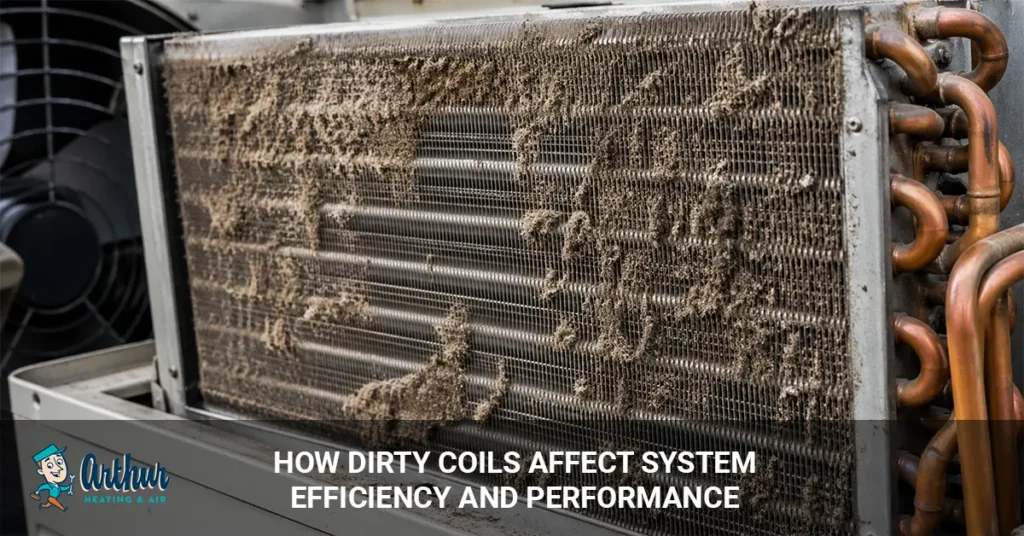
Dirty coils reduce your HVAC system’s efficiency and make it work harder than it should. This leads to higher energy bills, weaker cooling, and faster wear on important parts.
Your system may still run, but it won’t perform at its best. When coils are dirty, they cannot transfer heat properly, which lowers overall efficiency.
Many homeowners don’t notice this problem early. The system keeps running, but performance slowly drops over time.
In this guide, you’ll learn how dirty coils affect your system, the signs to watch for, and simple ways to prevent costly damage.
What Are HVAC Coils and Why Do They Matter?
HVAC coils are key parts of your system that transfer heat to keep your home comfortable. They help your system cool or heat air efficiently.
The evaporator coil is located inside your home and absorbs heat from indoor air. The condenser coil is outside and releases that heat into the air.
When these coils are clean, your system works smoothly and uses less energy. When they get dirty, heat transfer slows down, and your system loses efficiency and performance.
How Dirty Coils Affect System Efficiency
Dirty coils reduce system efficiency by blocking heat transfer and making your HVAC system work harder. This increases energy use and lowers overall performance.
When dirt builds up on the coils, it acts like a barrier. It prevents the system from absorbing and releasing heat properly.
Because of this, your system has to run longer to reach the set temperature. This extra run time uses more energy and puts added strain on the system.
Over time, this leads to higher energy bills and faster wear on key components.
How Dirty Coils Impact HVAC Performance
Dirty coils reduce your HVAC system’s performance and make it harder to keep your home comfortable. The system cannot heat or cool air properly when coils are dirty.
You may notice weak airflow or uneven temperatures from room to room. Some areas may feel too warm, while others stay cooler than expected.
The system may also struggle to maintain the set temperature. It runs longer than usual but still does not deliver consistent comfort.
Over time, this reduces overall performance and puts extra strain on the system.
Common Signs of Dirty Coils
Dirty coils show clear signs that your HVAC system is not working properly. These signs usually appear as reduced cooling and higher energy use.
Your AC may not cool your home as well as before. If your system is not cooling properly, dirty coils could be one of the main reasons. You may feel less airflow or notice rooms taking longer to reach the desired temperature.
You might also see a sudden increase in your energy bills without changing your usage. This often means the system is working harder than it should.
Ice buildup on the coils is another common warning sign. In many cases, the system keeps running but still cannot maintain the set temperature.
Risks of Ignoring Dirty Coils
Ignoring dirty coils can lead to serious damage and costly repairs. What starts as a small issue can quickly turn into a major problem.
When coils are dirty, your system cannot release heat properly. This can cause the system to overheat and put stress on key components.
Over time, this added strain can damage important parts, including the compressor. Compressor failure is one of the most expensive repairs and may even require replacing the entire system.
Dirty coils can also shorten the lifespan of your HVAC system. Regular cleaning and maintenance help prevent these problems and keep your system running longer.
Dirty Evaporator Coil vs Condenser Coil Issues
Dirty evaporator and condenser coils both reduce performance, but they affect your system in different ways. Knowing the difference helps you find the problem faster.
Dirty Evaporator Coil Effects
A dirty evaporator coil reduces indoor cooling and can lead to ice buildup. It blocks the system from absorbing heat properly.
When this happens, your home may not cool as expected. The system runs longer but still struggles to reach the set temperature.
Over time, this reduces comfort and puts extra strain on the system.
Dirty Condenser Coil Effects
A dirty condenser coil prevents heat from escaping outside. This makes your system work harder to release heat.
As a result, the system can overheat and lose efficiency. You may also notice higher energy use and reduced cooling performance.
In some cases, pressure inside the system can increase. This can lead to damage if the issue is not fixed.
How Often Should HVAC Coils Be Cleaned?
HVAC coils should be cleaned at least once a year to keep your system running efficiently. Regular cleaning helps maintain proper airflow and heat transfer.
In some homes, coils may need cleaning more often. If you have pets, high dust levels, or use your system heavily, dirt can build up faster.
Scheduling maintenance before summer and winter is a smart approach. Seasonal inspections help keep coils clean and prevent performance problems before they start.
Can You Clean HVAC Coils Yourself?
You can clean HVAC coils yourself at a basic level, but deep cleaning should be done by a professional. Proper tools and experience are needed to clean coils safely without causing damage.
You can remove leaves, dirt, and debris from the outdoor unit and keep the surrounding area clean. This helps maintain airflow and prevents buildup on the condenser coil.
However, internal coil cleaning is more complex. It requires careful handling and the right cleaning methods to avoid bending fins or damaging components.
If cleaning is done incorrectly, it can reduce system performance or lead to costly repairs. Professional service ensures the coils are cleaned thoroughly and safely, helping your system run efficiently.
How to Prevent Dirty Coil Problems
You can prevent dirty coil problems with simple, regular maintenance. Keeping your system clean helps it run efficiently and last longer.
Changing your air filters regularly is one of the most effective steps. Clean filters reduce dust buildup and protect the coils from getting dirty.
Keeping the outdoor unit clear of leaves, dirt, and grass also helps. Good airflow around the unit allows the system to work properly.
Scheduling annual maintenance is important. Regular AC coil cleaning helps remove buildup and keeps your system running efficiently. A technician can inspect and clean the coils to keep your system running smoothly and prevent future issues.
When to Call a Professional
You should call a professional when dirty coils start affecting your HVAC system’s performance. Waiting too long can turn a small issue into a costly repair.
If your system is not cooling properly, running longer than usual, or showing ice buildup, it’s a clear sign the coils need attention. These problems usually mean the system is struggling to work efficiently.
A professional technician can safely clean the coils, inspect the system, and fix any related issues. This helps restore performance and prevent further damage.
Getting expert service at the right time keeps your system running efficiently and avoids bigger problems later.
Final Thoughts
Dirty coils can reduce your HVAC system’s efficiency and overall performance. Even a small buildup can lead to higher energy costs and bigger repairs over time.
Taking action early makes a big difference. Regular maintenance keeps your system running smoothly and helps avoid unexpected breakdowns.
Keeping your coils clean helps your HVAC system work better, last longer, and maintain a comfortable home.