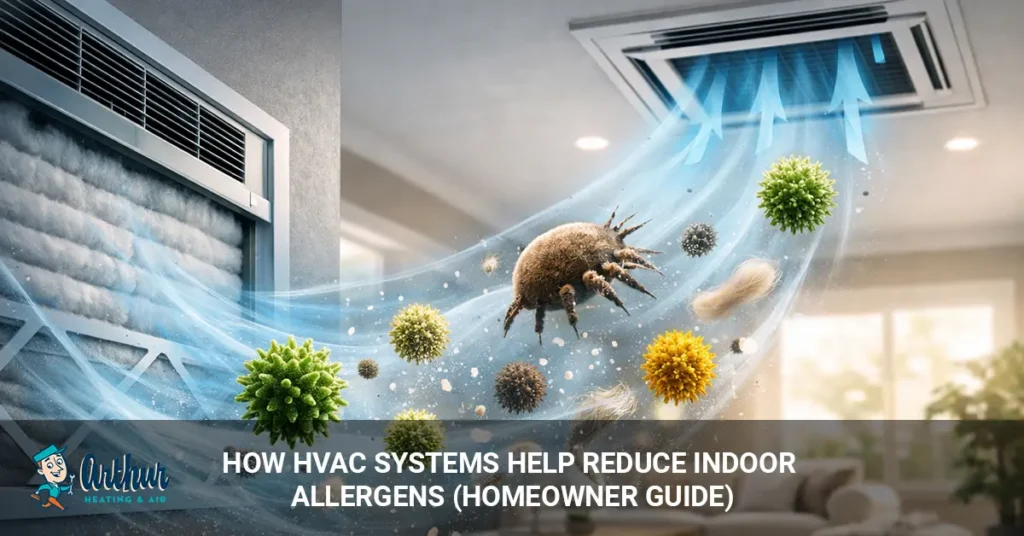
HVAC systems help reduce indoor allergens by filtering air, controlling humidity, and improving airflow throughout your home.
Many homeowners don’t realize how much indoor air quality affects daily comfort. Dust, pollen, pet dander, and mold can build up inside your home and trigger allergies.
Your HVAC system plays a key role in keeping that air clean. When it’s working properly, it helps remove allergens and keeps your indoor environment healthier.
How HVAC Systems Reduce Indoor Allergens
HVAC systems reduce indoor allergens by capturing particles, circulating clean air, and maintaining balanced humidity levels.
As air moves through your system, filters trap dust and other particles before they spread. At the same time, proper airflow prevents allergens from settling in one place.
Humidity control also plays a big role. Too much moisture can lead to mold and dust mites, while balanced humidity keeps these problems under control.
Common Indoor Allergens in Your Home
The most common indoor allergens are dust, pollen, pet dander, mold spores, and bacteria.
These allergens enter your home through open doors, windows, and even on clothing. Over time, they settle in carpets, furniture, and air ducts.
Without proper airflow and filtration, these particles continue to circulate and affect your indoor air quality.
1. Air Filters Capture Allergens
HVAC air filters trap dust, pollen, and other airborne particles before they spread through your home.
As air passes through the system, the filter captures these particles and keeps them from recirculating.
Higher-quality filters can capture smaller particles, which improves air quality even more.
Replacing your air filter regularly is one of the easiest and most effective ways to reduce allergens.
2. Proper Ventilation Reduces Allergen Buildup
Proper ventilation helps remove stale, allergen-filled air and bring in fresh air.
Without ventilation, indoor air becomes trapped, and pollutants build up over time.
A well-functioning HVAC system helps exchange indoor air, reducing the concentration of allergens.
3. Humidity Control Prevents Mold and Dust Mites
HVAC systems control humidity, which helps prevent mold growth and dust mites.
When humidity levels are too high, it creates the perfect environment for allergens to grow.
Keeping humidity at a balanced level helps reduce these triggers and keeps your home more comfortable.
4. Air Circulation Improves Air Quality
Air circulation helps reduce allergens by keeping air moving and evenly distributed.
When air flows properly, filtered air reaches every part of your home. This prevents allergens from building up in certain areas.
Poor airflow, on the other hand, allows dust and particles to settle and accumulate.
5. HVAC Add-Ons Improve Allergen Control
HVAC add-ons can further reduce allergens and improve air quality.
Whole-home air purifiers, advanced filters, and UV lights can help remove bacteria, mold, and smaller particles.
These upgrades work alongside your HVAC system to provide cleaner indoor air.
Signs Your HVAC System Isn’t Controlling Allergens Well
Poor HVAC performance can lead to increased allergens in your home.
You may notice more dust, musty smells, or worsening allergy symptoms.
Uneven airflow and rooms that feel stuffy are also signs your system isn’t working properly.
How to Maintain Your HVAC System for Better Air Quality
Regular maintenance keeps your HVAC system effective at reducing allergens.
Changing filters on time helps maintain proper airflow and filtration. Cleaning ducts and vents prevents buildup inside the system.
Routine inspections also help catch small issues before they affect air quality.
When to Upgrade Your HVAC System
You should consider upgrading your HVAC system if it’s not improving your indoor air quality.
Older systems may not filter air effectively or control humidity well.
A newer system with better filtration and efficiency can make a noticeable difference in air quality and comfort.
Tips for Homeowners to Reduce Indoor Allergens
Simple habits can help reduce allergens along with your HVAC system. (Follow these HVAC tips for allergy sufferers for better results.)
Regular cleaning removes dust and debris from surfaces. Using a vacuum with a high-quality filter helps capture fine particles.
Keeping your home dry and well-ventilated also helps prevent allergen buildup.
Final Thoughts
HVAC systems play a major role in reducing indoor allergens and improving air quality.
With proper maintenance and the right setup, your system can help create a cleaner and healthier home.
Taking small steps now can make a big difference in your comfort and long-term health.