
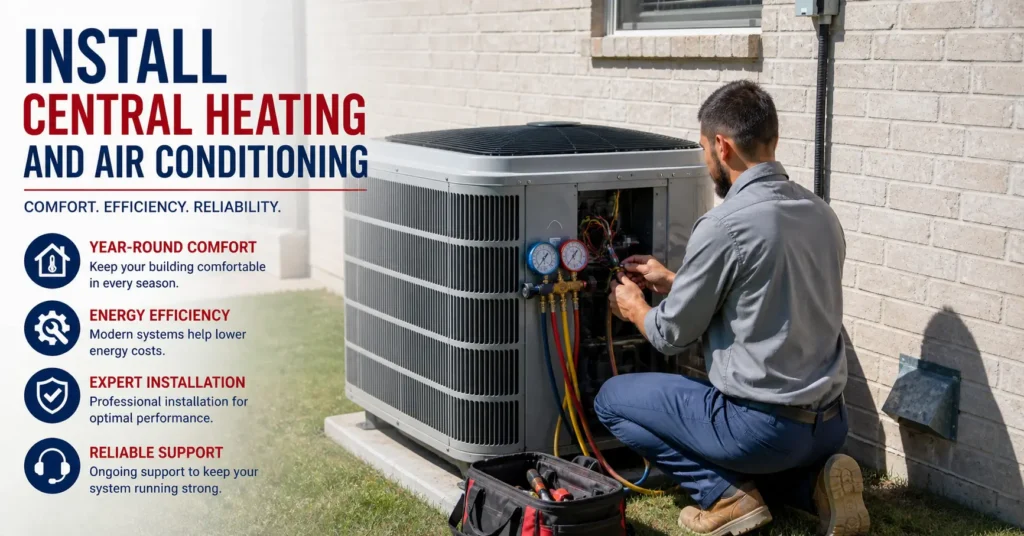
Installing central heating and air conditioning means setting up one system that heats and cools your entire home through ducts. It keeps every room comfortable and maintains steady airflow.
This upgrade improves comfort, lowers energy waste, and adds value to your home.
It also replaces the need for multiple units like window ACs or space heaters.
In this guide, you’ll learn exactly how central HVAC works, what you need, and how to install it step by step.
Everything is explained in simple terms so you can understand it quickly and make the right decisions.
What Is Central Heating And Air Conditioning?
Central heating and air conditioning is a system that heats or cools air in one place and sends it through ducts to every room in your home.
It uses a central unit and a network of ducts to keep the whole house comfortable.
Unlike window units or space heaters, it keeps the temperature even in every room.
Air flows better throughout the home, so you don’t get hot or cold spots.
It also helps improve indoor air quality by filtering the air as it circulates.
How Central HVAC Systems Work
A central HVAC system works by pulling in air, heating or cooling it, and pushing it through ducts into every room.
It uses one main unit and a blower fan to move air evenly throughout your home.
Here’s how it works step by step:
- Air is pulled in through return vents from inside your home
- The system heats or cools the air inside the unit
- A blower fan pushes the conditioned air through the ductwork
- The air flows out through vents into each room
This cycle repeats continuously to keep your home at the set temperature.
Types of Central HVAC Systems
There are different types of central HVAC systems, and each one is designed for specific home sizes, climates, and budgets.
Choosing the right system helps improve comfort, efficiency, and long-term cost savings.
Split System (Most Common)
A split system uses separate indoor and outdoor units to heat and cool your home.
The indoor unit includes the furnace or air handler, while the outdoor unit contains the air conditioner.
Packaged System
A packaged system keeps all components in one outdoor unit.
It’s a good option for homes with limited indoor space.
Heat Pump System
A heat pump system provides both heating and cooling using electricity.
It works best in moderate climates and is energy efficient.
Hybrid System
A hybrid system combines a heat pump with a gas furnace.
It switches between the two to maximize efficiency and reduce energy costs.
Tools And Materials Needed
You need the right tools and materials to install a central HVAC system safely and correctly.
Having everything ready before you start makes the job faster and helps avoid mistakes.
Here’s what you’ll need:
- HVAC unit (furnace and AC or heat pump)
- Ductwork materials for air distribution
- Refrigerant lines to connect the indoor and outdoor units
- Thermostat to control the system
- Electrical wiring, breakers, and a disconnect box
- Drill, sheet metal tools, and fasteners for installation
- Vacuum pump and gauges to prepare and charge the system
Using proper tools ensures the system runs efficiently and lasts longer.
Step-by-Step: How To Install Central Heating And Air Conditioning
1. Plan and Size the System
Planning and sizing the system means choosing the right HVAC unit based on your home’s size, layout, and climate.
This step is critical because the wrong-sized system will not work efficiently.
If the system is too large, it will turn on and off too often and waste energy.
If it’s too small, it will struggle to heat or cool your home properly.
To get the right size, consider:
- Total square footage of your home
- Insulation quality
- Ceiling height
- Local climate conditions
For the most accurate results, professionals use a load calculation method to match the system to your home.
2. Install or Upgrade Ductwork
Installing or upgrading ductwork means setting up a sealed pathway that carries air evenly throughout your home.
Good ductwork is essential for proper airflow and system efficiency.
Ducts should be the right size for your system so air can move freely.
All joints and connections must be sealed to prevent air leaks.
Insulation helps keep the air at the right temperature as it travels.
Poor or leaky ducts can waste energy and reduce system performance.
In many homes, fixing duct leaks can improve efficiency by up to 30%.
3. Install the Indoor Unit
Installing the indoor unit means placing the furnace or air handler in a safe, central location inside your home.
This unit is responsible for heating or moving air through the system.
Choose a location where airflow is balanced and access is easy, such as:
- Basement
- Utility room
- Attic
Make sure the unit is level and securely mounted to prevent vibration.
Leave enough space around it for airflow, maintenance, and repairs.
4. Install the Outdoor Unit
Installing the outdoor unit means placing the condenser outside your home on a stable, level surface.
This unit releases heat and is key to the cooling process.
Set it on a concrete pad or solid base to keep it steady and reduce vibration.
Make sure the ground is even so the unit stays balanced.
Leave enough space around the unit for proper airflow and easy maintenance.
Good airflow helps the system run efficiently and last longer.
5. Connect Refrigerant Lines
Connecting refrigerant lines means linking the indoor and outdoor units so heat can move between them.
These lines are essential for the system to heat and cool properly.
Run the lines carefully between both units without sharp bends or damage.
Make sure they are properly insulated to prevent energy loss and protect performance.
Tight, secure connections are important to avoid leaks and keep the system running efficiently.
6. Handle Electrical Connections
Handling electrical connections means safely connecting the HVAC system to your home’s power supply.
This step powers the system and allows it to run properly.
Connect the unit to your main electrical panel using the correct wiring and breakers.
Install a disconnect switch near the outdoor unit for safety and easy servicing.
All connections must follow local electrical codes to prevent hazards and system damage.
If you’re unsure, it’s best to hire a licensed electrician for this step.
7. Install the Thermostat
Installing the thermostat means placing it in the right spot so it can read your home’s temperature accurately.
This helps your HVAC system run efficiently and maintain comfort.
Mount the thermostat on an interior wall in a central area of your home.
Keep it away from:
- Direct sunlight
- Windows
- Air vents
This prevents false readings and keeps your system from overworking or underperforming.
8. Vacuum and Charge the System
Vacuuming and charging the system means removing air and moisture from the lines and adding the correct amount of refrigerant.
This step is critical for proper cooling performance and system lifespan.
Use a vacuum pump to clear out any air and moisture inside the refrigerant lines.
This prevents damage and keeps the system running efficiently.
After that, add the correct refrigerant charge based on the manufacturer’s specifications.
Too much or too little refrigerant can reduce efficiency and cause system issues.
9. Test the System
Testing the system means turning it on and making sure everything works properly.
This step confirms the installation was done correctly.
Turn on the system and check airflow in every room to ensure even distribution.
Make sure the temperature stays consistent and matches your thermostat setting.
Listen for unusual noise and watch how the system performs during operation.
Fix any issues right away to avoid bigger problems later.
Cost to Install Central Heating And Air Conditioning
The cost to install central heating and air conditioning usually ranges from $5,000 to $15,000, depending on your home size, system type, and installation complexity.
Larger homes and more advanced systems will cost more.
Here’s a simple breakdown:
- Equipment: $3,000 to $8,000
- Labor: $2,000 to $7,000
- Ductwork (if needed): $1,000 to $5,000
If your home doesn’t have existing ductwork, the total cost will be higher.
Adding new ducts requires extra materials, labor, and time. For a more detailed breakdown, check the typical HVAC installation cost for different system types.
DIY vs Professional Installation
DIY installation means installing the HVAC system yourself, while professional installation means hiring a licensed expert. Most homeowners choose professional help because HVAC systems are complex and regulated.
DIY Installation
DIY installation is possible, but it requires strong technical skills and the right tools.
It’s not recommended unless you have HVAC experience.
Pros:
- Lower upfront cost
Cons:
- Higher risk of mistakes
- Possible code violations
- No warranty protection
- Time-consuming and complex
For most people, DIY can lead to costly fixes later if something goes wrong.
Professional Installation
Professional installation means hiring a licensed HVAC expert to install the system correctly and safely.
This is the most reliable option for long-term performance.
Pros:
- Code-compliant installation
- Proper system sizing for your home
- Warranty protection on equipment and labor
- Better energy efficiency and performance
A professional ensures everything is installed right the first time, which helps avoid costly repairs later. Understanding the benefits of proper AC installation helps ensure long-term performance and efficiency.
Common Installation Mistakes to Avoid
Common installation mistakes can reduce efficiency, increase energy bills, and shorten your HVAC system’s lifespan. Avoiding these issues helps your system run smoothly for years.
Here are the most common mistakes:
- Choosing the wrong system size, which leads to poor performance
- Poor duct sealing, causing air leaks and energy loss
- Incorrect refrigerant levels reduce efficiency and damage the system
- Bad thermostat placement, leading to inaccurate temperature control
- Ignoring building codes, which can cause safety issues and fines
Fixing these mistakes early saves money and improves comfort.
Benefits of Central HVAC Systems
Central HVAC systems provide consistent comfort, better air quality, and improved energy efficiency throughout your home.
They are one of the most effective ways to control indoor temperature year-round.
Here are the key benefits:
- Consistent temperature in every room, with no hot or cold spots
- Improved indoor air quality through filtered and circulated air
- Energy-efficient operation that can lower utility bills
- Increased home value and buyer appeal
Overall, central HVAC makes your home more comfortable, efficient, and easier to manage.
Maintenance Tips After Installation
Regular maintenance keeps your HVAC system running efficiently and helps prevent costly repairs.
Simple routine care can extend the life of your system.
Follow these basic tips:
- Change air filters every 1–3 months to keep airflow clean and strong
- Schedule a yearly inspection to catch issues early
- Clean vents and ducts to remove dust and buildup
- Check for airflow problems like weak or uneven air
Staying consistent with maintenance helps your system perform better and last longer.
Final Thought
Installing central heating and air conditioning is one of the best ways to improve comfort, airflow, and energy efficiency in your home.
It creates a consistent indoor environment and makes temperature control simple.
While you can install it yourself, professional installation is the safer and more reliable option. It ensures the system is set up correctly, meets local codes, and performs well for years.