If your home smells musty or your allergies are getting worse, your HVAC system could be the cause. Mold often grows inside the system when moisture and dust build up.
Mold in HVAC systems forms when moisture, dirt, and poor airflow come together. The good news is you can prevent it with simple steps.
In this guide, you’ll learn why mold grows, how to spot it early, and how to keep your HVAC system clean and safe.
Why Mold Grows in HVAC Systems
Mold grows in HVAC systems when moisture and dust build up in dark, enclosed areas. Your system naturally creates condensation, which makes it an ideal place for mold to grow.
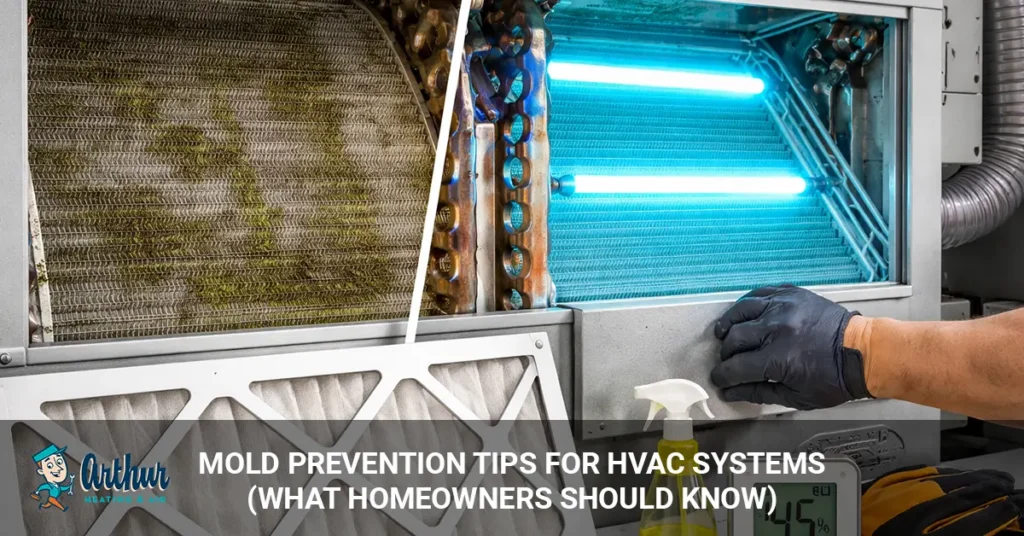
The most common problem areas are the evaporator coils, where moisture collects, and the drain pan and drain lines, where water can sit if not properly drained. Mold can also develop inside air ducts and on dirty air filters where dust builds up.
High indoor humidity makes the problem worse. When moisture levels stay high, it becomes much easier for mold to grow and spread inside your system.
Signs of Mold in Your HVAC System
You can spot mold in your HVAC system by a few clear warning signs. Catching it early helps prevent bigger problems.
A musty or damp smell coming from your vents is one of the most common signs. You may also see visible mold around vents or inside parts of the unit. If your allergies suddenly get worse indoors, your HVAC system could be spreading mold spores.
You might also notice weak or reduced airflow, which can happen when buildup affects the system.
If you notice any of these signs, it’s important to take action quickly to protect your air quality and your health.
Is Mold in HVAC Dangerous?
Mold in HVAC systems can be harmful to your health, especially if you have allergies or asthma. It spreads spores through the air every time your system runs.
Breathing in these spores can cause symptoms like sneezing, coughing, and irritation in your eyes and throat. In some cases, it can also lead to breathing problems or worsen existing conditions.
Addressing mold early is important. It helps protect your indoor air quality and keeps your home safer and healthier.
Mold Prevention Tips for HVAC Systems
You can prevent mold in your HVAC system by controlling moisture and keeping the system clean. Simple, regular maintenance goes a long way.
Start by changing your air filters regularly. Clean filters reduce dust buildup, which helps stop mold from forming. Keep the coils clean so moisture doesn’t collect and create a breeding ground for mold. Make sure the drain lines are clear so water can flow out instead of sitting in the system.
It’s also important to control indoor humidity. Keep it between 30% and 50% to reduce the chance of mold growth. You can use UV lights or air scrubbers to help control mold inside the system.
Good ventilation matters too. It helps remove excess moisture from your home and keeps the air moving, which makes it harder for mold to grow.
How Often Should You Service Your HVAC System?
You should service your HVAC system at least once or twice a year. Regular maintenance helps prevent mold and keeps your system running efficiently.
During a service visit, a professional will clean important parts, check for moisture buildup, and make sure everything is working properly. This helps catch small issues before they turn into bigger problems.
Staying on a regular maintenance schedule reduces the risk of mold and helps your system last longer.
How Humidity Control Prevents Mold
Controlling humidity helps prevent mold by removing the moisture it needs to grow. Mold thrives in damp environments, so keeping air dry enough stops it from forming.
Keeping your indoor humidity between 30% and 50% makes it harder for mold to develop inside your HVAC system. When moisture stays under control, mold doesn’t have the conditions it needs to spread. Understanding how humidity affects indoor comfort can help you maintain the right balance and prevent moisture problems.
Using a dehumidifier can help reduce excess moisture, especially in humid areas or during warmer months. Balanced humidity protects your HVAC system and keeps your indoor air cleaner and healthier.
UV Lights vs Filters for Mold Prevention
UV lights and air filters both help prevent mold, but they work in different ways. Using both together gives the best protection.
UV lights kill mold and bacteria at the source inside your HVAC system. They stop growing before they spread through your home. Improving heating and indoor air quality can further reduce contaminants and help maintain a cleaner indoor environment.
Air filters trap dust, dirt, and mold spores as air moves through the system. This helps prevent spores from circulating in your indoor air.
When you combine UV lights with good air filters, you get stronger protection and better overall air quality.
DIY vs Professional Mold Prevention
You can prevent mold with basic DIY steps, but serious issues require professional help. Knowing the difference helps you take the right action.
Homeowners can handle simple tasks like changing air filters, cleaning vents, and keeping the system dry. These steps help reduce moisture and limit mold growth.
If mold is already visible or keeps coming back, it’s best to call a professional. They have the tools and experience to clean and treat the system safely.
Ignoring mold can make the problem worse over time and affect your air quality. Acting early helps protect your home and your health.
Common Mistakes to Avoid
Avoiding a few common mistakes can help prevent mold and keep your HVAC system working properly. Small issues can quickly turn into bigger problems.
Ignoring moisture is one of the biggest mistakes. When moisture builds up, mold can grow fast. Not replacing air filters regularly also allows dust and moisture to collect inside the system.
Skipping routine maintenance can let small problems go unnoticed. Blocking airflow or closing vents can also trap moisture and create the right conditions for mold.
Staying consistent with maintenance and airflow helps keep your system clean, efficient, and mold-free.
Final Thoughts
Mold in your HVAC system can affect your comfort, health, and indoor air quality. The best approach is to prevent it before it starts.
Keep your system clean, control humidity, and stay on top of regular maintenance. These simple steps go a long way in reducing mold risk.
With the right habits, you can keep your HVAC system running properly and maintain a healthier, safer home.
If mold is already visible or keeps coming back, it’s best to call a professional. They have the tools and experience to clean and treat the system safely. Professional duct cleaning services can help remove mold buildup and improve your indoor air quality.