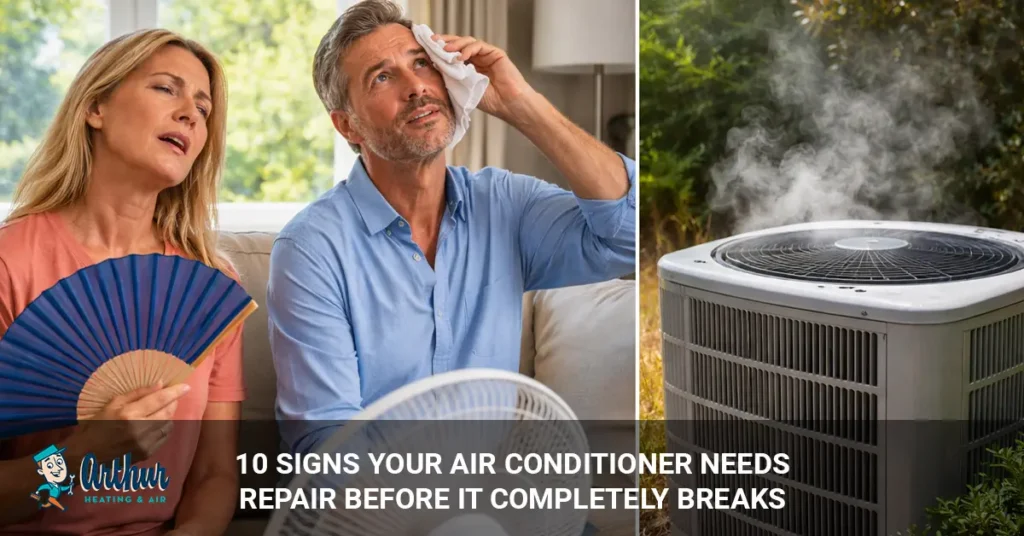
Your air conditioner usually gives warning signs before it stops working completely. Most systems don’t fail overnight; they show small problems first that get worse over time.
Many homeowners ignore these early signs. Later, the repair becomes expensive, or the unit breaks down completely.
If you notice these issues early, you can fix them quickly, save money, and keep your home comfortable. Early action also helps your AC system last longer.
How Do You Know If Your Air Conditioner Needs Repair?
You know your air conditioner needs repair when it stops cooling properly, makes unusual noises, or your energy bills suddenly go up.
These are early warning signs that something inside the system is not working as it should. You may notice weak airflow, warm air instead of cool air, or your AC turning on and off too often.
These problems don’t fix themselves. If you ignore them, they usually get worse and lead to bigger, more expensive repairs.
10 Signs Your Air Conditioner Needs Repair
1. Weak or Limited Airflow
Weak airflow means your air conditioner is not moving enough air through your home. This usually happens when something is blocking or slowing the airflow.
You may notice that the air coming from the vents feels very light or uneven. This can be caused by a dirty air filter, blocked ducts, or a problem with the blower motor.
When airflow is weak, your AC has to work harder to cool your home. This increases energy use and can lead to bigger system problems if not fixed early.
2. AC Blowing Warm Air
If your AC is blowing warm air, it means the system is not cooling properly and needs repair.
You may feel air coming out of the vents, but it isn’t cold. This often happens due to a wrong thermostat setting, low refrigerant levels, or a problem with the compressor.
This is not a small issue. If you ignore it, the system can stop cooling completely or suffer more serious damage. It’s best to get it checked as soon as possible, especially if your AC is not cooling properly and showing signs of deeper issues.
3. Strange Noises (Grinding, Banging, Screeching)
Strange noises from your AC mean something inside the system is loose, worn out, or damaged.
A healthy air conditioner runs quietly. If you hear grinding, banging, or screeching sounds, it’s a clear sign of a problem. These noises often come from broken parts, motor issues, or loose components.
This is not something to ignore. Small mechanical issues can quickly turn into major damage if the system keeps running.
4. Unusual Odors Coming from Vents
Bad smells from your AC vents mean there is a problem inside your system that needs attention.
If you notice a musty smell, it usually means mold or mildew is growing in the unit or ductwork. If you smell something burning, it could be an electrical issue or overheated parts.
These are not normal and should not be ignored. Odors can affect your indoor air quality and may even become a safety risk if left untreated.
5. Frequent Cycling (Turning On and Off Too Often)
Frequent cycling means your AC turns on and off too often, which is a sign that something is not working correctly.
This issue is called short cycling. It usually happens because of a faulty thermostat, electrical problems, or an AC system that is too large or too small for your home.
When this happens, your system never completes a full cooling cycle. This puts extra stress on the components, increases energy use, and can lead to faster wear and tear if not fixed.
6. High Energy Bills Without Increased Usage
If your energy bills go up without using more electricity, your air conditioner is likely losing efficiency.
This usually means the system is working harder than it should to cool your home. Common causes include dirty filters, worn-out parts, or internal issues that reduce performance.
When your AC uses more power but delivers less cooling, it’s a clear sign that something needs to be repaired.
7. Water Leaks or Moisture Around the Unit
Water or moisture around your AC unit means there is a problem that needs to be fixed.
You might see water pooling near the indoor unit or notice damp areas around it. This often happens because of a clogged drain line, frozen coils, or a refrigerant issue.
This is not just a minor issue. If ignored, it can cause water damage, mold growth, and further damage to your AC system.
8. Uneven Cooling in Different Rooms
Uneven cooling means your AC is not distributing air evenly throughout your home.
You may notice some rooms feel cool while others stay warm. This usually happens due to duct issues, blocked airflow, or parts of the system not working properly.
When cooling is uneven, your system has to work harder to balance temperatures. This reduces comfort and signals that your AC is not running efficiently.
9. Thermostat Not Responding Properly
A thermostat that doesn’t respond properly means your AC cannot control the temperature correctly.
You may notice the system not turning on, not turning off, or showing the wrong temperature. This usually happens due to a faulty thermostat, wiring issue, or electrical problem.
When the thermostat fails, the whole system becomes unreliable. It can lead to poor cooling, higher energy use, and ongoing performance issues.
10. AC Unit Is Over 10–15 Years Old and Struggling
An old AC unit that struggles to cool your home is a sign that it may need repair or replacement.
Most air conditioners last around 10 to 15 years. As they age, parts wear out, and the system becomes less efficient. You may notice frequent breakdowns, weaker cooling, or higher energy bills.
At this stage, repairs may only fix the problem temporarily. If issues keep coming back, it may be more cost-effective to replace the unit.
Repair vs Replace: When Should You Decide?
You should repair your AC if the problem is small, but replace it if the system is old or keeps breaking down.
Minor issues like a dirty filter, a thermostat problem, or a small part failure are usually quick and affordable to fix. In these cases, repair is the better option.
But if your AC breaks down often, struggles to cool your home, or your energy bills keep rising, replacement may be the smarter choice. This guide on AC repair vs replacement can help you decide what’s best. Older systems also become less efficient over time.
A simple rule to follow: if the repair cost is more than half the price of a new unit, replacing the system is usually the better long-term decision.
What Happens If You Ignore These Warning Signs?
If you ignore these warning signs, small AC problems can turn into major system failures.
At first, the issue may seem minor, like weak airflow or a strange noise. But over time, these problems put more stress on the system and cause parts to wear out faster.
This can lead to higher repair costs, poor cooling, and uncomfortable indoor temperatures. In some cases, it can even affect your indoor air quality.
Fixing problems early helps you avoid breakdowns, save money, and keep your system running efficiently.
When to Call a Professional HVAC Technician
You should call a professional HVAC technician when the problem doesn’t go away or keeps coming back.
If your AC shows signs like warm air, strange noises, leaks, or frequent cycling, it usually means there is a deeper issue that needs expert attention.
A professional can quickly find the root cause and fix it safely. This prevents further damage and helps your system run more efficiently.
Getting timely repairs also extends the life of your air conditioner and helps you avoid costly breakdowns later.
Final Thoughts
Your air conditioner gives warning signs before it breaks down, and paying attention to them can save you time and money.
Small issues often turn into big problems if ignored. Acting early helps you avoid costly repairs, sudden breakdowns, and discomfort at home.
If your AC doesn’t seem to be working properly, it’s best to fix the problem sooner rather than later.