
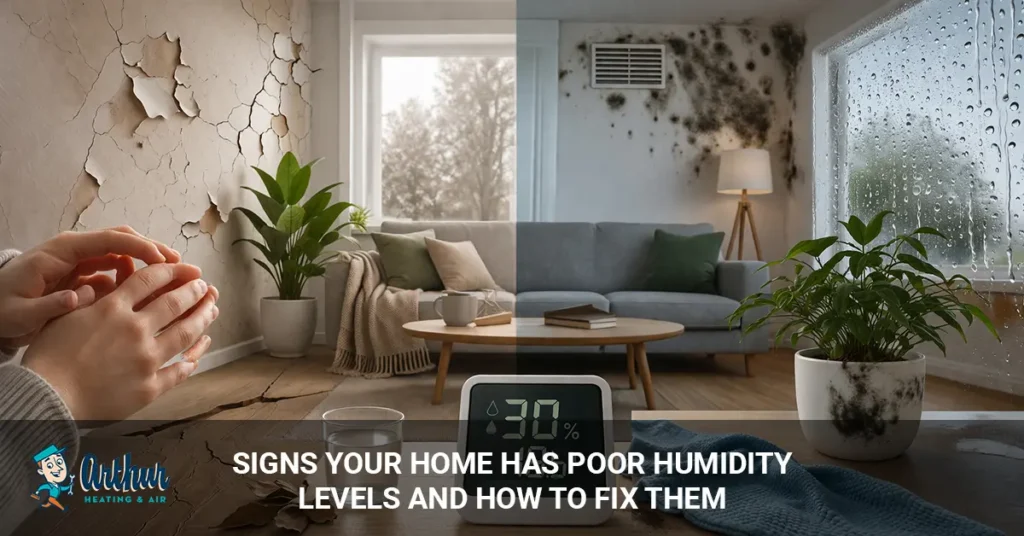
If your home feels too sticky or too dry, your humidity is likely out of balance. This can affect how comfortable you feel, your health, and even your home.
Poor humidity means there is either too much moisture or not enough in the air. Both can cause problems if you don’t fix them.
In this guide, you’ll learn the clear signs of poor humidity and simple ways to bring your home back to a comfortable level.
What Are Poor Humidity Levels?
Poor humidity levels mean your indoor air is either too dry or too humid. The ideal range is between 30% and 50% for comfort and health.
When humidity goes above or below this range, the air starts to feel uncomfortable. You may also notice changes in your body, like dryness or stickiness, and signs around your home, like condensation or cracks.
Keeping humidity in the right range helps your home feel balanced and comfortable.
Signs Your Home Has High Humidity
High humidity makes your home feel damp, heavy, and uncomfortable. It can also lead to mold and poor air quality.
You may notice the air feels sticky or thick, especially in warmer rooms. A musty smell is another common sign, which often means moisture is building up. You might also see mold or mildew in corners, on walls, or near vents.
Condensation on windows is a clear sign that there is too much moisture in the air. You may also experience more allergy symptoms, as high humidity can increase mold and dust mites.
If you notice these signs, your home likely has excess moisture that needs to be controlled.
Signs Your Home Has Low Humidity
Low humidity makes your home feel dry and uncomfortable. It can affect your body and your home.
You may notice dry skin, chapped lips, or a scratchy throat. Static electricity is another common sign, especially when touching fabrics or metal surfaces. Wood furniture, floors, or trim may start to crack or shrink over time.
You might also feel dryness in your nose or throat and experience more coughing or irritation indoors.
If you notice these signs, your air likely needs more moisture to feel comfortable again.
Why Poor Humidity Is a Problem
Poor humidity is a problem because it affects your comfort, your health, and your home. When levels are not balanced, you start to feel it quickly.
High humidity can lead to mold growth, musty odors, and breathing issues. It also makes the air feel heavy and uncomfortable. Low humidity causes dry skin, throat irritation, and general discomfort.
Over time, it can also damage your home. Too much moisture can harm walls and ceilings, while dry air can cause wood and furniture to crack.
Keeping humidity balanced helps you stay comfortable and protects your home. Understanding how humidity affects indoor comfort can help you recognize issues early and maintain a healthier indoor environment.
How to Fix High Humidity in Your Home
You can fix high humidity by removing excess moisture from the air. This helps make your home feel more comfortable and prevents mold.
Use a dehumidifier to lower moisture levels quickly. Improve ventilation by turning on exhaust fans in kitchens and bathrooms or opening windows when possible. If you’re unsure which option works best, understanding humidifier vs dehumidifier can help you choose the right solution for your home.
These simple steps help keep your home dry, fresh, and comfortable.
How to Fix Low Humidity in Your Home
You can fix low humidity by adding moisture back into the air. This helps reduce dryness and makes your home more comfortable.
Use a humidifier to raise humidity levels to a healthy range. Adding indoor plants can also help add natural moisture. Try not to overuse heating systems, as they can dry out the air quickly.
These simple steps help bring your indoor air back into balance and improve comfort.
Best Ways to Maintain Balanced Humidity
The best way to maintain balanced humidity is to keep your indoor levels between 30% and 50%. This helps prevent problems and keeps your home comfortable year-round.
Use a hygrometer to check your humidity levels regularly so you know when adjustments are needed. Keep your HVAC system well-maintained so it can manage airflow and moisture properly.
Adjust your approach based on the season. You may need a humidifier in winter and a dehumidifier in summer.
Regular monitoring and small adjustments help keep your home balanced, comfortable, and healthy.
Tools to Control Humidity
You can control humidity using simple tools that are easy to use at home. These tools help you keep your air balanced and comfortable.
A hygrometer measures your indoor humidity so you know when it’s too high or too low. A humidifier adds moisture when the air feels dry. A dehumidifier removes extra moisture when the air feels damp or sticky.
Some smart thermostats can also track and adjust humidity automatically, making it easier to maintain the right level without constant checking.
Common Mistakes to Avoid
Avoiding common mistakes helps keep your humidity levels balanced and your home comfortable. Small errors can make a big difference.
Ignoring humidity levels is a common mistake. If you don’t measure it, you won’t know if your air is too dry or too humid. Overcorrecting is another issue, as adding too much moisture or removing too much can create new problems.
Not maintaining your humidifier or dehumidifier can reduce performance over time. Choosing the wrong size unit for your space can also make it harder to control humidity properly.
Keeping things balanced, monitored, and well-maintained will give you the best results.
Final Thoughts
Poor humidity can affect your comfort, your health, and your home. The key is keeping it balanced every day.
Aim to keep your indoor humidity between 30% and 50%. This range helps you avoid both dryness and excess moisture.
With the right tools and a few simple habits, you can keep your home comfortable, healthy, and easier to live in all year round.