
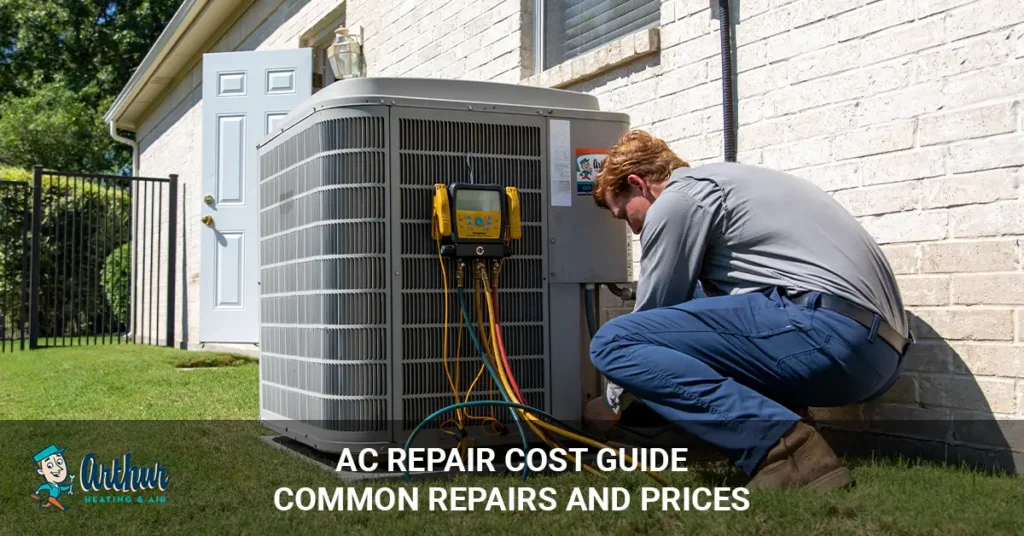
AC repair costs usually range from $150 to $1,500, depending on the type of problem, the parts required, and the labor involved. Small repairs are often affordable, while major component replacements can cost significantly more.
If your air conditioner is not cooling properly, makes unusual noises, or runs constantly, it may need professional repair. Many homeowners worry about repair costs because AC systems include several complex parts that can fail over time.
The good news is that not every AC problem is expensive to fix. Some issues, such as replacing a capacitor, tightening electrical connections, or cleaning a clogged drain line, are relatively quick and inexpensive. However, larger problems like compressor failure or refrigerant leaks require specialized tools and trained technicians, which increases the cost.
In this guide, you will learn typical AC repair costs, the most common problems, factors that affect pricing, and when it is best to call a professional HVAC technician. Understanding these costs helps you plan repairs, avoid unnecessary expenses, and keep your air conditioning system running efficiently.
How Much Does AC Repair Cost?
AC repair usually costs between $150 and $650 for the most common problems. The exact price depends on what part of the system needs repair and how complex the job is.
Simple fixes are usually the most affordable. For example, replacing a capacitor, unclogging a drain line, or fixing a small electrical issue often costs between $100 and $400. These repairs are quick and typically require fewer parts.
More involved repairs cost more. Problems like replacing a fan motor, repairing a refrigerant leak, or fixing a control board generally fall between $400 and $1,000 because they require more labor and specialized components.
Major repairs are the most expensive. If your system needs a compressor replacement, evaporator coil repair, or major refrigerant work, the cost can range from $1,000 to $2,500 or more.
It is also important to know that emergency or after-hours service can increase the price. HVAC companies often charge additional fees for nights, weekends, or urgent repairs because technicians must respond outside normal working hours.
Understanding these price ranges helps homeowners estimate repair costs, compare quotes, and decide whether repairing or replacing the AC system makes the most sense.
AC Repair Cost by Common Problems
AC repair costs vary depending on the specific problem inside the system. Some issues are quick fixes, while others require replacing major components. Below are the most common AC problems and their typical repair costs.
AC Refrigerant Leak Repair Cost
AC refrigerant leak repair usually costs between $200 and $1,500, depending on where the leak is located and the type of refrigerant used.
Technicians first locate the leak using specialized tools, then seal the damaged area and recharge the system with refrigerant. If the leak is in a hard-to-reach component like the evaporator coil, labor costs can increase.
Older systems that use R-22 refrigerant are often more expensive to repair because this refrigerant is being phased out and is harder to find.
AC Capacitor Replacement Cost
AC capacitor replacement typically costs between $120 and $400, making it one of the most affordable AC repairs.
The capacitor helps start and run the compressor and fan motor. When it fails, the AC may struggle to start, shut off unexpectedly, or make clicking sounds.
Because the part is relatively inexpensive and quick to replace, this repair is usually completed within a single service visit.
AC Compressor Repair or Replacement Cost
AC compressor replacement usually costs between $1,000 and $2,500.
The compressor is often called the heart of the air conditioning system because it circulates refrigerant through the unit. When it fails, the AC may stop cooling completely.
Since compressors are expensive parts, homeowners sometimes consider replacing the entire AC unit, especially if the system is older.
AC Fan Motor Replacement Cost
AC fan motor replacement generally costs between $300 and $900.
The fan motor moves air through the system and helps release heat from the outdoor unit. When it begins to fail, you may notice loud noises, reduced airflow, or the fan not spinning properly.
Replacing the motor restores proper airflow and helps the system run efficiently again.
AC Thermostat Replacement Cost
Thermostat replacement typically costs between $100 and $500, depending on the type of thermostat you install.
Basic manual thermostats are inexpensive, while programmable or smart thermostats cost more but offer additional features like remote control and automatic scheduling.
Upgrading the thermostat can also improve comfort and energy efficiency. If you are considering upgrading, you can also learn about the smart thermostat installation cost to understand pricing and installation options.
AC Drain Line Cleaning Cost
AC drain line cleaning usually costs between $75 and $250.
The drain line removes condensation from the air conditioning system. When it becomes clogged with dust, algae, or debris, it can cause water leaks or trigger the system to shut down.
Cleaning the drain line early is a simple and affordable repair that helps prevent larger moisture problems.
AC Circuit Board Repair Cost
AC circuit board replacement typically costs between $400 and $1,200.
The circuit board acts as the control center of the AC system, managing communication between components like the thermostat, compressor, and fan.
If the board fails, the system may stop responding, cycle incorrectly, or fail to start. Because these parts are electronic and specialized, they can be more expensive to replace.
AC Repair Cost by Unit Type
AC repair costs also depend on the type of air conditioning system installed in your home. Different systems have different components, repair complexity, and labor requirements.
Central AC Repair Cost
Central AC repair usually costs between $150 and $1,500, depending on the issue.
Central air systems are larger and more complex than other AC units. Repairs may involve components like the compressor, evaporator coil, refrigerant lines, or ductwork. Because these systems serve the entire home, diagnosing and fixing problems often requires more time and specialized tools.
Window AC Repair Cost
Window AC repair typically costs between $75 and $400.
Window units are smaller and simpler than central systems. Many repairs involve cleaning coils, replacing small electrical parts, or fixing the fan motor. Because the units are compact and easier to access, labor costs are usually lower.
In some cases, replacing the unit may be more cost-effective than repairing it.
Ductless Mini Split Repair Cost
Ductless mini-split repair generally costs between $200 and $1,500.
Mini-split systems use indoor air handlers connected to an outdoor unit, and repairs often involve refrigerant lines, sensors, or control boards. These systems are efficient but can require specialized technicians familiar with ductless technology.
If multiple indoor units are connected, the repair cost may increase. Homeowners considering a new system can also review the mini split installation cost to compare repair and replacement expenses.
Heat Pump Repair Cost
Heat pump repair usually costs between $200 and $1,600.
Heat pumps work as both heating and cooling systems, which means they have additional components compared to standard AC units. Common repairs include fixing the reversing valve, compressor, or refrigerant issues.
Because the system operates year-round, parts may experience more wear and require maintenance or replacement over time.
What Factors Affect AC Repair Cost?
Several factors affect how much it costs to repair an AC unit, including the type of problem, system age, labor rates, and the availability of replacement parts.
Type of Problem
The specific issue with the AC system is the biggest factor in repair cost.
Simple problems like a dirty drain line or a faulty capacitor are quick and inexpensive to fix. More complex issues, such as compressor failure, refrigerant leaks, or coil damage, require more time, specialized tools, and costly parts.
Age of the System
Older AC systems often cost more to repair.
As air conditioners age, parts become harder to find or may be discontinued by manufacturers. Older units may also experience multiple worn components, which increases the likelihood of larger repair bills.
Brand and Parts Availability
The brand of your air conditioner can affect repair costs.
Premium or specialized brands sometimes require manufacturer-specific parts, which may cost more than standard components. If parts are difficult to source, repair prices may increase due to delays or limited supply.
Warranty Coverage
Warranty coverage can significantly reduce repair expenses.
If your AC system or certain parts are still under manufacturer warranty, you may only need to pay labor costs while the part itself is covered.
Labor Rates in Your Area
Labor rates vary depending on your location and the HVAC company you hire.
Technicians in larger cities or regions with higher living costs typically charge higher hourly service rates than those in smaller towns.
Emergency or After Hours Service
Emergency AC repairs usually cost more than standard service visits.
If you need repairs at night, on weekends, or during extreme heat when HVAC companies are busy, technicians may charge additional emergency service fees.
Accessibility of the Unit
The location of the AC unit can also affect repair costs.
Units installed in tight spaces, rooftops, or attics often require more time and effort to access. This can increase labor charges compared to systems that are easily accessible.
Emergency AC Repair Cost
Emergency AC repair usually costs 20% to 50% more than a standard service call. HVAC companies charge higher rates because technicians must respond outside normal working hours.
Most emergency repairs happen at night, on weekends, or during extreme heat, when air conditioning systems are under heavy demand. During these times, companies often apply additional service fees or higher hourly labor rates.
Peak summer months can also increase repair prices. When many systems fail at the same time, technicians may charge more due to high demand and limited availability.
If the problem is not urgent, scheduling the repair during regular business hours can help reduce the cost. Waiting for a standard appointment often eliminates emergency service fees and keeps the repair more affordable.
Is It Cheaper to Repair or Replace an AC Unit?
It is usually cheaper to repair your AC if the repair cost is less than 50% of the price of a new system. Small or moderate repairs often make sense, especially if the unit is still fairly new.
For example, repairs like capacitor replacement, thermostat issues, or fan motor repairs are relatively inexpensive. In these cases, fixing the unit is often the most cost-effective option.
However, replacement may be the better choice if the repair is expensive and the system is old. Most air conditioners last about 10 to 15 years. If your unit is within this age range and needs a major repair, such as a compressor or coil replacement, installing a new system may save money over time.
New air conditioning systems are also more energy-efficient. Upgrading to a modern unit can reduce monthly energy bills and improve cooling performance. Many newer systems also include advanced features like smart thermostats and better temperature control.
A simple rule many HVAC professionals recommend is this:
If the repair cost is high and the AC system is older, replacing the unit is often the smarter long-term investment.
Signs You Need AC Repair
You likely need AC repair if your air conditioner shows signs like warm air, weak airflow, strange noises, or unusually high energy bills. These symptoms often indicate that something inside the system is not working properly.
Warm air from vents is one of the most common warning signs. If your AC is running but blowing warm or room-temperature air, the problem could be related to low refrigerant, a failing compressor, or thermostat issues.
Weak airflow can also signal a problem. This often happens when the fan motor, air filter, or ductwork is blocked or damaged, which prevents cool air from circulating properly throughout the home.
Strange noises or vibrations should never be ignored. Sounds like grinding, rattling, or buzzing may indicate loose parts, a failing motor, or electrical issues inside the system.
Water leaks around the unit are another common sign. This usually happens when the drain line becomes clogged or when condensation cannot drain properly from the system.
You may also notice higher energy bills even though your usage has not changed. When an AC system struggles to cool your home, it often runs longer and consumes more electricity.
Finally, an AC that runs constantly without reaching the set temperature may have issues such as refrigerant problems, dirty coils, or a malfunctioning thermostat.
Addressing these warning signs early can prevent larger system damage, reduce repair costs, and keep your air conditioner running efficiently.
Noticing These Warning Signs?
Catch the problem early before it turns into a costly repair.
 Book AC Inspection
When Should You Call a Professional?
You should call a professional HVAC technician when your AC has electrical problems, refrigerant leaks, compressor issues, or unusual burning smells. These problems involve complex components that require specialized tools and training.
Electrical issues are one of the most important reasons to call a professional. If the AC keeps tripping the breaker, won’t start, or shuts off unexpectedly, the problem may involve wiring, capacitors, or control boards.
Refrigerant leaks also require professional repair. Refrigerant must be handled safely and requires proper equipment to detect leaks, repair the damaged area, and recharge the system.
Compressor problems should always be handled by an experienced technician. The compressor is one of the most expensive and critical parts of the AC system, and improper repairs can cause further damage.
You should also call a professional if you notice burning smells or unusual odors coming from the unit. This may indicate electrical overheating or motor failure, which can be dangerous if ignored.
While simple maintenance tasks like changing air filters or cleaning vents can be done by homeowners, DIY repairs are not recommended for complex AC problems. Attempting to fix major issues without proper training can damage the system, create safety risks, and even void manufacturer warranties.
How to Lower AC Repair Costs
You can lower AC repair costs by performing regular maintenance and fixing small problems early. Preventative care helps your system run efficiently and reduces the risk of expensive breakdowns.
- Change air filters regularly: A clean air filter improves airflow and keeps the system from working too hard. Most homeowners should replace filters every 1 to 3 months, depending on usage and indoor air quality.
- Schedule annual tune-ups: A professional HVAC inspection once a year helps identify small issues before they become major repairs. Technicians typically check refrigerant levels, clean coils, inspect electrical parts, and test system performance.
- Keep the outdoor unit clean: Leaves, dirt, and debris can block airflow around the outdoor condenser unit. Make sure the area around the unit stays clear and clean so heat can escape properly.
- Fix small issues early: Minor problems like unusual noises, weak airflow, or inconsistent cooling should be addressed quickly. Ignoring early warning signs can lead to larger and more expensive repairs later.
Routine maintenance is one of the best ways to extend the lifespan of your AC system, improve energy efficiency, and prevent costly repairs.
Final Thoughts
AC repair costs depend on the type of problem, the age of the system, and the amount of labor required. Small issues are usually affordable, while major component failures can become expensive.
Many common AC problems, such as capacitor replacement, drain line cleaning, or thermostat issues, are relatively inexpensive to fix. However, larger repairs like compressor or coil replacement can significantly increase the total cost.
Understanding typical AC repair prices helps homeowners prepare for maintenance expenses and avoid unexpected costs. It also makes it easier to decide whether repairing the system or replacing it is the better option.If your air conditioner is blowing warm air, making unusual noises, or running constantly, it’s best to have it inspected by a professional. Addressing problems early can prevent bigger repairs, improve system efficiency, and extend the life of your AC unit.
AC Not Cooling as It Should?
Get fast, reliable repair from certified HVAC technicians.
 Schedule AC Repair Service