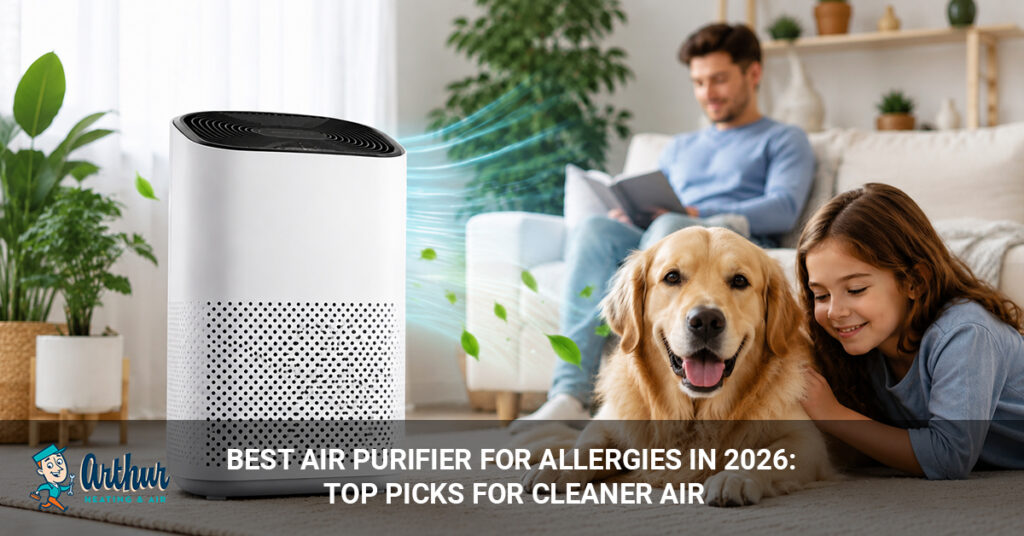
The best air purifier for allergies is a model with a True HEPA filter that effectively removes pollen, dust, pet dander, mold spores, and other airborne allergens from your home.
If you struggle with allergy symptoms, improving your indoor air quality can make a noticeable difference. Even in a clean home, allergens can build up in the air and trigger sneezing, congestion, itchy eyes, coughing, and other uncomfortable symptoms. Pollen can enter through open doors and windows, pet dander can spread throughout the house, and dust particles can remain suspended in the air for hours.
A high-quality air purifier works by continuously pulling air through a filtration system and trapping airborne particles before they can circulate throughout your living space. While an air purifier won’t eliminate allergies completely, it can help reduce exposure to common triggers and create a cleaner, healthier indoor environment.
Not all air purifiers perform the same, however. The most effective models for allergy sufferers use True HEPA filtration, provide adequate room coverage, and offer strong airflow to capture allergens efficiently.
In this guide, you’ll find the best air purifiers for allergies in 2026, learn which features matter most, compare top-rated models, and discover how to choose the right air purifier for your specific needs and budget.
What Is the Best Air Purifier for Allergies?
The best air purifier for allergies is one that uses a True HEPA filter, has a high Clean Air Delivery Rate (CADR), and is properly sized for the room where it will be used.
A quality air purifier can help reduce common allergy triggers such as pollen, dust, pet dander, mold spores, and other airborne particles. While several models perform well, the right choice depends on your room size, allergy concerns, budget, and desired features.
Top Air Purifiers for Allergies at a Glance
| Air Purifier | Best For | Room Size |
| Coway Airmega AP-1512HH | Best Overall | Up to 361 sq. ft. |
| Levoit Core 600S | Large Rooms | Up to 3,000 sq. ft. |
| Blueair Blue Pure 311i Max | Allergy Relief | Up to 1,800 sq. ft. |
| Winix 5500-2 | Pet Allergies | Up to 360 sq. ft. |
| Levoit Core 300-P | Budget Buyers | Up to 1,095 sq. ft. |
| Honeywell HPA300 | Pollen & Dust | Up to 2,250 sq. ft. |
The Coway Airmega AP-1512HH stands out as the best overall air purifier for allergies because it combines excellent filtration performance, energy efficiency, quiet operation, and affordable filter replacement costs.
For larger spaces, the Levoit Core 600S offers powerful airflow and extensive room coverage. If pet dander is your primary concern, the Winix 5500-2 is a popular choice thanks to its True HEPA filtration and odor-reducing carbon filter. Homeowners looking for a more affordable option often choose the Levoit Core 300-P, which delivers strong performance at a budget-friendly price.
No matter which model you choose, look for a True HEPA filter and coverage that matches your room size. These two factors have the biggest impact on how effectively an air purifier can reduce allergens and improve indoor air quality.
Best Air Purifiers for Allergies in 2026
The best air purifiers for allergies in 2026 combine True HEPA filtration, strong airflow, reliable performance, and room coverage that matches your living space. The models below stand out for their ability to remove common allergens such as pollen, dust, pet dander, and mold spores.
Best Overall Air Purifier for Allergies
The Coway Airmega AP-1512HH is the best overall air purifier for allergies because it delivers excellent filtration performance at a reasonable price.
This model uses a True HEPA filter and an activated carbon filter to capture airborne allergens and odors. It effectively removes pollen, dust mites, pet dander, mold spores, and other particles that can trigger allergy symptoms. Its energy-efficient design and affordable replacement filters also help keep long-term operating costs low.
Pros
- True HEPA filtration
- Quiet operation
- Energy efficient
- Affordable replacement filters
Cons
- Not ideal for very large rooms
Best Air Purifier for Large Rooms
The Levoit Core 600S is one of the best air purifiers for large rooms and open-concept living spaces.
Its powerful filtration system and high CADR ratings allow it to clean large volumes of air quickly. This makes it a great option for homeowners who want allergy relief throughout larger areas of the home.
Pros
- Excellent room coverage
- Smart controls and app connectivity
- High CADR ratings
- Effective allergen removal
Cons
- Higher upfront cost
Best Air Purifier for Small Rooms
The Levoit Core 300-P is an excellent choice for bedrooms, home offices, and other small spaces.
Despite its compact design, it provides impressive filtration performance and operates quietly, making it ideal for nighttime use. It’s also one of the most affordable True HEPA air purifiers available.
Pros
- Affordable price
- Compact design
- Quiet operation
- Easy filter replacement
Cons
- Limited coverage area
Best Air Purifier for Pet Allergies
The Winix 5500-2 is one of the best air purifiers for homes with cats and dogs.
Its True HEPA filter captures pet dander, while the activated carbon filter helps reduce pet odors. This combination makes it particularly effective for allergy sufferers who share their home with pets.
Pros
- Excellent pet dander removal
- Effective odor reduction
- Good overall value
- Reliable filtration system
Cons
- Replacement filters required periodically
Best Air Purifier for Dust and Pollen Allergies
The Honeywell HPA300 is a top choice for reducing dust, pollen, and other seasonal allergens.
Its powerful airflow and high filtration efficiency allow it to clean indoor air quickly, making it especially useful during peak allergy seasons when pollen levels are high.
Pros
- Strong allergen filtration
- Trusted brand reputation
- Suitable for larger rooms
- High airflow performance
Cons
- Can be louder on higher fan settings
Best Budget Air Purifier for Allergies
The Levoit Core 300-P offers the best balance of affordability and performance for budget-conscious buyers.
It uses True HEPA filtration to capture common allergens and provides reliable air cleaning without the higher price tag associated with premium models.
Pros
- Budget-friendly
- Energy efficient
- Easy to operate
- Good filtration performance
Cons
- Best suited for smaller spaces
Best Premium Air Purifier for Allergies
The Blueair Blue Pure 311i Max is one of the best premium air purifiers available for allergy sufferers.
Its advanced filtration technology captures fine airborne particles while maintaining quiet operation. The unit also includes smart features that allow homeowners to monitor air quality and adjust settings automatically.
Pros
- Excellent filtration performance
- Smart air quality monitoring
- Quiet operation
- Modern design
Cons
- Higher upfront investment
When choosing an air purifier, focus on filtration quality, room coverage, and long-term operating costs rather than price alone. A properly sized True HEPA air purifier can make a noticeable difference in indoor air quality and help reduce allergy symptoms throughout the year.
Comparison Table of the Best Air Purifiers for Allergies
The best air purifier for allergies depends on your room size, allergy triggers, filtration needs, and budget. While all of the models below can help improve indoor air quality, choosing a unit with the right filter type and coverage area is essential for the best results.
| Model | Filter Type | Coverage Area | Best For |
| Coway Airmega AP-1512HH | True HEPA + Activated Carbon | Up to 361 sq. ft. | Best Overall |
| Levoit Core 600S | True HEPA | Up to 3,000 sq. ft. | Large Rooms |
| Blueair Blue Pure 311i Max | HEPASilent Technology | Up to 1,800 sq. ft. | Premium Performance |
| Winix 5500-2 | True HEPA + Activated Carbon | Up to 360 sq. ft. | Pet Allergies |
| Levoit Core 300-P | True HEPA | Up to 1,095 sq. ft. | Budget Buyers |
| Honeywell HPA300 | True HEPA | Up to 2,250 sq. ft. | Dust & Pollen |
If you’re looking for the best overall value, the Coway Airmega AP-1512HH offers an excellent balance of filtration performance, energy efficiency, and affordability. For larger spaces, the Levoit Core 600S provides significantly greater coverage and powerful air-cleaning performance.
Pet owners may benefit most from the Winix 5500-2, while budget-conscious shoppers often find the Levoit Core 300-P delivers reliable allergy relief at a lower price point. Those seeking advanced features and premium performance may prefer the Blueair Blue Pure 311i Max.
No matter which model you choose, make sure the air purifier is designed for your room size. Even the best air purifier can struggle to remove allergens effectively if it’s too small for the space. A properly sized unit with a high-quality filtration system will provide better airflow, improved allergen removal, and more noticeable allergy relief.
How Air Purifiers Help with Allergies
Air purifiers help reduce allergy symptoms by removing airborne allergens such as pollen, dust, pet dander, mold spores, and other microscopic particles from indoor air.
When an air purifier runs, it continuously pulls air through a filtration system that captures allergens before they can circulate throughout your home. This process helps reduce the number of airborne particles you breathe, which may lead to fewer allergy symptoms and improved indoor air quality.
A quality air purifier with a True HEPA filter is especially effective at trapping common allergy triggers, including:
- Pollen from trees, grass, and weeds
- Dust and dust mite particles
- Pet dander from cats and dogs
- Mold spores
- Smoke particles and other airborne pollutants
For people with seasonal allergies, an air purifier can help limit indoor exposure to pollen that enters through open doors, windows, clothing, and pets. For pet owners, it can reduce airborne dander that often triggers sneezing, itchy eyes, and congestion.
Air purifiers can also improve sleep quality for allergy sufferers. Cleaner air may help reduce nighttime symptoms such as coughing, nasal congestion, and throat irritation, making it easier to sleep comfortably.
While an air purifier won’t eliminate every allergen in your home, it can be an important part of an overall allergy management strategy. Find out if air purifiers really work before making your decision. When combined with regular cleaning, proper humidity control, and routine HVAC maintenance, an air purifier can help create a healthier and more comfortable indoor environment year-round.
What to Look for in an Air Purifier for Allergies
The best air purifier for allergies should have a True HEPA filter, sufficient room coverage, strong airflow, and features that help remove airborne allergens efficiently.
The most important feature to look for is a True HEPA filter. True HEPA filters can capture at least 99.97% of airborne particles as small as 0.3 microns, including pollen, dust, pet dander, mold spores, and many other common allergy triggers. See our full breakdown of HEPA vs MERV filters to understand the difference. If you’re buying an air purifier specifically for allergies, this feature should be your top priority.
Another important factor is the Clean Air Delivery Rate (CADR). CADR measures how quickly an air purifier can remove particles from the air. A higher CADR generally means faster and more effective air cleaning, which can be especially beneficial for allergy sufferers.
Room size also plays a major role in performance. An air purifier that is too small for the room may struggle to remove allergens effectively. Always choose a model rated for the size of your room or slightly larger to ensure optimal filtration and airflow.
Several additional features can improve performance and overall user experience:
- Activated carbon filters help reduce odors, smoke, and volatile organic compounds (VOCs).
- Smart controls and air quality sensors automatically adjust fan speeds based on indoor air conditions.
- Quiet operation is important for bedrooms, nurseries, and home offices.
- Energy-efficient performance helps reduce electricity costs when running the purifier continuously.
- Affordable replacement filters can lower long-term ownership costs.
It’s also worth considering maintenance requirements. Some air purifiers have more expensive filters or require more frequent replacements than others. Checking replacement costs before purchasing can help you avoid unexpected expenses later.
Ultimately, the best air purifier for allergies is one that combines effective filtration, adequate room coverage, and features that fit your lifestyle. Choosing the right balance of performance and value can make a noticeable difference in indoor air quality and allergy relief.
Best Air Purifier by Allergy Type
The best air purifier for you depends on the specific allergens that trigger your symptoms. While all quality air purifiers can improve indoor air quality, certain models are better suited for pollen, dust, pet dander, mold spores, or seasonal allergies.
Best Air Purifier for Pollen Allergies
The Honeywell HPA300 is one of the best air purifiers for pollen allergies thanks to its powerful airflow and True HEPA filtration.
Pollen can easily enter your home through open doors, windows, clothing, and pets. The Honeywell HPA300 is designed to capture airborne pollen quickly, making it an excellent choice during peak allergy seasons when pollen levels are at their highest.
Best Air Purifier for Dust Allergies
The Coway Airmega AP-1512HH is an excellent option for people who are sensitive to dust and dust mite particles.
Its True HEPA filter effectively captures fine dust particles while maintaining energy-efficient operation. It also offers strong filtration performance without high operating costs, making it a popular long-term choice for allergy sufferers.
Best Air Purifier for Pet Dander
The Winix 5500-2 is one of the best air purifiers for pet allergies because it combines True HEPA filtration with an activated carbon filter.
This combination helps remove airborne pet dander while also reducing pet odors. For households with cats or dogs, the Winix 5500-2 can help improve air quality and reduce common allergy symptoms caused by pets.
Best Air Purifier for Mold Allergies
The Blueair Blue Pure 311i Max is a strong choice for mold allergies due to its advanced filtration technology and excellent particle removal performance.
Mold spores can easily become airborne and trigger allergic reactions. The Blueair Blue Pure 311i Max helps capture these microscopic particles before they circulate throughout your home.
Best Air Purifier for Seasonal Allergies
The Levoit Core 600S is one of the best air purifiers for seasonal allergies because it provides powerful filtration and extensive room coverage.
It can quickly remove airborne pollen, dust, and other seasonal allergens from large spaces, making it a great option for homeowners who want whole-room allergy relief during spring and fall allergy seasons.
Choosing an air purifier that targets your specific allergy triggers can provide more effective symptom relief and help create a cleaner, healthier indoor environment throughout the year.
Air Purifier vs. Humidifier for Allergies
An air purifier is usually better for allergies because it removes airborne allergens, while a humidifier only adds moisture to the air.
Many homeowners confuse these devices because both can improve indoor comfort, but they serve very different purposes. An air purifier helps reduce allergy triggers such as pollen, dust, pet dander, mold spores, and other airborne particles. A humidifier, on the other hand, increases humidity levels to relieve dry skin, dry sinuses, and throat irritation caused by dry indoor air. Read our detailed guide on humidifier vs. dehumidifier to learn which one your home needs.
| Feature | Air Purifier | Humidifier |
| Removes Allergens | Yes | No |
| Adds Moisture | No | Yes |
| Improves Indoor Air Quality | Yes | Limited |
| Helps Dry Air Symptoms | No | Yes |
If your primary goal is to reduce allergy symptoms, an air purifier is typically the better investment. By continuously filtering the air, it can help reduce exposure to allergens that trigger sneezing, congestion, itchy eyes, and other common allergy symptoms.
A humidifier can still be beneficial in certain situations. During winter or in dry climates, low humidity levels may cause dry nasal passages, irritated sinuses, and throat discomfort. Adding moisture to the air can help relieve these symptoms and improve overall comfort.
In some homes, using both devices together provides the best results. An air purifier helps remove allergens and improve air quality, while a humidifier maintains healthy humidity levels and reduces dryness. When used correctly, they can create a cleaner and more comfortable indoor environment for allergy sufferers.
For most people dealing with allergies caused by pollen, dust, pet dander, or mold, an air purifier should be the first priority. If dry air is also a concern, adding a humidifier can provide additional relief.
Do Air Purifiers Really Work for Allergies?
Yes, air purifiers can help reduce allergy symptoms by removing airborne allergens such as pollen, dust, pet dander, and mold spores from indoor air.
A high-quality air purifier with a True HEPA filter can capture microscopic particles that commonly trigger allergies. As the purifier continuously circulates and filters the air, it reduces the number of allergens floating throughout your home, which can help improve indoor air quality and minimize exposure to allergy triggers.
Many allergy sufferers notice fewer symptoms after using a properly sized air purifier, especially during peak pollen seasons or in homes with pets. Common benefits may include reduced sneezing, less nasal congestion, fewer itchy eyes, and improved sleep quality.
However, it’s important to understand that air purifiers are not a complete solution. They work best when combined with other allergy-control measures throughout the home. To maximize results, consider the following practices:
- Vacuum carpets and upholstery regularly
- Wash bedding in hot water frequently
- Control indoor humidity levels
- Keep windows closed during high-pollen days
- Replace HVAC filters on schedule
- Reduce dust accumulation on surfaces
An air purifier can only remove allergens that are airborne. Allergens trapped in carpets, furniture, bedding, and other surfaces still need to be addressed through regular cleaning and maintenance.
While no air purifier can eliminate every allergen in your home, the right model can make a noticeable difference. For many allergy sufferers, cleaner indoor air leads to fewer symptoms, greater comfort, and a healthier living environment throughout the year.
Common Mistakes When Buying an Air Purifier
One of the biggest mistakes people make when buying an air purifier is choosing a model based on price alone instead of focusing on filtration performance, room coverage, and long-term value.
A common issue is purchasing an air purifier that is too small for the room. Even a high-quality unit may struggle to remove allergens effectively if it is not designed to handle the size of the space. Always check the manufacturer’s recommended coverage area and choose a model that matches or exceeds your room size.
Another mistake is assuming all air filters provide the same level of protection. For allergy sufferers, a True HEPA filter is one of the most important features to look for. Some manufacturers use terms like “HEPA-type” or “HEPA-style,” but these filters may not capture airborne allergens as effectively as a certified True HEPA filter.
Many homeowners also overlook the cost of replacement filters. A lower-priced air purifier may seem like a great deal initially, but expensive filter replacements can increase the total cost of ownership over time. Before buying, compare both the purchase price and the ongoing maintenance costs.
Other common mistakes include:
- Ignoring the CADR (Clean Air Delivery Rate)
- Running the air purifier only when symptoms appear
- Placing the unit in a corner or behind furniture
- Waiting too long to replace filters
- Choosing smart features over filtration performance
- Not considering noise levels for bedrooms
- Buying an air purifier without researching real-world reviews
Proper placement is also important. An air purifier needs adequate airflow to work efficiently. Blocking vents or placing the unit in a confined area can reduce its effectiveness.
To get the best results, prioritize filtration quality, room coverage, CADR ratings, and maintenance costs. Avoiding these common mistakes can help you choose an air purifier that delivers better allergy relief, improved indoor air quality, and greater long-term value.
How to Get the Best Results from an Air Purifier
You can get the best results from an air purifier by running it continuously, placing it in the right location, and keeping the filters properly maintained.
Many people only turn on their air purifier when allergy symptoms become noticeable, but consistent operation is far more effective. Running the unit throughout the day allows it to capture airborne allergens before they build up inside your home. Most modern air purifiers are designed to operate efficiently for extended periods and use relatively little electricity.
Placement is equally important. For the best performance, place the air purifier in the room where you spend the most time, such as a bedroom, living room, or home office. Make sure there is enough open space around the unit so air can flow freely. Avoid placing it behind furniture, inside tight corners, or near objects that block airflow.
To improve allergy relief and indoor air quality, follow these additional best practices:
- Replace filters according to the manufacturer’s recommendations
- Keep doors and windows closed during high-pollen days
- Vacuum carpets, rugs, and upholstery regularly
- Wash bedding and pillowcases frequently
- Dust surfaces to reduce allergen buildup
- Maintain healthy indoor humidity levels
- Replace HVAC filters on schedule
- Keep pet hair and dander under control if you have pets
It’s also important to choose the correct fan speed. During allergy season or periods of poor air quality, higher fan settings can help remove allergens more quickly. Lower settings may be sufficient during normal conditions and can reduce noise levels, especially at night.
While an air purifier can significantly improve indoor air quality, it works best when combined with regular cleaning and allergen-control measures. By following these simple habits, you can maximize the effectiveness of your air purifier and create a cleaner, healthier indoor environment year-round.
Are Air Purifiers Worth It for Allergy Sufferers?
Yes, air purifiers are worth it for many allergy sufferers because they can reduce airborne allergens, improve indoor air quality, and help minimize everyday allergy symptoms.
A quality air purifier cannot cure allergies, but it can reduce your exposure to common triggers such as pollen, dust, pet dander, mold spores, and other airborne particles. By continuously filtering the air, it helps create a cleaner indoor environment where allergens are less likely to circulate.
Many homeowners notice benefits such as fewer allergy flare-ups, reduced nasal congestion, less sneezing, improved sleep quality, and greater overall comfort after installing an air purifier. These improvements can be especially noticeable during allergy season or in homes with pets.
Air purifiers are often most beneficial for:
- People with seasonal allergies
- Pet owners sensitive to pet dander
- Individuals with asthma or respiratory sensitivities
- People affected by dust allergies
- Those living in areas with high pollen levels
- Homes with mold concerns or poor indoor air quality
However, it’s important to have realistic expectations. An air purifier works best when combined with other allergy-management practices. Regular vacuuming, washing bedding, controlling indoor humidity, and replacing HVAC filters can all help improve results. Explore more HVAC tips for allergy sufferers to get the most out of your system.
When choosing an air purifier, a model with a True HEPA filter is usually the best option for allergy relief. These filters are designed to capture extremely small airborne particles that commonly trigger allergic reactions.
For most households, the long-term benefits of cleaner air, improved comfort, and reduced allergen exposure make an air purifier a worthwhile investment. If allergies regularly affect your sleep, productivity, or quality of life, a properly sized air purifier can be one of the most effective additions to your home.
Frequently Asked Questions
What is the best air purifier for allergies?
The best air purifier for allergies is one that uses a True HEPA filter, offers strong airflow, and provides coverage for your room size. The Coway Airmega AP-1512HH is often considered one of the best overall choices because it combines effective allergen removal, quiet operation, and affordable maintenance costs.
Do air purifiers help with allergies?
Yes, air purifiers can help reduce allergy symptoms by removing airborne allergens such as pollen, dust, pet dander, and mold spores. They are most effective when equipped with a True HEPA filter and used consistently throughout the day.
Is a HEPA filter necessary for allergies?
Yes, a True HEPA filter is highly recommended for allergy sufferers. True HEPA filters can capture at least 99.97% of airborne particles as small as 0.3 microns, including many of the allergens that commonly trigger symptoms.
What size air purifier do I need?
You should choose an air purifier that is rated for your room size or larger. An undersized unit may not clean the air effectively, while a properly sized purifier can provide better allergen removal and overall air quality improvement.
How often should air purifier filters be replaced?
Most air purifier filters need to be replaced every 6 to 12 months. However, replacement schedules vary based on the manufacturer, indoor air quality, pet ownership, and how often the unit is used.
Can air purifiers remove pet dander?
Yes, air purifiers with True HEPA filters are very effective at capturing pet dander and other airborne particles produced by cats, dogs, and other pets. Models that include activated carbon filters can also help reduce pet odors.
Are air purifiers good for asthma?
Air purifiers can be beneficial for many people with asthma because they help reduce airborne particles that may trigger symptoms. However, they should be used alongside medical treatment and should not replace advice from a healthcare professional.
Do air purifiers remove pollen?
Yes, air purifiers are highly effective at removing airborne pollen. A quality True HEPA air purifier can capture pollen particles before they circulate throughout your home, making it especially helpful during allergy season.
Which air purifier is best for bedrooms?
The Levoit Core 300-P is one of the best air purifiers for bedrooms because it combines quiet operation, compact size, and effective True HEPA filtration. It provides strong allergy protection without creating excessive noise while you sleep.
Is an expensive air purifier worth it?
An expensive air purifier can be worth the investment if it offers better filtration, larger room coverage, quieter performance, smart features, and lower long-term operating costs. However, many mid-range models provide excellent allergy relief without the premium price tag.
Final Thoughts
The best air purifier for allergies is one that effectively removes airborne allergens, provides enough coverage for your space, and uses a True HEPA filter to improve indoor air quality.
While many air purifiers can help reduce allergy symptoms, choosing the right model for your room size and specific allergy triggers will have the biggest impact on results. Features such as True HEPA filtration, strong airflow, adequate coverage, and reasonable filter replacement costs should be prioritized over unnecessary extras.
For most homeowners, the Coway Airmega AP-1512HH offers the best overall combination of performance, affordability, and long-term value. If you need coverage for a larger area, the Levoit Core 600S is an excellent option. Pet owners may benefit most from the Winix 5500-2, thanks to its ability to capture pet dander and reduce odors.
It’s important to remember that no air purifier can completely eliminate allergens or cure allergies. However, a high-quality air purifier can significantly reduce airborne particles such as pollen, dust, pet dander, and mold spores, helping create a cleaner and healthier indoor environment.
When combined with regular cleaning, proper humidity control, routine HVAC maintenance, and other allergen-reduction strategies, an air purifier can play a valuable role in managing allergy symptoms, improving sleep quality, and enhancing overall comfort throughout the year.