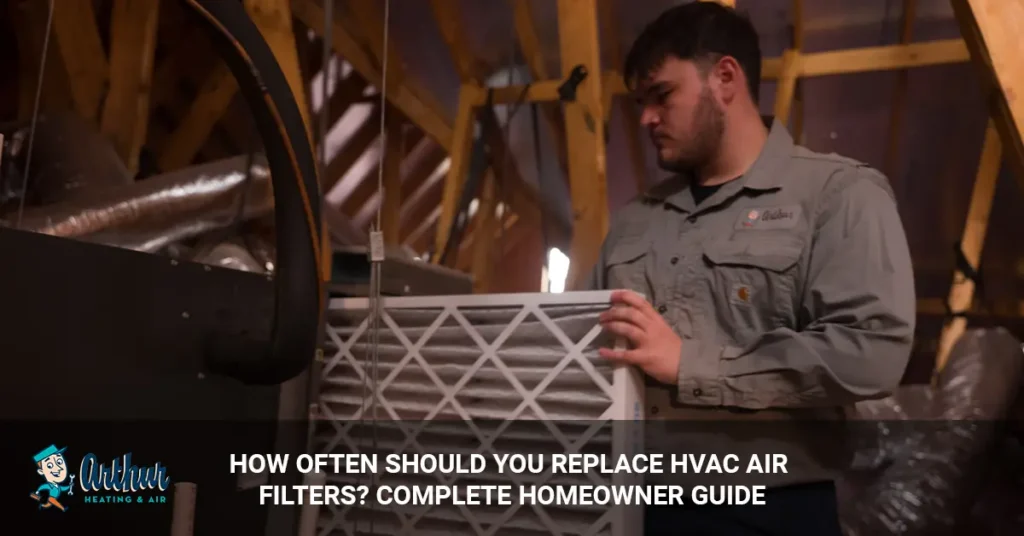
You should replace your HVAC air filter every 1 to 3 months, depending on your home and usage.
Many homeowners forget this simple task. But your air filter plays a key role in air quality, energy efficiency, and system performance.
If you don’t change it on time, your HVAC system has to work harder, and your indoor air quality gets worse.
This guide explains when to replace your filter, what affects the timing, and how to do it correctly.
How Often Should You Replace HVAC Air Filters?
You should replace your HVAC air filter every 1 to 3 months in most homes.
This is the general rule, but the exact timing depends on your home and how you use your system. Homes with pets, allergies, or heavy HVAC use usually need more frequent changes.
If your system runs daily, check the filter monthly and replace it when it looks dirty. This helps keep airflow strong and indoor air clean.
What Does an HVAC Air Filter Do?
An HVAC air filter cleans the air by trapping dust, dirt, and other particles.
As air moves through your system, the filter catches things like pollen, pet dander, and debris. This keeps these particles out of your home and out of your HVAC system.
A clean filter protects important parts of the system and helps it run smoothly. It also improves indoor air quality.
When the filter gets dirty, it blocks airflow. This makes your system work harder and reduces efficiency.
HVAC Air Filter Replacement Schedule (By Situation)
Your HVAC air filter replacement schedule depends on how your home is used.
Standard Homes
In standard homes, you should replace the air filter every 2 to 3 months.
This works well if you don’t have pets, allergies, or heavy HVAC usage. Dust builds up more slowly in these homes, so the filter lasts longer.
Checking the filter once a month still helps you replace it at the right time.
Homes with Pets
In homes with pets, you should replace the air filter every 1 to 2 months.
Pet hair and dander build up quickly and clog the filter faster than usual. This reduces airflow and makes your system work harder.
Changing the filter more often helps keep the air clean and your HVAC system running efficiently.
Homes with Allergies or Asthma
In homes with allergies or asthma, you should replace the air filter every 30 to 45 days.
A clean filter removes more dust, pollen, and allergens from the air. This helps improve air quality and reduce symptoms.
Changing the filter regularly keeps the air cleaner and supports better breathing.
Vacation Homes or Low Usage
In vacation homes or homes with low HVAC use, you can replace the air filter every 3 to 6 months.
Because the system runs less often, dust and debris build up more slowly. This allows the filter to last longer.
Even then, it’s a good idea to check the filter occasionally to make sure it stays clean and effective.
Signs Your HVAC Air Filter Needs Replacement
Your HVAC air filter needs replacement when airflow drops or the system struggles to run properly.
Reduced Airflow
Weak airflow is a clear sign your air filter is clogged.
If the air coming from your vents feels low or uneven, the filter may be blocking airflow. This makes your system work harder and reduces performance.
Higher Energy Bills
Higher energy bills can mean your HVAC air filter is dirty and needs to be replaced.
When the filter is clogged, airflow is restricted. This forces your system to work harder to heat or cool your home.
As a result, energy use goes up, and you end up paying more on your utility bills.
Dust Buildup in Your Home
More dust in your home is a sign that your air filter is not working properly.
If you notice dust collecting quickly on furniture or surfaces, the filter may be clogged or no longer trapping particles.
Replacing the filter helps keep the air cleaner and reduces dust inside your home.
Allergy Symptoms Getting Worse
Worsening allergy symptoms can mean your HVAC air filter needs to be replaced.
When the filter is dirty, it cannot trap dust, pollen, and allergens effectively. These particles stay in the air and can trigger sneezing, coughing, or breathing issues.
Replacing the filter helps improve air quality and reduce allergy symptoms.
Visible Dirt on the Filter
Visible dirt on the filter means it is clogged and needs to be replaced.
If the filter looks gray, dusty, or covered with debris, it can no longer trap particles properly. This reduces airflow and affects system performance.
Replacing a dirty filter helps restore airflow and keeps your indoor air clean.
What Happens If You Don’t Change Your Air Filter?
If you don’t change your air filter, your HVAC system will lose efficiency and may break down.
A dirty filter blocks airflow, which forces the system to work harder to heat or cool your home. This increases energy use and puts extra stress on the system.
The same principle applies to other filtration systems, so understanding how often to replace Berkey filters can help ensure consistent filtration performance.
Over time, this can lead to higher energy bills, poor cooling or heating, and costly repairs. It can also shorten the lifespan of your HVAC system, especially since dirty air filters can affect your heater and overall system performance over time.
How to Replace an HVAC Air Filter (Step-by-Step)
You can replace an HVAC air filter in a few simple steps.
Start by turning off your HVAC system for safety. Then locate the air filter, usually near the return vent or inside the unit.
Remove the old filter carefully. Insert the new filter in the correct direction by checking the airflow arrow on the frame.
Once done, turn the system back on. This quick task only takes a few minutes but helps your system run better and keeps your air clean.
How to Choose the Right HVAC Air Filter
Choosing the right HVAC air filter helps improve airflow, system performance, and indoor air quality.
Filter Size
Using the correct filter size is important for proper airflow and system efficiency.
Always check the size printed on your old filter or in your system manual. A filter that is too small or too large will not fit properly and can reduce performance.
MERV Rating
MERV rating shows how well an air filter traps dust, pollen, and other particles.
A higher MERV rating captures smaller particles and improves air quality. However, very high ratings can restrict airflow if your system is not designed for them.
For most homes, a moderate MERV rating provides a good balance between clean air and proper airflow.
Filter Type
The type of air filter you choose affects both air quality and system performance.
Basic filters are low-cost and good for protecting your system, but they do not capture smaller particles very well. High-efficiency filters trap more dust, pollen, and allergens, which improves indoor air quality.
However, better filters can clog faster and may need more frequent replacement. Choose a filter that fits your needs and your system’s capacity.
Tips to Extend the Life of Your Air Filter
You can extend the life of your air filter by keeping your home clean and maintaining your HVAC system.
Start by cleaning your home regularly to reduce dust and debris in the air. Keep vents and ducts clear so airflow stays strong.
Use good-quality filters that trap particles more effectively, especially if you choose the best air filters for homes with allergies to improve air quality and system performance. Also, check your filter every month so you can replace it before it gets too dirty.
These simple habits help your filter last longer and keep your system running efficiently.
Final Thoughts
Replacing your HVAC air filter on time is one of the easiest ways to keep your system running properly.
A clean filter improves airflow, lowers energy costs, and keeps your indoor air clean. It also helps prevent unnecessary strain on your system.
If you’re not sure when to replace it, checking it once a month is a simple and effective habit.