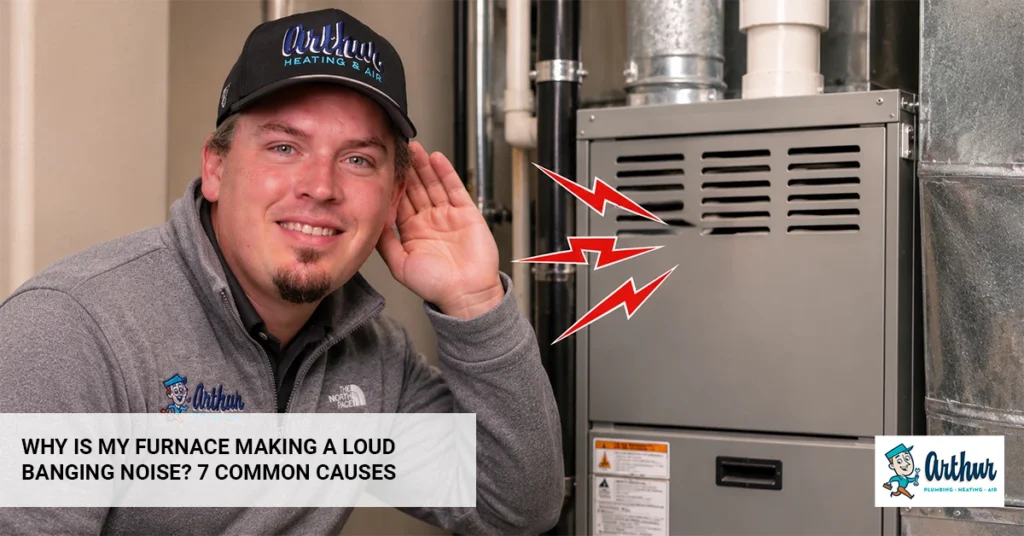
Is your furnace making a loud banging noise when it starts or shuts off? The sound may come from delayed ignition, expanding metal ductwork, loose components, or a problem with the blower.
Pay attention to when you hear the noise. A loud bang during startup may indicate delayed ignition, which happens when gas builds up before the burners ignite. Popping sounds from the walls or ceiling may come from metal ductwork expanding and contracting as it heats up and cools down.
Some furnace noises are harmless, but repeated loud bangs shouldn’t be ignored. Ignition problems can damage furnace components, while loose blower parts may need repair.
In this guide, we’ll cover seven common causes of furnace banging noises, how to identify the problem, what you can safely check, and when to call an HVAC professional.
Why Is My Furnace Making a Loud Banging Noise?
Your furnace may make a loud banging noise because of delayed ignition, expanding ductwork, dirty burners, or loose mechanical parts. The timing of the sound can help you identify where the problem may be coming from.
For example, a loud bang right when the furnace starts may indicate delayed ignition. This happens when gas builds up before the burners ignite. On the other hand, popping sounds from your walls, floors, or ceilings may come from metal ductwork expanding as hot air moves through it.
Pay attention to when you hear the noise:
- When the furnace starts: Possible delayed ignition or expanding ductwork.
- While the furnace is running: Possible loose blower components, damaged fan parts, or restricted airflow.
- When the furnace shuts off: Possible contracting ductwork or loose components.
- Repeatedly during the heating cycle: Possible mechanical problems or ongoing airflow restrictions.
These sounds can have different causes, so the timing alone won’t confirm the problem. However, it gives an HVAC technician a useful starting point when inspecting your heating system.
Banging is just one type of unusual heating system noise. Learn more about common heater noises and their causes to understand what different sounds may indicate.
If you hear repeated loud bangs during startup, stop using the furnace and arrange a professional inspection. Delayed ignition can be a serious combustion issue.
7 Common Reasons Your Furnace Makes a Loud Banging Noise
A furnace can make banging, popping, or booming sounds when its ignition system, burners, ductwork, or internal components aren’t working properly. Here are seven common causes and what you should know about each one.
1. Delayed Furnace Ignition
Delayed ignition can cause a loud bang when your furnace starts because the gas doesn’t ignite as quickly as it should. When ignition is delayed, a small amount of gas can build up around the burners before the flame catches. This can create a sudden popping or booming sound.
When inspecting a furnace, an HVAC technician will typically check the burners, ignitor, and gas supply to find out why ignition is being delayed.
Common causes of delayed furnace ignition include:
- Dirty or clogged furnace burners
- A weak, damaged, or improperly positioned ignitor
- Incorrect gas pressure
- Dirty or misaligned burner components
- Problems with the furnace ignition system
Signs of delayed furnace ignition include:
- A loud bang when the furnace starts.
- A delay between the ignition sequence and burner lighting.
- Repeated popping or booming sounds during startup.
- The furnace struggling to ignite or displaying an ignition-related error code.
How to Fix Delayed Furnace Ignition
Fixing delayed ignition requires a professional inspection of the furnace’s ignition and burner system.
An HVAC technician can inspect and clean the burners, test the ignitor, check gas pressure, and examine the ignition controls. If a component is damaged, the technician can repair or replace it as needed.
Don’t attempt to adjust gas pressure, clean internal burners, or repair ignition components yourself. If your furnace makes a loud bang during startup, turn it off and arrange professional service before using it again.
2. Expanding and Contracting Ductwork
Expanding and contracting metal ductwork can cause popping, knocking, or banging noises when your furnace starts or shuts off.
When the furnace starts, warm air moves through the ducts and heats the metal. As the metal heats up, it expands. When the furnace shuts down and the ducts cool, the metal contracts. This repeated movement can create noticeable popping or banging sounds, especially in older duct systems or ducts with loose supports.
Signs of ductwork expansion and contraction include:
- Popping sounds coming from walls, ceilings, or floors.
- A loud bang shortly after the furnace starts.
- Clicking or popping noises as the heating system cools down.
- Noises that seem to come from the ductwork rather than the furnace cabinet.
How to Fix Banging Noises From Ductwork
An HVAC technician can inspect your ductwork to find loose connections, poor support, or airflow problems that may contribute to the noise.
Depending on what they find, the repair may involve:
- Securing loose duct sections and connections.
- Adding proper supports to reduce movement and vibration.
- Checking for restricted airflow or excessive duct pressure.
- Inspecting duct sizing and insulation.
Occasional popping sounds caused by normal duct expansion may not be a serious problem. However, repeated or unusually loud banging deserves an inspection. A technician can check the ductwork and rule out other furnace problems before recommending a repair.
3. Dirty or Clogged Furnace Burners
Dirty or clogged furnace burners can cause popping or banging noises by interfering with proper gas ignition. Dust, rust, and other buildup can prevent the burners from lighting evenly or at the right time.
When the burners don’t ignite properly, gas may take longer to light. This can cause a popping sound or a loud bang when the furnace starts.
Common signs of dirty furnace burners include:
- Popping or banging sounds during startup.
- Uneven or inconsistent burner flames.
- The furnace struggling to ignite.
- Repeated ignition attempts or unexpected shutdowns.
- Visible dirt, rust, or buildup on burner components.
How to Fix Dirty Furnace Burners
An HVAC technician can inspect the burner assembly, check for dirt and buildup, and clean the burners if necessary.
During the inspection, the technician can also check the ignitor, burner alignment, gas pressure, and ignition sequence. These checks help determine whether dirty burners are causing the noise or another ignition problem is responsible.
If any burner components are damaged, they may need repair or replacement.
Don’t remove or clean internal burners yourself. Gas furnace components require proper handling and testing to ensure safe ignition and operation.
4. A Loose or Damaged Blower Wheel
A loose or damaged blower wheel can cause banging, rattling, or vibrating noises while your furnace is running.
The blower wheel is part of the furnace’s air circulation system. It spins to move heated air through the ductwork and into your rooms. If the wheel becomes loose, bent, damaged, or unbalanced, it may vibrate or hit nearby components as it spins.
Dust and debris can also collect on the blower wheel. Heavy buildup can affect its balance and cause unusual noises during operation.
Signs of a blower wheel problem include:
- Repeated banging or rattling while the furnace runs.
- Strong vibrations coming from the furnace cabinet.
- Weak airflow from supply vents.
- Unusual noises when the blower starts or stops.
- Uneven airflow throughout your home.
How to Fix a Loose or Damaged Blower Wheel
An HVAC technician can inspect the blower assembly to check for damage, loose mounting hardware, and excessive vibration.
Depending on the condition, the repair may involve:
- Cleaning dust and debris from the blower wheel.
- Securing loose mounting hardware.
- Correcting an unbalanced blower wheel.
- Replacing a damaged or worn wheel.
If the noise continues, the technician should also inspect the blower motor, bearings, and related components. Replacing the blower wheel or repairing the motor may be necessary if either part is damaged.
Don’t attempt to remove or adjust the blower assembly yourself. The technician can inspect and repair these components safely.
5. Loose Furnace Panels or Internal Components
Loose furnace panels, mounting brackets, or internal components can cause banging and rattling noises while your furnace is running.
Your furnace vibrates during normal operation as the blower motor and other components work. If a panel, bracket, or internal part becomes loose, the vibration can create unusual sounds.
The noise may become louder when the blower starts or when the furnace runs at higher speeds.
Common signs of loose furnace components include:
- Banging or rattling sounds near the furnace cabinet.
- Noise that starts when the blower turns on.
- Visible vibration around an exterior access panel.
- Repeated rattling during heating cycles.
- Noise that seems to come from inside the furnace.
How to Fix Loose Furnace Components
An HVAC technician can inspect the furnace cabinet, mounting brackets, blower assembly, and internal connections to find the source of the noise.
Depending on the problem, the repair may involve:
- Tightening loose exterior panels.
- Securing mounting brackets and supports.
- Tightening loose component connections.
- Replacing damaged or worn parts.
You can look for a visibly loose exterior panel, but don’t remove access panels or reach inside the furnace. If the banging continues, have an HVAC technician inspect the system and secure or replace any loose components.
6. Restricted Airflow Inside the Furnace
Restricted airflow can cause unusual furnace noises, overheating, and repeated shutdowns. A dirty air filter, blocked return vent, or restricted ductwork can prevent air from moving properly through the heating system.
When airflow drops, the furnace may struggle to distribute heat. This can cause internal temperatures to rise and trigger the high-limit switch, which shuts off the burners to protect the system. Airflow restrictions can also create pressure imbalances that contribute to ductwork popping or banging sounds.
Common signs of restricted furnace airflow include:
- Weak airflow from supply vents.
- Some rooms staying colder than others.
- The furnace overheating or shutting down frequently.
- Popping or banging sounds coming from the ductwork.
- A visibly dirty or clogged air filter.
- Longer heating times or inconsistent indoor temperatures.
How to Improve Furnace Airflow
Start with a few basic checks to restore proper airflow:
- Inspect the furnace air filter.
- Replace it if it’s dirty or clogged.
- Make sure supply vents are open and unobstructed.
- Remove furniture, rugs, or other objects blocking return vents.
- Turn on the furnace and check whether airflow improves.
If the furnace continues making banging noises or overheating, the problem may be deeper inside the system. An HVAC technician can inspect the blower assembly, measure airflow, and check the ductwork for blockages, leaks, or sizing problems.
Fixing the airflow problem can help your furnace operate more reliably and reduce unnecessary strain on its components.
7. Problems With the Furnace Blower Motor
A worn or damaged furnace blower motor can cause banging, rattling, or grinding noises while the heating system is running.
The blower motor powers the fan that moves heated air through your ductwork and into your rooms. When the motor develops a mechanical problem, it may struggle to operate smoothly and create unusual sounds.
Worn motor bearings, loose mounting hardware, damaged fan components, or debris inside the blower assembly can all contribute to the noise.
Common signs of a furnace blower motor problem include:
- Banging, rattling, or grinding while the blower runs.
- Unusual vibrations coming from the furnace cabinet.
- Weak or inconsistent airflow from supply vents.
- The blower motor struggling to start.
- Strange noises when the furnace fan turns on or shuts off.
How to Fix a Furnace Blower Motor Problem
An HVAC technician can inspect the blower motor, bearings, mounting hardware, and electrical connections to identify the cause of the noise.
Depending on the condition of the motor, the repair may involve:
- Tightening loose motor mounts.
- Removing debris from the blower assembly.
- Addressing worn bearings, where serviceable.
- Repairing or replacing damaged motor components.
- Replacing the blower motor if it cannot operate properly.
If the blower motor is damaged, replacing it may be necessary to restore proper airflow and quiet operation.
Don’t open the furnace cabinet or attempt electrical repairs yourself. A qualified HVAC technician can test the motor and determine whether it needs repair or replacement.
How to Identify the Cause of Furnace Banging Noise
You can narrow down the cause of furnace banging by paying attention to when the noise happens and where it comes from. A loud bang during startup may indicate an ignition problem, while popping sounds from walls or ceilings often point to expanding ductwork.
Use this table to identify possible causes:
| When you hear the noise | Possible cause |
| Loud bang when the furnace starts | Delayed ignition or ductwork expansion |
| Popping shortly after heating begins | Expanding metal ductwork |
| Banging when the furnace shuts off | Contracting ductwork or loose components |
| Repeated banging while the furnace runs | Loose blower wheel or mechanical problems |
| Rattling near the furnace cabinet | Loose panels or internal components |
Pay attention to whether the sound comes from the furnace cabinet, ductwork, or nearby walls and ceilings. Also, notice whether it happens once or repeats throughout the heating cycle.
These signs can help narrow down the problem, but they don’t confirm the exact cause. An HVAC technician can inspect the ignition system, burners, blower assembly, and ductwork to find the source of the noise and recommend the right repair.
Furnace noises can sometimes occur alongside other heating issues. Read about common heater problems homeowners experience and the warning signs to watch for.
Important: If you hear a loud bang during furnace startup, stop using the system and arrange a professional inspection. This may indicate delayed ignition.
How to Fix a Furnace Making a Loud Banging Noise
You can check a few basic things when your furnace makes a loud banging noise, but the right repair depends on what’s causing the sound. Start with the air filter, vents, and exterior furnace panels before scheduling professional service.
Follow these steps:
- Check the air filter: Remove the filter and inspect it for dust and debris. Replace it if it’s dirty or clogged.
- Inspect supply vents: Make sure furniture, rugs, curtains, and other objects aren’t blocking airflow.
- Check return vents: Keep return air openings clear so air can circulate freely through the system.
- Pay attention to the noise: Note whether the banging happens when the furnace starts, while it runs, or when it shuts off. This information can help an HVAC technician identify the problem.
- Check the furnace display: Look for flashing diagnostic lights or error codes. Check your owner’s manual for their meaning.
- Look at the exterior panels: Check for visible damage, loose panels, or unusual vibration. Don’t remove the panels or reach inside the furnace.
These checks may help resolve simple airflow problems, but they won’t fix every cause of furnace banging.
If you hear a loud bang during startup, stop using the furnace and contact an HVAC technician. Delayed ignition can indicate a combustion problem that requires professional attention.
Never adjust gas valves, clean internal burners, repair ignition components, or bypass furnace safety switches yourself. Also, avoid repeatedly restarting a furnace that keeps shutting down. Have the system inspected to find and fix the underlying problem.
Is a Loud Banging Noise From Your Furnace Dangerous?
A loud banging noise from your furnace isn’t always dangerous, but repeated booming sounds during startup can indicate delayed ignition or another problem that needs immediate professional attention.
If your furnace produces repeated loud startup bangs or shows signs of a serious heating problem, seek emergency heating repair rather than continuing to operate the system.
The risk depends on what’s causing the noise. Occasional popping from expanding metal ductwork may be harmless. However, loud ignition bangs, burning smells, and repeated furnace shutdowns can signal more serious problems.
Watch for these warning signs:
- Repeated loud bangs during startup: May indicate delayed ignition, which can cause gas to build up before the burners ignite.
- Burning or electrical smells: May point to an overheating component, damaged wiring, or another mechanical problem.
- Repeated overheating: May indicate restricted airflow or a faulty safety component.
- Gas smell: May indicate a gas leak and requires immediate action.
- Carbon monoxide alarm: May indicate dangerous carbon monoxide levels inside your home.
If you smell gas, leave the building immediately. Don’t operate electrical switches, appliances, or anything that could create a spark. Contact your gas utility or emergency services from a safe location.
If your carbon monoxide alarm sounds, get everyone outside immediately and seek emergency assistance. Don’t re-enter the building until emergency responders confirm it’s safe.
For repeated banging, overheating, or unusual furnace smells, stop using the system and arrange a professional inspection. Don’t ignore these warning signs or keep restarting a furnace that isn’t operating properly.
When Should You Call an HVAC Professional?
Call an HVAC professional if your furnace keeps making loud banging noises, especially during startup, ignition, or normal operation. These sounds may indicate a problem with the burners, ignition system, blower assembly, or ductwork.
If your furnace continues making loud banging noises, schedule professional furnace repair service to identify the cause and restore safe, reliable heating.
Schedule professional furnace repair if you notice any of these signs:
- A loud bang when the furnace starts: May indicate delayed ignition or a burner problem.
- Repeated banging during operation: Could point to a loose blower wheel, damaged components, or ductwork problems.
- Burners failing to ignite: May indicate a faulty ignitor, dirty burners, or gas supply issue.
- Grinding or mechanical noises: May indicate worn blower motor bearings or damaged moving parts.
- Inconsistent heating: Could result from restricted airflow or a problem with the blower assembly.
- Unusual smells or repeated shutdowns: May indicate an electrical, combustion, or overheating problem.
- Noise continues after basic checks: The system may need a more detailed inspection to identify the cause.
During a service visit, an HVAC technician can inspect the burners, ignition system, blower wheel, motor, ductwork, and electrical components. They can also test the system to determine which part needs repair or replacement.
Getting the problem diagnosed early can help prevent further damage, reduce unnecessary wear, and restore reliable furnace operation.
The cost of repairing a noisy furnace depends on the underlying problem and the components involved. See our guide to furnace repair costs to understand what you may pay for common repairs.
How to Prevent Furnace Banging Noises
Regular furnace maintenance can help prevent banging and popping noises by keeping the burners, blower, ductwork, and other components in good condition.
Follow these maintenance practices to keep your heating system running smoothly.
Replace Air Filters Regularly
Replace your furnace air filter according to the manufacturer’s recommendations. A dirty filter restricts airflow and can cause the furnace to overheat.
Check the filter regularly, especially during periods of heavy furnace use. Replacing a clogged filter helps maintain proper airflow and reduces strain on the blower motor.
Schedule Annual Furnace Maintenance
Schedule a professional furnace inspection at least once a year, preferably before the heating season begins. Regular inspections can help identify dirty burners, worn components, and loose connections before they cause bigger problems. Learn more about our furnace maintenance service to keep your heating system in good condition.
Regular inspections can help identify loose components, dirty burners, and ignition problems before they become more serious. Learn more about annual heater maintenance and what your heating system needs each year.
During maintenance, an HVAC technician can:
- Inspect and clean the burners.
- Check the ignition system.
- Inspect the blower motor and wheel.
- Test electrical connections.
- Check safety switches and controls.
- Inspect the furnace for loose or worn components.
Regular maintenance helps identify potential problems before they lead to unexpected breakdowns or expensive repairs.
Keep Air Vents Clear
Keep supply and return vents free from furniture, rugs, curtains, and other objects that block airflow.
Clear vents allow heated air to move properly through your home. This helps prevent airflow restrictions that can contribute to overheating and ductwork noises.
Address Unusual Noises Early
Don’t ignore repeated banging, popping, grinding, or rattling sounds from your furnace.
These noises may indicate loose components, ignition problems, or mechanical wear. Having the system inspected early can help identify the cause before the problem becomes more serious.
Maintain Your Ductwork
Have your ductwork inspected if you frequently hear loud popping or banging sounds from walls, ceilings, or floors.
An HVAC technician can check for loose connections, damaged duct sections, poor support, and airflow restrictions. Securing loose ducts and correcting airflow problems can help reduce unwanted noise and improve heating performance.
Frequently Asked Questions
Why Does My Furnace Make a Loud Bang When It Turns On?
A loud bang when your furnace starts may indicate delayed ignition. This happens when gas builds up around the burners before igniting, creating a sudden booming sound. Dirty burners, a faulty ignitor, or incorrect gas pressure may cause this problem. Have an HVAC technician inspect the furnace before using it again.
Why Does My Furnace Make a Popping Noise?
Your furnace may make popping noises because metal ductwork expands when heated and contracts as it cools. Dirty burners, delayed ignition, and loose components can also cause popping sounds. Pay attention to when the noise occurs to help identify the possible cause.
Is It Normal for a Furnace to Bang When Starting?
A mild popping sound from expanding ductwork can be normal, but a loud bang during startup isn’t normal furnace operation. It may indicate delayed ignition or a burner problem. Stop using the furnace and arrange a professional inspection if you hear repeated loud startup bangs.
Why Does My Furnace Bang When It Shuts Off?
Your furnace may bang when it shuts off because metal ductwork contracts as it cools. Loose duct connections, unsupported duct sections, or mechanical components can also cause shutdown noises. An HVAC technician can inspect the system if the banging is loud or happens repeatedly.
Can a Dirty Furnace Filter Cause Banging Noises?
A dirty furnace filter can restrict airflow and contribute to overheating and pressure-related duct noises. The reduced airflow may also cause the furnace to shut down before completing a heating cycle. Replace a clogged filter with the correct size and type. If the banging continues, have the furnace inspected.
Can Delayed Ignition Damage a Furnace?
Yes. Repeated delayed ignition can create sudden pressure inside the burner area and put additional stress on furnace components. It may also damage parts of the burner or ignition system over time. A qualified HVAC technician should inspect the burners, ignitor, and gas supply to find the cause.
Should I Turn Off My Furnace If It Makes a Loud Banging Noise?
Yes, stop using your furnace if it makes repeated loud bangs during startup. Delayed ignition may create a combustion safety problem, so don’t keep restarting the system. Contact an HVAC professional for an inspection. If you smell gas or your carbon monoxide alarm sounds, leave the building immediately and seek emergency assistance.
How Much Does It Cost to Fix a Furnace Making Banging Noises?
The cost depends on what’s causing the banging noise and which components need repair. Securing loose ductwork may cost less than replacing a faulty ignitor, damaged blower wheel, or blower motor. An HVAC technician can inspect the furnace, identify the problem, and provide a repair estimate before starting the work.
Get Professional Help for Furnace Banging Noises
A furnace making loud banging noises may need professional repair, especially when the sound comes from the ignition system, burners, blower assembly, or internal components.
Start by checking the air filter and making sure your supply and return vents aren’t blocked. Also, pay attention to when the noise occurs. A loud bang during startup may indicate delayed ignition, while repeated banging during operation may point to a mechanical problem.
Don’t ignore repeated loud bangs or attempt to repair gas or ignition components yourself. Turn off the furnace if you suspect an ignition problem and arrange a professional inspection.
Arthur Heating & Air provides furnace repair services to help homeowners identify heating system problems and get the right repairs. Contact the team to discuss your furnace issue and schedule professional service.