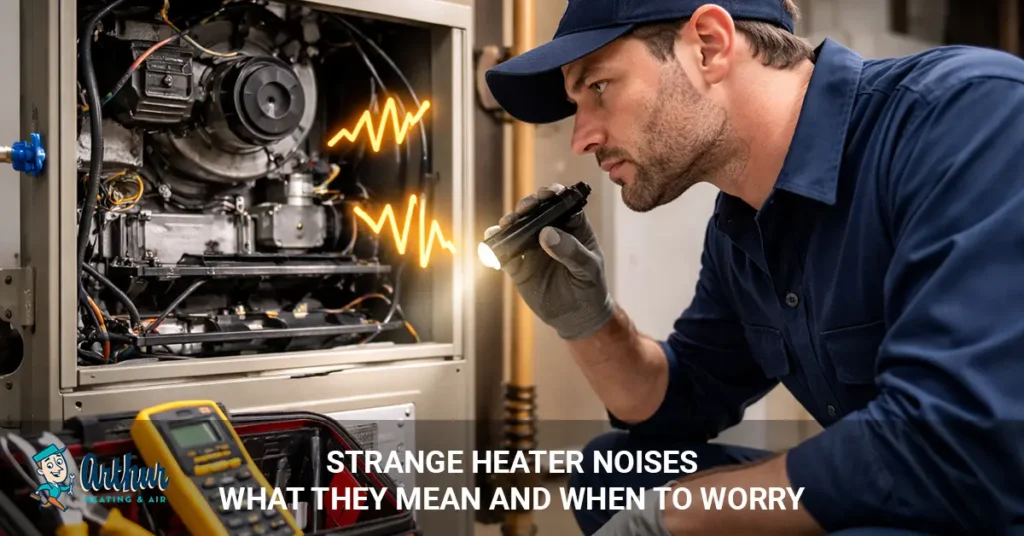
A heater can make some normal sounds as it starts, runs, and shuts down, but loud, sudden, repeated, or unusual noises often point to a problem that needs attention. Banging, grinding, squealing, buzzing, and booming sounds can indicate issues with the blower, ignition system, electrical components, burners, or airflow.
The sound itself can give you a useful clue about what’s happening inside the system.
Some problems are simple, such as a dirty air filter or loose panel. Others require professional HVAC service, especially when the noise involves gas ignition, electrical components, or moving parts.
Here’s what the 10 most common heater noises mean and what you should do about them.
What Do Different Heater Noises Mean?
Different heater noises often point to different problems, from restricted airflow and loose components to blower, ignition, and electrical issues.
| Heater Noise | Common Cause | What to Do |
| Banging or popping | Delayed ignition, dirty burners, duct expansion | Have the system inspected if repeated |
| Clicking | Ignition or electrical problem | Monitor repeated clicking and schedule service |
| Screeching | Blower motor, belt, or bearings | Schedule HVAC service |
| Squealing | Belt, motor, or bearing issue | Have the system inspected |
| Rattling | Loose panel, duct, or component | Check accessible panels and schedule service if it continues |
| Humming | Motor, transformer, or electrical component | Have persistent humming inspected |
| Buzzing | Electrical or motor problem | Schedule professional inspection |
| Whistling | Restricted airflow or duct issue | Check the filter and vents |
| Booming | Delayed gas ignition | Turn off the furnace and call an HVAC professional |
| Grinding or scraping | Blower motor or moving component | Shut the system down and arrange service |
A single brief sound doesn’t always mean something has failed. The timing, volume, frequency, and type of noise matter.
10 Common Heater Noises and What They Mean
1. Why Is My Heater Making a Banging or Popping Noise?
A loud or repeated bang from a furnace can indicate delayed ignition, while lighter popping sounds can come from expanding ductwork.
When sheet metal heats up, it expands. That expansion can create an occasional pop as the ductwork changes shape.
A loud bang from a gas furnace deserves more attention. Dirty burners or an ignition problem can delay the ignition of the fuel, creating a sudden pressure change when it finally ignites.
Don’t try to clean or adjust gas burners yourself.
If you hear repeated loud bangs when the furnace starts, turn the system off and have an HVAC professional inspect it.
2. Why Is My Heater Making a Clicking Sound?
Repeated clicking can point to an ignition, thermostat, control, or electrical problem.
A furnace may make a brief click when the thermostat calls for heat or when the ignition sequence starts. That can be normal.
The problem starts when the system repeatedly clicks without successfully starting or when the clicking continues throughout the heating cycle.
Possible causes include:
- Ignition problems
- Faulty controls
- Electrical components
- Thermostat issues
- A problem with the startup sequence
If your heater clicks repeatedly but doesn’t produce heat, schedule an HVAC inspection.
3. Why Is My Heater Screeching or Squealing?
A screeching or high-pitched squealing noise often points to a blower motor, belt, bearing, or other moving-part problem.
The blower assembly moves air through your home’s ductwork. As components wear, they can produce a high-pitched sound.
A worn belt may squeal as the blower starts. Worn motor bearings can also create a sharp or continuous noise.
Don’t ignore a screech that gets louder over time. A small mechanical problem can turn into a more expensive repair if a moving component fails.
If the noise starts when the blower turns on, have a technician inspect the blower assembly.
4. Why Is My Heater Making a Rattling Noise?
A rattling heater often has a loose panel, duct component, fastener, or internal part.
Start by listening for where the rattle comes from.
A loose access panel can create a surprisingly loud vibration. Loose ductwork can also rattle when the blower starts.
You can safely check whether an accessible exterior panel appears loose. Don’t remove internal furnace components.
If the rattling continues or sounds like something is moving inside the furnace, turn the system off and schedule an inspection.
5. Why Is My Heater Humming?
A persistent humming noise can come from the blower motor, transformer, electrical components, or another part that operates continuously.
A quiet operating hum isn’t necessarily a problem. What matters is a new, louder, or unusual humming sound.
A humming motor that struggles to start can indicate a mechanical or electrical problem. Because diagnosing electrical components requires specialized knowledge, don’t open the furnace or attempt electrical repairs yourself.
If the humming suddenly becomes louder or the heater struggles to start, have an HVAC technician check it.
6. Why Is My Heater Buzzing?
A buzzing sound can indicate an electrical component, motor, transformer, or loose connection that needs inspection.
A brief electrical sound during startup may not indicate a serious problem. A continuous or increasingly loud buzz deserves more attention.
Pay particular attention if the buzzing occurs with:
- A burning smell
- Flickering lights
- Repeated system shutdowns
- Difficulty starting
- Unusual heat around the equipment
If you notice these signs, turn the system off and arrange professional service rather than trying to diagnose the electrical components yourself.
7. Why Is My Heater Whistling?
A whistling heater often points to restricted airflow caused by a dirty filter, blocked vent, closed register, or duct problem. A dirty filter can affect more than airflow, so it’s worth understanding how dirty air filters affect your heater.
Air has to move freely through the return and supply sides of the HVAC system. A restriction can increase air velocity through a smaller opening and create a noticeable whistle.
Start with the simple things you can safely check:
- Inspect the air filter.
- Replace a dirty filter with the correct size.
- Make sure supply vents are open.
- Check that return-air grilles aren’t blocked by furniture or other objects.
If the whistling continues after these checks, the problem could involve the ductwork or another part of the system.
8. Why Is My Heater Making a Grinding Noise?
A grinding noise usually indicates a problem with a moving component, such as the blower motor or bearings.
Grinding is more concerning than a normal operating hum because it can mean metal or another mechanical component is rubbing where it shouldn’t.
Continuing to run the system can make a mechanical problem worse.
If your heater suddenly starts grinding, turn it off and arrange an HVAC inspection. A technician can check the blower assembly, motor, bearings, and related components.
9. Why Is My Furnace Making a Booming Noise?
A loud boom when a gas furnace starts can indicate delayed ignition and requires prompt professional attention.
Delayed ignition occurs when the burner doesn’t ignite normally at the expected point in the heating cycle. When ignition finally occurs, the resulting combustion can create a loud boom.
Don’t attempt to adjust the burners, ignition system, or gas components yourself.
If your furnace repeatedly makes a loud boom during startup, turn it off and call a qualified HVAC professional. A technician can inspect the burners, ignition system, and other components to determine the cause.
10. Why Is My Heater Making a Scraping or Metal-on-Metal Noise?
A scraping sound often means a moving component is rubbing against another part of the system.
The blower wheel and motor are common areas to inspect when you hear this type of noise.
Possible causes include:
- A damaged blower wheel
- A worn motor bearing
- A loose component
- A misaligned moving part
- Debris contacting the blower
Don’t keep running the heater to see whether the noise goes away. A scraping component can cause additional damage.
Turn the system off and have an HVAC technician inspect it.
Not Sure if the Noise Is Serious?
A professional inspection can catch the issue early and prevent costly repairs.
 Book a Heater Inspection
Which Heater Noises Are Normal?
Brief clicking, light popping, and normal airflow sounds can occur during regular heater operation, but loud, new, or repeated noises deserve attention.
For example, you may hear a light pop as metal ductwork expands when warm air enters it. You may also hear a brief click as the thermostat or ignition sequence operates.
The key is to compare the sound with your heater’s normal operation.
A noise becomes more concerning when it happens alongside other signs you need heater repair, such as:
- Suddenly appears
- Gets louder over time
- Happens repeatedly
- Occurs with poor heating
- Comes with unusual odors
- Causes the system to shut down
- Starts during ignition
If the noise is new and you can’t identify a simple cause, have the system inspected rather than guessing at the repair.
When Should You Turn Off a Noisy Heater?
Turn off your heater when it makes a loud booming, grinding, or unusual electrical noise, or when you notice smoke, a burning odor, or other signs of a serious problem.
You should also stop using the system if it repeatedly fails to start or produces a noise that suddenly becomes much louder. If your heater keeps shutting off, the repeated shutdowns may point to a separate system problem that needs attention.
Some heater problems can worsen when the equipment continues operating.
A particularly important warning sign is a loud boom during gas furnace startup. That can indicate delayed ignition and requires professional attention.
If you smell gas, leave the area and follow your local gas utility’s emergency instructions rather than attempting to find or repair the leak yourself.
Can You Fix a Noisy Heater Yourself?
You can safely check a few basic issues yourself, but gas, electrical, ignition, and internal mechanical problems require professional HVAC service.
Safe checks include:
- Replacing a dirty air filter
- Making sure supply vents are open
- Clearing furniture away from return-air grilles
- Checking accessible exterior panels for obvious looseness
- Looking for obvious airflow restrictions
Avoid opening internal furnace components or attempting to repair:
- Gas burners
- Ignition systems
- Electrical controls
- Motors
- Wiring
- Gas connections
If the noise comes from inside the furnace or continues after basic checks, let an HVAC technician diagnose the system. Professional heater repair can identify whether the noise is coming from the blower, ignition system, electrical components, or another part of the heater.
How Much Does It Cost to Fix a Noisy Heater?
The cost to fix a noisy heater depends on the component causing the sound, with simple airflow or loose-component problems generally costing less than blower, motor, ignition, or electrical repairs. For a broader breakdown of potential expenses, see our guide to heater repair cost.
For example, a dirty filter may only require a replacement filter, while a failing blower motor can require a much larger repair.
The same noise can also have more than one possible cause. That’s why a technician needs to diagnose the source before giving you an accurate repair price.
When getting a repair estimate, ask what caused the noise, which component needs attention, and whether the repair includes parts and labor.
Frequently Asked Questions
Why is my heater making a loud noise?
A loud heater noise can come from loose components, restricted airflow, blower problems, ignition issues, or electrical components. The type and timing of the noise can help identify the likely cause.
Why does my furnace make a banging noise?
A furnace can bang because of delayed ignition, dirty burners, or ductwork that expands as it heats. A loud repeated bang during startup needs professional inspection because delayed ignition can cause damage.
Why is my heater making a clicking sound?
Repeated clicking can indicate an ignition, thermostat, control, or electrical problem. A brief click during startup can be normal, but repeated clicking without normal heating needs attention.
Why does my furnace squeal when it starts?
A squealing furnace may have a worn belt, blower motor, bearing, or another moving component. Have the blower assembly inspected if the noise continues or gets louder.
Why is my heater making a rattling noise?
A rattling noise often comes from a loose panel, duct component, fastener, or internal part. If you can’t identify an accessible loose panel, have an HVAC technician inspect the system.
Is a buzzing furnace dangerous?
A persistent or unusual buzzing furnace should be inspected because the sound can come from an electrical or mechanical component. Turn the system off if the buzzing comes with a burning smell, smoke, repeated shutdowns, or other unusual symptoms.
Why does my furnace make a booming sound?
A loud boom during gas furnace startup can indicate delayed ignition and needs prompt professional attention. Don’t attempt to adjust the burners or ignition system yourself.
Should I turn off my furnace if it is making noise?
Turn off the furnace when the noise is loud, sudden, worsening, or accompanied by a burning smell, smoke, electrical symptoms, or repeated startup problems. Have an HVAC professional diagnose the cause before using the system again.
Can a dirty filter make my furnace noisy?
Yes, a dirty filter can restrict airflow and contribute to whistling or other airflow-related noises. Replace a dirty filter with the correct type and size, then check whether the noise improves.
When should I call an HVAC technician for a noisy heater?
Call an HVAC technician when the noise is loud, repeated, worsening, or comes from the furnace’s internal components. You should also get professional help for gas ignition, electrical, blower, motor, and grinding problems.
Final Thought
A new, loud, or repeated heater noise usually deserves attention, even if the system still produces heat. The sound can help point to the problem, but it doesn’t always identify the exact failed component.
Light popping or brief clicking can occur during normal operation. Whistling may point to an airflow restriction, while squealing or grinding often suggests a mechanical problem. A loud boom from a gas furnace can indicate delayed ignition and needs prompt professional attention.
You can safely check simple issues such as a dirty filter or blocked vents. Leave gas, electrical, ignition, and internal mechanical repairs to a qualified HVAC professional.
If your heater suddenly starts making a noise it didn’t make before, don’t ignore it. Finding the cause early can help prevent a small problem from becoming a larger repair.
Still Hearing That Noise? Get It Fixed Today
Fast, reliable heater repair to restore quiet and comfort.
 Schedule Heater Repair