
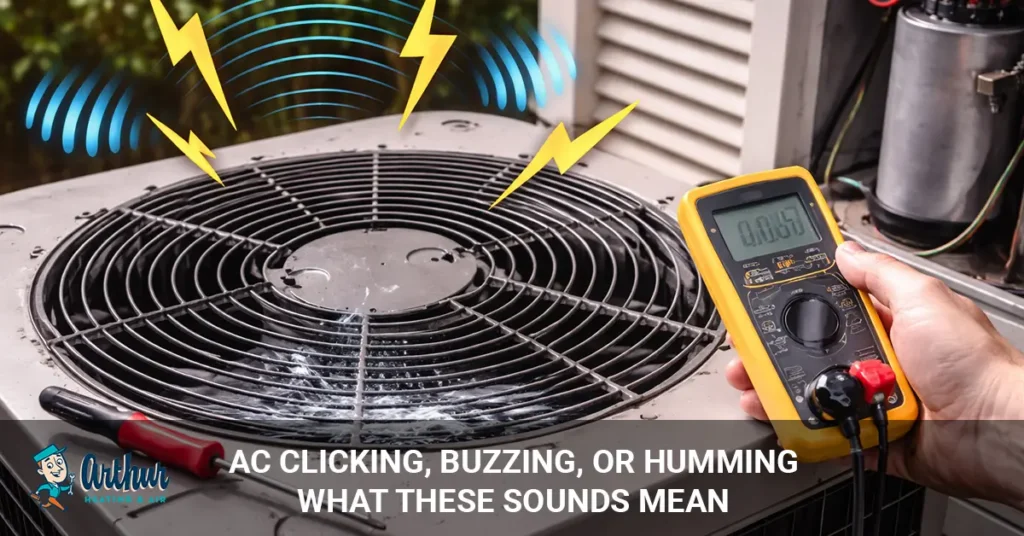
Your air conditioner should run quietly in the background. If you start hearing clicking, buzzing, or humming, it usually means something isn’t quite right. While a few sounds during startup or shutdown are normal, loud or ongoing noises are not.
In many cases, these sounds point to electrical issues, mechanical wear, or airflow problems. Ignoring them can lead to bigger damage and higher repair costs. In this guide, we’ll explain what each sound means, what might be causing it, and when it’s best to call a professional before a small issue turns into a major repair.
Why Is My Air Conditioner Making Noise?
Your air conditioner is making noise because one or more parts aren’t working the way they should. AC systems have motors, fans, electrical components, and refrigerant lines, so some sound is normal. But when a new or unusual noise appears, it often means something is loose, worn out, or starting to fail.
The most common reasons an AC becomes noisy include:
- Aging or worn components
- Loose electrical connections
- Skipped or irregular maintenance
- Dirty coils or clogged air filters
- Extra strain on the motor or electrical system
Paying attention to the type of sound you hear helps identify the problem faster and prevents more serious damage.
AC Clicking Sound: Causes and What to Do
A clicking sound usually means your AC is struggling to start or communicate with its electrical components. A single click when the system turns on or off is normal. Repeated or constant clicking is not.
Common Causes of AC Clicking
- Electrical relay or control board problems that prevent proper startup
- The faulty thermostat signals are sending the wrong commands
- Loose fan blades or internal parts tapping as they move
- A failing compressor contactor that can’t stay engaged
If the clicking continues or your AC won’t turn on, turn the system off and have it checked by a professional to avoid electrical damage.
When Clicking Is Normal
Clicking is normal when it happens briefly as your AC turns on or shuts off. This single click usually comes from electrical components doing their job.
Normal clicking sounds include:
- One click when the system starts or stops
- The thermostat is sending a signal to begin cooling
If the clicking is short and doesn’t repeat, there’s usually nothing to worry about.
When Clicking Is a Problem
Clicking is a problem when it keeps happening or the AC can’t run properly. Ongoing clicking usually means an electrical or mechanical part is failing.
You should be concerned if you notice:
- Repeated or constant clicking that doesn’t stop
- Clicking sounds but the AC won’t turn on
- Clicking followed by the system shutting down
If this happens, turn the system off and have it checked. Running the AC in this condition can lead to bigger and more expensive damage.
What You Should Do
You should turn off your AC and call a professional if the clicking doesn’t stop quickly.
Clicking that lasts more than a few seconds often points to an electrical issue that won’t fix itself.
Continuing to run the system can damage major components and lead to higher repair costs. Getting it inspected early is the safest and most cost-effective option.
AC Buzzing Sound: What It Means
A weak or failing capacitor is a common cause of buzzing, and understanding the cost to replace a capacitor on an AC can help you plan for repairs. Unlike normal operating sounds, buzzing is often a warning sign that something isn’t working safely or efficiently.
Common reasons an AC buzzes include:
- Loose or failing electrical wiring
- A weak or failing capacitor
- Dirty condenser coils are forcing the system to work harder
- Refrigerant flow issues inside the system
- A malfunctioning contactor that can’t stay engaged
If you hear buzzing, it’s best to shut the system off and have it inspected before the issue causes further damage.
Is a Buzzing AC Dangerous?
Yes, a buzzing air conditioner can be dangerous and should not be ignored. Buzzing caused by electrical problems can lead to system failure or electrical damage if left unchecked.
Refrigerant-related buzzing can also reduce cooling performance and put extra strain on the compressor. Turning the system off and calling a professional is the safest next step.
Immediate Steps to Take
You should shut off your AC and contact a professional as soon as you hear a buzzing sound. Start by turning the system off at the thermostat or breaker to prevent further damage. Avoid trying to fix electrical issues yourself, as this can be unsafe. A licensed HVAC technician can quickly identify the problem and make the proper repair.
AC Humming Sound: Normal or Not?
A humming sound can be normal, but it depends on how loud it is and when it happens. Some low-level humming is part of normal operation, especially when the system is running smoothly.
Normal Humming Sounds
Normal humming usually sounds steady and quiet. It often comes from:
- A soft, consistent hum while the AC is running
- Air is moving through the duct system as the unit circulates cool air
If the humming stays low and doesn’t change, it’s usually nothing to worry about.
Problematic Humming Causes
Humming becomes a problem when it gets louder, changes pitch, or happens with poor cooling. These sounds usually mean a part is under strain or starting to fail.
Common causes include:
- A failing blower or condenser motor
- Loose internal parts vibrating during operation
- A compressor working under extra stress
- Unbalanced fan blades are causing uneven movement
If the humming grows or sounds different than usual, it’s best to have the system checked before damage worsens.
How to Reduce AC Humming
You can reduce AC humming by fixing airflow issues and addressing loose or stressed components early. Start with simple steps that help the system run more smoothly.
Helpful actions include:
- Replace dirty air filters to improve airflow
- Making sure exterior panels are tight and secure
- Scheduling a professional motor and compressor inspection
If the humming gets louder or changes pitch, it usually means the problem is getting worse and should be checked right away.
AC Noise Troubleshooting Chart (Quick Diagnosis)
This quick chart helps you understand what the sound means and how urgent the problem may be. Use it as a fast guide to decide whether you should wait or call for service right away.
| AC Sound | Possible Cause | Urgency |
| Clicking | Electrical relay or thermostat issues | Medium–High |
| Buzzing | Capacitor failure, wiring problems, refrigerant issues | High |
| Humming | Motor issues or loose internal parts | Medium |
This quick check helps you determine how fast you should act and avoid more serious damage.
Not Sure How Serious the Noise Is?
A quick inspection can prevent major damage and expensive repairs.
 Schedule AC Inspection
Should I Turn Off My AC If It’s Making Noise?
Yes, you should turn off your AC if the noise is loud, constant, or unusual. Running a noisy system can make the problem worse and lead to expensive damage.
Turn the AC off right away if:
- Buzzing or clicking is loud or doesn’t stop
- The system struggles or fails to start
- You smell something burning or notice weak airflow
Continuing to run a noisy AC can cause compressor damage, electrical failure, and higher repair costs.
Can Poor Maintenance Cause AC Noises?
Yes, poor maintenance is one of the most common causes of AC noise.
When basic upkeep is skipped, parts work harder than they should and start making sounds.
Common maintenance-related causes include:
- Dirty air filters that restrict airflow
- Dust and debris buildup on coils
- Worn belts and aging motors
- Loose screws and panels that vibrate during operation
Annual professional maintenance helps catch these issues early, keeping your AC quieter and preventing costly repairs.
When to Call a Professional for AC Noises
If your system is making loud or repeated noises, scheduling professional AC repair can help prevent electrical or compressor damage. You should call a professional when AC noises are new, getting worse, or affecting performance. These sounds often mean the system needs expert attention before the damage spreads.
Call an HVAC professional if:
- The noise is new or keeps getting louder
- Your AC isn’t cooling the way it should
- The unit turns on and off frequently
- You hear electrical noises like buzzing or repeated clicking
Prompt repairs are almost always cheaper than replacing major components later.
How to Prevent Clicking, Buzzing, and Humming in the Future
You can prevent most AC noises by keeping your system clean, maintained, and well cared for. Small steps taken early make a big difference in how quietly your AC runs.
Simple ways to reduce future noise include:
- Scheduling annual AC tune-ups to catch issues early
- Replace air filters regularly to keep airflow smooth
- Keeping the outdoor unit clean and free of debris
- Fixing small problems before they turn into bigger ones
Preventive care keeps your air conditioner quiet, efficient, and reliable for the long run.
Final Thoughts
Clicking, buzzing, and humming are early warning signs that your air conditioner needs attention. Taking action early can prevent breakdowns, protect major components, and keep your home comfortable.
If your AC is making unusual noises, don’t wait. A professional inspection today can save you time, stress, and money tomorrow.
AC Making Loud or Constant Noise? Don’t Wait.
Get fast, reliable repair before the problem gets worse.
 Book Emergency AC Repair