
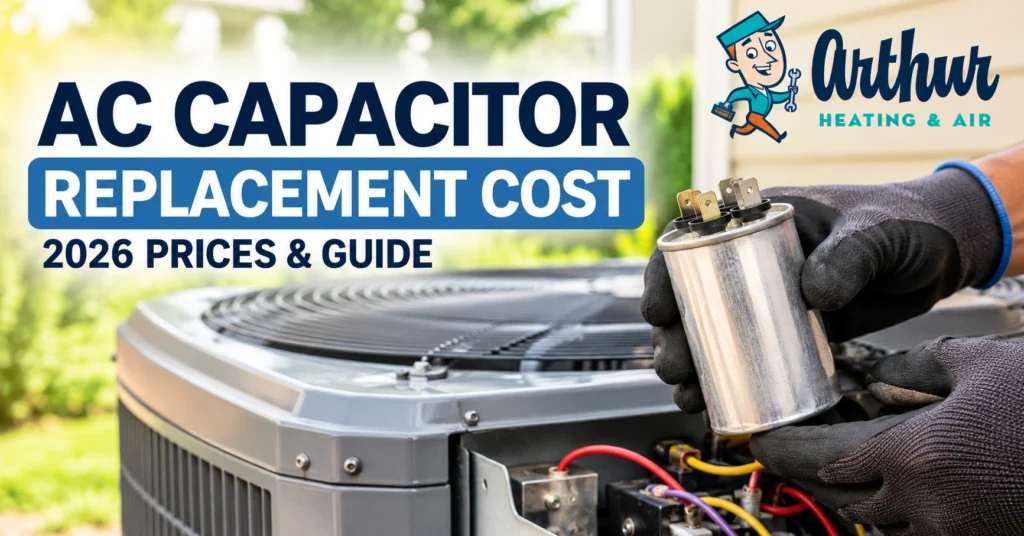
AC capacitor replacement usually costs between $150 and $400 in 2026 when handled by an HVAC professional. The capacitor itself may cost only $10 to $60, but the total repair price can include the service call, diagnosis, labor, and testing.
Your actual cost depends on the type of capacitor, local labor rates, your AC system, and when you need the repair. A standard appointment during business hours will usually cost less than an emergency or after-hours visit.
If your AC is humming, struggling to start, or suddenly stops cooling, a bad capacitor could be the cause. But those symptoms can also come from other AC problems. Getting the system properly diagnosed can help you avoid paying for the wrong repair.
How Much Does It Cost to Replace an AC Capacitor?
AC capacitor replacement typically costs $150 to $400 in 2026, including the replacement part and professional labor. The exact price depends on your AC system, local labor rates, the type of capacitor, and whether you need regular or emergency service.
Here’s a general breakdown of what you may pay:
| AC Capacitor Expense | Typical Cost |
| Capacitor only | $10–$60 |
| Service or diagnostic fee | $75–$150 |
| Labor | $75–$200 |
| Professional replacement | $150–$400+ |
These are general price ranges, so your actual quote may be different. Some HVAC companies include the service call in the repair price, while others charge it separately.
A routine appointment during normal business hours will usually cost less than an emergency visit. Evening, weekend, and holiday service can increase the total.
When comparing quotes, ask whether the price includes the capacitor, labor, diagnostic fee, and testing. That gives you a clearer idea of what you’re actually paying for.
How Much Does an AC Capacitor Cost Without Labor?
An AC capacitor typically costs $10 to $60 without labor, although some OEM or specialty models can cost more. The price depends on the capacitor type, voltage rating, capacitance, brand, and whether it matches your specific AC system.
Common types include:
- Single-run capacitor: Powers one motor, such as the outdoor condenser fan.
- Dual-run capacitor: Supports both the compressor and condenser fan motor.
- Start capacitor: Provides extra power to help certain motors start.
Dual-run capacitors are common in many residential central AC systems. However, you shouldn’t choose a replacement based only on its price or physical size. The new capacitor needs to match the electrical specifications required by your system.
That’s also why the price you see for a capacitor online isn’t the same as the total cost of professional replacement. You still need to account for diagnosis, labor, service fees, and system testing.
What Is Included in AC Capacitor Replacement Cost?
AC capacitor replacement cost usually includes the service call, diagnosis, replacement capacitor, labor, and system testing. You are paying for the complete repair, not just the small electrical part.
Diagnostic or Service Call
A diagnostic or service call typically costs $75 to $150 and covers the technician’s visit and inspection. The technician checks the system to confirm whether the capacitor is actually causing the problem.
Some HVAC companies apply this fee toward the repair if you approve the work. Others charge it separately. Before scheduling service, ask whether the diagnostic fee is included in the quoted price.
Replacement Capacitor
The capacitor itself usually costs $10 to $60, although OEM and specialty parts can cost more. The price depends on the type and electrical specifications required by your AC system.
A technician should use a replacement capacitor that matches the manufacturer’s required specifications rather than simply choosing the cheapest available part.
HVAC Labor
HVAC labor covers the technician’s time to diagnose the problem, replace the capacitor, and make sure the system is working properly. Labor rates vary by company and location.
The job may also take longer if the technician needs additional time to access the equipment or diagnose another electrical issue.
Testing After Replacement
Testing confirms that the AC starts and runs properly after the new capacitor is installed. A technician may check the compressor, condenser fan, and other relevant components before completing the repair.
This step matters because a capacitor may not be the only reason an AC has trouble starting or running. Proper testing helps make sure the repair actually fixes the problem.
What Affects AC Capacitor Replacement Cost?
The type of capacitor, your AC system, local labor rates, service fees, timing, and equipment access can all affect the final cost of AC capacitor replacement. That’s why two homeowners with similar AC problems may receive different repair quotes.
Type of Capacitor
The type of capacitor your AC needs can affect the replacement price. Single-run, dual-run, and start capacitors can have different prices, and the required voltage and capacitance ratings also matter.
The technician needs to use a capacitor that matches your system’s specifications. Choosing a cheaper part that doesn’t meet those requirements can cause problems.
AC System and Capacitor Requirements
Your AC system’s design and electrical requirements can affect the price of the replacement capacitor. Different manufacturers and equipment models may require different capacitor specifications.
A technician should check the system and install a compatible replacement rather than simply choosing the least expensive option.
Labor Rates in Your Area
Local HVAC labor rates can make a noticeable difference in the total replacement cost. Labor tends to cost more in areas with higher operating expenses, and different HVAC companies may have different pricing.
An independent contractor and a larger HVAC company may also charge different rates for the same type of repair.
Service and Diagnostic Fees
A separate service or diagnostic fee can increase the total cost of capacitor replacement. Some HVAC companies charge for the technician’s visit and diagnosis before adding the repair cost.
Other companies include the diagnostic fee in the total repair price or apply it toward the repair.
When comparing quotes, check whether the price includes:
- Service call
- Diagnosis
- Capacitor
- Labor
- System testing
- Parts or labor warranty
Looking at the complete price gives you a much better comparison than comparing the advertised capacitor replacement price alone.
Emergency and After-Hours Service
Emergency and after-hours HVAC service usually costs more than a standard appointment. Companies may charge additional fees for evenings, weekends, holidays, or same-day emergency calls.
If your AC problem isn’t urgent, scheduling service during normal business hours may help keep the repair cost lower.
Accessibility
The amount of time needed to access the capacitor can also affect labor costs. Most residential capacitors are accessible to trained HVAC technicians, but equipment layouts can vary.
If the technician needs extra time to reach the component or diagnose related problems, the labor portion of the repair may increase.
AC Capacitor Replacement Cost vs. Other AC Repairs
AC capacitor replacement is usually less expensive than major AC repairs such as a condenser fan motor or compressor replacement. The exact price depends on the equipment, parts, labor rates, and location.
| AC Repair | Typical Cost Range |
| AC capacitor replacement | 150–400 |
| AC contactor replacement | 150–400 |
| Condenser fan motor replacement | 300–900+ |
| AC compressor replacement | 1,200–3,000+ |
These ranges are general estimates, so your actual repair cost may be higher or lower. For a broader look at common AC repair costs, you can compare capacitor replacement with other common AC repairs.
A humming outdoor unit that won’t start, for example, can point to a bad capacitor. But a faulty contactor, fan motor, compressor, wiring problem, or another electrical issue can cause similar symptoms.
That’s why it’s important to diagnose the problem before replacing a part. Paying for a capacitor that isn’t actually faulty won’t fix the AC and can add an unnecessary repair cost.
Why Does AC Capacitor Replacement Cost More Than the Part?
AC capacitor replacement costs more than the part because you’re also paying for diagnosis, labor, service, testing, and the technician’s expertise. A capacitor might cost only $20 or $30 online, but the total repair involves much more than the component itself.
A professional HVAC repair bill may include:
- Technician travel and service call
- Time spent diagnosing the problem
- HVAC labor
- Replacement capacitor
- Testing equipment and tools
- System testing after the repair
- Business operating costs
- Parts or workmanship warranty
The technician also needs to confirm that the capacitor is actually causing the problem. An AC that won’t start or makes a humming sound can have several possible causes.
Replacing a capacitor without finding the real problem may not fix the AC. In that case, you could end up paying for another repair on top of the first one. A proper diagnosis helps make sure you’re paying for the repair your system actually needs.
Can You Replace an AC Capacitor Yourself to Save Money?
You may save money on labor by replacing an AC capacitor yourself, but the repair involves high-voltage electrical components and can be dangerous without the right training and equipment.
An air conditioner can still hold electrical charge even after the power has been switched off. A mistake while handling or wiring the capacitor can cause serious injury or damage the equipment.
There is also the issue of diagnosis. An AC that won’t start doesn’t always have a bad capacitor. If your AC is not turning on, check the possible causes before assuming the capacitor has failed. A faulty contactor, fan motor, compressor, wiring, or electrical supply can cause similar symptoms.
The replacement capacitor must also have the correct specifications for your system. Using the wrong capacitor can cause additional equipment problems.
If you don’t have HVAC electrical training and the proper testing equipment, having a qualified technician diagnose and replace the capacitor is the safer option. It can also help you avoid paying for a part that wasn’t actually causing the problem.
When Should You Pay for AC Capacitor Replacement?
You should consider paying for AC capacitor replacement when a technician confirms the capacitor has failed and the rest of the system is in good working condition. A capacitor repair can be a relatively small expense compared with replacing a major AC component or the entire system.
Common signs that may point to a capacitor problem include:
- AC won’t start
- Outdoor unit hums but doesn’t run
- Condenser fan struggles to start
- AC takes longer than usual to turn on
- System shuts off unexpectedly
- Air conditioner isn’t cooling properly
However, these symptoms alone don’t prove that the capacitor has failed. If your outdoor unit is making unusual sounds, our guide to AC humming or buzzing explains other possible causes. A faulty fan motor, compressor, contactor, wiring, or another electrical component can cause similar problems.
A technician can test the capacitor and check the related components before recommending a replacement. If you need professional AC repair, Arthur Heating & Air can diagnose the problem and determine which component needs attention. If the capacitor is the only failed part, replacing it is usually far less expensive than replacing a major component or installing a new AC system.
How to Save Money on AC Capacitor Replacement
The best way to save money on AC capacitor replacement is to compare the full repair cost, not just the price of the capacitor. A low part price doesn’t always mean a lower total bill.
Here are a few practical ways to keep the cost under control:
- Ask for an itemized estimate. Make sure the quote shows the diagnostic fee, capacitor, labor, and testing.
- Check the service-call fee. Some HVAC companies apply the diagnostic fee toward the repair if you approve the work.
- Schedule regular-hour service when possible. Evening, weekend, holiday, and emergency appointments may cost more.
- Ask about warranties. Find out whether the replacement part and labor are covered if the capacitor fails again.
- Deal with problems early. If your AC is struggling to start or running unusually, getting it checked early may help prevent a more expensive repair.
You don’t need to choose the cheapest quote. Look for a clear price, proper diagnosis, and a repair that includes the work your AC actually needs.
Frequently Asked Questions About AC Capacitor Replacement Cost
How much does it cost to replace an AC capacitor?
Professional AC capacitor replacement typically costs $150 to $400 in 2026. The final price depends on the capacitor, labor, service fees, your AC system, location, and whether you need emergency service.
How much does an AC capacitor cost by itself?
An AC capacitor usually costs about $10 to $60 without labor. OEM, specialty, or less common capacitors may cost more depending on the system and required specifications.
How much is labor to replace an AC capacitor?
AC capacitor replacement labor typically costs around $75 to $200. Your HVAC company may also charge a separate service or diagnostic fee, so check whether labor is included in the quoted repair price.
Why is AC capacitor replacement expensive if the part is cheap?
The total repair costs more because you’re paying for the technician’s time and service, not just the capacitor. The bill may include travel, diagnosis, labor, testing, tools, and a parts or workmanship warranty.
Does AC capacitor replacement include the service call?
It depends on the HVAC company and the type of service you book. Some companies include the service call in the repair price, while others charge a separate diagnostic fee. Ask for an itemized estimate before approving the work.
Is AC capacitor replacement covered under warranty?
AC capacitor replacement may be covered by a warranty, but it depends on the specific warranty terms. Some warranties cover the replacement part but not labor, diagnostic fees, or service charges. Check your HVAC manufacturer’s or service provider’s warranty before scheduling the repair.
Is it cheaper to replace an AC capacitor yourself?
DIY replacement can cost less upfront because you avoid the labor charge, but it isn’t a safe repair for everyone. AC systems contain high-voltage components, and capacitors can hold an electrical charge even after the power is turned off.
There’s also a risk of replacing the wrong part. A failed capacitor isn’t the only possible cause of an AC that won’t start. Professional diagnosis can help prevent an unnecessary repair.
How long does AC capacitor replacement take?
A straightforward AC capacitor replacement can often be completed quickly once the problem has been diagnosed. The entire service visit may take longer because the technician needs to inspect the system, replace the capacitor, and test the AC afterward.
If the technician finds another problem during the inspection, the repair may take longer.
Final Thoughts
AC capacitor replacement typically costs $150 to $400 in 2026, while the capacitor itself may cost around $10 to $60. Your final price can change based on labor, diagnostic fees, the type of capacitor, local HVAC rates, and whether you need emergency service.
If a repair quote seems high compared with the price of the capacitor online, ask for an itemized estimate. It should show the cost of the part, diagnosis, labor, and any service fees.
If your AC is humming, struggling to start, or not cooling properly, don’t assume the capacitor is the problem. Have the system diagnosed first. Confirming the cause can help you avoid paying for a repair that doesn’t fix the issue.