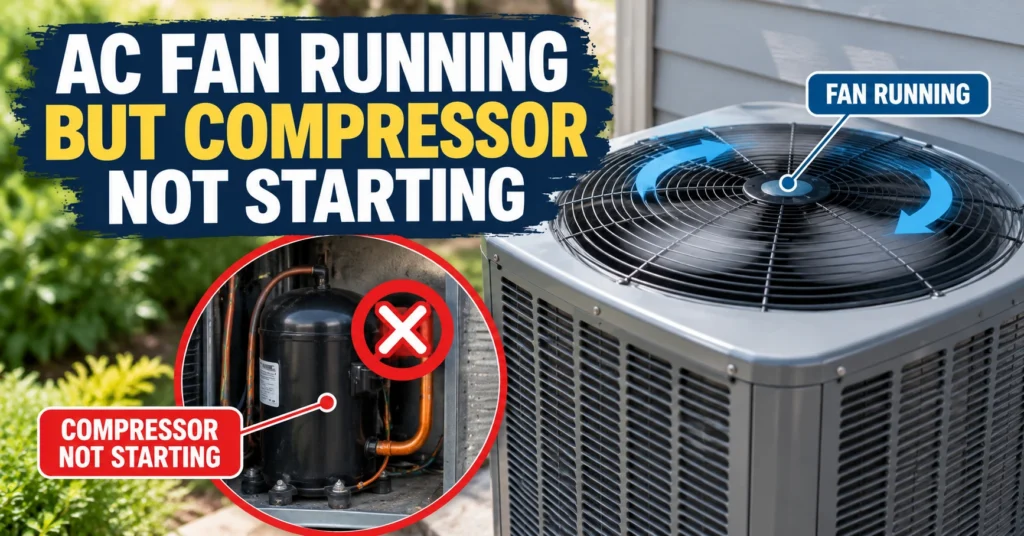
If your outdoor AC fan is running but the compressor isn’t starting, your air conditioner may have an electrical, control, or compressor problem. The fan and compressor are separate components, so one can operate while the other fails to start.
Common causes include a bad capacitor, a faulty contactor, a power supply issue, a thermostat or control problem, overheating, or a failing compressor. The right fix depends on the cause. You can check your thermostat settings and observe how the system behaves, but an HVAC technician should handle electrical testing and internal repairs.
Here’s how to recognize the problem, understand the possible causes, and decide what to do next.
Why Is My AC Fan Running but the Compressor Not Starting?
Your outdoor AC fan may run while the compressor stays off because the two components have separate motors and electrical controls. A failed capacitor, faulty contactor, control issue, or compressor problem can prevent the compressor from starting even when the fan runs.
When the compressor isn’t operating, your air conditioner usually can’t provide normal cooling. You may notice that the outdoor fan keeps spinning while the air coming from your indoor vents feels warm.
What Happens When the Outdoor Fan Runs but the Compressor Doesn’t?
The outdoor fan moves air across the condenser coil, while the compressor circulates refrigerant through the cooling system. Both need to work correctly for the AC to remove heat from your home.
If the fan runs but the compressor doesn’t, the system may move air without actually cooling your home.
You might notice these signs:
- The outdoor fan spins normally.
- The indoor blower continues moving air through the vents.
- The air from your vents feels warm or isn’t as cool as usual.
- The outdoor unit makes a humming or clicking sound.
- Your home gets warmer even though the thermostat calls for cooling.
These symptoms help identify the problem, but they don’t confirm which component has failed.
How Can You Tell Whether the Compressor Is Actually Running?
You can look for signs that the compressor isn’t operating, but sound alone cannot confirm its condition.
If the outdoor fan spins while the AC provides little or no cooling, the compressor may not be running. You might also hear a click or hum when the system attempts to start.
Don’t remove the outdoor unit’s cover or touch its components to investigate. A technician can check the compressor’s operation and determine whether the problem involves its electrical supply, controls, or internal components.
If you hear unusual sounds from your outdoor unit, learn about the possible causes of AC clicking, buzzing, and humming noises and what these sounds may indicate.
7 Reasons Your AC Fan Runs but the Compressor Won’t Start
A running outdoor fan with a non-starting compressor can indicate a capacitor problem, faulty contactor, electrical supply issue, overheating, control fault, wiring problem, or compressor failure. The following causes are common possibilities, but testing is needed to identify the actual fault.
1. A Bad or Weak AC Capacitor
A bad AC capacitor can prevent the compressor from starting even when the outdoor fan runs.
The capacitor supplies electrical support that helps certain motors start and operate. Depending on your system’s design, the compressor and fan may use separate capacitors or share a dual-run capacitor.
If the capacitor serving the compressor fails, the fan may continue spinning while the compressor struggles to start.
Possible warning signs include:
- The outdoor unit hums but doesn’t cool the home.
- The fan runs, but the compressor doesn’t appear to start.
- The system repeatedly attempts to start.
- Cooling stops unexpectedly.
These signs can also indicate a motor or electrical problem.
How to fix it: An HVAC technician can test the capacitor against its specified rating and replace it if necessary. If the capacitor keeps failing, the technician should also investigate the cause.
Learn more in our guide to AC capacitor failure symptoms if that article is published on your website.
2. A Faulty AC Contactor
A faulty AC contactor can prevent the compressor from receiving the electrical power it needs to start.
The contactor is an electrically controlled switch that helps supply power to the outdoor unit’s components. If its contacts become damaged or the switch fails to operate correctly, the compressor may not start as expected.
You might hear clicking when the thermostat calls for cooling, but clicking alone doesn’t prove the contactor is faulty. The fan may also continue running if the problem affects the compressor circuit rather than the fan circuit.
How to fix it: A technician can inspect the contactor and test the relevant electrical circuits. If the contactor has failed, replacing it with the correct component may restore normal operation.
Don’t open the electrical compartment or attempt to test the contactor yourself.
3. A Tripped Breaker or Power Supply Problem
An electrical supply problem can prevent the compressor from starting even when part of the AC system appears to be working.
Some systems have separate electrical supplies or circuits for different components. A wiring fault, damaged connection, or other electrical problem can therefore affect compressor operation without making every part of the system stop.
Possible signs include intermittent operation, unusual noises, or a system that stops cooling unexpectedly.
How to fix it: Check the thermostat settings and observe whether the system responds normally. If you notice a tripped breaker, don’t repeatedly reset it. A breaker that trips repeatedly may indicate an electrical fault that needs professional attention.
An HVAC technician can inspect the power supply and identify the underlying problem.
4. The Compressor Is Overheating
An overheated compressor may shut down temporarily because a protective device interrupts its operation.
Overheating can result from several conditions, including electrical problems, inadequate heat removal, or other system faults. The outdoor fan may continue running even while the compressor is off.
You may notice that the AC stops cooling during a hot afternoon and starts working again later. However, that pattern alone doesn’t confirm overheating.
How to fix it: Turn off the AC if the compressor repeatedly stops or struggles to restart. A technician can check the compressor, condenser, electrical components, and operating conditions to determine why the system is overheating.
Don’t keep restarting the unit to force it to run.
5. A Thermostat or Control Problem
A thermostat or control problem can prevent the compressor from receiving the correct signal to start.
Your thermostat might display the correct temperature and appear to be working, but a wiring issue, control fault, or system safety condition may interrupt the cooling cycle.
Some systems also have built-in restart delays that prevent the compressor from starting immediately after a shutdown.
How to fix it: Make sure the thermostat is set to COOL and the target temperature is below the current room temperature. If the system has just shut down, allow the manufacturer’s specified restart delay.
If the fan continues running but the compressor doesn’t start, arrange an inspection rather than repeatedly changing the thermostat settings.
6. Loose or Damaged Electrical Wiring
Loose or damaged wiring can interrupt the electrical supply or control signal needed to start the compressor.
Electrical connections can deteriorate or become damaged over time. A wiring fault may cause intermittent operation, startup failures, or repeated shutdowns.
Because the outdoor fan and compressor have separate electrical connections and controls, a problem may affect one component without stopping the other.
How to fix it: Have an HVAC technician inspect the wiring, connections, and relevant electrical components. The technician can repair or replace damaged parts according to the equipment manufacturer’s requirements.
Don’t touch exposed wires or open the electrical compartment. These components can carry dangerous voltage.
7. A Failing or Seized Compressor
A failing compressor can prevent the AC from cooling even when the outdoor fan continues to run.
The compressor circulates refrigerant through the system. If its motor or internal components fail, the outdoor fan may still operate, but the system cannot provide normal cooling.
Possible signs include persistent humming, repeated failed startup attempts, unusual noises, and a complete loss of cooling. However, these symptoms can also come from a failed capacitor or another electrical problem.
How to fix it: A qualified technician must determine whether the compressor itself has failed or whether another component is preventing it from starting.
Depending on the diagnosis, the repair may involve a smaller electrical component or a major compressor repair or replacement. If the compressor has failed, compare the repair estimate with the age and overall condition of your AC before deciding what to do.
What Should You Check First?
Start with simple observations and thermostat settings when your outdoor AC fan runs but the compressor doesn’t start. Avoid opening electrical compartments, touching wiring, or attempting to diagnose high-voltage components yourself.
If your air conditioner still won’t start properly, follow our guide to AC not turning on troubleshooting for more information about common startup problems and safe checks.
Check That the Thermostat Is Set to Cool
Make sure your thermostat is set to COOL and the target temperature is below the current indoor temperature.
If the thermostat is set to FAN ON, the indoor blower may continue moving air even when the system isn’t actively cooling. This can make it seem as though the AC is running normally when it isn’t.
If the settings are correct and the compressor still doesn’t start, the problem may be elsewhere in the system.
Check Whether the System Is in a Restart Delay
Some air conditioners delay compressor startup to protect the system after a shutdown or power interruption.
If the AC has just stopped, wait for the restart period specified by the manufacturer. Avoid repeatedly switching the system off and on.
If the compressor still doesn’t start after the expected delay, arrange professional service.
Look for Signs of an Electrical Problem
You can observe whether a breaker has tripped without opening the AC unit itself.
If a breaker has tripped, don’t repeatedly reset it to force the compressor to run. A repeated trip can indicate a problem that requires professional diagnosis.
If you notice smoke, a burning smell, or unusual electrical noises, stop using the system and seek professional assistance.
Listen for Humming or Clicking
A humming or clicking sound may help describe the problem to an HVAC technician, but it cannot identify the failed component on its own.
Note whether the sound occurs when the thermostat calls for cooling and whether the outdoor fan continues spinning afterward.
This information can help the technician narrow down the possible causes without putting you at risk.
How Do You Fix an AC Fan That Runs but the Compressor Doesn’t?
The correct fix depends on which component or condition is preventing the compressor from starting. A technician should diagnose the system before replacing parts.
Here are some common repair options.
When a Capacitor Needs Replacement
If testing confirms that the capacitor is faulty, a technician can replace it with a component that meets the manufacturer’s specifications.
The technician should also check for an underlying electrical or motor problem if the capacitor has failed repeatedly.
When a Contactor or Electrical Component Needs Repair
A damaged contactor, faulty connection, or electrical supply problem may require repair or replacement of the affected component.
The technician will inspect the relevant circuit and verify that the compressor receives the correct electrical supply and control signal.
When the Compressor Overheats
If the compressor is overheating, the repair depends on the cause. The technician may need to investigate electrical faults, condenser performance, or other operating conditions.
Simply allowing the compressor to cool down may not solve the underlying problem.
When Compressor Repair or Replacement Is Necessary
If the compressor itself has failed, the technician will explain the available repair or replacement options.
A compressor replacement can be a significant expense. For an older AC system, replacing the entire unit may be worth considering if the cost of the repair is high relative to the system’s remaining useful life.
Ask for a clear diagnosis and written estimate before approving major work.
Can You Keep Running Your AC if the Compressor Isn’t Starting?
No, you shouldn’t keep running an AC system that repeatedly attempts to start without cooling. Turn it off and arrange professional diagnosis, especially if you hear persistent humming or notice unusual electrical behavior.
Why Repeated Startup Attempts Can Be Harmful
Repeated failed startup attempts can place additional stress on the compressor and its electrical components.
If the compressor cannot start because of a faulty capacitor, motor problem, or electrical fault, repeatedly restarting the system won’t resolve the underlying issue.
Turn the system off instead of trying to force it to run.
When Should You Turn Off the System Immediately?
Turn off the AC if the compressor repeatedly fails to start, the system makes persistent unusual noises, or the unit shows signs of electrical trouble.
If you notice smoke or a burning smell, keep clear of the equipment and seek urgent professional assistance.
If the AC is not cooling and the indoor temperature is rising, arrange service promptly rather than continuing to operate a malfunctioning system.
How Much Does It Cost to Fix an AC Compressor That Won’t Start?
The repair cost depends on the failed component, the equipment, local labor rates, and whether the compressor itself needs replacement.
A capacitor or contactor repair is generally a different type of expense from replacing a compressor. However, the actual price varies by system and location, so a technician’s estimate is more useful than an unverified national average.
For a broader breakdown of repair expenses, see our guide to AC repair costs and the factors that can affect your final bill.
Capacitor and Contactor Repair Costs
If the problem involves a failed capacitor or contactor, the technician may be able to restore operation without replacing the compressor.
The final price depends on the replacement part, diagnostic fee, labor, and any additional repairs required.
Ask for an itemized quote that explains the diagnosis and recommended work.
Compressor Repair or Replacement Costs
Compressor-related repairs can be significantly more expensive than replacing a smaller electrical component.
The cost depends on the compressor, equipment design, labor, warranty coverage, and whether related components also need attention.
If the compressor has failed, ask whether repair or replacement offers better value for your particular system.
What Affects the Final HVAC Repair Bill?
Several factors influence the final bill:
- The component that has failed.
- The type and age of your AC system.
- The cost and availability of replacement parts.
- Labor and diagnostic fees.
- Whether additional electrical or mechanical repairs are needed.
- Whether the repair is covered by a warranty.
Request a written estimate before approving major work.
Frequently Asked Questions About an AC Fan Running but Compressor Not Starting
Why is my AC fan running but the compressor isn’t starting?
The most likely possibilities include a bad capacitor, faulty contactor, electrical supply problem, control issue, overheating, or compressor failure. The fan and compressor can operate independently, so a spinning fan doesn’t confirm that the compressor is working. A technician can test the system to identify the cause.
Can a bad capacitor make the fan run but not the compressor?
Yes. Depending on the system’s capacitor arrangement, a failed capacitor can prevent the compressor from starting while the outdoor fan continues running. However, a contactor, wiring, motor, or other electrical problem can produce similar symptoms.
Why is my AC compressor humming but not starting?
A compressor that hums without starting may have a capacitor problem, an electrical supply issue, or a motor or compressor fault. Turn off the system if the humming continues without startup. A qualified HVAC technician should diagnose the cause.
Can I reset my AC compressor?
Some air conditioners have built-in restart delays, so you may need to wait briefly after a shutdown before the compressor starts again. However, repeatedly resetting the system won’t fix a failed capacitor, damaged wiring, or compressor fault. If the problem persists, arrange professional service.
How do I know if my AC compressor is bad?
A compressor that won’t start, makes unusual noises, or fails to cool the home may have a problem. These signs don’t prove that the compressor has failed because other components can cause the same symptoms. Professional testing is needed before deciding whether the compressor needs repair or replacement.
Should I turn off my AC if the compressor isn’t running?
Yes, if the compressor repeatedly fails to start or the system shows signs of an electrical or motor fault, turn the AC off and arrange an inspection. Continuing to restart a malfunctioning system can place additional stress on its components.
How much does it cost to fix an AC compressor that won’t start?
The price depends on whether the problem involves a capacitor, contactor, wiring, or the compressor itself. Smaller component repairs generally differ substantially from compressor replacement. Ask an HVAC technician to diagnose the system and provide a written estimate.
Get Professional Help With Your AC Compressor
If your outdoor AC fan is running but the compressor isn’t starting, the problem could involve a capacitor, contactor, power supply, control system, or compressor fault.
Check your thermostat settings and observe the system’s behavior, but leave electrical testing and internal repairs to a qualified HVAC technician. An accurate diagnosis can help you avoid replacing parts unnecessarily and determine the most appropriate repair.
Need help with your air conditioner? Visit Arthur Air to learn about its HVAC services and request assistance.