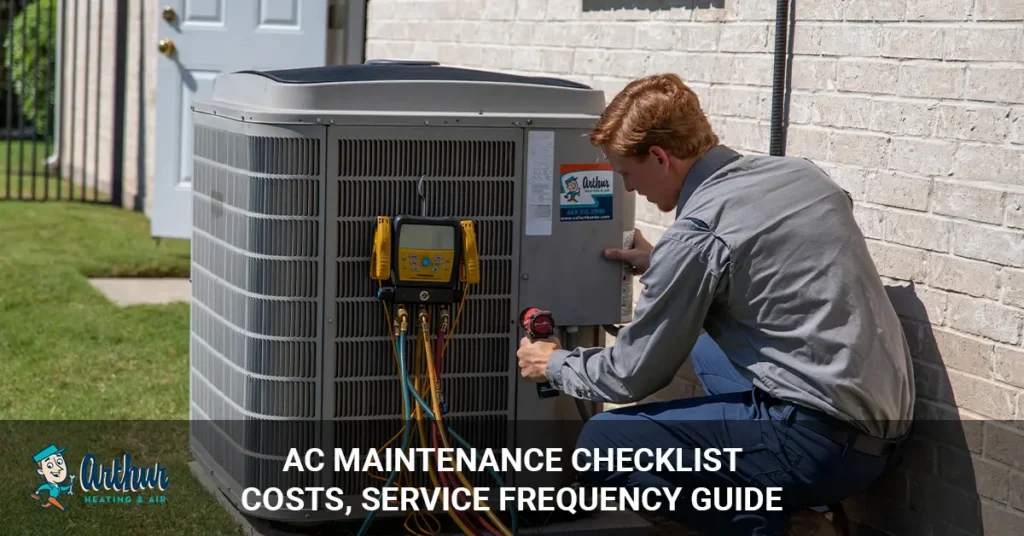
Air conditioners keep your home cool, but they need regular care to work properly. AC maintenance means cleaning, inspecting, and servicing the system so it runs efficiently and avoids costly problems. When maintenance is ignored, the unit can lose cooling power, use more electricity, and break down sooner.
A simple AC maintenance checklist helps make sure every important part of the system is checked. Some basic tasks, like replacing filters, can be done by homeowners. However, a professional HVAC technician should inspect the entire system at least once a year.
Regular AC maintenance keeps your cooling system reliable. It helps improve efficiency, reduces energy bills, and extends the lifespan of the equipment. Understanding what maintenance includes, how often it should be done, and how much it costs makes it easier for homeowners to keep their air conditioning systems in good condition.
What Is AC Maintenance
AC maintenance is the regular inspection, cleaning, and servicing of an air conditioning system to keep it running efficiently and safely. It helps the system cool properly, reduces energy use, and prevents unexpected breakdowns. When an AC unit is maintained regularly, it performs better and lasts longer.
Air conditioners collect dust, dirt, and debris over time. Parts can also wear out from daily use. Maintenance helps remove buildup, check important components, and ensure the system works the way it should. A professional technician usually performs a full inspection, but homeowners can also handle simple tasks like changing filters.
Regular maintenance keeps the cooling system reliable during hot weather and helps avoid costly repairs.
Purpose of Regular Air Conditioner Maintenance
The purpose of regular AC maintenance is to keep the system running efficiently, reduce energy costs, and prevent major repairs. When an air conditioner is serviced regularly, it can cool the home more effectively and operate with less strain on its components.
Regular maintenance offers several key benefits:
- Maintains strong and consistent cooling performance
- Reduces electricity usage and energy bills
- Prevents sudden system failures
- Extends the lifespan of the AC unit
- Improves indoor air quality by reducing dust and allergens
Even small issues can affect performance. For example, a clogged filter can restrict airflow, and dirty coils can make the system work harder. Fixing these small problems early helps prevent larger and more expensive repairs later.
Why AC Systems Need Routine Servicing
AC systems need routine servicing because dust, wear, and continuous use can affect the performance of important components. Over time, parts of the system can become dirty, loose, or less efficient.
Air conditioners run for long hours during warm seasons. This constant operation can lead to common issues such as:
- Dirt buildup on evaporator and condenser coils
- Reduced airflow caused by dirty filters
- Worn or loose electrical connections
- Changes in refrigerant pressure
Routine servicing helps identify these issues early. A technician can clean components, adjust settings, and check system performance before small problems turn into major breakdowns.
Complete AC Maintenance Checklist
A complete AC maintenance checklist includes inspecting, cleaning, and testing the main components of the air conditioning system to keep it running efficiently. Regular checks help improve cooling performance, prevent breakdowns, and extend the life of the unit.
During maintenance, technicians inspect several key parts of the system to make sure everything works properly. For a more detailed breakdown, check this AC tune-up checklist to see what professionals typically inspect.
Replace or Clean Air Filters
Replacing or cleaning air filters is one of the most important AC maintenance tasks. Clean filters allow air to flow freely through the system and help maintain good indoor air quality.
Air filters capture dust, pollen, and other airborne particles before they enter the system. When filters become clogged, airflow becomes restricted, and the AC unit has to work harder.
Most filters should be replaced every 1 to 3 months, depending on how often the system runs and the level of dust inside the home.
Inspect and Clean Evaporator Coils
Evaporator coil cleaning helps the air conditioner absorb heat efficiently from indoor air. When the coils become covered with dirt, they cannot remove heat properly.
Dirty coils force the AC system to work longer and use more energy to cool the home. Cleaning the evaporator coils helps restore proper cooling performance and system efficiency.
Clean Condenser Coils
Cleaning condenser coils helps the air conditioner release heat effectively from the system. These coils are located in the outdoor unit and play a major role in the cooling process.
Leaves, dust, and debris can collect around the outdoor unit and block airflow. When airflow is restricted, the system can overheat and lose efficiency. Cleaning the condenser coils helps maintain proper heat transfer and energy efficiency.
Check Refrigerant Levels
Checking refrigerant levels ensures the air conditioner can cool the home properly. Refrigerant absorbs heat from indoor air and releases it outside.
If refrigerant levels are low, the AC system may blow warm air or take longer to cool the home. During maintenance, technicians check refrigerant pressure and inspect the system for leaks.
Inspect Thermostat Settings
Inspecting thermostat settings ensures the air conditioning system maintains the correct indoor temperature. The thermostat controls when the AC turns on and off.
During maintenance, technicians check thermostat calibration and confirm it communicates properly with the cooling system. A correctly functioning thermostat helps maintain comfort and energy efficiency.
Clear the Condensate Drain Line
Cleaning the condensate drain line prevents water leaks and moisture problems. Air conditioners remove humidity from indoor air, which creates condensation.
This water flows through a drain line. If the line becomes clogged with dirt or algae, water may back up and leak around the unit. Clearing the drain line keeps moisture flowing away safely.
Inspect Electrical Connections
Inspecting electrical connections helps ensure the air conditioning system operates safely and reliably. AC systems contain several electrical components that control power and operation.
Loose or damaged wiring can cause system failures or safety hazards. Technicians check capacitors, contactors, and wiring to make sure everything is secure and functioning correctly.
Lubricate Moving Parts
Lubricating moving parts reduces friction and helps the AC system run smoothly. Components such as motors and bearings may require lubrication during maintenance.
Proper lubrication prevents excessive wear and helps avoid overheating or mechanical damage.
Inspect Blower Components
Inspecting blower components helps maintain proper airflow throughout the home. The blower motor and fan push cooled air through the duct system and into each room.
If the blower becomes dirty or worn, airflow may decrease and cooling performance can drop. Cleaning and inspecting these components helps ensure consistent air circulation.
What Is Included in Professional AC Maintenance
Professional AC maintenance includes a complete inspection, cleaning, and performance check of the air conditioning system. HVAC technicians examine the system, clean important components, and test the unit to make sure it cools efficiently and safely.
This type of service helps prevent breakdowns, improve energy efficiency, and extend the life of the air conditioner.
Full System Inspection
A full system inspection checks the main components of the air conditioning unit to ensure everything is working correctly. During this step, technicians carefully examine both the indoor and outdoor units.
The inspection usually includes checking:
- Indoor evaporator unit
- Outdoor condenser unit
- Duct connections and airflow
- Thermostat operation
- Electrical components and wiring
This inspection helps identify small issues before they turn into major problems.
Cleaning of Major Components
Professional AC maintenance includes cleaning key components that affect cooling performance. Dirt and debris can build up inside the system and reduce efficiency.
Technicians typically clean:
- Evaporator coils
- Condenser coils
- Condensate drain line
- Air filters
Cleaning these parts improves airflow and helps the system cool the home more effectively.
Refrigerant Pressure Check
Checking refrigerant pressure ensures the air conditioner has the correct amount of refrigerant for proper cooling. Refrigerant is the substance that absorbs heat from indoor air and releases it outside.
During maintenance, technicians measure refrigerant levels and compare them with manufacturer specifications. If levels are low, the technician may inspect the system for leaks.
Safety and Electrical Testing
Safety and electrical testing confirm that the AC system operates safely and reliably. Air conditioning systems rely on several electrical components to function properly.
Technicians check:
- Capacitors
- Contactors
- Wiring connections
- Voltage levels
These checks help prevent electrical problems and reduce the risk of system failure.
System Performance Testing
System performance testing verifies that the air conditioner cools the home properly after maintenance. Once inspection and cleaning are complete, the technician runs the AC system.
During this test, they check:
- Cooling output
- Airflow through vents
- Thermostat response
- Overall system operation
This final step ensures the air conditioning system is ready to operate efficiently throughout the cooling season.
How Often AC Maintenance Is Needed
AC maintenance is usually needed at least once a year to keep the system running efficiently and prevent unexpected problems. Regular servicing helps maintain cooling performance, improve energy efficiency, and extend the life of the unit.
The exact maintenance schedule may vary depending on how often the system runs and the climate where you live. Most homeowners schedule spring AC maintenance to prepare the system before peak cooling season.
Annual Maintenance Schedule
Most HVAC professionals recommend servicing an air conditioner once a year. The ideal time for AC maintenance is in the spring, before the hot season begins and the system starts running regularly.
During annual maintenance, technicians inspect the system, clean important components, and check performance. This prepares the unit for heavy use during the summer and reduces the risk of breakdowns.
Scheduling maintenance before peak cooling season also helps ensure the system operates efficiently when temperatures rise.
Seasonal Maintenance
Some homes benefit from AC maintenance twice a year, especially in areas with long summers. In these cases, homeowners may schedule service in the spring and fall.
Seasonal maintenance helps keep the system clean and ensures all components continue working properly throughout the year. It can also improve energy efficiency and reduce wear on the equipment.
Maintenance for Heavy Usage Areas
Homes in very warm climates may require more frequent AC inspections because the system runs almost continuously. When air conditioners operate for long periods, components can wear out faster, and dirt can accumulate more quickly.
In these situations, HVAC professionals may recommend additional inspections or tune-ups to maintain system performance and prevent unexpected failures.
AC Maintenance Annual Cost
The annual cost of AC maintenance typically ranges from $75 to $200 per service visit, depending on the system and service provider. Regular maintenance is usually affordable compared to the cost of major repairs or system replacement. You can compare the overall HVAC maintenance cost to understand long-term service expenses.
The total cost can vary based on the type of air conditioning unit, the size of the system, and the services included in the maintenance visit.
Average AC Maintenance Cost
The average cost of AC maintenance is usually between $75 and $200 for a standard service visit. This basic service often includes system inspection, filter replacement, coil cleaning, and performance checks.
Prices may vary by location and HVAC company. Some services may cost slightly more if the system requires additional cleaning or adjustments.
Regular maintenance helps avoid larger repair costs and keeps the system running efficiently.
HVAC Maintenance Plan Cost
Many HVAC companies offer maintenance plans that include scheduled service visits throughout the year. These plans often provide one or two maintenance visits annually.
Typical maintenance plans cost between $150 and $500 per year, depending on the services included. Some plans also offer benefits such as:
- Priority scheduling for repairs
- Discounts on replacement parts
- Reduced service call fees
Maintenance plans can help homeowners keep their systems serviced regularly.
Factors That Affect Maintenance Cost
Several factors can influence how much AC maintenance costs. The price may change depending on the type and condition of the system.
Common factors that affect maintenance pricing include:
- Size and type of air conditioning unit
- Age and condition of the equipment
- Location of the property
- Complexity of the maintenance service
Larger systems or systems that require extra cleaning or repairs may take more time to service, which can increase the total cost.
Signs Your AC Unit Needs Immediate Maintenance
Your AC unit needs immediate maintenance if it shows warning signs such as weak airflow, warm air, unusual noises, water leaks, or rising energy bills. These issues often indicate that the system is not working efficiently and may require professional inspection.
Recognizing these signs early can help prevent larger repairs and keep the air conditioning system running properly.
Weak Airflow
Weak airflow from vents usually means the AC system is struggling to move air through the home. This problem may be caused by a clogged air filter, blocked ducts, or issues with the blower motor.
When airflow is reduced, the system must work harder to cool the house. Replacing the air filter or scheduling maintenance can help restore proper airflow.
Warm Air from Vents
Warm air coming from vents often indicates that the AC system is not cooling properly. This may happen when refrigerant levels are low, the compressor is not working correctly, or the thermostat is set incorrectly.
If the AC runs but does not produce cool air, it is best to have a technician inspect the system.
Strange Noises
Unusual noises from the AC unit usually signal mechanical problems inside the system. Sounds such as grinding, buzzing, or rattling may indicate loose components, motor issues, or debris inside the unit.
These noises should not be ignored because they can lead to more serious damage if the system continues to run.
Water Leaks Around the Unit
Water leaking around the indoor unit often means the condensate drain line is clogged. When the drain line becomes blocked, moisture cannot flow out of the system properly.
This can cause water to collect around the unit and may lead to mold growth or water damage if not addressed quickly.
High Energy Bills
A sudden increase in energy bills may indicate the AC system is running inefficiently. Dirty coils, clogged filters, or worn components can force the unit to work harder to cool the home.
Scheduling maintenance can help identify the cause of the problem and restore energy efficiency.
DIY AC Maintenance vs Professional Service
DIY AC maintenance includes simple tasks homeowners can do themselves, while professional service involves technical inspections and repairs performed by HVAC technicians. Both types of maintenance are important for keeping an air conditioning system running efficiently.
Homeowners can handle basic upkeep to maintain airflow and cleanliness, but trained technicians are needed for complex inspections and system adjustments.
Tasks Homeowners Can Do
Homeowners can perform several basic AC maintenance tasks to keep the system clean and running smoothly. These simple steps help improve airflow and prevent common problems.
Common DIY AC maintenance tasks include:
- Replace air filters regularly to maintain good airflow and indoor air quality
- Keeping vents and registers clean so air can move freely through the home
- Removing debris around the outdoor unit, such as leaves, grass, and dirt
- Checking thermostat settings to ensure the system maintains the correct temperature
These small maintenance steps help the AC system operate more efficiently and reduce strain on its components.
Tasks That Require HVAC Professionals
Professional HVAC technicians should handle technical maintenance tasks that require specialized tools and training. These services help ensure the air conditioning system operates safely and performs at its best.
Professional maintenance may include:
- Refrigerant inspection and recharge
- Electrical system testing and repairs
- Compressor inspection and diagnostics
- Deep cleaning of evaporator and condenser coils
Professional service allows technicians to identify hidden problems and correct them before they lead to major repairs or system failure.
Benefits of Regular AC Maintenance
Regular AC maintenance improves system efficiency, lowers energy costs, and helps prevent unexpected breakdowns. When an air conditioning system is serviced routinely, it runs more smoothly and lasts longer.
Maintenance keeps important components clean and ensures the system works at its best during hot weather.
Lower Energy Bills
Regular AC maintenance helps lower energy bills by keeping the system running efficiently. Clean filters, coils, and components allow the unit to cool the home without using extra electricity.
When an air conditioner is dirty or poorly maintained, it must work harder to produce the same level of cooling. This increases energy consumption and raises monthly utility costs.
Longer Equipment Lifespan
Routine maintenance helps extend the lifespan of an air conditioning system. When parts are inspected, cleaned, and adjusted regularly, they experience less strain and wear.
Well-maintained AC systems often last several years longer than systems that receive little or no servicing.
Improved Cooling Efficiency
AC maintenance improves cooling efficiency by ensuring the system operates at its full capacity. Clean coils, proper refrigerant levels, and well-functioning components allow the unit to cool the home more effectively.
This helps maintain comfortable indoor temperatures even during very hot weather.
Better Indoor Air Quality
Regular maintenance improves indoor air quality by reducing dust, allergens, and pollutants in the air. Clean air filters and coils help prevent contaminants from circulating through the home’s ventilation system.
This is especially helpful for people with allergies or respiratory sensitivities.
Reduced Risk of Emergency Repairs
Routine maintenance reduces the risk of sudden AC breakdowns and emergency repairs. During service visits, technicians can identify worn or damaged components before they cause major system failures.
Fixing small issues early helps avoid expensive repairs and keeps the cooling system operating reliably.
AC Maintenance Tips for Homeowners
Simple AC maintenance habits can help homeowners keep their cooling systems running efficiently and prevent common problems. Regular attention to filters, airflow, and system settings helps maintain performance and reduces the chance of costly repairs.
These small steps can make a big difference in how well your air conditioner works throughout the cooling season.
Keep Outdoor Unit Clear of Debris
Keeping the outdoor unit clear of debris helps maintain proper airflow and cooling performance. The condenser unit needs open space to release heat effectively.
Leaves, grass, dust, and dirt can collect around the unit and block airflow. Homeowners should regularly remove debris and keep at least 2 to 3 feet of clear space around the outdoor unit.
This helps the system operate more efficiently.
Replace Filters on Schedule
Replacing air filters regularly is one of the easiest ways to maintain an air conditioning system. Clean filters allow air to move freely through the system and improve indoor air quality.
Most filters should be replaced every 1 to 3 months, depending on usage and household conditions. Homes with pets or higher dust levels may need more frequent filter changes.
Monitor Thermostat Performance
Monitoring thermostat performance helps ensure the AC system maintains the correct indoor temperature. The thermostat controls when the air conditioner turns on and off.
Homeowners should check that the thermostat responds quickly when temperature settings are adjusted. If the system does not respond properly, the thermostat may need recalibration or replacement.
Schedule Preventive Maintenance
Scheduling preventive maintenance helps keep the air conditioning system running reliably throughout the year. Professional technicians can inspect and service important components before heavy summer use.
Annual maintenance helps detect small issues early, improves efficiency, and reduces the risk of unexpected system failures during hot weather.
Final Thoughts
Regular AC maintenance keeps your air conditioning system efficient, reliable, and ready for hot weather. When you follow a proper AC maintenance checklist, important parts of the system stay clean, inspected, and working correctly.
Homeowners can handle simple tasks like replacing air filters and keeping the outdoor unit clean. However, professional HVAC servicing is still important. Technicians can inspect internal components, check refrigerant levels, and identify issues before they become serious problems.
Scheduling annual AC maintenance helps improve cooling performance, lower energy bills, and extend the lifespan of the system. With routine service and basic care, your air conditioner can keep your home comfortable and operate efficiently throughout the year.