
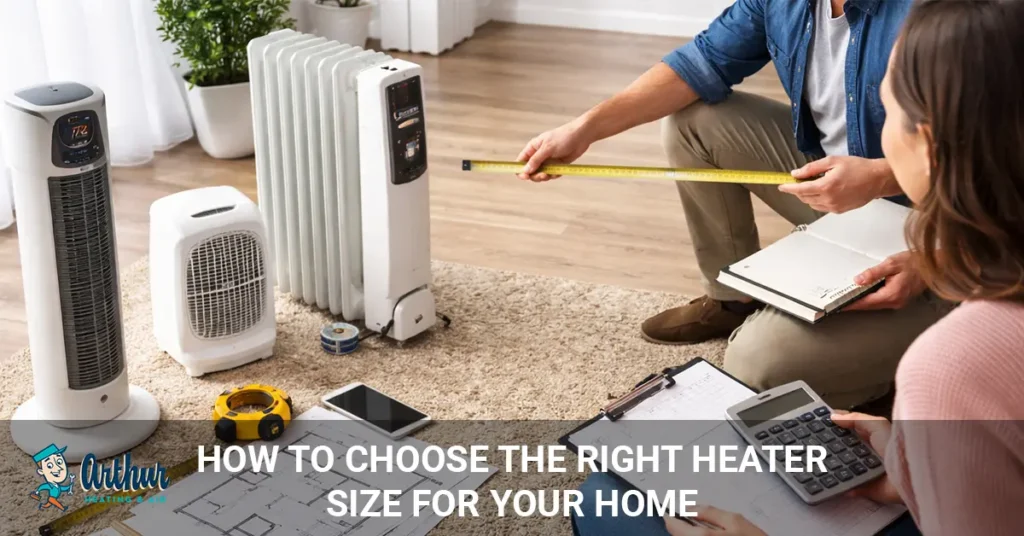
Choosing the right heater size for your home matters more than most people think. A heater that’s too small won’t keep you comfortable. One that’s too large wastes energy and wears out faster.
Many homeowners assume bigger is better, but that’s rarely true with heating systems. The right size depends on your home’s layout, insulation, and climate, not guesswork.
This guide explains how heater sizing works, why it matters, and how to choose the correct size so your home stays warm and your energy bills stay under control.
Why Heater Size Matters
Choosing the right heater size helps your home heat evenly, lowers energy bills, and extends the life of the system.
A properly sized heater runs efficiently and keeps temperatures consistent. When a heater is too large or too small, it can cause short cycling, uneven heating, and higher long-term costs.
What Happens If a Heater Is Too Small?
A heater that’s too small won’t be able to heat your home properly. It may run almost nonstop but still leave some rooms cold. This constant operation increases energy bills and puts extra strain on the system, which leads to faster wear and more frequent breakdowns over time.
What Happens If a Heater Is Too Large?
A heater that’s too large heats your home too fast and turns off too often. This repeated on-and-off behavior, known as short cycling, wastes energy and causes uneven temperatures. It also puts extra wear on system components, which increases operating costs and shortens the heater’s lifespan.
Short cycling caused by oversized heaters puts unnecessary stress on components, which can significantly affect how long home heaters last.
How Heater Size Is Measured
Heater size is measured in BTUs, which show how much heat a system can produce. The higher the BTU rating, the more heat the heater can generate. While square footage gives a rough starting point, it’s not enough by itself to choose the right size. Factors like insulation, climate, and ceiling height also matter for accurate sizing.
Factors That Affect Heater Size
The right heater size depends on several factors, not just your home’s square footage.
- Home Square Footage: Larger homes need more heating power, while smaller homes need less.
- Climate and Location: Homes in colder climates require higher BTU capacity than those in milder areas.
- Insulation and Windows: Well-insulated homes with modern windows hold heat better and often need smaller systems.
- Ceiling Height: Higher ceilings increase the amount of air that must be heated.
- Home Layout: Open floor plans lose and move heat differently than homes with closed rooms. All of these factors work together to determine the correct heater size for your home.
General Heater Size Chart (BTU Guide)
A BTU size chart gives a rough estimate of the heater size your home may need based on square footage.
- 1,000–1,500 sq ft: 30,000–45,000 BTUs
- 1,500–2,000 sq ft: 45,000–60,000 BTUs
- 2,000–2,500 sq ft: 60,000–75,000 BTUs
These numbers are estimates only. Actual heater size can vary based on insulation quality, local climate, ceiling height, and home layout.
Furnace vs Heat Pump Sizing
Furnaces and heat pumps are sized differently because they heat homes in different ways.
Furnaces produce heat directly, so BTU output is the main sizing factor. Heat pumps move heat rather than create it, which makes climate and efficiency ratings more important. In colder regions, heat pumps often need backup heating to stay effective.
Can You Size a Heater Yourself?
You can estimate heater size on your own, but it’s rarely accurate enough for long-term comfort and efficiency.
Online calculators offer general ranges, but they don’t account for insulation quality, air leakage, or home layout. Even small sizing errors can lead to comfort problems, higher energy bills, and unnecessary wear on the system.
Manual J Load Calculation
A Manual J load calculation is the most accurate way to determine the right heater size for your home.
It evaluates your home’s size, insulation, windows, climate, and layout. HVAC professionals use this method to calculate the exact heating load your home needs, which helps prevent both oversizing and undersizing.
Signs Your Current Heater Is the Wrong Size
Ongoing comfort and performance issues can be a sign that your heater is the wrong size.
Common signs include short cycling, uneven temperatures between rooms, higher-than-normal energy bills, and constant thermostat adjustments. If these problems keep happening, improper heater sizing may be the cause.
These symptoms are often confused with mechanical failures, but many overlap with common heater problems caused by improper system sizing.
When to Call a Professional HVAC Technician
You should call a professional HVAC technician when choosing a new heater or when comfort problems don’t go away.
A technician can perform a proper load calculation and recommend the right system size for your home. This helps prevent costly mistakes and ensures reliable, efficient performance.
Final Thoughts
Choosing the right heater size is key to comfort, efficiency, and long-term savings.
Bigger isn’t better, and smaller isn’t cheaper. The right heater size is the one that matches your home’s actual needs. Proper sizing helps your system run efficiently, last longer, and keep your home comfortable through every cold season. When in doubt, professional sizing is the safest and most cost-effective option.