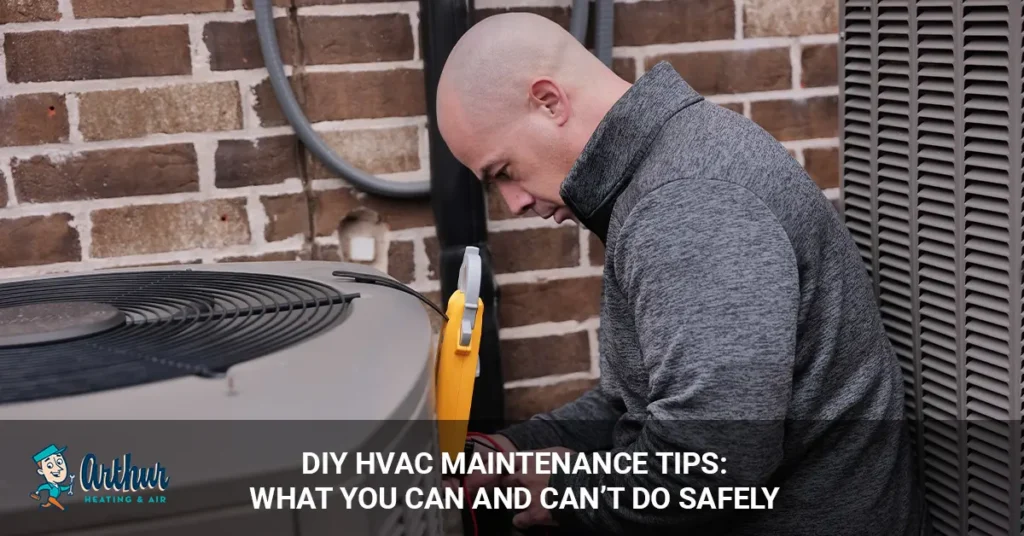
DIY HVAC maintenance helps you keep your system running efficiently, but only some tasks are safe to handle yourself. Knowing what to do and what to avoid can prevent damage and save money.
Many homeowners try to handle maintenance on their own. This works well for simple tasks, but some jobs require proper tools and training.
Doing the right tasks at home can improve performance and reduce small issues. But doing the wrong ones can lead to bigger problems and costly repairs.
In this guide, you’ll learn which HVAC maintenance tasks are safe to do yourself, which ones to avoid, and when to call a professional.
What Is DIY HVAC Maintenance?
DIY HVAC maintenance means doing simple tasks yourself to keep your system clean and running efficiently. These tasks focus on basic care and do not involve complex parts or technical repairs.
Simple actions like cleaning, checking, and replacing parts help improve airflow and reduce strain on the system. This keeps your HVAC working more smoothly.
However, DIY care has limits. It supports performance but does not replace professional maintenance or repairs.
What HVAC Maintenance You Can Do Safely
You can safely do basic HVAC tasks that improve airflow and keep your system running efficiently. These tasks are simple and don’t require special tools or technical skills.
Change Air Filters
Changing air filters is the easiest and most important task you can do yourself. Clean filters keep air flowing properly and reduce strain on your system.
When filters get dirty, airflow becomes restricted. This makes your system work harder and use more energy.
Replace your air filter every 1 to 3 months, depending on usage, dust levels, and whether you have pets. To get the exact timing, see how often to replace your HVAC air filter. This simple step helps improve efficiency and protect your system.
Clean Around the Outdoor Unit
Keeping the outdoor unit clean helps your HVAC system run efficiently and prevents airflow problems. Good airflow is important for proper performance.
Leaves, dirt, and debris can build up around the unit and block airflow. When this happens, the system has to work harder to release heat.
Make sure there is enough open space around the unit. Clear away debris regularly so air can move freely.
This simple step helps improve efficiency, reduce strain, and keep your system working properly.
Check Thermostat Settings
Checking your thermostat settings helps your HVAC system run efficiently and avoid unnecessary strain. Proper settings keep your home comfortable without overworking the system.
Set your thermostat to a reasonable temperature based on the season. Extreme settings force the system to run longer and use more energy.
Using a programmable or smart thermostat can improve efficiency. It adjusts temperatures automatically and reduces system workload when you’re not home.
Inspect Vents and Registers
Inspecting vents and registers helps maintain proper airflow throughout your home. Good airflow keeps your HVAC system working efficiently.
Blocked vents can restrict air movement and reduce performance. Furniture, dust, or debris can easily cause this problem.
Check that all vents are open and not covered. Clean them regularly to remove dust and keep air moving freely.
This simple step improves comfort, supports efficiency, and reduces strain on your system.
What HVAC Maintenance You Should NOT Do Yourself
You should avoid HVAC tasks that involve technical work or safety risks. These jobs require proper training, tools, and experience.
Refrigerant Handling
Handling refrigerant is not safe for DIY work and should only be done by a certified technician. It requires proper equipment and knowledge to handle it correctly.
Refrigerant is under pressure and can be harmful if handled improperly. It can also damage your system if the levels are not set correctly.
Trying to fix refrigerant issues on your own can lead to bigger problems, higher repair costs, and safety risks.
Electrical Repairs
Electrical repairs should not be done yourself because they can be dangerous and require proper training. HVAC systems involve high voltage and sensitive components.
Attempting electrical work without experience can lead to shocks, short circuits, or further damage to the system. Even a small mistake can create serious safety risks.
A professional technician has the tools and knowledge to handle electrical issues safely. This ensures the system is repaired correctly and avoids future problems.
Internal Component Repairs
Internal component repairs should not be done yourself because they require specialized tools and technical experience. These parts are complex and sensitive.
Accessing internal components without proper knowledge can lead to incorrect repairs. Even small mistakes can damage the system or reduce its performance.
A trained technician knows how to diagnose and fix internal issues safely. Professional repair helps prevent further damage and keeps your system running properly.
Why Some HVAC Tasks Are Dangerous
Some HVAC tasks are dangerous because they involve electricity, pressure, and complex system parts. These risks require proper training and tools.
Working with electrical components can lead to shocks or fire hazards. Pressurized parts, like refrigerant lines, can cause injury if handled incorrectly.
Improper work can also damage the system. This may lead to bigger repairs and higher costs.
In many cases, DIY mistakes can void your system warranty. Professional service helps keep your system safe and protected.
Signs You Should Stop DIY and Call a Professional
You should stop DIY work and call a professional when your HVAC system shows signs of serious problems. These issues go beyond basic maintenance and need expert attention.
Strange noises like banging or grinding often mean internal parts are failing. Burning smells can point to electrical issues or overheating components.
If your system won’t turn on or keeps turning on and off frequently, it is likely struggling with a deeper problem.
Poor performance, such as weak airflow or uneven temperatures, is another sign the system needs professional service.
Benefits of DIY HVAC Maintenance
DIY HVAC maintenance improves efficiency and helps prevent small problems before they grow. It keeps your system clean and running smoothly.
Simple tasks like changing air filters and cleaning around the unit help maintain proper airflow. This reduces strain on the system and improves performance.
Regular DIY care can lower energy use and reduce utility costs. It also helps extend the life of your HVAC system.
Limits of DIY HVAC Maintenance
DIY HVAC maintenance has limits and cannot replace professional service. Some problems are not visible and require expert inspection.
Basic tasks can help with cleaning and airflow, but they do not address deeper system issues. Hidden problems can go unnoticed without proper testing.
Without the right tools and knowledge, it is easy to make mistakes. This can lead to more damage and higher repair costs.
Professional maintenance is still needed to keep your system safe, efficient, and reliable.
How Often Should You Perform DIY Maintenance?
You should perform DIY HVAC maintenance regularly to keep your system efficient and prevent buildup. Consistent care helps avoid small issues turning into bigger problems.
Check your air filter every month and replace it as needed. A clean filter keeps airflow steady and reduces strain on the system.
Clean around the outdoor unit whenever you see dirt, leaves, or debris. Keeping the area clear helps maintain proper airflow.
Regular attention keeps your system running smoothly and reduces the risk of unexpected issues.
When to Schedule Professional Maintenance
You should schedule professional HVAC maintenance at least once or twice a year to keep your system in good condition. Regular service ensures a full inspection and proper care.
Plan a tune-up before summer for cooling and before winter for heating. Following a complete HVAC maintenance checklist ensures your system is fully inspected and serviced. This prepares your system for heavy use during peak seasons.
Seasonal maintenance helps improve efficiency, catch problems early, and reduce the risk of unexpected breakdowns.
Final Thoughts
DIY HVAC maintenance helps keep your system efficient when done correctly. Simple tasks can prevent small issues and improve performance.
However, it’s important to know your limits. Some tasks require professional skills to ensure safety and avoid damage.
A balance of DIY care and expert maintenance keeps your HVAC system reliable, efficient, and running longer.