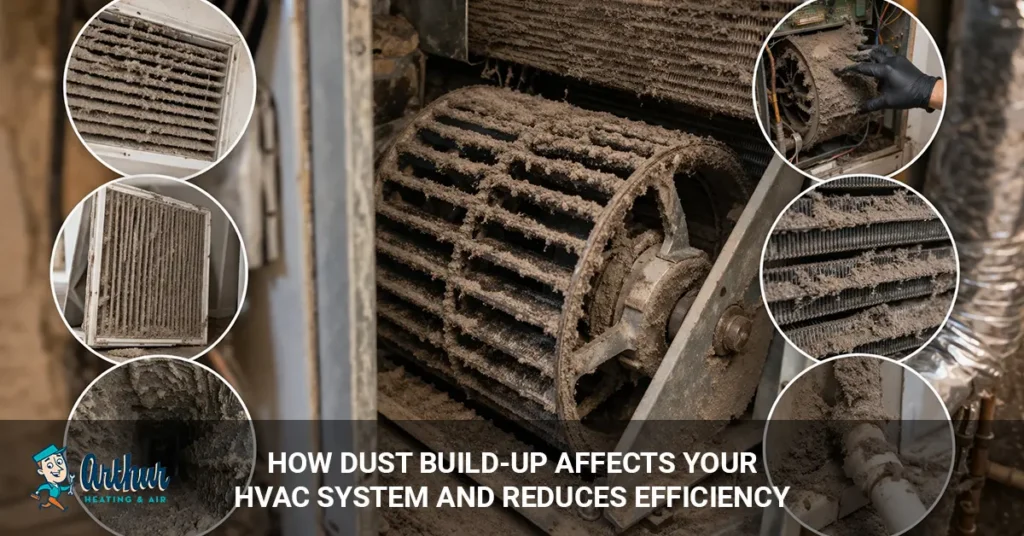
Dust build-up reduces your HVAC system’s efficiency by blocking airflow and making it work harder than it should. When dust collects inside your system, it slows everything down and increases energy use.
Most homeowners don’t think about dust inside their HVAC system. But even a small amount can start to affect performance over time.
You might notice weak airflow, uneven temperatures, or higher energy bills. These are all signs your system is struggling to keep up.
The good news is that this problem is easy to fix if you catch it early.
In this guide, you’ll learn how dust affects your HVAC system and what you can do to keep it running smoothly.
What Causes Dust Build-Up in HVAC Systems?
Dust builds up in HVAC systems because everyday particles in the air get pulled into the system and settle inside. Things like dirt, pet hair, and tiny debris move through your home and end up in your ducts and components.
One of the main reasons this happens is poor air filtration. If your air filter is dirty or not strong enough, it won’t catch enough dust before it enters the system.
Leaky ducts can make the problem worse by pulling in dust from areas like attics or basements. Proper duct sealing helps prevent outside dust from entering your HVAC system. They can pull in dust from areas like attics, basements, or crawl spaces and bring it into your HVAC system.
Over time, this buildup grows and starts to affect how your system works.
How Dust Build-Up Affects HVAC Performance
Dust build-up reduces HVAC performance by blocking airflow and making the system work harder. When air can’t move freely, your system struggles to heat or cool your home properly.
You may notice that rooms take longer to reach the right temperature or feel uneven. That’s because dust is limiting how much air can pass through the system.
As the system works harder, it uses more energy and puts extra strain on its parts. Over time, this can lower performance, increase wear, and lead to more frequent problems.
Key Areas Where Dust Accumulates
Air Filters
Air filters collect dust first, and a dirty filter can quickly block airflow. When the filter gets clogged, your system can’t pull in enough air to work properly.
This is one of the most common reasons for poor HVAC performance. Replacing filters regularly helps prevent this issue.
Air Ducts
Air ducts collect dust over time and spread it through your home when the system runs. Every time air moves through the ducts, it can carry dust into your living space.
This affects both airflow and indoor air quality.
Evaporator and Condenser Coils
Dust on coils reduces your system’s ability to heat or cool efficiently. These coils need to stay clean to transfer heat properly.
When dust builds up, your system has to work harder to reach the desired temperature.
Blower Components
Blower components can collect dust and lose their ability to move air effectively. When the fan is covered in dust, airflow becomes weaker.
This makes it harder for your system to deliver air throughout your home.
Signs Dust Is Affecting Your HVAC System
Dust is affecting your HVAC system when you notice weak airflow, more dust, or higher energy bills. These signs usually mean that the buildup inside the system is starting to block performance.
You may feel less air coming from your vents or notice that some rooms are warmer or cooler than others. Dust collecting around vents is another clear sign.
You might also see your energy bills go up without a clear reason. In some cases, allergy symptoms can get worse because dust is being circulated through the air.
If you notice these signs, your system likely needs cleaning or maintenance.
How Dust Build-Up Reduces Energy Efficiency
Dust build-up reduces energy efficiency by making your HVAC system work harder to move air. When airflow is blocked, the system has to run longer to reach the right temperature.
This extra run time uses more energy and increases your utility bills. Even small amounts of dust can make a difference over time.
As dust continues to build up, your system becomes less efficient and wastes more energy. Keeping your system clean helps it run smoothly and use less power.
Impact on Indoor Air Quality
Dust build-up lowers indoor air quality by spreading dust and allergens through your home. Every time your HVAC system runs, it pushes these particles into the air you breathe.
This can make the air feel stale and uncomfortable. You may also notice more sneezing, coughing, or allergy symptoms.
Over time, poor air quality can affect your comfort and health.
Keeping your ducts and filters clean helps reduce dust and keeps your indoor air fresh and healthier.
Long-Term Damage to Your HVAC System
Dust build-up can damage your HVAC system over time by putting extra strain on its parts. When the system works harder than it should, components wear out faster.
You may start to see more frequent breakdowns or repairs as the strain increases. Small issues can turn into bigger problems if the dust is not removed.
If ignored, this can shorten the overall lifespan of your HVAC system. Regular cleaning and maintenance help protect your system and keep it running longer.
How to Prevent Dust Build-Up
You can prevent dust build-up by keeping your HVAC system clean and stopping dust from entering in the first place. Simple maintenance steps can make a big difference.
Change Air Filters Regularly
Changing your air filters is the easiest way to reduce dust in your system. A clean filter blocks dust before it gets inside.
Clean Air Ducts
Cleaning your air ducts removes built-up dust and helps improve airflow. This also keeps dust from spreading through your home.
Seal Duct Leaks
Sealing duct leaks stops dust from entering your system from areas like attics or basements. This helps keep the system cleaner.
Schedule Routine Maintenance
Regular maintenance keeps your HVAC system clean and running efficiently. It also helps catch small problems before they get worse.
When to Call a Professional
You should call a professional when dust starts affecting your HVAC system’s performance. If airflow feels weak or problems keep coming back, it’s a sign the issue is deeper inside the system.
You may also need help if dust builds up quickly, your energy bills keep rising, or your home feels less comfortable than usual.
A professional can inspect your system, clean hard-to-reach areas, and fix the root cause of the problem.
Getting expert help early can improve performance and prevent bigger issues later.
Final Thoughts
Dust build-up may seem minor, but it can seriously affect your HVAC system over time. It reduces efficiency, increases energy costs, and makes your home less comfortable.
The good news is that simple steps can prevent most of these problems. Changing your air filters and keeping up with regular maintenance can make a big difference.
If you notice signs of dust buildup, it’s best to take action early.
Keeping your system clean helps it run better, last longer, and maintain healthier air in your home.
