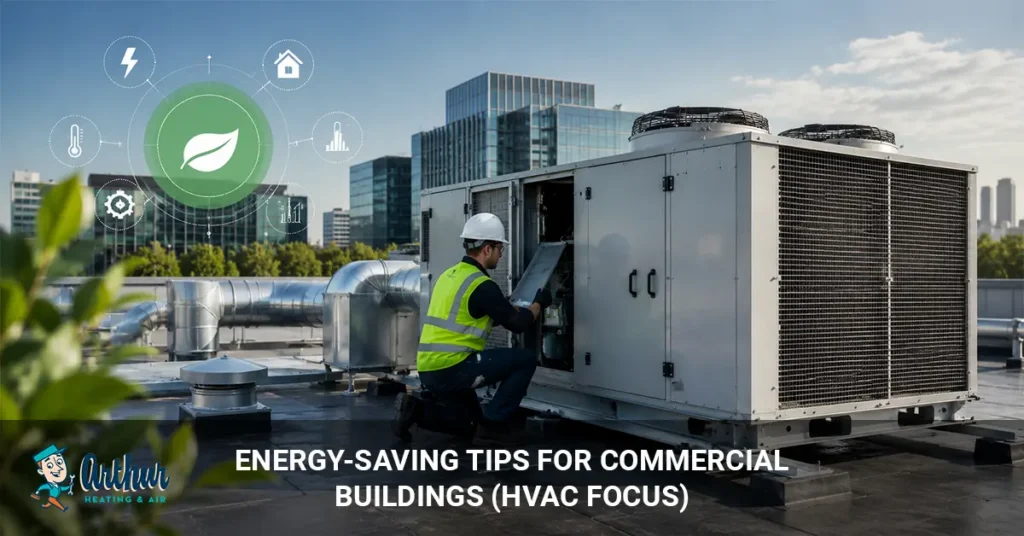
You can save energy in commercial buildings by improving how your HVAC system runs and how well you maintain it.
Heating and cooling systems use a large share of energy in most buildings. When the system is not efficient, energy bills go up fast.
The good news is you don’t need complex changes to see results. Simple steps and smart upgrades can reduce energy use and lower costs.
This guide covers practical HVAC-focused tips that help you cut energy waste and improve system performance.
Why HVAC Systems Use So Much Energy in Commercial Buildings
HVAC systems use a lot of energy because they run for long hours and cover large spaces.
Commercial buildings need steady heating and cooling to keep people comfortable throughout the day. This means the system runs almost continuously, especially during peak seasons.
Energy use increases even more when the system is not well-maintained. Dirty filters, leaking ducts, and worn components make the unit work harder than it should.
As a result, the system uses more power, efficiency drops, and operating costs go up.
Tip 1: Schedule Regular HVAC Maintenance
Regular HVAC maintenance reduces energy use and keeps your system running efficiently.
Over time, dust, dirt, and normal wear can slow down performance. When this happens, the system has to work harder to heat or cool the building, which increases energy consumption.
Routine maintenance helps prevent this problem. Cleaning and inspecting the system keeps all parts working properly and reduces unnecessary strain.
Simple checks like replacing filters, cleaning coils, and inspecting components can improve efficiency and extend the life of your system.
Tip 2: Upgrade to Energy-Efficient HVAC Systems
Upgrading to an energy-efficient HVAC system through planned HVAC system upgrades lowers energy use and reduces long-term costs.
Newer systems are built to deliver the same or better comfort using less energy. They run more smoothly, maintain temperature more accurately, and reduce wasted power.
While the upfront cost can be higher, the lower energy bills over time can offset the investment. You also get better performance and fewer issues compared to older systems.
Tip 3: Use Programmable or Smart Thermostats
Programmable or smart thermostats and modern thermostat upgrades reduce energy use by controlling temperatures automatically.
They let you set schedules based on business hours, so the system doesn’t run at full capacity when the building is empty. This helps avoid wasted energy.
With better control over temperature, your HVAC system runs more efficiently. You also get more consistent comfort throughout the day without extra energy use.
Tip 4: Improve Insulation and Seal Air Leaks
Improving insulation and sealing air leaks reduces energy loss and helps your HVAC system run more efficiently.
When air escapes through gaps, the system has to work harder to keep the building comfortable. This leads to higher energy use and increased costs.
Sealing leaks and adding proper insulation keep indoor air stable. This reduces the workload on your HVAC system and helps lower your energy bills.
Tip 5: Optimize Airflow and Ductwork
Optimizing airflow and ductwork helps your HVAC system run more efficiently and use less energy.
When ducts are blocked, leaking, or poorly designed, air cannot move properly through the building. This forces the system to work harder to maintain the desired temperature.
Fixing duct leaks and improving duct sealing improves air distribution. This reduces energy waste and helps the system perform more effectively.
Tip 6: Adjust Temperature Settings Strategically
Adjusting temperature settings helps reduce energy use and improve HVAC efficiency.
Setting the temperature too low in summer or too high in winter makes the system work harder than needed. This increases energy use and puts extra strain on the equipment.
Keeping the temperature within a reasonable range allows the system to run more efficiently. Even small adjustments can lower energy consumption and reduce operating costs over time.
Tip 7: Use Zoning Systems for Better Control
Zoning systems save energy by controlling temperatures in different areas of your building.
Instead of heating or cooling the entire space at once, you can adjust settings based on where people are working. This reduces unnecessary energy use.
By focusing only on occupied areas, the system runs more efficiently and maintains better comfort. It also prevents energy waste in empty rooms or low-use zones.
Tip 8: Upgrade to Variable Speed Systems
Variable speed systems save energy by adjusting output based on real-time demand.
Instead of running at full capacity all the time, these systems change speed depending on how much heating or cooling is needed. This reduces energy use and avoids unnecessary strain on the system.
They also maintain more stable indoor temperatures, which improves comfort throughout the building. Over time, this leads to better efficiency and lower operating costs.
Tip 9: Use Energy Management Systems (EMS)
Energy management systems reduce energy use by monitoring and controlling HVAC performance in real time.
They track how your system is running and show where energy is being wasted. This makes it easier to adjust settings and improve efficiency quickly.
With better data and control, you can make smarter decisions about how your system operates. Over time, this leads to lower energy costs and more efficient performance.
Tip 10: Train Staff on Energy-Saving Practices
Training staff on energy-saving habits helps reduce HVAC energy use.
Every day actions affect how hard your system works. When doors are left open or thermostats are changed often, energy use increases.
Simple habits like keeping doors closed, using thermostats correctly, and reporting issues early can improve efficiency. When everyone follows these practices, the system runs more smoothly, and energy costs go down.
How Much Can You Save with HVAC Energy Improvements?
You can save a noticeable amount on energy costs by improving HVAC efficiency.
The exact savings depend on your system condition, building size, and the changes you make. Older systems or poorly maintained units usually offer the biggest savings when improved or upgraded.
Even small changes, like better maintenance or adjusting settings, can reduce monthly energy bills. Larger upgrades, such as efficient systems or smart controls, can lead to even greater savings over time.
As these savings continue each month, they add up and help lower your overall operating costs.
When to Invest in HVAC Upgrades vs Maintenance
Invest in HVAC upgrades when your system is outdated, inefficient, or costing too much to run.
If your system is still relatively new and working well, regular HVAC maintenance plans can keep it efficient and reliable. Simple servicing often solves minor issues and extends its lifespan.
But when performance drops, energy bills rise, and repairs become frequent, maintenance is no longer enough. In that case, upgrading to a newer system is the better long-term option.
Making the right choice between maintenance and upgrades helps you control costs and get the best performance from your HVAC system.
Final Thoughts
Energy savings in commercial buildings start with how you manage your HVAC system.
Simple actions like regular maintenance, better settings, and timely upgrades can make a big difference. These changes help reduce energy use and keep costs under control.
When your system runs efficiently, it also improves comfort and performance across your building. Over time, this helps your business operate more smoothly and efficiently.