You can extend the life of your HVAC system with simple care and regular maintenance. Small actions done on time can prevent major problems later.
Your system may keep running without maintenance, but it will wear out faster. Lack of care leads to higher energy bills, poor performance, and costly repairs.
Most HVAC systems fail due to neglect, not age. Small issues like dirty filters or blocked airflow build up over time and reduce efficiency.
In this guide, you’ll learn practical tips to help your HVAC system last longer, run better, and avoid unexpected breakdowns.
How Long Does an HVAC System Last?
Most HVAC systems last 10 to 15 years with proper maintenance. With good care, some systems can last even longer.
Air conditioners typically last around 10 to 15 years. Furnaces often last 15 to 20 years, depending on how often they are used and how well they are maintained.
Several factors affect lifespan, including regular servicing, usage habits, and the environment. Proper maintenance plays the biggest role in helping your system last longer.
Why HVAC Systems Fail Early
HVAC systems fail early mainly due to poor maintenance and overuse. Small problems get worse over time when they are not fixed.
Dirty air filters, lack of regular inspections, and blocked airflow are common causes. These issues force the system to work harder than it should.
As the system runs under extra strain, parts begin to wear out faster. This leads to reduced performance, more repairs, and a shorter system lifespan.
Change Air Filters Regularly
Changing air filters regularly is one of the easiest ways to extend your HVAC system’s life. Clean filters keep airflow steady and help your system run efficiently.
When filters get dirty, airflow becomes restricted. Your system has to work harder to push air through, which increases energy use and puts extra stress on key parts.
Over time, this added strain can lead to performance issues and early wear. It can also reduce indoor air quality.
Replacing your air filter every 1 to 3 months helps prevent these problems. To know the exact timing, see how often to replace your HVAC air filter. It keeps your system efficient, protects components, and supports better airflow.
Schedule Regular HVAC Maintenance
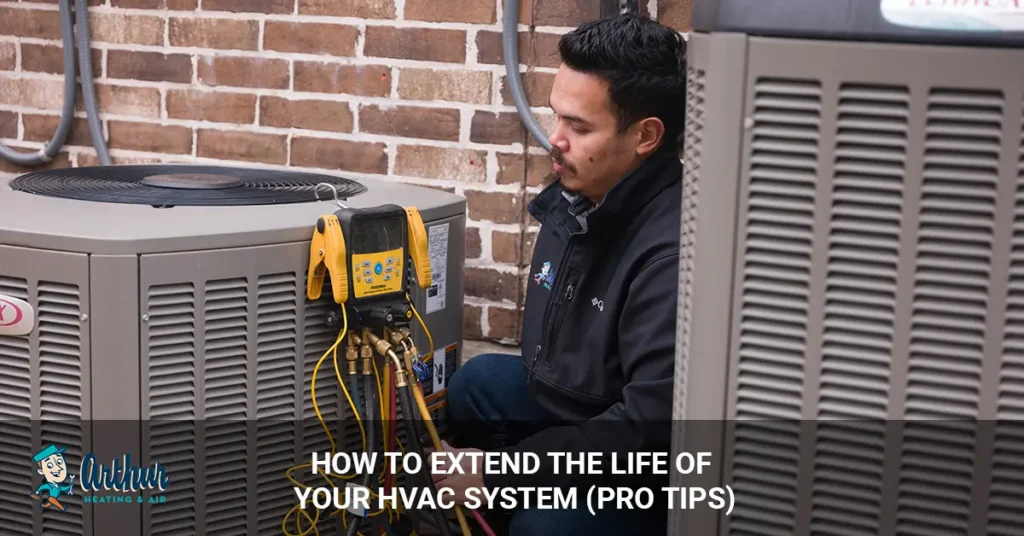
Regular HVAC maintenance helps prevent breakdowns and keeps your system running efficiently. Professional checkups catch small problems before they turn into costly repairs.
During a maintenance visit, a technician inspects key components, cleans important parts, and makes sure everything is working as it should. This helps improve performance and system reliability.
Scheduling maintenance twice a year, before summer and winter, keeps your system in good condition. Following a structured HVAC maintenance plan helps ensure consistent care year-round. It also helps extend its lifespan and maintain energy efficiency.
Keep the Outdoor Unit Clean
Keeping the outdoor unit clean helps your HVAC system run efficiently and prevents unnecessary strain. Good airflow around the unit is essential for proper performance.
Leaves, dirt, and debris can easily build up around the unit and block airflow. When this happens, the system has to work harder to release heat.
This extra effort reduces efficiency and can increase energy use over time. It can also lead to faster wear on system components.
Clearing the area around the unit and keeping it clean helps maintain airflow. This simple step improves performance and helps extend the life of your HVAC system.
Use a Programmable or Smart Thermostat
Using a programmable or smart thermostat helps reduce strain on your HVAC system and improves efficiency. It controls temperature more accurately and avoids unnecessary system use.
You can set schedules based on your daily routine. This means the system runs less when you are not home and only works when needed.
Less runtime reduces wear on components and helps extend system life. It also prevents the system from overworking.
Better temperature control improves comfort and lowers energy costs over time.
Seal and Insulate Ductwork
Sealing and insulating ductwork improves airflow and helps your HVAC system run more efficiently. It keeps air moving where it should.
When ducts have leaks, conditioned air escapes before it reaches your rooms. This forces the system to run longer and use more energy.
Over time, this extra workload increases wear on key components and reduces overall performance.
Proper sealing and insulation prevent air loss, maintain consistent airflow, and reduce strain on your system.
Don’t Ignore Small Problems
Fixing small HVAC problems early helps prevent major damage and costly repairs. Minor issues can quickly grow if they are left unchecked.
Unusual noises, weak airflow, or higher energy bills are common warning signs. These often mean your system is starting to struggle.
If you act early, you can fix the problem before it affects other parts of the system. This keeps repairs simple and more affordable.
Timely repairs help avoid breakdowns and extend the life of your HVAC system.
Avoid Overworking Your HVAC System
Avoiding overuse helps extend your HVAC system’s lifespan and keeps it running efficiently. When the system runs too often, it wears out faster.
Setting reasonable temperatures reduces strain. Extreme settings force the system to run longer and work harder than necessary.
Constant operation also puts pressure on key components. Over time, this leads to more wear and a higher chance of breakdowns.
Balanced usage helps your system stay efficient, reliable, and last longer.
Improve Home Insulation
Good insulation reduces the workload on your HVAC system and keeps indoor temperatures stable. It helps your home hold cool or warm air longer.
When insulation is effective, your system doesn’t need to run as often. This lowers energy use and reduces wear on key components.
Over time, less strain means fewer repairs and better performance. It also helps maintain consistent comfort in every room.
Improving insulation supports long-term HVAC efficiency and extends the life of your system.
When to Repair vs Replace
You should decide to repair or replace your HVAC system based on its age, condition, and repair costs. Frequent issues often mean replacement is the better long-term option.
If your system is over 10 to 15 years old, it may no longer run efficiently. Older systems tend to break down more and cost more to maintain.
When repair costs start adding up, it may be more cost-effective to invest in a new system. Ongoing repairs can quickly exceed the value of the unit.
A new HVAC system offers better efficiency, lower energy bills, and more reliable performance. Over time, it can save money and improve comfort.
Final Thoughts
You can extend the life of your HVAC system with simple maintenance and smart usage. Small actions done regularly can prevent bigger problems later.
Regular care keeps your system efficient and reduces the risk of costly repairs. It also helps maintain consistent comfort in your home.
Taking action early makes a big difference. It helps your system last longer, perform better, and avoid unexpected breakdowns.