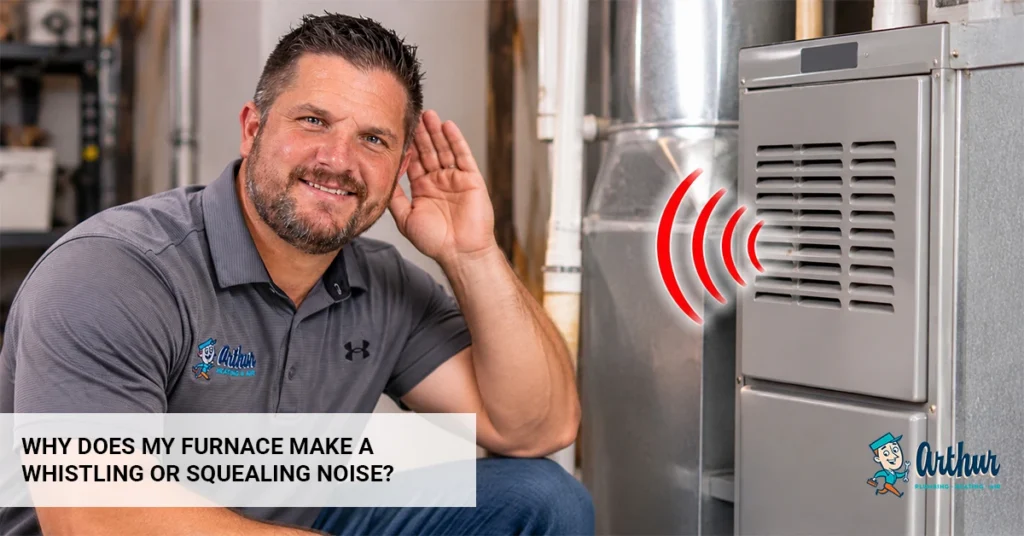
If your furnace makes a whistling or squealing noise, it may have a dirty air filter, blocked vents, leaking ductwork, or a problem with the blower motor. Whistling usually happens when air struggles to move through a narrow opening. Squealing often points to worn motor bearings, a damaged blower fan, or a loose belt in an older furnace.
Not every furnace noise means something serious is wrong. However, a loud or persistent high-pitched sound shouldn’t be ignored. It may be an early sign that your heating system needs repair.
Here are a few things to watch for:
- Whistling near the air filter: The filter may be dirty, clogged, or incorrectly fitted.
- Whistling through the vents: Airflow may be restricted by blocked vents or ductwork problems.
- Squealing from the furnace: The blower motor or its bearings may be worn.
- Squealing during startup: A mechanical part may be loose or struggling to move.
- Grinding or rattling: The blower fan or another internal component may be damaged.
You can start by checking the air filter and making sure your vents aren’t blocked. If the noise continues, an HVAC technician can inspect the blower motor, fan, and ductwork to find the problem.
In this guide, we’ll explain the common reasons your furnace makes these noises, what you can safely check yourself, and when it’s time to call a professional.
Is It Normal for a Furnace to Make a Whistling or Squealing Noise?
No, a loud or ongoing whistling or squealing noise is not normal for a furnace. A soft humming sound during operation is usually normal, but a high-pitched noise may indicate restricted airflow or a problem with an internal component.
For example, a dirty air filter can restrict airflow and cause a whistling sound. Worn blower motor bearings may produce a squealing noise as the motor spins.
The timing of the noise can help you identify the possible cause:
- During startup: A worn motor bearing, loose belt, or blower issue may cause squealing.
- While the furnace runs: Restricted airflow or a mechanical problem may create continuous noise.
- Near the air vents: A blocked vent or restricted duct may cause air to whistle as it passes through.
- When the furnace shuts off: Brief noises may come from changing airflow or ductwork expanding and contracting.
An occasional, quiet airflow sound may not be a serious concern. However, don’t ignore a noise that gets louder, happens more frequently, or comes with weak airflow or a burning smell. Turn off the furnace if you notice signs of overheating or another safety concern, and have an HVAC technician inspect it.
What Is the Difference Between a Whistling and Squealing Furnace Noise?
A whistling furnace noise usually indicates restricted airflow, while a squealing noise often points to a problem with moving mechanical parts. The sounds may seem similar, but they can have different causes.
| Type of noise | Possible cause | What it may indicate |
| High-pitched whistling | Dirty or clogged air filter | Air struggling to pass through the filter |
| Whistling from vents | Blocked vents or restricted ductwork | Uneven airflow or increased air pressure |
| Continuous squealing | Worn motor bearings | Friction inside the blower motor |
| Squealing during startup | Motor or belt problem | A mechanical component struggling to move |
| Grinding or rattling | Loose or damaged blower components | Mechanical wear or damage |
Why does the difference matter?
A whistling noise may stop after you replace a dirty air filter or clear a blocked vent. However, squealing caused by worn bearings, a damaged blower fan, or a motor problem usually requires professional repair.
You can also learn about other unusual heater noises and what they may indicate about your heating system.
Pay attention to where the sound comes from and when it occurs. This information can help an HVAC technician narrow down the cause and diagnose the problem more quickly.
8 Reasons Your Furnace Makes a Whistling or Squealing Noise
Your furnace may whistle or squeal because of restricted airflow, ductwork problems, or worn mechanical components. Some causes are simple to fix, while others require professional attention.
These sounds can be signs of common furnace problems that affect your system’s performance and reliability.
Below are eight common reasons your furnace may make these high-pitched noises and what you can do about them.
1. A Dirty or Clogged Furnace Air Filter
A dirty or clogged furnace air filter can cause whistling by restricting the airflow entering your heating system. As the furnace pulls air through the blocked filter, the narrow airflow path can create a high-pitched sound.
Your furnace needs enough air to operate properly. When dust and debris build up on the filter, airflow decreases. This can also make your heating system work harder than necessary.
Learn more about how dirty air filters affect your heater and why replacing a clogged filter is important for proper airflow.
Common signs of a dirty air filter include:
- Whistling or hissing near the furnace.
- Weak airflow from heating vents.
- Rooms taking longer to warm up.
- More dust collecting around your home.
- The furnace running longer than usual.
What should you do?
Turn off the furnace before checking the air filter. If it looks dirty or clogged, replace it with the correct size and filter type recommended by the manufacturer.
Check the filter regularly, especially during the heating season. Replacing it when needed helps maintain proper airflow and reduces strain on the blower motor.
If the whistling continues after you install a clean filter, the problem may involve blocked vents, restricted ductwork, or another airflow issue.
2. Blocked or Closed Air Vents
Blocked or closed air vents can cause your furnace to whistle by restricting the flow of heated air through the ductwork. When air cannot move freely, it may create a high-pitched sound as it passes through a narrow opening.
Your furnace sends warm air through supply vents and draws cooler air back through return grilles. Furniture, rugs, curtains, and other household items can block these openings and interfere with airflow.
Common signs of blocked or restricted vents include:
- Whistling near a specific air vent.
- Weak airflow in certain rooms.
- Uneven temperatures throughout your home.
- Rooms taking longer to warm up.
- Air coming out of some vents with unusual force.
What should you do?
Check all the supply vents and return grilles in your home. Move furniture, rugs, curtains, and other objects that may be blocking them.
Make sure the vents are open and unobstructed. If the whistling continues after clearing the openings, an HVAC technician can inspect the ductwork and check whether your system has an airflow imbalance.
3. Leaking or Loose Ductwork
Loose duct connections or gaps in your ductwork can cause a whistling noise as heated air escapes through small openings. The sound may come from inside walls, ceilings, basements, or areas near the air vents.
Your furnace uses ductwork to distribute warm air throughout your home. When duct joints loosen or sections become damaged, air can escape instead of reaching the intended rooms. As air passes through a narrow gap, it may create a high-pitched whistle.
Common causes of duct leaks include:
- Loose connections between duct sections.
- Gaps around duct joints.
- Damaged or disconnected ducts.
- Poorly sealed ductwork.
- Deteriorating duct materials.
You may also notice uneven heating, weak airflow in certain rooms, or higher energy bills.
What should you do?
Pay attention to where the whistling sound is coming from. If you suspect a duct leak, have an HVAC technician inspect the ductwork.
A technician can locate air leaks, tighten loose connections, and recommend the appropriate sealing or repair work. Fixing these problems can reduce unwanted noise and help your furnace distribute warm air more effectively.
4. A Failing Furnace Blower Motor
A failing furnace blower motor can produce a high-pitched squealing or whining noise when its internal components become worn or damaged. The blower motor moves heated air through your home’s ductwork, so a motor problem can also affect airflow.
As the motor ages, its bearings and other components may wear out. This can create friction, unusual sounds, and difficulty keeping the blower running smoothly.
Common causes of blower motor problems include:
- Worn or damaged motor bearings.
- Damaged internal motor components.
- Excessive strain from restricted airflow.
- Loose electrical connections.
- General wear from age and regular use.
You may also notice these warning signs:
- Squealing or whining while the furnace runs.
- Weak airflow from heating vents.
- Unusual humming or vibrations.
- The blower struggling to start.
- The furnace shutting down unexpectedly.
What should you do?
If the squealing is loud or persistent, turn off the furnace and arrange a professional inspection. If you notice a burning smell, stop using the system and contact an HVAC technician.
A technician can inspect the blower motor, check its electrical connections, and determine whether it needs repair or replacement.
5. Worn or Damaged Blower Motor Bearings
Worn or damaged blower motor bearings can cause a continuous squealing or high-pitched noise while your furnace runs. Bearings help the motor shaft rotate smoothly. When they wear out, friction increases and can produce squealing, grinding, or scraping sounds.
This problem often develops as the furnace gets older or the blower motor experiences frequent use.
Common signs of worn blower motor bearings include:
- A sharp squealing sound during operation.
- Grinding or scraping noises.
- Noise that gets louder as the blower runs.
- Unusual motor vibration.
- Reduced blower performance.
The noise may start quietly and become more noticeable over time. Ignoring worn bearings can put extra strain on the motor and lead to further damage.
What should you do?
Have an HVAC technician inspect the blower motor and its bearings. The technician can determine whether the bearings can be serviced or whether the entire motor needs replacement.
Avoid trying to lubricate the motor yourself unless the manufacturer specifically recommends it. Many modern blower motors use sealed bearings that aren’t designed for homeowner lubrication.
6. A Loose or Damaged Blower Fan
A loose or damaged blower fan can cause rattling, whistling, or unusual vibrations while your furnace runs. The blower wheel spins to move heated air through the system. If it becomes loose, damaged, or unbalanced, it may create noise during operation.
Common causes of blower fan problems include:
- Dust and dirt buildup on the blower wheel.
- A loose blower wheel mounting.
- Bent or damaged fan blades.
- An unbalanced blower assembly.
- Worn mounting components.
You may hear the noise coming directly from the furnace cabinet. It may become louder as the blower speeds up. Weak airflow and unusual vibrations can also indicate a problem with the fan.
What should you do?
Turn off the furnace and arrange an inspection with an HVAC technician. A technician can check the blower wheel, remove accumulated debris, and inspect the assembly for loose or damaged components.
If the fan is cracked or badly damaged, it may need replacement. Avoid opening the furnace cabinet or trying to adjust the blower wheel yourself, as internal components can be dangerous to handle.
7. A Faulty Furnace Belt
A loose or worn blower belt can cause a high-pitched squealing noise in older belt-driven furnace systems. The belt connects the motor to the blower and helps move heated air through your home’s ductwork.
When the belt becomes loose, stretched, or misaligned, it may slip against the pulleys. This friction can create a squealing sound, especially when the furnace starts or the blower runs.
Common furnace belt problems include:
- A stretched or loose belt.
- Cracks or visible signs of wear.
- Incorrect belt alignment.
- Worn or damaged pulleys.
- Improper belt tension.
You may hear the squealing when the furnace starts or while the blower is operating. The noise may become more noticeable as the belt wears down.
What should you do?
Have an HVAC technician inspect the blower belt and assembly. The technician can check its condition, alignment, and tension.
A worn or cracked belt may need replacement, while a loose belt may only require adjustment.
Important: This issue mainly affects older belt-driven furnaces. Many modern furnaces use direct-drive blower motors and don’t have belts.
8. High Air Pressure or Restricted Airflow
Restricted airflow can cause your furnace to whistle as air moves through narrow openings in the heating system. When the furnace cannot pull in or distribute enough air, pressure changes can create a high-pitched sound near the vents or ductwork.
Several problems can restrict airflow, including:
- An incorrectly sized air filter.
- A filter with more airflow resistance than the furnace allows.
- Blocked return air grilles.
- Restricted or poorly designed ductwork.
- Too many closed supply vents.
- Undersized air ducts.
You may also notice weak airflow, uneven heating, or whistling from specific vents. Some rooms may take longer to reach the desired temperature.
What should you do?
Start by checking that your air filter is the correct size and type for your furnace. Make sure supply vents and return grilles are open and free from obstructions.
If the whistling continues, contact an HVAC technician. They can measure the system’s static pressure and inspect the ductwork to find airflow restrictions that may not be visible from outside the furnace.
What Should You Do If Your Furnace Makes a Whistling or Squealing Noise?
If your furnace makes a whistling or squealing noise, start by checking simple airflow problems, such as a dirty air filter or blocked vents. If the noise continues or seems to come from an internal mechanical component, have an HVAC technician inspect the system.
If the noise comes from a worn blower motor, damaged fan, or another faulty component, professional furnace repair services can help identify and fix the problem.
Follow these steps to identify possible problems without putting yourself at risk.
1. Check the Furnace Air Filter
Turn off the furnace before checking the air filter. Remove it and look for heavy dust buildup, dirt, or visible blockages.
If the filter is dirty, replace it with the correct size and type recommended by the furnace manufacturer. Make sure the new filter fits properly and faces the correct direction.
A clean, properly fitted filter helps maintain steady airflow and may stop whistling caused by a clogged or poorly installed filter. If the noise continues, check the other possible causes or contact an HVAC technician.
2. Make Sure All Air Vents Are Clear
Check the supply vents and return grilles throughout your home. Look for furniture, rugs, curtains, or other objects that may be blocking airflow.
Move anything covering the vents and make sure all openings are clear. Also, check that the vents are open.
Clearing these openings helps your furnace move air more freely. If the whistling continues, the problem may involve restricted ductwork or an airflow imbalance.
3. Listen to Where the Noise Comes From
Pay attention to where the whistling or squealing sound is coming from. Its location can help you narrow down the possible cause.
- Near the air filter: A dirty, clogged, or poorly fitted filter may be restricting airflow.
- Near an air vent: A blocked vent or ductwork restriction may be causing the whistle.
- Inside the furnace cabinet: A squealing sound may indicate a blower motor or mechanical problem.
- Inside a wall or ceiling: Loose duct connections or air leaks may be responsible.
The location of the noise can give you useful clues, but it won’t confirm which component is causing the problem. An HVAC technician can inspect the system and identify the exact source.
4. Notice When the Noise Happens
Pay attention to when the whistling or squealing starts and stops. Does it happen when the furnace starts, while the blower runs, or just after the system shuts down?
The timing can provide useful clues about the problem:
- During startup: A worn motor bearing, loose belt, or blower issue may cause squealing.
- While the blower runs: Restricted airflow, worn bearings, or a damaged fan may be responsible.
- When the furnace shuts down: Brief noises may come from changing airflow or ductwork expanding and contracting.
Share these details with your HVAC technician. They can help narrow down the cause and make the inspection more efficient.
5. Contact an HVAC Technician
If the noise continues after checking the air filter and vents, contact a qualified HVAC technician. Persistent whistling or squealing may indicate a problem that needs professional attention.
A technician can inspect the blower motor, motor bearings, fan assembly, and ductwork to identify the source of the noise. They can then recommend the appropriate repair.
Important: If the noise comes with a burning smell, smoke, or signs of electrical damage, turn off the furnace if you can do so safely. If you see smoke or fire, leave the building and contact emergency services.
Can You Run Your Furnace If It Makes a High-Pitched Whistling or Squealing Noise?
You may be able to run your furnace if the whistling is mild and caused by a simple airflow restriction. However, loud or persistent squealing may indicate a mechanical problem that needs professional attention.
For example, a dirty air filter can restrict airflow and cause whistling without necessarily requiring an immediate shutdown. On the other hand, worn blower motor bearings can create friction and damage other components if the furnace continues running.
Turn off your furnace if you notice any of these warning signs:
- Loud or continuous squealing.
- Grinding or scraping sounds.
- A burning smell coming from the furnace.
- Smoke or signs of electrical damage.
- The blower motor struggling to start.
- Repeated or unexpected furnace shutdowns.
If you see smoke or flames, leave the building and contact emergency services.
Don’t ignore a new or worsening furnace noise. Have an HVAC technician inspect the system to identify the cause and prevent further damage.
When Should You Call an HVAC Technician for a Noisy Furnace?
Call an HVAC technician if your furnace makes persistent whistling, squealing, grinding, or other unusual noises. These sounds may indicate problems with the blower motor, motor bearings, fan assembly, or ductwork.
Watch for these warning signs that your furnace needs professional attention:
- Loud squealing: May indicate worn motor bearings, a loose belt, or a failing blower motor.
- Continuous whistling: Could point to restricted airflow, blocked vents, or leaking ductwork.
- Grinding sounds: May indicate damaged motor bearings or blower components.
- Weak airflow: Could mean the air filter, ductwork, or blower assembly needs attention.
- Frequent cycling: May indicate restricted airflow or another furnace problem.
- Burning smell: Could point to an overheating motor or an electrical issue.
- Unexpected shutdowns: May indicate that a furnace safety control is shutting down the system because of a problem.
A qualified HVAC technician can inspect the furnace, identify the source of the noise, and recommend the appropriate repair.
Don’t wait until your furnace stops working completely. Addressing unusual noises early can help prevent additional damage, avoid unexpected breakdowns, and reduce the risk of more expensive repairs.
How Do HVAC Technicians Find the Cause of a Whistling or Squealing Furnace?
An HVAC technician identifies the cause of a whistling or squealing furnace by inspecting the airflow, ductwork, blower motor, and internal mechanical components. These checks help determine whether the noise comes from an airflow restriction, loose component, or worn motor part.
Here’s what a professional furnace inspection may include.
Air Filter and Airflow Inspection
An HVAC technician checks the air filter and overall airflow to determine whether a blockage is causing the noise.
The inspection may include:
- Checking the air filter for dirt and debris.
- Confirming the filter is the correct size and fits properly.
- Inspecting supply vents and return grilles.
- Checking airflow through the blower assembly.
- Measuring the furnace’s static pressure when necessary.
Why does this matter?
Restricted airflow can cause air to whistle as it passes through narrow openings. Measuring airflow and static pressure helps the technician locate restrictions and determine whether the filter, vents, or ductwork needs attention.
Ductwork Inspection
An HVAC technician inspects the ductwork for air leaks, loose connections, gaps, and damaged sections that may cause whistling noises.
During the inspection, the technician may check for:
- Loose duct joints and connections.
- Gaps around duct sections.
- Damaged or disconnected ducts.
- Air leaks near vents.
- Blockages or restrictions inside the ductwork.
Why does this matter?
Air escaping through small gaps can create a high-pitched whistling sound. Sealing leaks, securing loose connections, and repairing damaged ducts can help reduce noise and improve airflow throughout your home.
Blower Motor Inspection
An HVAC technician examines the blower motor for worn bearings, unusual vibrations, overheating, and other signs of mechanical or electrical problems.
The inspection may include:
- Checking the motor bearings for wear.
- Looking for signs of overheating.
- Listening for unusual motor noises.
- Inspecting electrical connections.
- Testing the motor’s operation and performance.
Why does this matter?
A worn or damaged blower motor can produce squealing or whining noises and reduce airflow. Identifying the problem early can help prevent further motor damage and avoid a more expensive replacement.
Blower Wheel Inspection
An HVAC technician checks the blower wheel for dirt buildup, damaged blades, loose mounting, and other problems that may cause unusual furnace noises.
The inspection may include checking for:
- Dust and debris on the fan blades.
- A loose blower wheel.
- Bent or damaged blades.
- An unbalanced fan assembly.
- Excessive vibration during operation.
Why does this matter?
A dirty, damaged, or unbalanced blower wheel can create rattling, whistling, or vibration and affect airflow. Cleaning the wheel or repairing damaged components can help restore proper furnace operation.
Belt and Mechanical Component Inspection
If your furnace has a belt-driven blower, the technician checks the belt for wear, looseness, and alignment problems.
They may inspect:
- Cracked or stretched belts.
- Incorrect belt tension.
- Misaligned or worn pulleys.
- Loose mechanical components.
- Signs of excessive friction.
Why does this matter?
A loose, worn, or misaligned belt can slip against the pulleys and produce a high-pitched squealing noise. Adjusting or replacing the belt can help restore smooth blower operation.
This inspection mainly applies to older belt-driven furnaces. Most modern systems use direct-drive blower motors without belts.
Furnace Operation and Safety Testing
After completing the inspection and necessary repairs, the HVAC technician runs the furnace to confirm that it operates properly and safely.
The final checks may include:
- Testing blower motor performance.
- Checking airflow and static pressure.
- Inspecting electrical connections.
- Testing furnace safety controls.
- Confirming normal heating operation.
These tests help verify that the noise has been addressed and that the furnace is operating as expected.
How Much Does It Cost to Fix a Furnace That Makes a Whistling or Squealing Noise?
The cost of fixing a furnace that makes a whistling or squealing noise depends on the underlying problem, replacement parts, and labor required. A simple air filter replacement usually costs much less than repairing a blower motor or replacing damaged ductwork. For a better understanding of potential expenses, read our guide to furnace repair costs.
Here are some common furnace repair categories and the factors that affect their costs:
| Repair type | What affects the cost? |
| Air filter replacement | Filter size, type, and quality |
| Duct sealing | Location and size of air leaks |
| Ductwork repair | Extent of damage and accessibility |
| Blower motor repair | Motor condition and labor |
| Blower motor replacement | Motor type and replacement parts |
| Bearing or blower assembly repair | Component design and parts availability |
| Belt replacement | Belt type and labor |
What Factors Affect Furnace Repair Costs?
Several factors can influence how much you pay to repair a noisy furnace.
- Type of problem: A simple airflow restriction may cost less to fix than a damaged blower motor.
- Replacement parts: Some furnace components are more expensive or harder to find than others.
- Labor charges: Complex repairs may require more inspection time and specialized work.
- Furnace age: Older systems may need replacement parts that are difficult to source.
- Location: HVAC service rates vary depending on your area and service provider.
What should you do?
Ask an HVAC technician to inspect your furnace and identify the source of the noise. Before approving any work, request an estimate that separates parts, labor, and other service charges.
Don’t assume you need a new furnace just because it makes a whistling or squealing noise. In many cases, repairing the affected component can resolve the problem without replacing the entire heating system.
How to Prevent Whistling or Squealing Noises From Your Furnace
Regular furnace maintenance can help prevent restricted airflow, worn components, and mechanical problems that cause whistling or squealing noises.
A few simple maintenance habits can keep your heating system running smoothly and reduce the risk of unexpected repairs.
Replace the Furnace Air Filter Regularly
Replace your furnace air filter according to the manufacturer’s recommendations. A dirty or clogged filter restricts airflow and can cause whistling noises.
Check the filter every month, especially during the heating season. Replace it when it becomes dirty or clogged.
Always use the correct filter size and type for your furnace. A properly fitted filter helps maintain steady airflow and reduces unnecessary strain on the blower motor.
Keep Supply and Return Vents Clear
Keep furniture, rugs, curtains, and other objects away from your supply vents and return grilles. Blocked openings can restrict airflow and create pressure changes that cause whistling noises.
Check the vents throughout your home regularly and make sure air can move freely through each opening.
Schedule Annual Furnace Maintenance
Have a qualified HVAC technician inspect your furnace at least once a year, preferably before the heating season begins. Professional furnace maintenance services help identify worn blower components, airflow restrictions, and other issues before they cause unexpected breakdowns.
Routine maintenance can help identify potential problems, including:
- Worn blower motor bearings.
- Loose or damaged mechanical components.
- Dirty blower wheels.
- Electrical connection problems.
- Restricted airflow.
- Leaking or damaged ductwork.
Finding and fixing these issues early can reduce the risk of unexpected breakdowns and expensive repairs.
Pay Attention to Unusual Furnace Noises
Don’t ignore new or unusual sounds coming from your furnace. A high-pitched whistle, continuous squeal, or grinding noise may indicate a developing problem.
If the noise becomes louder, happens more frequently, or comes with weak airflow, arrange a professional inspection. Addressing the issue early can help prevent further damage.
Address Small Problems Early
Take care of airflow restrictions, damaged ductwork, and unusual blower noises as soon as you notice them. Even a minor issue can put extra strain on your heating system if left unresolved.
If your furnace starts making a persistent whistling or squealing noise, contact an HVAC technician to identify the cause and recommend the right repair before the problem gets worse.
Frequently Asked Questions
Why Does My Furnace Make a High-Pitched Whistling Noise?
A furnace usually makes a high-pitched whistling noise because of restricted airflow, a dirty air filter, blocked vents, or leaking ductwork. Air passing through a narrow opening can create a whistle. Check the filter and vents first. If the noise continues, contact an HVAC technician to inspect the system.
Why Does My Furnace Squeal When It Starts?
Your furnace may squeal during startup because of worn blower motor bearings, a loose belt, or another mechanical problem. The sound can occur as the blower motor starts spinning. If the squealing continues or gets louder, have an HVAC technician inspect the motor and blower assembly.
Can a Dirty Furnace Filter Cause a Whistling Noise?
Yes, a dirty furnace filter can cause whistling by restricting airflow. When air struggles to pass through a clogged filter, it may create a high-pitched sound. Replacing the filter with the correct size and type can often resolve the problem.
Why Does My Furnace Whistle Through the Vents?
Your furnace may whistle through the vents because of blocked openings, restricted ductwork, or changes in air pressure. Check whether furniture, rugs, or other objects are covering the vents. If the noise continues, an HVAC technician can inspect the ductwork for leaks, blockages, and airflow restrictions.
Why Does My Furnace Make a Squealing Noise When the Blower Runs?
A furnace may squeal when the blower runs because of worn motor bearings, a damaged blower wheel, or a loose belt in an older belt-driven system. These problems can create friction or vibration during operation. A professional inspection can help identify the affected component.
Is a Whistling Furnace Dangerous?
A whistling furnace isn’t always dangerous. A dirty filter or restricted airflow may cause the noise without creating an immediate safety concern. However, persistent whistling can indicate an underlying problem. If you notice a burning smell, smoke, or signs of electrical damage, turn off the furnace if safe and seek professional help. If you see smoke or fire, leave the building and contact emergency services.
Should I Turn Off My Furnace If It Makes a Squealing Noise?
Turn off your furnace if the squealing is loud, persistent, or accompanied by a burning smell, grinding, or signs of mechanical damage. A worn motor or damaged component may deteriorate further if the system keeps running. Contact an HVAC technician to inspect the furnace before restarting it.
How Much Does It Cost to Fix a Noisy Furnace?
The cost depends on what’s causing the noise and which components need repair. Replacing a dirty air filter usually costs less than repairing a blower motor, replacing bearings, or fixing damaged ductwork. Ask an HVAC technician to diagnose the problem and provide a detailed repair estimate before approving the work.
Get Professional Help for a Whistling or Squealing Furnace
A whistling or squealing furnace often indicates an airflow restriction or a problem with an internal component. Common causes include dirty air filters, blocked vents, leaking ductwork, worn motor bearings, and damaged blower assemblies.
Some airflow problems are easy to fix, but mechanical issues usually require professional attention. Ignoring persistent furnace noises can put extra strain on the system, cause further damage, and lead to more expensive repairs.
If your furnace continues to make a high-pitched noise, contact an experienced HVAC technician. A professional inspection can identify the source of the sound, recommend the right repair, and help restore proper furnace operation.
Don’t wait until a minor issue causes a complete breakdown. Schedule a professional furnace inspection to keep your heating system running safely and reliably.