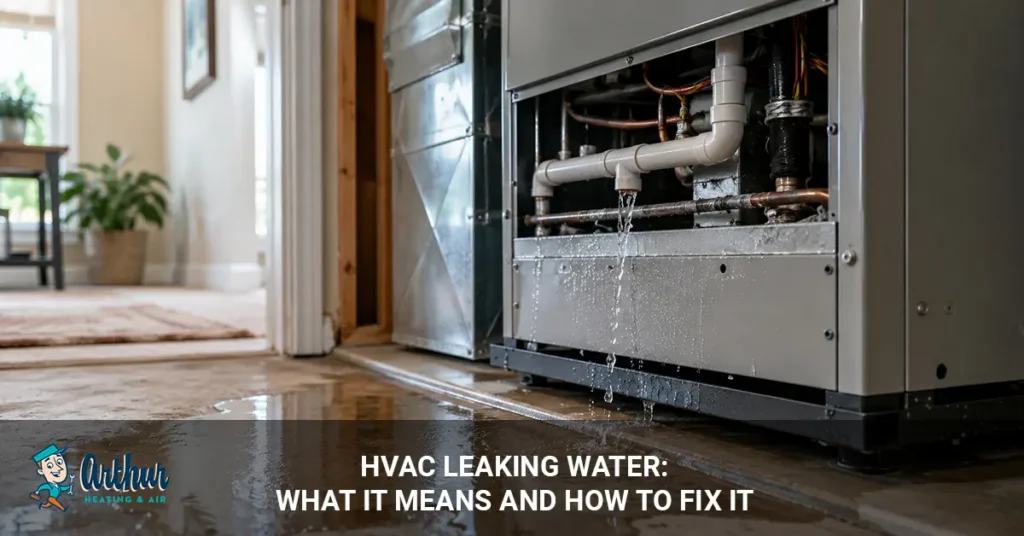
Water leaking from an HVAC system usually means something inside the system is not draining or working properly. While a small amount of condensation is normal, visible water around the indoor unit is often a sign that the HVAC system needs attention.
This is one of the most common HVAC problems homeowners deal with, especially during hot or humid weather when the air conditioner runs more often. In many cases, leaks happen because of clogged drain lines, dirty air filters, frozen evaporator coils, low refrigerant, or a failing condensate pump.
Some HVAC water leaks are minor and easy to fix. Others can lead to water damage, mold growth, poor cooling performance, and expensive HVAC repairs if the problem is ignored for too long.
The good news is that many leaking problems can be caught early before they become more serious.
This guide explains the most common causes of HVAC water leaks, warning signs to watch for, simple troubleshooting steps, and when it is best to call an HVAC professional.
Is Water Leaking From an HVAC System Normal?
Small amounts of condensation are normal in an HVAC system, but visible water leaking around the unit usually means there is a problem that needs attention.
Some Condensation Is Normal
Air conditioners naturally remove moisture from indoor air while cooling the home. That moisture turns into condensation and drains away through the condensate drain system.
During hot or humid weather, HVAC systems often produce more condensation because they are removing more moisture from the air.
A small amount of moisture near the drain line is usually normal.
Visible Leaking Usually Indicates a Problem
Water pooling around the indoor HVAC unit is not normal. If water cannot drain properly, it may leak from the system and collect on floors, walls, or ceilings.
This often points to problems like:
- Clogged drain lines
- Frozen evaporator coils
- Dirty air filters
- Damaged drain pans
- Refrigerant problems
Ignoring leaks can eventually lead to water damage and larger HVAC repairs.
Signs the Leak May Be Serious
Some HVAC water leaks are signs of bigger system problems and should not be ignored.
Warning signs include:
- Water damage around the unit
- Musty odors
- Mold growth
- Weak cooling performance
- Ice buildup on coils
- HVAC short cycling
If your system is repeatedly turning on and off while leaking water, it may be experiencing HVAC short cycling, which often occurs alongside airflow restrictions and frozen evaporator coil problems.
Clogged Condensate Drain Lines
Clogged condensate drain lines are one of the most common reasons an HVAC system starts leaking water. When the drain line becomes blocked, condensation cannot drain properly and begins backing up inside the system.
Why HVAC Drain Lines Clog
The condensate drain line removes moisture collected by the air conditioner during normal operation. Over time, the drain line can become clogged by:
- Dirt
- Dust
- Algae
- Mold buildup
As debris collects inside the pipe, water flow slows down or stops completely.
This problem is especially common in humid climates where HVAC systems remove large amounts of moisture from indoor air.
What Happens When the Drain Line Is Blocked
When the condensate drain line becomes clogged, water backs up inside the HVAC system instead of draining outside.
This often leads to:
- Water leaking around the indoor unit
- Overflow drain pans
- Increased indoor humidity
- Musty odors near the system
If the blockage continues, water may eventually damage floors, walls, or ceilings around the HVAC unit.
Signs of a Clogged HVAC Drain Line
Common warning signs include:
- Water near the indoor HVAC unit
- Damp areas around the system
- Musty smells
- Overflow drain pan filling with water
- HVAC shutting down unexpectedly
Some HVAC systems automatically shut down when the drain pan overflows to help prevent water damage.
Drain line clogs should be cleaned quickly before the leak becomes larger or causes mold and moisture problems inside the home.
Dirty Air Filters Can Cause Water Leaks
Dirty air filters can reduce airflow and eventually cause the HVAC system to leak water. When airflow becomes restricted, the system may struggle to cool properly and frozen coils can develop inside the unit.
How Restricted Airflow Freezes Evaporator Coils
Your HVAC system needs steady airflow across the evaporator coil to regulate temperature correctly. When the air filter becomes clogged with dust, dirt, and pet hair, airflow drops significantly.
Without enough warm air moving across the coil, the evaporator coil can become too cold and start freezing.
As ice builds up:
- Airflow becomes even weaker
- Cooling performance drops
- System strain increases
- HVAC efficiency decreases
This is one of the most common causes of frozen evaporator coils.
Frozen Coils Melting and Leaking Water
When the HVAC system shuts off or airflow improves, the frozen evaporator coils begin melting.
The melting ice can create a large amount of water inside the system. If the drain pan cannot handle the extra water, it may overflow and leak around the indoor HVAC unit.
In some homes, water may spread onto nearby floors, ceilings, or walls if the leak continues long enough.
Signs Your Air Filter May Be the Problem
A dirty air filter may cause:
- Weak airflow from vents
- Ice buildup on refrigerant lines
- Uneven cooling
- HVAC short cycling
- Water leaks around the system
Replacing the air filter is often one of the easiest and most effective ways to improve airflow and reduce HVAC leaking problems before they become more serious.
Following a proper schedule for how often to replace HVAC air filters can help prevent future airflow and moisture issues.
Frozen Evaporator Coils
Frozen evaporator coils are one of the most common causes of HVAC water leaks. When the coils freeze, airflow becomes restricted and large amounts of water may leak as the ice melts.
What Causes Evaporator Coils to Freeze
Evaporator coils usually freeze because the HVAC system is not getting enough airflow or the refrigerant system is not working properly.
Common causes include:
- Restricted airflow
- Low refrigerant levels
- Dirty evaporator coils
- Blower motor problems
When airflow becomes too weak, moisture on the coil surface freezes into ice instead of draining away normally.
Over time, the ice buildup blocks airflow even more and increases strain on the HVAC system.
Why Frozen Coils Leak Water
Frozen evaporator coils eventually begin melting after the HVAC system shuts off or airflow improves.
As the ice melts, excess water may overflow the drain pan or drain line and leak around the indoor HVAC unit.
In some homes, the leak may spread onto nearby floors, ceilings, or walls if the problem continues for too long.
Warning Signs of Frozen Coils
Common signs of frozen evaporator coils include:
- Ice on refrigerant lines
- Weak airflow from vents
- Poor cooling performance
- Water leaks around the HVAC unit
- HVAC short cycling
Frozen coils should be inspected quickly before the problem causes compressor damage or larger HVAC repairs.
Homeowners experiencing this issue can learn more about AC freezes up and how to fix it to better understand the causes and potential solutions.
Low Refrigerant Levels
Low refrigerant levels can cause evaporator coils to freeze and eventually leak water around the HVAC system. When the refrigerant becomes too low, the air conditioner cannot regulate pressure and temperature properly.
How Low Refrigerant Affects Coil Temperature
Refrigerant controls the cooling process inside the AC system. It helps regulate pressure and keeps the evaporator coil at the correct temperature.
When refrigerant levels drop too low, the evaporator coil can become excessively cold and start freezing.
As ice builds up:
- Airflow becomes restricted
- Cooling performance drops
- System strain increases
- Water leaks may develop as the ice melts
Low refrigerant often causes the HVAC system to work harder while cooling less effectively.
Refrigerant Leaks and Frozen Coils
Most low refrigerant problems happen because of leaks somewhere inside the HVAC system.
As refrigerant slowly escapes:
- Cooling performance decreases
- Ice buildup increases
- Compressor strain grows
- HVAC efficiency drops
Unlike fuel, refrigerant does not get “used up” during normal operation. If levels are low, there is usually a leak that needs repair.
Signs of Low Refrigerant
Homeowners may notice:
- Warm air coming from vents
- Hissing or bubbling sounds
- Ice buildup on refrigerant lines
- Weak cooling performance
- Frequent HVAC cycling
Low refrigerant should always be inspected and repaired professionally. Running the system with low refrigerant can eventually damage the compressor and lead to expensive repairs.
Broken or Failing Condensate Pump
A broken condensate pump can cause water to back up and leak around the HVAC system. When the pump stops removing condensation properly, excess water may collect inside the unit instead of draining away.
What the Condensate Pump Does
Some HVAC systems use a condensate pump to move water away from the indoor unit when gravity drainage is not possible.
As the air conditioner removes moisture from indoor air, condensation collects inside the system. The condensate pump pushes that water through a drain tube and safely removes it from the home.
These pumps are commonly used in:
- Basements
- Attics
- Closets
- HVAC systems located far from floor drains
Why Pumps Fail
Condensate pumps can fail over time because of:
- Age
- Electrical problems
- Dirt buildup
- Mechanical wear
If the pump motor stops working or the pump becomes clogged, water may begin backing up inside the HVAC system.
In some cases, the HVAC system may automatically shut down to prevent overflow and water damage.
Signs the Condensate Pump Is Broken
Common warning signs include:
- Water pooling around the HVAC unit
- Unusual pump noises
- HVAC shutdowns
- Overflowing drain pans
- Intermittent leaking problems
In some cases, condensate pump failures can trigger safety shutdowns that leave the system completely unresponsive. If this happens, review these common causes of an HVAC not turning on before calling for repairs.
Cracked or Rusted Drain Pans
Cracked or rusted drain pans can cause water to leak directly from the HVAC system. When the drain pan becomes damaged, it can no longer hold and direct condensation properly.
How Drain Pans Collect Condensation
The drain pan sits beneath the evaporator coil and collects condensation created during the cooling process.
Normally, the pan safely directs water into the condensate drain line so it can drain away from the HVAC system.
When the drain pan is working correctly, homeowners usually never notice the condensation at all.
Older HVAC Systems and Rust Damage
Older HVAC systems are more likely to develop drain pan problems because metal pans can rust, crack, or corrode over time.
As the pan weakens:
- Small cracks may form
- Rust holes can develop
- Water may begin leaking around the indoor unit
Once the drain pan becomes damaged, it may no longer hold water properly during normal HVAC operation.
Signs of a Damaged Drain Pan
Common signs of drain pan damage include:
- Water under the indoor HVAC unit
- Rust stains around the system
- Persistent water leaks
- Visible cracks or corrosion
In some cases, replacing the drain pan is enough to stop the leak and restore proper drainage. Older HVAC systems with severe rust damage may require additional repairs or component replacement.
Improper HVAC Installation Problems
Poor HVAC installation can create drainage and airflow problems that eventually lead to water leaks. If the system or drain line is installed incorrectly, condensation may not drain the way it should.
Uneven HVAC Installation Causing Drainage Issues
HVAC systems need to sit level so condensation can flow properly into the drain pan and drain line.
If the indoor unit is tilted or uneven, water may collect inside the system instead of draining correctly. Over time, this can cause water to overflow and leak around the unit.
Improper system positioning can also increase long-term moisture problems inside the HVAC system.
Poor Drain Line Slope
Condensate drain lines need the correct slope for water to flow freely out of the system.
If the drain line is installed at the wrong angle:
- Water may drain slowly
- Moisture can back up inside the system
- Drain line clogs may happen more often
- Water leaks can develop around the unit
Even small installation mistakes can create ongoing drainage problems.
Oversized HVAC Systems Creating Excess Condensation
Oversized air conditioners may cool the home too quickly without removing enough humidity from the air.
This can create:
- Excess indoor moisture
- More condensation inside the HVAC system
- Increased strain on the drain system
- Higher risk of water leaks
Oversized systems are also more likely to short cycle, which can reduce humidity control even further.
Why Professional Installation Matters
Proper HVAC installation helps improve:
- Drainage performance
- Airflow balance
- Humidity control
- Overall system efficiency
Incorrect installation often leads to long-term performance issues, repeated leaks, and unnecessary HVAC repairs. Having the system installed correctly from the beginning helps reduce future problems and improve overall reliability.
High Humidity Can Increase Condensation
High humidity can increase the amount of condensation your HVAC system produces. When indoor air contains too much moisture, the air conditioner has to work harder to remove that humidity.
Why HVAC Systems Remove Humidity
Air conditioners naturally remove moisture from indoor air while cooling the home. As warm air moves across the evaporator coil, moisture condenses into water and drains away through the condensate system.
During very humid weather, the HVAC system may produce much more condensation than normal because it is removing extra moisture from the air.
Excess Moisture During Humid Weather
Extremely humid conditions can sometimes create more condensation than the HVAC drain system can handle efficiently.
This may increase the risk of:
- Water leaks around the unit
- Overflow drain pans
- Damp areas near the HVAC system
- Increased indoor humidity
Homes in humid climates are especially vulnerable to condensation-related HVAC problems during summer months.
Poor Ventilation Problems
Poor ventilation can trap excess moisture inside the home and increase humidity levels even more.
Common high-humidity areas include:
- Bathrooms
- Kitchens
- Laundry rooms
- Basements
Without proper ventilation, moisture stays inside the home longer and forces the HVAC system to remove more humidity.
When Condensation Becomes Excessive
If condensation becomes excessive, homeowners may notice:
- Water leaks
- Damp walls or ceilings
- Musty odors
- Condensation around vents
Improving indoor ventilation and humidity control can help reduce excess moisture and lower the risk of HVAC leaking problems.
What You Should Do if Your HVAC Is Leaking Water
Taking quick action when your HVAC system starts leaking water can help prevent larger HVAC problems, mold growth, and costly water damage inside the home.
Step 1: Turn Off the HVAC System if Leaking Is Severe
Shut the HVAC system off if large amounts of water are leaking around the indoor unit.
Turning the system off can help:
- Prevent additional water damage
- Reduce strain on HVAC components
- Stop frozen coils from getting worse
- Protect nearby flooring and walls
If water is close to electrical components, avoid touching the system and contact a professional immediately.
Step 2: Check the Air Filter
Inspect the HVAC air filter and replace it if it looks dirty or clogged.
A blocked filter can reduce airflow and cause:
- Frozen evaporator coils
- Weak cooling
- Water leaks
- HVAC short cycling
Replacing the filter is one of the simplest ways to improve airflow and reduce leaking problems.
Step 3: Inspect the Drain Pan and Drain Line
Look for:
- Standing water in the drain pan
- Overflowing pans
- Visible drain line clogs
- Water backing up near the indoor unit
Clogged condensate drain lines are one of the most common causes of HVAC leaks.
Step 4: Look for Ice Buildup
Ice on refrigerant lines or evaporator coils usually points to airflow or refrigerant problems.
Frozen coils often happen because of:
- Dirty air filters
- Blocked airflow
- Low refrigerant
- Blower motor issues
If ice is visible, the HVAC system should remain off until the problem is inspected.
Step 5: Call an HVAC Technician if Leaks Continue
Persistent HVAC leaks usually require professional inspection and repair.
An HVAC technician can identify:
- Refrigerant leaks
- Frozen coils
- Drainage problems
- Condensate pump failure
- Airflow restrictions
- Installation issues
Fixing the problem early can help prevent larger HVAC damage and expensive water repairs later.
When to Call an HVAC Professional
Some HVAC water leaks need professional repair right away. If the system keeps leaking or shows signs of airflow, refrigerant, or drainage problems, the issue should be inspected before it causes larger damage.
Call an HVAC technician if you notice:
- Water leaking repeatedly
- Frozen evaporator coils
- Refrigerant leaks
- Water damage near the HVAC system
- Weak cooling performance
- Musty odors or mold growth
- HVAC short cycling
- Overflowing drain pans
These problems often point to hidden issues inside the HVAC system that homeowners cannot easily diagnose on their own.
Professional HVAC inspections can identify:
- Drain line clogs
- Refrigerant problems
- Frozen coils
- Condensate pump failure
- Airflow restrictions
- Improper HVAC installation
Ignoring ongoing leaks can lead to mold growth, damaged flooring or ceilings, poor HVAC performance, and more expensive repairs later. Early repairs are usually much easier and less costly than waiting for the problem to get worse.
How to Prevent HVAC Water Leaks
Regular HVAC maintenance is one of the best ways to prevent water leaks and reduce the risk of expensive water damage. Keeping the system clean and fixing small problems early helps the HVAC system drain and operate properly.
Replace Air Filters Regularly
Clean air filters improve airflow and help prevent frozen evaporator coils.
Dirty filters restrict airflow and can cause:
- Ice buildup on coils
- Weak cooling
- Water leaks
- HVAC short cycling
Most HVAC filters should be replaced every 1 to 3 months depending on:
- Pets in the home
- Indoor air quality
- HVAC usage
- Filter type
Schedule Annual HVAC Maintenance
Professional HVAC maintenance helps catch drainage, airflow, and refrigerant problems before they become larger repairs.
During a tune-up, technicians inspect:
- Drain lines
- Evaporator coils
- Refrigerant levels
- Blower motors
- Airflow performance
Annual maintenance helps improve HVAC efficiency and reduce leak risks. Following a complete HVAC maintenance checklist can help homeowners catch drainage, airflow, and refrigerant issues before they cause water leaks.
Clean Drain Lines Periodically
Regular condensate drain line cleaning helps prevent:
- Clogs
- Algae buildup
- Water backups
- Overflow leaks
Keeping the drain line clean allows condensation to drain away properly during normal HVAC operation.
Keep Airflow Unrestricted
Good airflow helps the HVAC system maintain proper temperatures and reduces the risk of frozen coils.
Make sure:
- Vents stay open
- Return vents remain clear
- Furniture does not block airflow
- Air filters stay clean
Balanced airflow helps the HVAC system cool more efficiently and prevents moisture problems.
Fix Refrigerant Problems Early
Low refrigerant levels can freeze evaporator coils and eventually cause water leaks when the ice melts.
Repairing refrigerant leaks early helps:
- Prevent frozen coils
- Protect the compressor
- Improve cooling performance
- Reduce system strain
If the HVAC system starts cooling poorly or develops ice buildup, it should be inspected professionally before larger damage occurs.
Frequently Asked Questions
Why is my HVAC leaking water?
HVAC systems commonly leak water because of clogged drain lines, dirty air filters, frozen evaporator coils, refrigerant problems, damaged drain pans, or condensate pump failure.
Is HVAC leaking water dangerous?
HVAC water leaks can become serious if ignored for too long. Ongoing leaks may lead to:
- Mold growth
- Water damage
- Ceiling or floor damage
- Reduced HVAC performance
- Electrical problems near the unit
Can dirty air filters cause water leaks?
Yes. Dirty air filters restrict airflow and may cause evaporator coils to freeze. When the ice melts, excess water can overflow the drain pan and leak around the HVAC system.
Why is my AC leaking water inside the house?
Indoor AC leaks are often caused by:
- Clogged condensate drain lines
- Frozen evaporator coils
- Drainage problems
- Dirty air filters
- Condensate pump failure
These problems prevent condensation from draining properly.
Can low refrigerant cause HVAC leaks?
Yes. Low refrigerant can freeze evaporator coils. As the ice melts, excess water may leak around the indoor HVAC unit.
Should I turn off my HVAC if it is leaking water?
Yes. If the leak is severe or ice buildup is visible, turning the HVAC system off can help prevent additional water damage and reduce strain on the system until the problem is inspected.
Final Thoughts
HVAC water leaks are usually a warning sign that something inside the system needs repair or maintenance. In many homes, leaks happen because of clogged drain lines, frozen evaporator coils, dirty air filters, refrigerant problems, or drainage issues.
While some leaks are minor, ignoring them can eventually lead to:
- Mold growth
- Water damage
- Poor HVAC performance
- Higher repair costs
- Extra strain on HVAC components
The good news is that many HVAC leaking problems can be prevented with regular maintenance, clean air filters, proper airflow, and early repairs.
If your HVAC system keeps leaking water or the problem continues coming back, scheduling a professional HVAC inspection is often the best way to identify the cause and prevent larger system damage later.