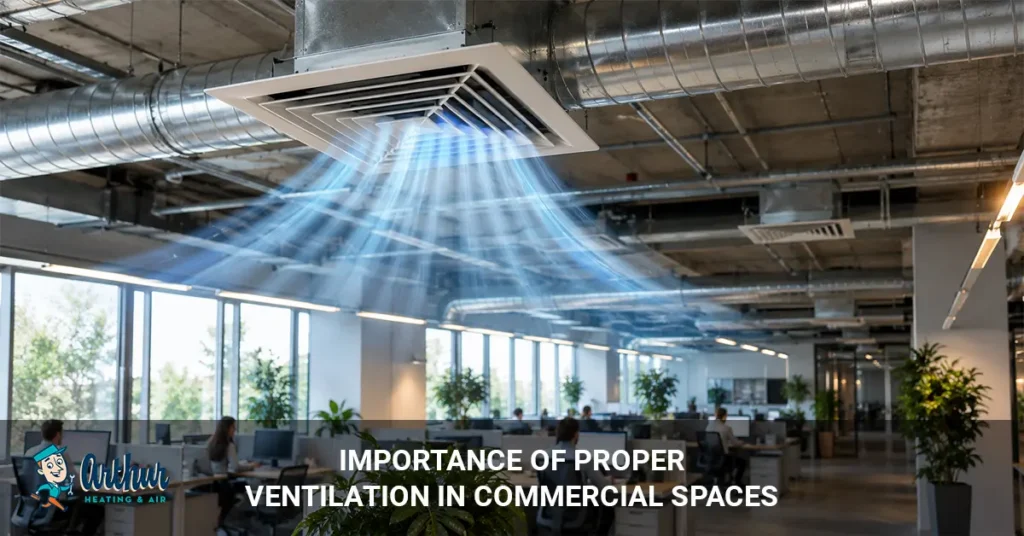
Proper ventilation is important in commercial spaces because it keeps the air clean, improves comfort, and supports daily operations.
In busy workplaces, the air can quickly become stale. Dust, odors, and pollutants build up when fresh air is not circulating properly. This can affect health, focus, and overall productivity.
Good ventilation brings in fresh air and removes harmful particles. It helps create a safe, comfortable environment for employees and customers while keeping your building running efficiently.
What Is Ventilation in Commercial Buildings?
Ventilation is the process of bringing fresh air into a building and removing stale air.
In commercial spaces, this is usually handled by HVAC systems or dedicated ventilation systems that control airflow. Some buildings also use natural methods like windows and vents to support air movement.
The goal is to keep indoor air clean, balanced, and comfortable for everyone inside.
Why Proper Ventilation Is Important for Businesses
Proper ventilation is important because it supports health, comfort, and overall business performance.
When air is clean and fresh, employees can focus better and work more efficiently. Customers also feel more comfortable and are more likely to stay longer in a well-ventilated space.
Poor ventilation can lead to discomfort, bad odors, and complaints. Over time, this can affect your business reputation and even reduce customer satisfaction.
Improves Indoor Air Quality
Proper ventilation improves indoor air quality by removing pollutants and bringing in fresh air.
Dust, chemicals, and other airborne particles can build up quickly in a closed space. Ventilation helps push these contaminants out and replace them with cleaner air.
This creates a healthier environment for employees and customers and makes the space feel more comfortable.
Enhances Employee Comfort and Productivity
Proper ventilation improves comfort and helps employees stay productive.
When air flows evenly, temperatures stay balanced and the space feels more comfortable throughout the day. This reduces distractions caused by stuffy or uneven conditions.
Comfortable employees can focus better, which leads to improved performance and overall productivity.
Reduces Health Risks and Illness
Proper ventilation reduces health risks by keeping indoor air clean and safe.
When air quality is poor, people may experience allergies, headaches, or breathing problems. Ventilation helps remove dust, pollutants, and other harmful particles from the air.
This creates a healthier environment and reduces the chances of illness in the workplace.
Controls Humidity and Prevents Mold
Proper ventilation controls humidity and prevents mold growth.
When moisture builds up indoors, it creates the right conditions for mold and can damage walls, ceilings, and equipment. Ventilation helps remove excess humidity, keep levels balanced, and support mold prevention in HVAC systems.
This protects the building structure and creates a safer, healthier environment for everyone inside.
Improves Energy Efficiency
Proper ventilation improves energy efficiency by helping your HVAC system run more effectively.
When airflow is balanced, the system doesn’t have to work as hard to maintain the right temperature. This reduces energy use and lowers your utility costs.
Good ventilation also supports overall system performance, helping everything run smoothly and efficiently.
Helps Meet Safety and Building Standards
Proper ventilation helps your business meet safety rules and building requirements.
Many codes require enough airflow to keep indoor conditions safe. Good ventilation supports compliance and reduces the risk of violations.
It also lowers safety risks and helps maintain a secure, comfortable environment for employees and customers.
Signs of Poor Ventilation in Commercial Spaces
Poor ventilation shows clear signs like stale air, strong odors, and uneven airflow.
You may notice the space feels stuffy or humid, especially in crowded areas. Bad smells may linger instead of clearing out, and some areas may feel hotter or colder than others.
These signs mean air is not moving properly through the building. When this happens, the ventilation system needs attention to restore comfort and air quality.
How to Improve Ventilation in Commercial Buildings
You can improve ventilation by upgrading your system and keeping airflow balanced.
Regular HVAC maintenance keeps filters clean and components working properly. Increasing fresh air intake and fixing airflow issues also help move air more effectively.
Even small changes can improve air quality and make the space more comfortable for everyone.
Natural vs Mechanical Ventilation: Which Is Better?
Mechanical ventilation is better for commercial spaces because it provides consistent and controlled airflow.
Natural ventilation depends on outdoor conditions like weather and building design, so it can be unreliable. It may work well at times but cannot maintain steady airflow throughout the day.
Mechanical systems, on the other hand, are designed to deliver constant air circulation regardless of outside conditions. This makes them more effective for maintaining comfort, air quality, and overall building performance.
Final Thoughts
Proper ventilation is essential for keeping your commercial space healthy, comfortable, and efficient.
It improves air quality, supports employee productivity, and reduces health risks. It also helps your HVAC system run better and keeps energy costs under control.
When you invest in proper ventilation, you create a better environment for employees and customers while keeping your business running smoothly.