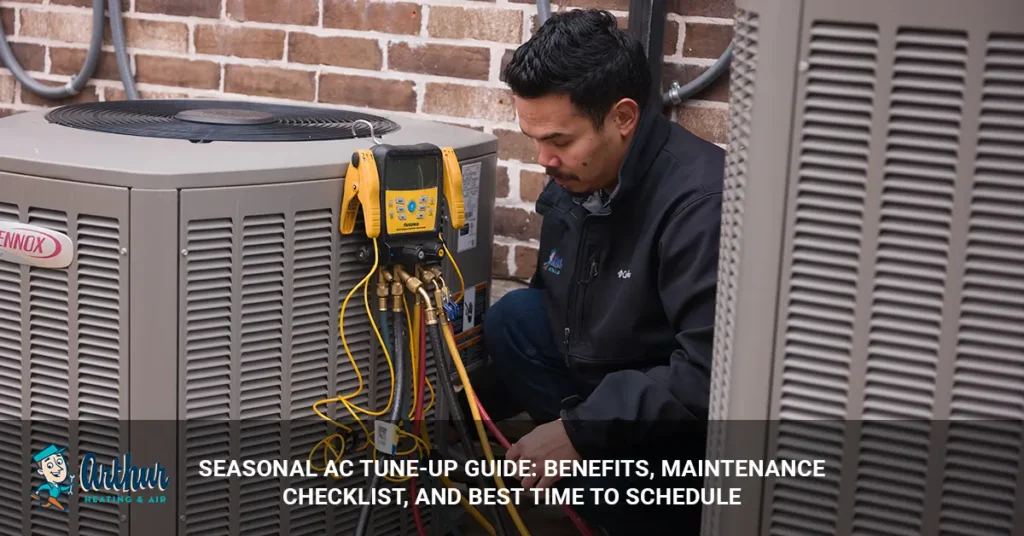
An AC tune-up keeps your air conditioner running smoothly and helps prevent breakdowns.
Many homeowners skip this simple step. But small problems can turn into expensive repairs if you ignore them. A seasonal tune-up helps your system work better, last longer, and keep your home comfortable.
In this guide, you’ll learn the benefits, what’s included, and the best time to schedule your AC service.
What Is an AC Tune-Up?
An AC tune-up is a routine maintenance service that keeps your air conditioner working properly.
It involves checking, cleaning, and adjusting key parts of the system. This helps make sure everything runs smoothly and safely.
The goal is to catch small issues early before they turn into bigger problems. Regular tune-ups improve efficiency and reduce the risk of sudden breakdowns.
Benefits of a Seasonal AC Tune-Up
Improves Energy Efficiency
An AC tune-up improves energy efficiency by helping your system run smoothly.
When parts are clean and working properly, your air conditioner uses less energy to cool your home.
This means lower energy bills and better overall performance.
Prevents Costly Repairs
An AC tune-up helps prevent costly repairs by finding problems early.
During the service, small issues are identified and fixed before they become serious. This reduces the risk of sudden breakdowns.
Fixing minor problems early saves money and avoids bigger repairs later.
Extends System Lifespan
An AC tune-up helps your system last longer by reducing strain on its parts.
When your system is clean and properly adjusted, it does not have to work as hard. This lowers wear and tear on important components.
As a result, you get fewer breakdowns and a longer lifespan from your air conditioner.
Improves Cooling Performance
An AC tune-up improves cooling performance by helping your system cool your home more effectively.
When all parts are clean and working properly, your system can deliver steady and even cooling.
This means more consistent temperatures and better comfort in every room.
Enhances Indoor Air Quality
An AC tune-up improves indoor air quality by keeping filters and system components clean.
When the system is clean, it removes more dust, allergens, and pollutants from the air.
This helps you breathe cleaner air and keeps your home healthier.
AC Tune-Up Maintenance Checklist
Check and Replace Air Filters
Checking and replacing air filters keeps airflow strong and air clean.
A dirty filter blocks airflow and makes your system work harder. This reduces efficiency and affects air quality.
Cleaning or replacing the filter regularly helps your system run smoothly and keeps your indoor air fresh.
Clean Coils (Evaporator and Condenser)
Cleaning the coils helps your AC transfer heat efficiently and cool your home properly.
When coils are dirty, they cannot release or absorb heat as they should. This makes the system work harder and reduces performance.
Keeping the evaporator and condenser coils clean improves efficiency and prevents strain on the system, especially when you follow proper AC coil cleaning steps for better performance.
Inspect Refrigerant Levels
Checking refrigerant levels ensures your AC can cool your home properly.
If the refrigerant is low or unbalanced, the system cannot remove heat effectively. This leads to weak cooling and higher energy use.
Keeping the correct refrigerant level helps maintain strong cooling performance and system efficiency.
Check Thermostat Settings
Checking the thermostat ensures your AC runs at the right temperature and responds properly.
If the thermostat is not set correctly or is not working well, your system may cool unevenly or run longer than needed.
Making sure it is accurate and set properly helps improve comfort and energy efficiency.
Inspect Electrical Components
Inspecting electrical components ensures your AC runs safely and reliably.
Loose wires or faulty connections can cause system failure or safety issues. These problems can also affect performance.
Checking and securing all electrical parts helps prevent breakdowns and keeps your system running smoothly.
Clean and Clear Drain Line
Cleaning the drain line prevents water leaks and moisture problems in your AC system.
A clogged drain line can cause water to back up and damage your system or home. It can also lead to mold growth.
Keeping the drain line clear helps your system run safely and avoids costly water damage.
Lubricate Moving Parts
Lubricating moving parts helps your AC run smoothly and reduces wear.
Without proper lubrication, parts create friction and can wear out faster. This can lead to noise, overheating, or damage.
Regular lubrication keeps components working properly and extends the life of your system.
Check Airflow and Ducts
Checking airflow and ducts ensures your AC can cool your home evenly.
If airflow is blocked or ducts are leaking, some rooms may not cool properly. This also makes your system work harder.
Keeping airflow clear and ducts in good condition helps maintain consistent cooling and better efficiency.
Best Time to Schedule an AC Tune-Up
Spring (Before Peak Summer Use)
The best time to schedule an AC tune-up is in the spring before heavy use begins.
This allows your system to be fully checked and prepared before hot weather arrives. It also helps you avoid peak-season delays when technicians are busy.
Scheduling in spring ensures your AC runs efficiently when you need it most.
Early Summer (If You Miss Spring)
If you miss spring, scheduling your AC tune-up in early summer is still a good option.
Even if your system has already started running, a tune-up can improve performance and catch any early issues.
It’s always better to service your AC late than to skip maintenance completely.
Why Timing Matters
Scheduling your AC tune-up early helps your system perform better when you need it most.
If you wait too long, you may face delays during peak season when technicians are busy. Your system may also run inefficiently without proper maintenance.
Getting your tune-up done early ensures reliable cooling and avoids last-minute problems.
Signs Your AC Needs a Tune-Up
Your AC needs a tune-up when it shows signs of reduced performance or efficiency.
Common warning signs include weak airflow, warm air, strange noises, higher energy bills, and frequent cycling.
These issues mean your system is working harder than it should and may need maintenance to prevent bigger problems.
What Happens If You Skip AC Maintenance?
Skipping AC maintenance can lead to breakdowns, higher costs, and poor performance.
Without regular service, your system loses efficiency and has to work harder. This increases energy bills and puts more strain on parts.
Over time, this can cause unexpected failures and expensive repairs. Regular maintenance helps you avoid these issues.
Can You Do an AC Tune-Up Yourself?
You can do basic AC maintenance yourself, but a full tune-up should be done by a professional.
Simple tasks like cleaning or replacing air filters and clearing debris around the unit are safe and helpful. These improve airflow and basic performance.
However, checking electrical parts, refrigerant levels, and internal components requires proper tools and training. For a complete tune-up, it’s best to call a professional.
When to Call a Professional HVAC Technician
You should call a professional HVAC technician when your system has ongoing issues or needs a full inspection.
If problems like weak cooling, strange noises, or frequent cycling continue, they usually point to deeper issues. These cannot be fixed with basic maintenance.
A professional can find the root cause, fix it safely, and make sure your system runs properly.
How Much Does an AC Tune-Up Cost?
An AC tune-up usually costs between $75 and $200, depending on your system and location.
The final price can vary based on the type of AC unit, the level of service, and the company you choose.
Regular tune-ups cost much less than major repairs, making them a smart and cost-effective investment.
How Often Should You Schedule an AC Tune-Up?
You should schedule an AC tune-up at least once a year.
In areas with heavy use or long cooling seasons, scheduling it twice a year can be even better.
Regular maintenance keeps your system running efficiently and helps prevent unexpected problems, especially when you follow a complete AC maintenance checklist for consistent performance.
Final Thoughts
An AC tune-up is one of the simplest ways to keep your system running efficiently.
It improves performance, lowers energy costs, and helps prevent unexpected breakdowns.
Scheduling regular maintenance keeps your home cool, comfortable, and worry-free when you need it most.