
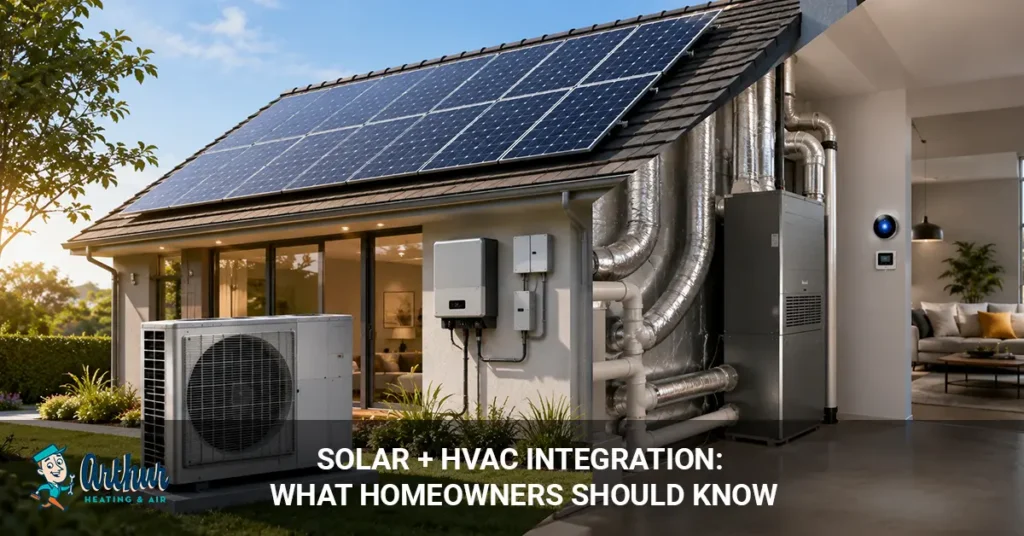
Energy costs continue to rise, and many homeowners are looking for smarter ways to reduce monthly utility bills without sacrificing comfort. Since heating and cooling systems are often the largest source of energy use in a home, combining solar power with an HVAC system has become a practical solution for long-term savings and efficiency.
Solar + HVAC integration allows homeowners to use renewable energy to support home heating and cooling needs. When designed properly, this combination can lower electricity costs, reduce strain on the power grid, improve indoor comfort, and increase property value.
Understanding how solar and HVAC systems work together can help homeowners make better decisions before investing in equipment upgrades or solar installation.
What Is Solar + HVAC Integration?
Solar + HVAC integration refers to using solar energy to power or offset the electricity used by heating and cooling systems. Solar panels generate electricity from sunlight, and that power can be used to run HVAC equipment such as air conditioners, heat pumps, mini split systems, and electric heating systems.
Instead of relying entirely on utility power, homeowners can use solar energy during the day to reduce the amount of electricity purchased from the grid.
Modern HVAC systems are more energy efficient than older equipment, which makes them a better match for solar energy systems. A high-efficiency HVAC setup combined with properly sized solar panels can significantly lower household energy consumption.
How Solar Panels Work With HVAC Systems
Solar panels produce direct current electricity when exposed to sunlight. An inverter converts that power into alternating current electricity used by home appliances and HVAC systems.
During sunny hours, solar energy can directly support cooling and heating operations. If the solar system produces more electricity than the home uses, excess power may be sent back to the electrical grid depending on local utility programs.
At night or during cloudy weather, the HVAC system can continue operating using grid electricity or stored battery power if a battery backup system is installed.
HVAC Systems That Work Well With Solar
Several HVAC systems can integrate effectively with solar energy.
Heat Pumps
Heat pumps are one of the best options for solar-powered homes because they transfer heat instead of generating it directly. This makes them highly energy efficient for both heating and cooling.
Mini Split Systems
Mini split systems use less electricity than traditional central HVAC systems and allow zoned temperature control. Their lower power demand makes solar integration easier and more affordable.
High Efficiency Central Air Systems
Modern central air conditioning systems with high SEER2 ratings consume less electricity while maintaining strong cooling performance. These systems can pair well with residential solar installations.
Electric Furnaces and Hybrid Systems
Electric heating systems can also benefit from solar energy, although heating demands in colder climates may require larger solar systems.
Why Homeowners Are Combining Solar and HVAC Systems
More homeowners are investing in solar HVAC integration because of the financial and environmental benefits.
Lower Energy Bills
Heating and cooling costs often represent a major portion of monthly electricity bills. Solar power helps offset these costs by generating electricity during peak daytime usage.
Homes in warmer climates may see especially noticeable savings during summer cooling seasons when air conditioning use is highest.
Improved Energy Efficiency
Pairing solar panels with energy-efficient HVAC equipment helps maximize performance while reducing waste. Older HVAC systems typically consume far more electricity than modern high-efficiency models.
Protection Against Rising Utility Costs
Electricity rates continue to increase in many regions. Solar energy gives homeowners more predictable long-term energy expenses.
Environmental Benefits
Using renewable energy reduces dependence on fossil fuels and lowers household carbon emissions. This helps reduce environmental impact while supporting cleaner energy use.
Increased Home Value
Energy-efficient homes with solar systems often attract buyers looking for lower operating costs and modern home upgrades.
How Much Solar Power Does an HVAC System Need?
The amount of solar power needed depends on several factors, including HVAC efficiency, home size, insulation quality, and climate conditions.
A large home in a hot climate with constant air conditioning use will require more solar production than a smaller home with moderate cooling needs.
Factors That Affect HVAC Energy Usage
Several variables influence HVAC electricity consumption:
- Square footage of the home
- Insulation quality
- Window efficiency
- Outdoor climate
- Thermostat settings
- Number of occupants
- Age of HVAC equipment
Homes with poor insulation or older HVAC systems usually require more electricity to maintain indoor comfort.
Solar Panel Sizing Basics
Solar contractors estimate average daily electricity use and determine how many solar panels are needed to offset HVAC consumption.
A properly designed solar system may fully or partially cover heating and cooling energy demands depending on roof space, sunlight exposure, and budget.
Why Heat Pumps Are Popular for Solar Homes
Heat pumps have become increasingly popular because they provide both heating and cooling using less electricity than traditional systems.
Unlike furnaces that create heat, heat pumps move heat from one location to another. Homeowners comparing systems can review heat pump vs furnace to better understand efficiency differences. This process uses less energy and works efficiently in many climates.
Air source heat pumps are commonly used in residential homes, while ground source heat pumps offer even higher efficiency but come with higher installation costs.
When paired with solar panels, heat pumps can dramatically reduce long-term energy costs.
Important Things to Consider Before Solar HVAC Integration
Not every home is immediately ready for solar HVAC integration. Several important factors should be evaluated before installation.
Roof Condition and Sun Exposure
Solar panels perform best on roofs with strong sun exposure and minimal shading. Roof age and condition should also be considered before installation.
Existing HVAC Efficiency
Installing solar panels without upgrading an outdated HVAC system may reduce potential savings. Many homeowners first explore top energy-efficient HVAC upgrades for your home to improve overall system performance.
Older systems consume more electricity and may waste solar-generated power. In many cases, improving HVAC efficiency first provides better overall results.
Electrical System Capacity
Some homes may require electrical panel upgrades to support both solar and modern HVAC equipment safely.
Climate Conditions
Local weather patterns affect both solar production and HVAC demand. Homes in extremely hot or cold climates may require larger systems.
Solar Battery Storage and HVAC Systems
Battery storage systems allow homeowners to store excess solar energy for later use.
This stored power can help run HVAC systems during nighttime hours, cloudy weather, or power outages.
While batteries increase installation costs, they provide energy independence and backup protection during grid failures.
For homeowners in areas with frequent outages, battery storage can be especially valuable.
Cost of Solar + HVAC Integration
The total cost depends on system size, equipment type, installation complexity, and local labor rates.
Costs may include:
- Solar panel installation
- HVAC replacement or upgrades
- Electrical work
- Battery storage systems
- Permits and inspections
Although upfront costs can be significant, energy savings and tax incentives often improve long-term return on investment.
Tax Credits and Incentives
Many homeowners qualify for federal tax credits and local energy incentives that reduce installation costs.
Energy-efficient HVAC systems and solar installations may both qualify for rebates depending on local programs.
Common Mistakes Homeowners Should Avoid
Some homeowners make costly mistakes during the planning process.
Installing Solar Before Improving Efficiency
Reducing energy waste should come before sizing a solar system. This guide explains how insulation affects HVAC performance and energy use and why insulation upgrades improve efficiency. Improving insulation, sealing air leaks, and upgrading HVAC equipment can lower the number of solar panels needed.
Choosing Incorrect System Sizes
Oversized or undersized HVAC systems can reduce efficiency, increase operating costs, and create uneven indoor temperatures.
Proper load calculations are important for accurate system design.
Hiring Inexperienced Contractors
Solar HVAC integration requires coordination between HVAC and solar professionals. Poor installation can reduce system performance and shorten equipment lifespan.
Choosing experienced contractors helps ensure proper sizing, safe installation, and long-term reliability.
How Smart Technology Improves Solar HVAC Performance
Smart home technology can help homeowners maximize energy savings.
Smart Thermostats
Smart thermostats automatically adjust temperature settings based on occupancy, schedules, and outdoor conditions. Many homeowners choose thermostat upgrades for comfort and savings to reduce unnecessary HVAC runtime and energy waste.
This reduces unnecessary HVAC usage and improves efficiency.
Energy Monitoring Systems
Monitoring systems track energy production and usage in real time, helping homeowners understand how their HVAC system interacts with solar generation.
Automated Energy Management
Some systems automatically prioritize HVAC operation during peak solar production hours to reduce grid electricity use.
Signs Your Home Is a Good Candidate for Solar HVAC Integration
Many homes can benefit from combining solar and HVAC systems, especially if they have:
- High monthly utility bills
- Older HVAC equipment
- Strong sunlight exposure
- Large cooling demands
- Plans for long-term home ownership
Homes with newer insulation and energy-efficient windows may achieve even better results.
Solar + HVAC Integration Installation Process
The process usually begins with a home energy assessment.
Contractors evaluate current HVAC performance, insulation levels, and energy usage patterns before designing a solar system.
The installation process typically includes:
- Energy analysis
- HVAC inspection
- Solar system design
- Permit approval
- Equipment installation
- Final testing and optimization
Professional planning helps ensure the HVAC system and solar setup work efficiently together.
Final Thoughts
Solar + HVAC integration offers homeowners an effective way to reduce energy costs, improve efficiency, and increase long-term comfort. As electricity prices continue to rise, combining renewable energy with modern HVAC technology has become a practical investment for many households.
The best results usually come from improving HVAC efficiency before installing solar panels. Upgrading insulation, replacing outdated equipment, and choosing properly sized systems can significantly improve overall performance.
When designed correctly, solar-powered HVAC systems can provide years of lower utility costs, cleaner energy use, and improved home value.