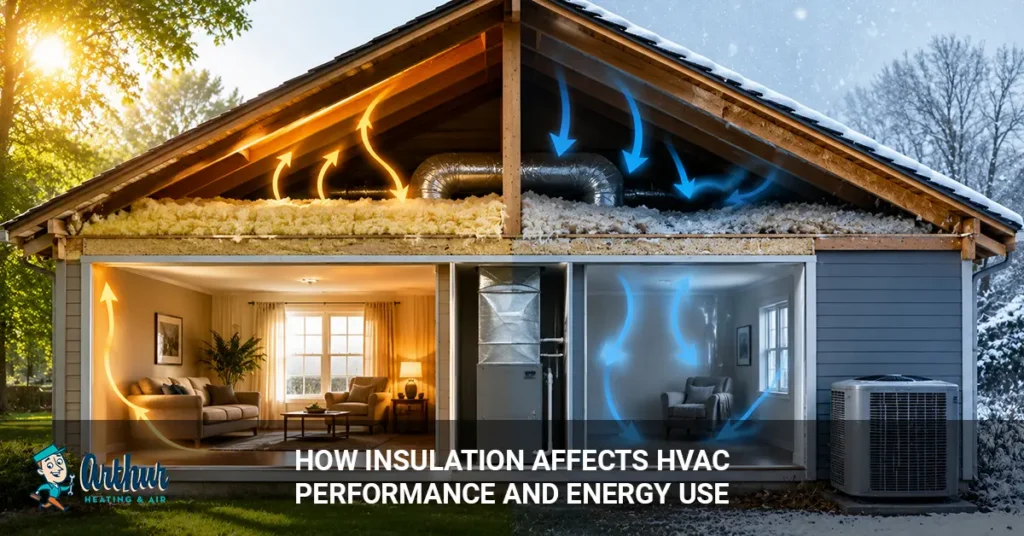
Your home’s insulation plays a major role in how efficiently your HVAC system heats and cools your home. Good insulation helps keep indoor temperatures stable, so your heating and cooling system does not need to work as hard throughout the day.
When insulation performs properly, it slows down heat transfer between the inside and outside of your home. During summer, it helps keep hot outdoor air out. During winter, it helps keep warm indoor air inside. This reduces the workload on your HVAC system and helps lower energy use.
Poor insulation creates the opposite effect. Heat enters and escapes more easily, forcing your HVAC system to run longer and more often to maintain comfortable temperatures. Over time, this can increase energy bills, reduce system efficiency, and cause extra wear on HVAC equipment.
Proper insulation also improves indoor comfort. It helps reduce drafts, hot and cold spots, and uneven temperatures between rooms. Many homeowners notice their homes feel more comfortable year-round after improving insulation.
Understanding the connection between insulation and HVAC performance can help homeowners reduce energy costs, improve comfort, and extend the lifespan of their heating and cooling systems.
Understanding How Insulation Works
Insulation works by slowing down heat transfer between the inside and outside of your home. It helps keep your indoor temperature more stable, so your HVAC system does not need to work as hard.
During summer, insulation helps block outdoor heat from entering your home. During winter, it helps keep warm air inside. This makes it easier for your heating and cooling system to maintain a comfortable temperature throughout the year.
Without enough insulation, heat moves through walls, ceilings, floors, and attics much faster. As a result, your HVAC system runs longer and more often to replace lost heating or cooling. This increases energy use and puts extra strain on the system.
Several types of insulation are commonly used in homes, including:
- Fiberglass insulation
- Spray foam insulation
- Cellulose insulation
- Rigid foam board insulation
Each type provides a different level of thermal protection. Insulation performance is measured by R-value. A higher R-value means the material does a better job of resisting heat flow and improving energy efficiency.
The Relationship Between Insulation and HVAC Systems
Insulation directly affects how hard your HVAC system needs to work to heat and cool your home. When a home is properly insulated, indoor temperatures stay more stable, which helps the HVAC system run more efficiently.
HVAC systems are designed based on a home’s heating and cooling load. That load depends on how much heat enters or escapes through areas like walls, ceilings, floors, windows, and attics.
When insulation is poor or outdated, heat moves through the home much faster. During summer, hot outdoor air enters more easily. During winter, warm indoor air escapes faster. This causes indoor temperatures to change quickly and forces the HVAC system to work harder to maintain comfort.
Longer HVAC Operating Cycles
Poor insulation causes HVAC systems to run longer because conditioned air escapes more easily. The system must continue heating or cooling the home to replace lost air temperatures.
Longer operating cycles can lead to:
- Higher energy consumption
- Increased wear on HVAC components
- Higher monthly utility bills
- Reduced overall system efficiency
Over time, this extra strain can shorten the lifespan of heating and cooling equipment and increase the risk of breakdowns.
Uneven Indoor Temperatures
Poor insulation often causes uneven indoor temperatures throughout the home. Some rooms may feel comfortable, while others stay too hot in summer or too cold in winter.
This happens because heat moves through certain parts of the home faster than others. Areas with weak or missing insulation lose heated or cooled air more quickly, making it harder for the HVAC system to maintain consistent temperatures.
Rooms near attics, garages, crawl spaces, windows, or exterior walls are usually affected the most. These areas are more exposed to outdoor temperatures and often experience greater heat gain or heat loss.
Proper insulation helps keep temperatures more balanced from room to room. It also reduces hot and cold spots, improves comfort, and helps the HVAC system work more efficiently.
Increased Wear and Tear on HVAC Equipment
Poor insulation can put extra stress on your HVAC system and cause parts to wear out faster. When heated or cooled air escapes too easily, the system must run longer and cycle more often to keep your home comfortable.
Over time, this constant workload increases strain on important HVAC components and reduces overall system performance.
Common problems caused by an overworked HVAC system include:
- Compressor strain
- Blower motor wear
- Frozen evaporator coils
- Frequent breakdowns
- Reduced equipment lifespan
Proper insulation helps reduce unnecessary HVAC runtime by keeping indoor temperatures more stable. This lowers stress on the system, improves efficiency, and helps heating and cooling equipment last longer.
How Good Insulation Reduces Energy Use
Good insulation reduces energy use by helping your home hold heated or cooled air longer. When indoor temperatures stay more stable, your HVAC system does not need to run as often to keep the home comfortable.
Proper insulation slows down heat transfer through walls, ceilings, floors, and attics. This helps reduce the amount of energy needed to heat or cool the home throughout the year.
As a result, homeowners often experience better HVAC efficiency and lower overall energy costs. Many homeowners also look for ways to lower heating and cooling bills by improving insulation and reducing energy loss.
Lower Heating and Cooling Bills
Proper insulation helps lower heating and cooling bills by reducing the workload on your HVAC system. When less air escapes, the system uses less energy to maintain the desired indoor temperature.
Homeowners commonly notice:
- Lower monthly utility bills
- Less HVAC runtime
- More consistent indoor temperatures
- Improved comfort throughout the home
Energy savings are often even greater in areas with very hot summers or cold winters, where HVAC systems typically run more frequently.
Improved HVAC Efficiency
Proper insulation improves HVAC efficiency by helping your home maintain stable indoor temperatures for longer periods. When less heat enters or escapes the home, your HVAC system does not need to run constantly to keep the space comfortable.
Good insulation reduces unnecessary system cycling and helps heating and cooling equipment operate more smoothly. Regular HVAC tune ups improve energy efficiency and support better overall HVAC performance.
It also improves airflow performance because the system can deliver conditioned air more effectively throughout the home.
Even high-efficiency HVAC systems can lose performance in homes with poor insulation. If too much heated or cooled air escapes, the system must work harder and use more energy to maintain the desired temperature.
Better Indoor Comfort
Good insulation improves indoor comfort by keeping temperatures more consistent from room to room. It helps prevent sudden temperature changes and reduces hot and cold spots throughout the home.
Homes with proper insulation usually feel less drafty and more comfortable during both summer and winter. Insulation also helps control indoor humidity levels, which can make the air feel more comfortable year-round.
Many homeowners notice a clear improvement in comfort shortly after upgrading insulation, especially in older homes with insulation gaps or air leaks.
Key Areas That Affect HVAC Efficiency
Some parts of the home have a bigger impact on HVAC efficiency because they lose or gain heat more easily. Proper insulation in these areas helps reduce energy loss and allows your heating and cooling system to work more efficiently.
Attic Insulation
Attic insulation is one of the most important factors in home energy efficiency because heat naturally rises toward the roof. A poorly insulated attic can quickly increase heating and cooling costs.
During summer, heat from the attic can move into the rooms below and make the home harder to cool. During winter, warm indoor air can escape through the roof if insulation is insufficient.
Proper attic insulation helps maintain stable indoor temperatures and reduces the workload on your HVAC system throughout the year.
Wall Insulation
Wall insulation helps reduce heat transfer between indoor and outdoor spaces. Well-insulated walls make it easier to maintain comfortable indoor temperatures without overworking the HVAC system.
Proper wall insulation can improve comfort, lower energy use, and reduce strain on heating and cooling equipment. Many older homes have outdated or insufficient wall insulation, which can lead to higher utility bills and uneven temperatures.
Crawl Space and Floor Insulation
Crawl space and floor insulation help block cold air, moisture, and outdoor temperatures from affecting indoor comfort. Without proper insulation, floors can feel cold during winter and contribute to energy loss throughout the home.
Insulating these areas helps improve comfort, protect flooring systems, and reduce the amount of work required from the HVAC system.
Ductwork Insulation
Duct insulation helps HVAC systems deliver heated or cooled air more efficiently throughout the home. Ducts that run through attics, garages, or crawl spaces can lose energy quickly if they are not insulated properly.
Insulated ductwork helps maintain air temperature as conditioned air moves through the system. Homeowners can also improve efficiency further through the benefits of duct sealing and airflow improvements.
This improves HVAC efficiency, supports better airflow performance, and helps reduce overall energy costs.
Signs Your Home May Have Insulation Problems
High energy bills, uneven temperatures, and constant HVAC use are some of the most common signs of insulation problems. Many homeowners do not notice insulation issues until comfort problems or rising utility costs become difficult to ignore.
Poor insulation allows heat to move in and out of the home too easily. This forces your HVAC system to work harder and makes indoor temperatures less stable throughout the year.
High Energy Bills
Unexpected increases in heating or cooling costs often point to insulation problems. If your HVAC system uses more energy than usual to maintain indoor comfort, your home may be losing heated or cooled air through poorly insulated areas.
Rooms That Feel Too Hot or Too Cold
Uneven indoor temperatures are another common warning sign. Some rooms may stay comfortable while others feel much warmer or colder than the rest of the house.
This usually happens when certain areas lose or gain heat faster because of insulation gaps or air leaks.
HVAC System Running Constantly
An HVAC system that rarely shuts off may be struggling to maintain the desired temperature. Poor insulation can cause heated or cooled air to escape too quickly, forcing the system to run longer and more often.
Over time, this can increase energy costs and place extra strain on HVAC equipment.
Drafts Around Doors and Windows
Drafts often indicate air leaks and insulation issues around openings in the home. Outside air can enter through small gaps and cracks, making indoor temperatures harder to control.
Common problem areas include windows, doors, attic openings, plumbing penetrations, and electrical fixtures.
Excess Indoor Humidity
Poor insulation and air leakage can increase indoor humidity levels, especially during summer. When warm outdoor air enters the home too easily, it can make the indoor environment feel damp and uncomfortable.
Proper insulation helps improve temperature control and supports better indoor humidity management.
Best Insulation Types for Energy Efficiency
The best insulation type for energy efficiency depends on your home’s structure, climate, and insulation goals. Some materials are better for air sealing, while others work well for large open spaces like attics and walls.
Choosing the right insulation can help reduce energy loss, improve indoor comfort, and lower HVAC workload.
Fiberglass Insulation
Fiberglass insulation is one of the most commonly used insulation materials because it is affordable and widely available. It helps slow heat transfer and works well in many residential applications.
Fiberglass insulation is commonly installed in walls, attics, and floors. It is often used in both new construction and home renovation projects.
Spray Foam Insulation
Spray foam insulation provides both thermal insulation and air sealing in one application. It expands to fill gaps and cracks, helping reduce unwanted airflow throughout the home.
Spray foam offers strong thermal performance, improved moisture resistance, and better protection against air leaks. It is commonly used in attics, crawl spaces, and wall cavities where energy loss is more likely to occur.
Cellulose Insulation
Cellulose insulation is made from recycled paper materials and provides good overall thermal performance. It is often used in attic upgrades and wall insulation projects because it can fill small gaps effectively.
Many homeowners choose cellulose insulation as an energy-efficient and environmentally friendly option.
Rigid Foam Board Insulation
Rigid foam board insulation provides high thermal resistance with relatively thin material thickness. It works well in areas where space is limited but strong insulation performance is needed.
This type of insulation is commonly used in basements, foundations, and exterior wall applications to help reduce heat transfer and improve overall energy efficiency.
Why Air Sealing Matters Alongside Insulation
Air sealing is important because insulation alone cannot stop all energy loss. Even with good insulation, small gaps and cracks can still allow outdoor air to enter and conditioned air to escape.
Air leaks make it harder for your HVAC system to maintain stable indoor temperatures. As a result, the system must run longer and use more energy to keep the home comfortable.
Common areas where air leaks develop include attics, window frames, door frames, electrical openings, and plumbing penetrations. These small openings may seem minor, but they can significantly affect energy efficiency over time.
Air sealing helps block uncontrolled airflow and improves the overall performance of your insulation. When air sealing and insulation work together, your HVAC system can operate more efficiently, reduce energy waste, and maintain better indoor comfort throughout the year.
Can Better Insulation Reduce HVAC System Size?
Yes, better insulation can reduce the size of the HVAC system a home needs. When a home holds indoor temperatures more effectively, the heating and cooling load decreases, so the HVAC system does not need to work as hard.
A well-insulated home loses less heated or cooled air throughout the year. This allows contractors to install a properly sized system instead of choosing a larger unit to compensate for energy loss.
Oversized HVAC systems can create several problems. They may short cycle by turning on and off too frequently, which reduces efficiency and increases wear on the equipment. Larger systems can also struggle with humidity control and create uneven temperatures throughout the home.
Improving insulation before replacing HVAC equipment helps contractors calculate the home’s actual heating and cooling needs more accurately. This can improve comfort, lower energy use, and support better long-term HVAC performance.
The Importance of Professional Energy Audits
A professional energy audit helps identify insulation problems, air leaks, and areas where your home may be wasting energy. It gives homeowners a clearer understanding of why heating and cooling costs may be higher than expected.
During an energy audit, professionals inspect the home for heat loss, airflow issues, and insulation gaps that affect HVAC performance. They may use thermal imaging cameras to detect hidden temperature differences inside walls and ceilings.
Blower door testing is often used to measure how much air leaks through the home. Contractors may also inspect attics, crawl spaces, and ductwork to identify areas that need better insulation or sealing.
An energy audit helps homeowners focus on upgrades that can provide the biggest improvement in comfort, HVAC efficiency, and long-term energy savings.
Tips to Improve Insulation and HVAC Efficiency
Improving insulation and HVAC efficiency can help lower energy bills, increase indoor comfort, and reduce strain on your heating and cooling system. Small upgrades in key areas of the home can make a noticeable difference in overall energy performance.
Upgrade Old Insulation
Old insulation can lose effectiveness over time due to settling, moisture damage, or age. Replacing outdated insulation with newer, higher-efficiency materials can help reduce heat loss and improve indoor temperature control.
Seal Air Leaks
Air leaks around windows, doors, and other openings can waste a large amount of energy. Sealing gaps with caulking or weatherstripping helps keep conditioned air inside and reduces unnecessary HVAC runtime.
Insulate Ductwork
Insulated ductwork helps prevent energy loss as heated or cooled air moves through the HVAC system. This is especially important for ducts located in attics, garages, crawl spaces, or other unconditioned spaces.
Schedule HVAC Maintenance
Regular HVAC maintenance helps heating and cooling systems run more efficiently and reliably. Routine inspections can identify airflow problems, dirty components, and performance issues before they become more serious.
Install a Smart Thermostat
Smart thermostats help improve energy efficiency by adjusting temperatures automatically based on daily schedules and home usage patterns. Many homeowners choose thermostat upgrades for comfort and savings to improve HVAC control and reduce energy waste.
This reduces unnecessary heating and cooling and helps lower overall energy consumption.
Common Misconceptions About Insulation and HVAC Systems
Many homeowners think HVAC problems can always be solved by replacing the heating or cooling system. In many cases, poor insulation is part of the problem and can significantly affect HVAC performance, comfort, and energy use.
Understanding how insulation and HVAC systems work together can help homeowners make better decisions before investing in expensive equipment upgrades.
Bigger HVAC Systems Are Not Always Better
A bigger HVAC system does not always improve comfort or efficiency. Oversized systems can heat or cool the home too quickly without running long enough to properly manage airflow and humidity.
This can lead to uneven temperatures, excess indoor moisture, higher energy use, and more wear on HVAC equipment over time.
New HVAC Equipment Cannot Fix Poor Insulation
Even the most efficient HVAC system can struggle in a poorly insulated home. If heated or cooled air escapes too easily, the system must work harder and run longer to maintain indoor comfort.
Improving insulation and sealing air leaks often helps HVAC systems perform better and reduces unnecessary energy loss.
Insulation Helps During Every Season
Insulation improves energy efficiency throughout the entire year, not just during winter. During summer, insulation helps keep outdoor heat from entering the home. During winter, it helps keep warm indoor air inside.
Proper insulation supports more stable indoor temperatures, lower energy bills, and better overall comfort in every season.
Final Thoughts
Insulation plays a major role in HVAC performance, indoor comfort, and overall energy efficiency. A properly insulated home helps heating and cooling systems work more efficiently by reducing heat loss and heat gain throughout the year.
Good insulation also helps maintain stable indoor temperatures, lower energy bills, and reduce unnecessary strain on HVAC equipment. When insulation works together with proper air sealing and regular HVAC maintenance, homeowners can improve comfort and reduce long-term operating costs.
Before replacing or upgrading HVAC equipment, it is important to evaluate the condition of your home’s insulation. In many cases, improving insulation and sealing air leaks can deliver significant energy savings and help HVAC systems perform more effectively for years to come.