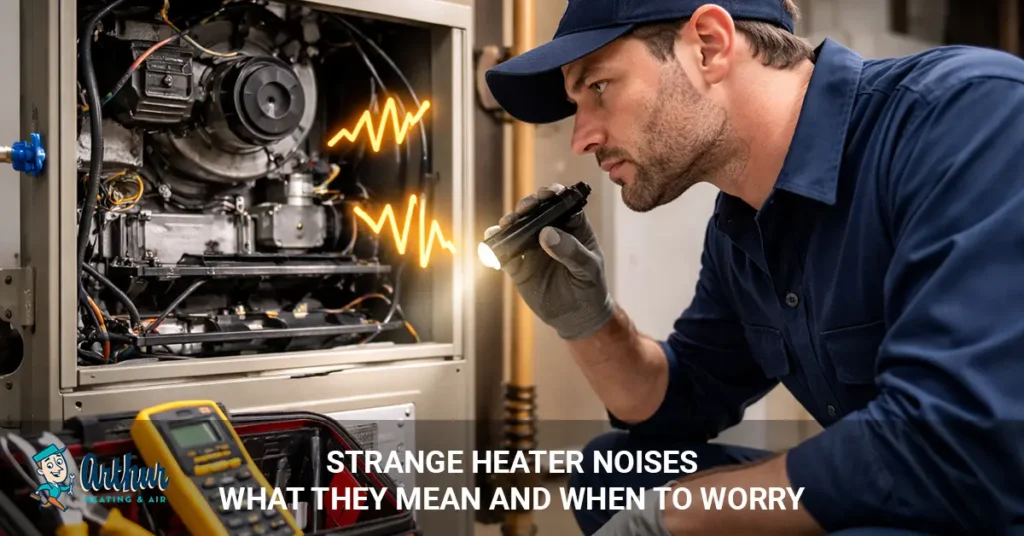
Strange heater noises usually mean the system needs attention. Some sounds are normal, especially when the heater starts or shuts off. Others are warning signs that shouldn’t be ignored.
This guide breaks down the most common heater noises and explains what each sound usually means. You’ll learn which noises are harmless, which ones signal a problem, and when it’s time to call a professional. Catching these issues early can help you avoid safety risks and keep your home warm and comfortable.
Are Heater Noises Normal or a Sign of Trouble?
Some heater noises are normal, but loud or new sounds usually point to a problem.
Heaters naturally expand, contract, and move air, so light noises during startup or shutdown can happen.
Heater noises are more likely a problem when they are:
- Loud or sudden
- New or getting worse over time
- Repeating often
- Paired with poor heating, strange smells, or performance issues
If a sound grabs your attention or doesn’t sound right, it’s worth checking before it turns into a bigger issue. Noises often show up alongside performance problems, such as a heater blowing cold air instead of warming the home.
Common Heater Noises and What They Mean
Banging or Booming Noise
A banging or booming noise usually means delayed ignition or rapid metal expansion.
This can happen when gas builds up before igniting or when ductwork expands quickly as it heats up.
Occasional popping from ducts can be normal, especially at startup. Repeated or loud banging is not and should be checked to prevent damage or safety issues.
Rattling or Vibrating Sounds
Rattling or vibrating sounds usually mean something inside the heater is loose.
Loose panels, screws, or duct connections can shake as the system runs.
In some cases, the noise may come from a failing blower motor. If tightening any visible panels doesn’t stop the sound, it’s best to call a professional to inspect the system.
Screeching or High-Pitched Squealing
Screeching or high-pitched squealing usually means there’s a problem with the motor or belt. Worn bearings or a slipping belt can create sharp, loud noises as the heater runs.
This sound often gets worse over time and shouldn’t be ignored. Addressing it early can help prevent motor damage and more expensive repairs later.
Clicking or Ticking Noises
Light clicking or ticking sounds during startup are usually normal. Heaters often make these noises as components turn on and off during a heating cycle.
Repeated or constant clicking is not normal and can point to a faulty relay, ignition problem, or control board issue. If the clicking doesn’t stop, it’s best to have the system checked by a professional.
Whistling or Hissing Sounds
Whistling or hissing sounds usually mean there’s an airflow or pressure problem.
Whistling often happens when air filters are clogged or vents are partially blocked.
Hissing can also come from leaking ductwork. If the sound is paired with a gas smell, turn off the heater immediately and call for professional help. Safety should always come first.
Humming or Buzzing
A soft humming sound is normal, but loud buzzing usually signals an electrical issue.
Buzzing often comes from problems like a failing capacitor, transformer, or other electrical component.
Electrical noises shouldn’t be ignored. Having them checked quickly can help prevent system damage and reduce safety risks.
Popping or Cracking Sounds
Light popping or cracking sounds are usually caused by metal expanding and contracting. This often happens as the heater warms up or cools down during normal operation.
If the popping is loud, frequent, or new, it may point to ductwork or airflow problems that should be checked before they get worse.
Heater Noises You Should Never Ignore
Some heater noises signal serious problems that need professional attention right away.
These sounds mean it’s time to stop troubleshooting and call a technician.
Never ignore:
- Loud bangs or booms
- Screeching or grinding noises
- Electrical buzzing
- Hissing sounds paired with a gas smell
- Sudden or drastic changes in normal sound patterns
These noises often point to safety or mechanical risks. Acting quickly can help prevent damage and keep your home safe.
Not Sure if the Noise Is Serious?
A professional inspection can catch the issue early and prevent costly repairs.
 Book a Heater Inspection
Why Heaters Get Noisy Over Time
Heaters get noisier over time as parts wear down and loosen. Dust buildup, aging components, and skipped maintenance all make the system work harder and sound louder.
As heaters age, small issues that were once quiet can turn into noticeable noises if they aren’t addressed early. Regular care helps keep those sounds from getting worse.
Step-by-Step Checks You Can Do Safely
Some heater noise issues can be checked safely without special tools.
These simple steps can help reduce noise and point you toward the cause.
Step 1: Check the Air Filter: A dirty air filter can cause extra strain and noise. Restricted airflow makes the system work harder and often leads to whistling, rattling, or overheating sounds. Replacing the filter can quickly reduce noise and improve performance.
Step 2: Inspect Vents and Ducts: Blocked or closed vents can cause whistling or rattling noises. When air can’t move freely, pressure builds up in the system. Make sure all supply and return vents are open and not blocked by furniture or rugs.
Step 3: Listen for When the Noise Starts: When a noise happens often reveals what’s causing it. Pay attention to whether the sound starts during startup, while heating, or during shutdown. This detail can help narrow down the issue and speed up repairs.
Step 4: Tighten Loose Panels: Loose access panels can vibrate as the heater runs. This often creates rattling or buzzing sounds. If panels are easy to reach, gently tightening them may stop the noise right away.
When to Call a Professional
You should call a professional if heater noises keep happening or start getting worse.
Some heater problems aren’t safe to fix without proper training and tools.
Call for service if:
- Noises are loud or sudden
- Heating performance drops, or rooms stay cold
- Error codes or warning lights appear
- Smells or smoke come from the system
When it comes to heating issues, it’s always better to be safe and get expert help early.
Heater Noise Repair Cost: What to Expect
The cost to fix heater noises depends on what’s causing the sound. Minor issues are usually affordable to repair, while motor or electrical problems tend to cost more.
If your heater is older and making frequent noises, replacement may be the more cost-effective long-term option. A newer system can run quieter, use less energy, and reduce ongoing repair costs.
How Regular Maintenance Prevents Heater Noises
Regular maintenance prevents most heater noise problems before they start.
Clean components and proper airflow reduce strain on the system and keep it running smoothly.
Maintenance helps by:
- Tightening loose components that can rattle or vibrate
- Lubricating moving parts to prevent squealing or grinding
- Cleaning dust and debris that cause airflow issues
- Catching worn parts early before they fail
Scheduling a yearly inspection helps keep your heater quiet, efficient, and reliable throughout the heating season.
Final Thoughts
Strange heater noises are often early warning signs that something needs attention.
Some sounds are harmless, but others point to problems that shouldn’t be ignored.
If a noise is loud, new, or keeps happening, take action sooner rather than later. Addressing heater noises early helps protect your system, improve comfort, and keep your home safe throughout the heating season.
Still Hearing That Noise? Get It Fixed Today
Fast, reliable heater repair to restore quiet and comfort.
 Schedule Heater Repair